The Beanie Babies of 2025: Labubus and their Doomed Fate

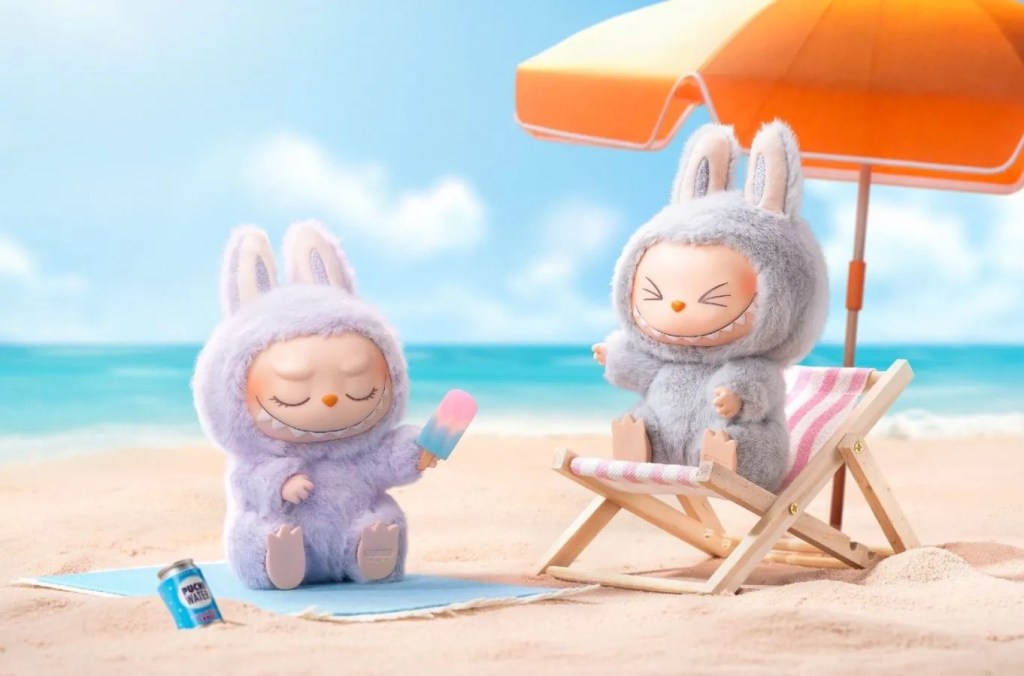
They’re everywhere. Whether in person or online, you’ve more than likely seen them- fuzzy little monsters with wide toothy grins. They come in a variety of colors and poses, and can be small key chains or large decorative figurines. Everyone is obsessed with them, to the point where fights have broken out in stores just for the chance to get one.

But… what are they?

These fuzzy little monsters are called Labubus. They’re the creation of Kasing Lung, a Hong Kong-born artist living in Belgium. They’re one part of his The Monsters collection, which was highly influenced by Nordic folklore and mythology that Lung grew up learning about during his childhood in the Netherlands.
Labubus were actually first introduced ten years back in 2015, the first of their figurines having been produced by How2Work. However, their production and sale shifted over to the Chinese retailer Pop Mart in 2019, where they have been sold from ever since.

While Labubus would start to enjoy wider popularity once they came under Pop Mart, it’s important to note that they didn’t immediately become the overwhelming trend seen currently. In fact, while toy collectors would buy them for collecting purposes, they were a bit reviled by others for being “ugly.”

However, that all changed in April 2025, when the K-Pop idol Lisa from Blackpink posted one attached to her bag on her Instagram story, admitting both that they were her favorite toy and that she loved collecting all of them.
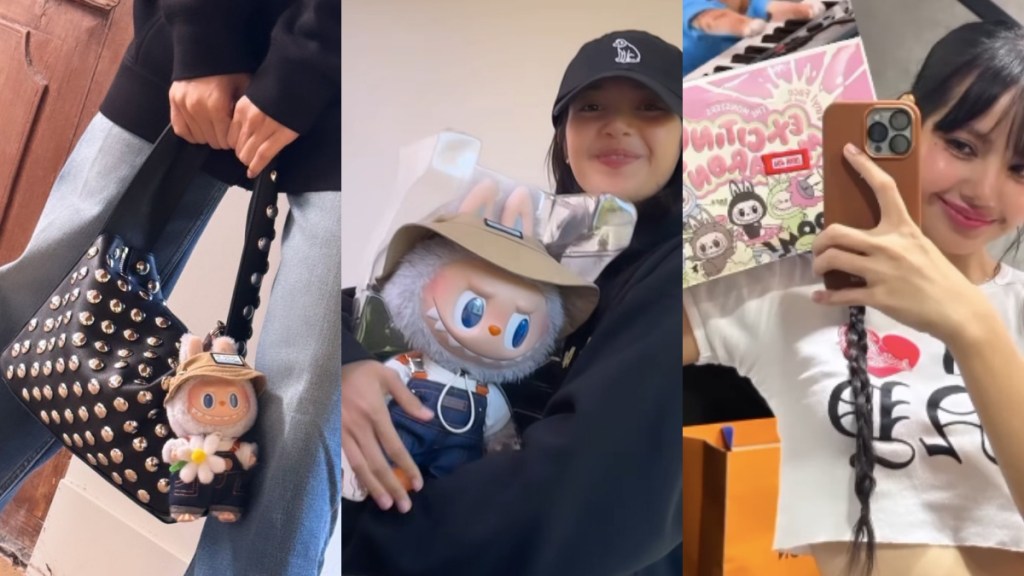
Lisa posting pictures with several of her Labubus

From that point, Labubus became all the rage. Other celebrities have posted showing off their Labubus. They’ve been to Milan fashion week. They’ve been taken on a “tour” of Thailand. They’re going to get an animated series. People have spent hundreds, if not thousands, on the Pop Mart blind boxes trying to collect these little imps, with the rare “mystery color” being the most sought after for each blind box series. They are the “it” thing.

But… if we know anything about trends like this, is that this one is not going to last very long.

Just like Funko Pops and Beanie Babies, Labubus are currently set to follow the same trajectory: a couple of years of excessive hype and popularity, then a sudden market “burst” and devaluation. Then, they’ll appear en masse in thrift stores and land fills, tossed to the wayside by the disinterested masses.

They won’t vanish entirely, of course- just as new funko pops and new beanie babies are released, so too will new Labubus. But they’ll once again return to being a niche toy, mostly forgotten in favor of the next big thing.

This pattern has happened time and time again. Why? Because that is just the nature of trends when it comes to non-essential goods. People don’t exactly need Labubus, or any other type of trending figurine. They don’t even need certain clothing, and clothing technically falls under the category of “essential.” But when something trends, it makes people want the item, out of sense of F.O.M.O., or “fear of missing out.” In our consumer society, people can’t help it.

But never in the history of the world has a trend like this lasted all that long. Especially in the age of social media, when new things are popping up every single day in a relentless wave. It’s simply impossible for the trend to last. Look at Stanley cups, for example: last year people were camping outside of stores and literally rushing to get their hands on the newest color. Now how often do you hear about them?

No matter how overwhelmingly popular Labubus may seem now, it’ll only be a matter of time before something else catches the attention of the general public and they are tossed aside. When or what will that be, is uncertain. But what is certain, is that this trend is doomed to die.
Returning to the World I Knew Before

I don’t know if I’ve indicated before, but I have a long history of being a huge nerd.

Or rather, a geek (yes, there is a difference). I wasn’t the techy “build your own computer and digs math” type, which would have classified me as a nerd (by stereotypical standards). No, I have always preferred pop culture and literature, preferring to spend my time playing games and dabbling in a bit of anime. But the biggest highlight of being a geek was going to conventions.

The two biggest conventions I went to were Wondercon, which functions as a mini-Comic Con, situated in Anaheim, and Anime Expo, the largest Anime convention in North America. I went to these conventions every year from when I was thirteen until I went to college, when scheduling began interfering. It got to a point where I kind of got sick of them.

But in college, things changed. For some reason, I had it in my head that I should “grow out” of my geekiness, or at least keep it more private. Perhaps it was because I looked around and saw all the other geeks around me at school made me uncomfortable. They were just too stereo-typically geeky. That’s not to say that some of my high school friends weren’t, but these guys just fit the bill too well.

The disassociation might also have been partially influenced by the fact that I never fit the bit for someone who was geeky. Yeah, I wear glasses and at one point cut my hair short and dressed less-than-pleasantly, but I’m not talking about that. I’m talking about my face, my figure. I looked more like the kind of person geeks and nerds would wish would be into the same stuff as them. And this isn’t out of an inflation of my own ego. I’ve had enough creepy experiences to know exactly what position I was in. I look more like I belong in a Starbucks.

This was a factor that had always plagued my adolescent years. Especially during the height of gamer gate, where you could get called a fake gamer or fake nerd for just about breathing the “wrong way”. They never judged the people that looked like (stereotypical) geeks and nerds. They judged the people that didn’t.

It didn’t help that my Mom and sister would make fun of me for being a geek. My sister has become more involved in the culture herself in recent years, which has lightened her take on it, but my Mom would always roll her eyes. She still thinks I’m into things that I’m not (i.e: she thinks everything I watch is anime for some reason). She didn’t stop me from being a part of geek culture, but she didn’t much like the fact that I was so into it, either.

So for most of my college years, I kind of kept things under wrap. I stopped investing myself in geek culture for the most part, although I couldn’t help having my closest friends know what I was into. Everything was going fine.

But then, I started to miss the geek world. I started to miss being involved in the newest game, and missed going to conventions. I missed being a geek. I wasn’t going to suddenly stop dressing decent, but I didn’t want to let go of something I actually enjoyed. It was a big part of my life, and it was something cool to do. I got to see artists I follow in person, discover new artists, and find new things that I didn’t know before in geek culture.

So I’ve decided to come back. My Dad says he can get us into Comic Con, and I am planning on going to Anime Expo, so I guess that’s a good start to breaking back in. While I don’t have much time to be “full geek” (I have school and work), I do plan on enjoying the things I once did.

Should Underage Sex Scenes be Descriptive?

This is an issue that only arises as one transitions from being a teenager to being an adult. It happens mostly as a result of shift in perceptions, where rereading the same section that you had no problem with when you were younger suddenly feels kind of weird.

But, I’m getting ahead of myself. Why am I even talking about this?

Well, it all started when I decided to go over a certain section in Cassandra Clare’s Lady Midnight. I don’t really know why I was; the book was a little too predictable for my tastes. But that’s besides the point.

Anyhow, in Lady Midnight, there is a sex scene between two of the main characters, both of who are seventeen when the events take place. When I had first read it, I thought there was nothing wrong (I had just turned eighteen). However, rereading it now, I felt that it got a little too descriptive, the number “seventeen” ringing in the back of my head. In Lord of Shadows, it gets even more descriptive.

The odd feeling got me thinking about other YA books with underage sex scenes written into them. More often than not, the sex scenes I’ve read usually involve the characters being eighteen or nineteen. But sometimes, they are younger. Which, there would be nothing wrong with that, had they not gotten so descriptive.

What do I mean by descriptive? I don’t mean when the narrator describes feelings and emotional roller coasters. Rather, I mean explicit mentions of penetrations and other physicality. When I was a teenager myself, I had no problem with this. In fact, I got excited by how daring the author would be. But now it feels kind of strange to read it being so descriptive, especially when the female character is specifically described as looking like a child. What makes it worse is when the author points out those childlike features during a scene, and then I want to skip the entire scene.

But, is the descriptiveness really so bad? Usually when the underage scene is written, the characters are seventeen or almost seventeen. Paired with the fact that the average age in the US for having sex for the first time is seventeen, then there really shouldn’t be an issue. These books are for kids from thirteen to around eighteen, and the scenes are catering towards that audience. So there really should be no issue, right?

Well personally, I would prefer them not to mention any penetration. But, if I was my younger self, I may not have an issue with that description.

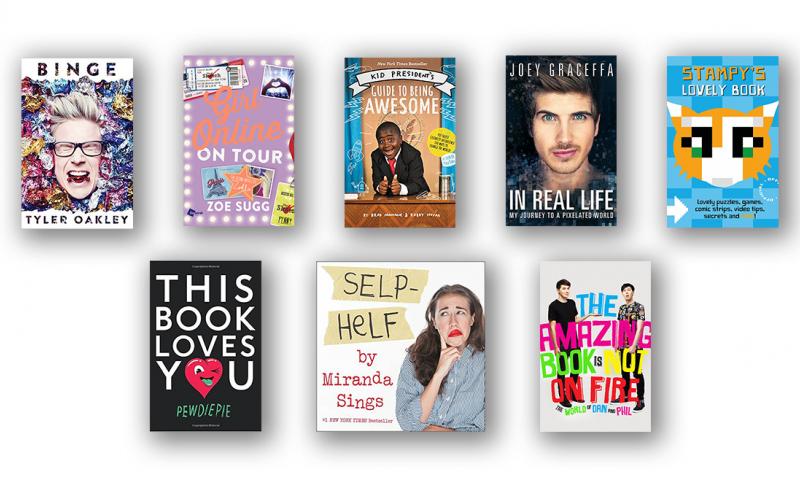
Youtubers Becoming Authors: The Self-Help Trend

In the last five years, there have been a number of Youtubers releasing books, some fictional (like Joey Graceffa’s Dystopian trilogy), and others non-fictional (like Shane Dawson, Miranda Sings, Tyler Oakley, and so many others). Youtubers, using their influence, often write books of “self-help”, or a series of essays, or something similar to memoirs. They provide advice, despite the fact that they are only in their mid-to-late twenties. It’s a bizarre case, one that I have been feeling the need to unpack for a long time.

Now, while John Green is technically the first youtuber to release a book, he was an author first, so I will just skip him.

The first youtubers to publish a book after gaining their popularity were Blaire and Elle Fowler, publishing the fiction book Beneath the Glitter, in 2012. From then on, Youtubers began publishing their non-fiction books, with books such as I Hate Myself and In Real Life: My Journey to a Pixelated World gaining quite a bit of traction. Most of these centered around Youtubers’ tales of their childhood, functioning as a pseudo-memoir despite the fact that most of the authors were in their early-to-mid twenties.

It wasn’t until 2014 that the first actual “help” books came out from a Youtuber, with Hannah Hart’s My Drunk Kitchen: a Guide to Eating, Drinking and Going with Your Gut. It’s help aspect comes from the fact that this is a recipe book, although within the next three years tons of “self-help” books came out.

Now, while I have no qualms with things such as recipe books and fictional novels, the memoirs and self-help books kind of get to me. And it’s not like it’s business or fashion advice, either (Michelle Phan published Make-up: Your Life Guide to Beauty, Style, and Success- Online and Off in 2014, which offers both business and fashion advice, as well as maintaining a healthy attitude), but rather actual life advice. This isn’t to say that someone who isn’t in their twenties can’t give life advice. It just seems odd that someone who is in their twenties are offering advice books to their audience-most of which are in their early or mid teens.

To me it’s difficult to imagine my teen-self or any of my friends following the advice of someone who, quite often, never got their degree in college, and made their career in a  very competitive environment. It also seems weird to read a memoir about someone who hasn’t even made it to their thirties, yet. Most people don’t write memoirs until they’re almost in their fifties, or even later. It’s usually after they have lived quite a bit. That isn’t to say that a lot hasn’t happened to a young person, but most Youtubers’ memoirs are quite mundane. They have childhoods that may be tough, but are often not unusual.

Of course, some of these Youtubers can provide some insight that their younger audiences can relate to. Things such as mental illness, eating disorders, being a part of the LGBT spectrum, and other such hardships may connect to people who are stuck in similar positions. The only problem is that the writers are so young themselves, still growing and learning, that what they write in one book won’t be how they feel ten years down the line.

Perhaps rather than sticking to full on life advice, they should stick to subcategories that they excel in for now. There are so many ways that you can provide advice to young people without it being how to live. There are also many ways to write personal anecdotes without writing full memoirs. It’s better not to rush into things so young, despite our tendency to do so.