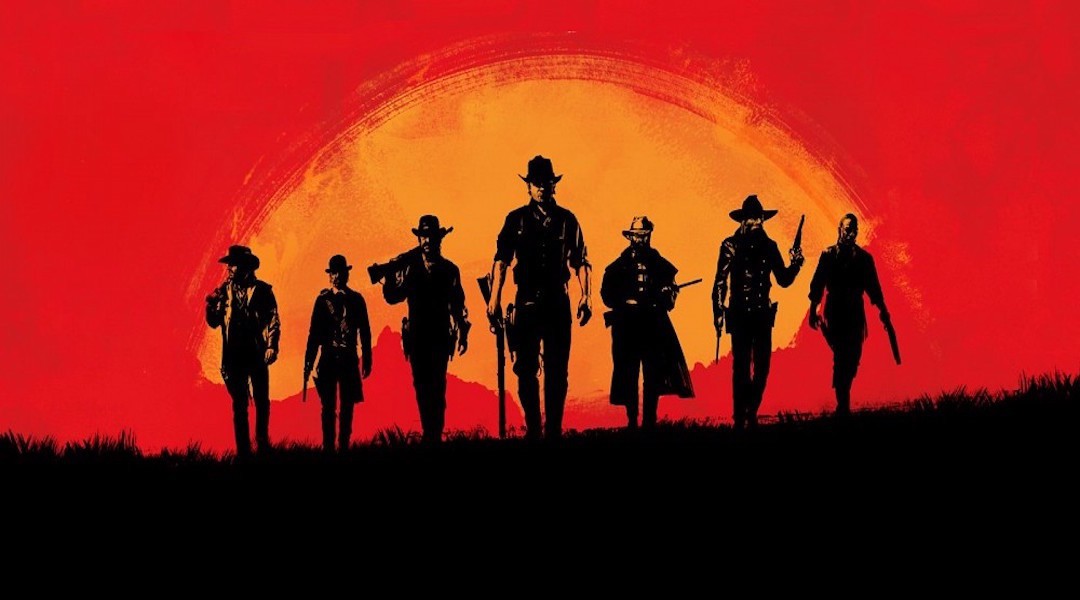
Recently, Rockstar has announced that Red Dead Redemption 2, the sequel to its instant classic of Red Dead Redemption, will add black cowboys, portraying a more realistic perspective of how the Wild West would have been.
However, like all things with time period games, there are those who dissent to having these characters added. Fortunately, it’s not nearly on the same scale as some other games, but it still exists. One argument of the dissent that stuck out to me was the idea of how historically “inaccurate” it was to have black cowboys. These arguments are based off of old Hollywood and TV portrayals of the West, somehow justifying their arguments. If P.O.Cs were not portrayed then, then therefore they simply weren’t actually present, right?
Wrong. Let me give a little insight on the actual realm of the West. The West, with its notoriety for being a “lawless wasteland”, was much more racially open than the rest of the United States. A former part of land owned and controlled by Spain (and later Mexico), the wide and mostly unpopulated expanse had plenty or room for the proliferation of Vaqueros, or the precursor to cowboys.
The Vaquero lifestyle was mostly used by Mexicans and some Natives, who gained influence from the Spanish ranchers on the Missions. However, when the land was won over by the US in the Mexican-American War, the Vaquero stopped being a purely Hispanic profession. Caucasian and later black cowboys began making an appearance on the scene, taking up the Vaquero (later renamed cowboy) lifestyle to live a “free rancher” life.
Black cowboys initially started as slaves tending to their masters’ cattle ranches while they were away at war in Texas, although there were some that escaped West before incorporation into the US to escape their former masters. In this, black Vaqueros gained the skills that would make them invaluable to the cattle industry, allowing them to prosper following the end of the Civil War. As many as 1 in 4 cowboys were Black, travelling throughout the West to help ranchers herd their cattle.
Now, this didn’t make the West some racial paradise, as discrimination against Latinos, Blacks, Native Americans, and later Asians (who came in to help build train tracks that would help connect the Continental US) was still a common phenomenon. But it allowed more freedom than other parts of the US.
Now, with all that in mind, how does this relate to old media? Well, if you’ve watched any spaghetti Western film or TV, you’ll easily notice that the diverse history of the West simply does not exist. If there’s a Native, they’re violent savages killing the poor white woman for fun. The Asians are portrayed as dirty, cheap, and lying. There’s not even a mention of Blacks or Hispanics.
No, the Western shows and films represent and idealized White version of the West, one which claims the cowboy as purely American made, despite its Hispanic origins. It’s about the finding the Classic love in the Wild and Gritty West, centered around White actors in a purely whitewashed realm.
Even as late into the 1990’s, media surrounding the West was heavily geared towards portraying it as white dominant, with only a few outliers that portrayed otherwise. It was only in recent years with Django Unchained, Hateful Eight and Magnificent Seven that the whites-only narrative has fallen back, showing another, previously unacknowledged side of diversity in the Wild West.
Old Media has a particular representation for portraying false narratives, and is unreliable for arguments trying to prove historical accuracy. Media changes stories and narratives all the time for entertainment, especially in older films and TV shows.

 Pop N' Crunch