The Beanie Babies of 2025: Labubus and their Doomed Fate

They’re everywhere. Whether in person or online, you’ve more than likely seen them- fuzzy little monsters with wide toothy grins. They come in a variety of colors and poses, and can be small key chains or large decorative figurines. Everyone is obsessed with them, to the point where fights have broken out in stores just for the chance to get one.

But… what are they?

These fuzzy little monsters are called Labubus. They’re the creation of Kasing Lung, a Hong Kong-born artist living in Belgium. They’re one part of his The Monsters collection, which was highly influenced by Nordic folklore and mythology that Lung grew up learning about during his childhood in the Netherlands.
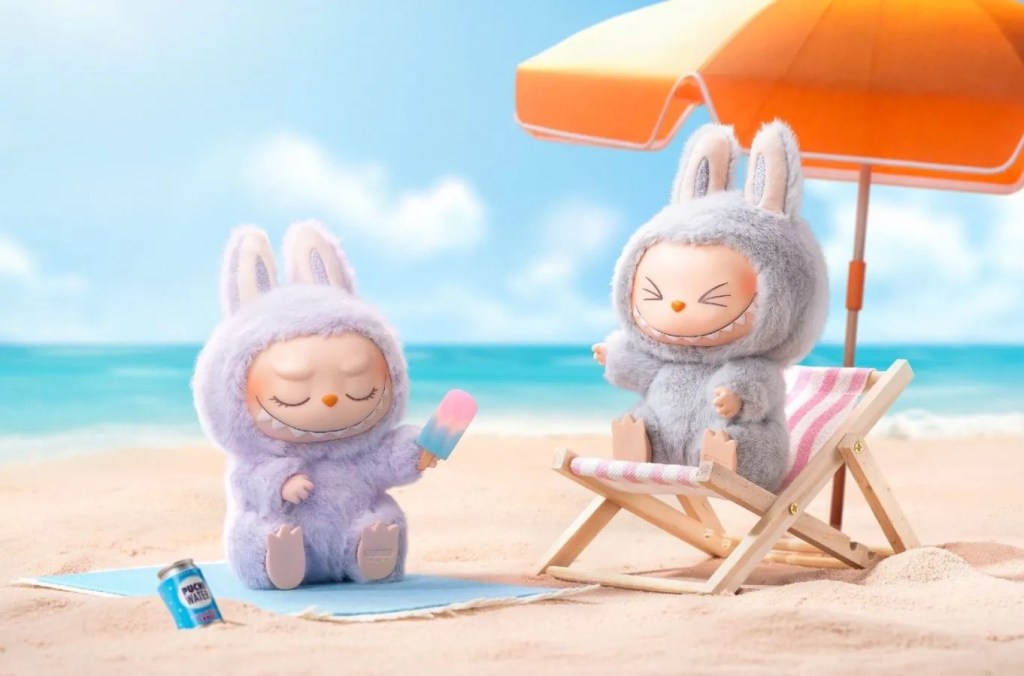
Labubus were actually first introduced ten years back in 2015, the first of their figurines having been produced by How2Work. However, their production and sale shifted over to the Chinese retailer Pop Mart in 2019, where they have been sold from ever since.

While Labubus would start to enjoy wider popularity once they came under Pop Mart, it’s important to note that they didn’t immediately become the overwhelming trend seen currently. In fact, while toy collectors would buy them for collecting purposes, they were a bit reviled by others for being “ugly.”

However, that all changed in April 2025, when the K-Pop idol Lisa from Blackpink posted one attached to her bag on her Instagram story, admitting both that they were her favorite toy and that she loved collecting all of them.
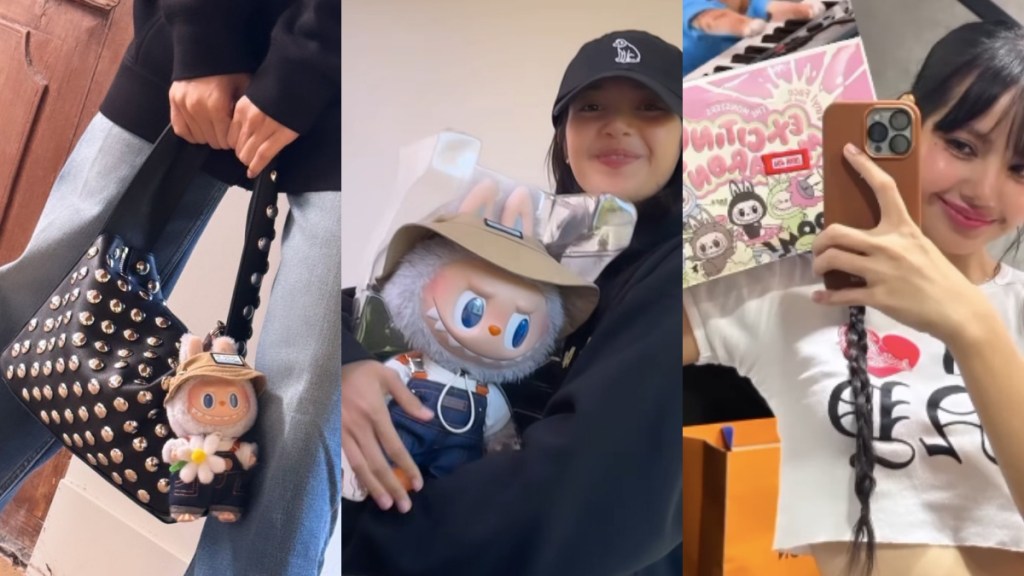
Lisa posting pictures with several of her Labubus

From that point, Labubus became all the rage. Other celebrities have posted showing off their Labubus. They’ve been to Milan fashion week. They’ve been taken on a “tour” of Thailand. They’re going to get an animated series. People have spent hundreds, if not thousands, on the Pop Mart blind boxes trying to collect these little imps, with the rare “mystery color” being the most sought after for each blind box series. They are the “it” thing.

But… if we know anything about trends like this, is that this one is not going to last very long.

Just like Funko Pops and Beanie Babies, Labubus are currently set to follow the same trajectory: a couple of years of excessive hype and popularity, then a sudden market “burst” and devaluation. Then, they’ll appear en masse in thrift stores and land fills, tossed to the wayside by the disinterested masses.

They won’t vanish entirely, of course- just as new funko pops and new beanie babies are released, so too will new Labubus. But they’ll once again return to being a niche toy, mostly forgotten in favor of the next big thing.

This pattern has happened time and time again. Why? Because that is just the nature of trends when it comes to non-essential goods. People don’t exactly need Labubus, or any other type of trending figurine. They don’t even need certain clothing, and clothing technically falls under the category of “essential.” But when something trends, it makes people want the item, out of sense of F.O.M.O., or “fear of missing out.” In our consumer society, people can’t help it.

But never in the history of the world has a trend like this lasted all that long. Especially in the age of social media, when new things are popping up every single day in a relentless wave. It’s simply impossible for the trend to last. Look at Stanley cups, for example: last year people were camping outside of stores and literally rushing to get their hands on the newest color. Now how often do you hear about them?

No matter how overwhelmingly popular Labubus may seem now, it’ll only be a matter of time before something else catches the attention of the general public and they are tossed aside. When or what will that be, is uncertain. But what is certain, is that this trend is doomed to die.
K-Beauty: A Trend with a Dark Side

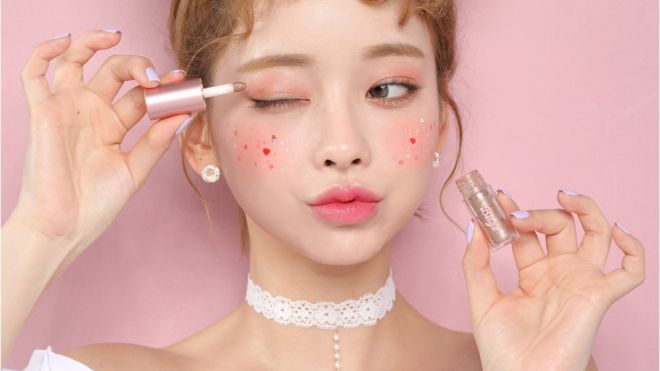
K-Beauty has been the “hot in-thing” on the beauty market for the last few years, each year growing exponentially more popular. People are going crazy for the various face masks, lotions, BB cream, dark spot treatment, CC cream, and many other products that hold a reputation for giving you a “dewy, young-looking face”. Youtubers and beauty bloggers only add to this craze, providing yearly top tens and list of best products. Now, in just about every pharmacy or beauty store, you’ll find a section devoted purely to Korean beauty and Korean companies.

But as with anything, the world of K-beauty has a vicious dark side. But this dark side isn’t an international issue. It only extends to the edges of the South Korean borders.

What do I mean by this? South Korea has interestingly harsh beauty standards, which can range anywhere from having a thin figure to having a certain face shape. Yes, a certain face shape. South Korea is currently known as the “plastic surgery capital of the world”, having the highest rates of plastic surgery per capita of any other country, with over 980,000 operations reported in 2014 (Business Insider, 2015) . The country also attracts hundreds of thousands of “medical tourists”, most of whom come to get cosmetic procedures, according a report by Chang-Won Koh (2017).

No, this isn’t the most alarming thing in the world. Despite the rather high levels of plastic surgery, South Korea ranks third in terms of the total number of plastic surgeries, trailing behind the US and Brazil by over 1,000,000 procedures (WorldAtlas, 2015). But you also have to consider that the population of South Korea ranges just around 55 million people, versus the 325 million in the US and the 209 million in Brazil. But I digress. It’s not so much the plastic surgery itself that’s the issue. It’s the culture surrounding it.

This culture is incredibly strict, and applies much more the girls than boys (although boys are not unaffected). The beauty culture actually even expects people to get plastic surgery to fit an impossible beauty ideal, with the most famous examples of this occurring being the fact that in just about every long-term K-pop idol contract, plastic surgery is one of the requirements.

But the beauty culture doesn’t just stop at plastic surgery. Skin bleaching is also a common problem, with illegal skin bleaching products flooding the beauty market every year in South Korea. There is a harsh expectation to be as white as possible (a result of a long-standing social issue where the nobility were white-skinned while the peasantry were dark-skinned from working in the sun). This expectation doesn’t just exist in South Korea (it exists throughout all of Asia, Africa, and Latin America), but South Korea is known for promoting ads that claim that being dark-skinned is being a failure in life (which has attracted much international backlash). The skin bleaching, which is known to break down melanin and leave skin much more likely to get skin cancer, can be compared to excessive tanning, which also leaves people at risk of the same effects.

But I can’t get on South Korea too harshly. The West also has incredibly high beauty standards, though with slightly less restrictions than South Korea. As I said earlier, the US ranks number one in terms of total amount of plastic surgery per year, having over 4 million procedures in 2015 alone. We also have a problem with tanning products, with products all over the market claiming to let you tan yourself from home, and tanning places existing all over the place. Are we really any better than South Korea?

Youtubers Becoming Authors: The Self-Help Trend

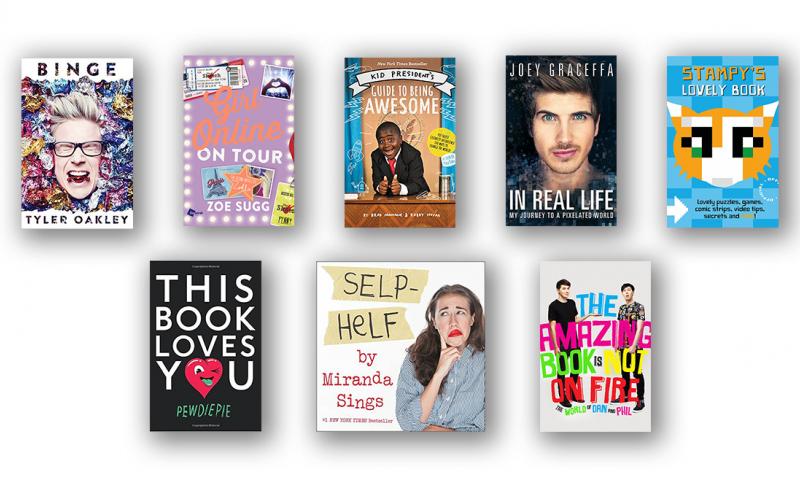
In the last five years, there have been a number of Youtubers releasing books, some fictional (like Joey Graceffa’s Dystopian trilogy), and others non-fictional (like Shane Dawson, Miranda Sings, Tyler Oakley, and so many others). Youtubers, using their influence, often write books of “self-help”, or a series of essays, or something similar to memoirs. They provide advice, despite the fact that they are only in their mid-to-late twenties. It’s a bizarre case, one that I have been feeling the need to unpack for a long time.

Now, while John Green is technically the first youtuber to release a book, he was an author first, so I will just skip him.

The first youtubers to publish a book after gaining their popularity were Blaire and Elle Fowler, publishing the fiction book Beneath the Glitter, in 2012. From then on, Youtubers began publishing their non-fiction books, with books such as I Hate Myself and In Real Life: My Journey to a Pixelated World gaining quite a bit of traction. Most of these centered around Youtubers’ tales of their childhood, functioning as a pseudo-memoir despite the fact that most of the authors were in their early-to-mid twenties.

It wasn’t until 2014 that the first actual “help” books came out from a Youtuber, with Hannah Hart’s My Drunk Kitchen: a Guide to Eating, Drinking and Going with Your Gut. It’s help aspect comes from the fact that this is a recipe book, although within the next three years tons of “self-help” books came out.

Now, while I have no qualms with things such as recipe books and fictional novels, the memoirs and self-help books kind of get to me. And it’s not like it’s business or fashion advice, either (Michelle Phan published Make-up: Your Life Guide to Beauty, Style, and Success- Online and Off in 2014, which offers both business and fashion advice, as well as maintaining a healthy attitude), but rather actual life advice. This isn’t to say that someone who isn’t in their twenties can’t give life advice. It just seems odd that someone who is in their twenties are offering advice books to their audience-most of which are in their early or mid teens.

To me it’s difficult to imagine my teen-self or any of my friends following the advice of someone who, quite often, never got their degree in college, and made their career in a  very competitive environment. It also seems weird to read a memoir about someone who hasn’t even made it to their thirties, yet. Most people don’t write memoirs until they’re almost in their fifties, or even later. It’s usually after they have lived quite a bit. That isn’t to say that a lot hasn’t happened to a young person, but most Youtubers’ memoirs are quite mundane. They have childhoods that may be tough, but are often not unusual.

Of course, some of these Youtubers can provide some insight that their younger audiences can relate to. Things such as mental illness, eating disorders, being a part of the LGBT spectrum, and other such hardships may connect to people who are stuck in similar positions. The only problem is that the writers are so young themselves, still growing and learning, that what they write in one book won’t be how they feel ten years down the line.

Perhaps rather than sticking to full on life advice, they should stick to subcategories that they excel in for now. There are so many ways that you can provide advice to young people without it being how to live. There are also many ways to write personal anecdotes without writing full memoirs. It’s better not to rush into things so young, despite our tendency to do so.

The Emo Phase: People Still go Through One?

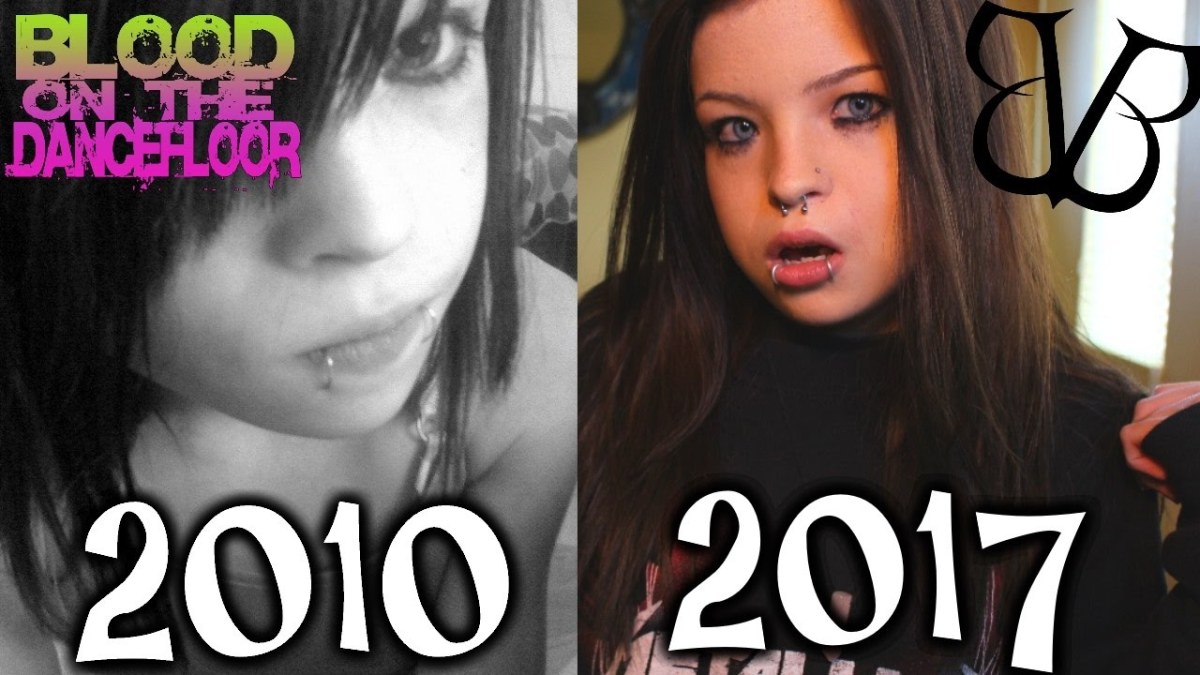
I grew up during the height of the Emo genre. Bands like My Chemical Romance, Evanescence, and the early days of Panic! At the Disco and Fall Out Boy were all hot on the scene, providing plenty of fuel to the Emo genre. Almost everyone had an emo phase; I even had a mild one. Dressing in all black, getting piercings all over and dying your hair funky colors was totally in. It was cool when I was a preteen.

But with the dawn of the 2010’s came the fall of the Emo genre. Rock, especially the hardcore rock, had fallen out of fashion in mainstream music, along with the Emo fashion. The era of the hipster was coming in.

I had thought the era of having an Emo Phase was long gone. But then my friend showed me a video of an Emo makeup tutorial from 2018. This greatly surprised me. There were still people going through Emo Phases in 2018? I had thought the closest people got was punk. I haven’t even seen a goth kid in ten years. So to see that there were still Emo kids was greatly surprising.

The thing is, I don’t even know how the Emo kids survive. I remember Emo phases being greatly tied to the music, but those are out of fashion. My Chemical Romance and Evanescence are disbanded, and Fall Out Boy and Panic! At the Disco have greatly changed their style. When Emo culture was a part of mainstream pop culture, it was easy to find and adopt that culture.

But I don’t find it anywhere, anymore. Not in the music, not in the fashion, not even in the hair. It simply doesn’t exist anymore. You can’t even really find videos online anymore about it, which leads me to wonder how it continues. It’s rather bizarre that the trend still continues on.

Strange Instagram Beauty Trends

Over the years, Instagram has become the source for young makeup artists or beauty gurus to show off their makeup skills and looks. However, it has also become the source of strange beauty trends, trying (and failing) to promote bizarre and frankly impractical beauty “hacks”. I thought I might put together some of the most bizarre instagram trends and hacks that I’ve seen within the last two years.

1: Using wasabi as a lip filler.

In late 2016, social media star Farah Dhukai proclaimed that by placing a small amount of wasabi for about a minute, your lips can become plumper for a longer amount of time than normal lip plumpers. She argued that because of the wasabi’s burning properties, it can cause mild inflammation, which could work to plump up the lips. Dhukai even posted a video showing a “tutorial” of how the process should be, declaring it 100% safe. Dermatologist Joshua Zeicher, M.D, who spoke to Refinery29 about the case, did say that using wasabi in small amounts was fine and safe, unless you have sensitive skin. While it is safe, it is still a strange concept.

2. Feathered Eyebrow Trend

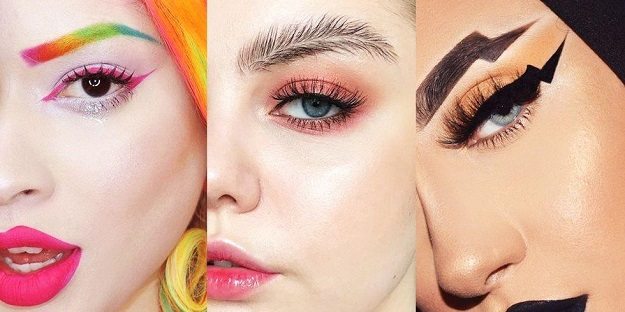
Initially started as a joke trend by popular makeup artist Stella Sironen, the “feathered eyebrow trend”, where half of the eyebrow is glued up and the other half is glued down, took off in a short-lived trend in 2017. It was used in order to “glamorize” makeup and bring it to a new level, although anyone normal would see this and think it was plain odd. Also, it probably is very difficult to make look how it’s supposed to.

3. Using Food for Makeup

Another strange and certainly not skin-friendly trend from last year was using different food items to apply your makeup. The trend, started by Raychel Newton who used a variety of different food objects (mac and cheese powder and Snickers bars to name a few), caused the hashtag #facefulloffoodchallenge to explode, where different makeup artists tried to make a fly look with random food items. While it is most certainly harmless, I don’t quite think it’s good for your skin, and wouldn’t recommend it.

4. Beauty Tampons

Tampons are most certainly not what you’d expect to be used for makeup. But in 2016, beauty blogger Ashley Blue DeFrancesco posted an Instagram video using a tampon as a beauty blender, applying foundation and using it on her skin. Which isn’t too bad, saying that a tampon is an absorbent wad of cotton, but in the context of what it is supposed to be used for, it becomes quite strange. It was surprisingly effective, although I’m not sure you’ll find anyone actively using their tampons to apply foundation, even in case of emergency, anytime soon.

5. Boob Blenders

In 2017, popular beauty blogger Huda Kattan decided to go a very unusual route, and try using a silicone bra insert as a beauty blender. In an attempt to start a new trend, she argued that it didn’t waste product like normal beauty sponges do. However, I don’t know how many people actually own a bra insert, nor do I know how willing they are to cut one up and use it as a blender.

6. Wavy Eyebrow Trend

Finally, we have a trend that some had considered cute, but most had considered bizarre, was the wavy eyebrow trend. Started in 2017, the wavy eyebrow trend involved gluing your eyebrows into “waves”, which some had argued was a new chic. The only problem with it is, that it’s hard to do, looks strange, and is definitely not suited for normal wear. It’s more something you do as a joke, not intend to wear out and about.

“Let’s Make a Podcast”: the New “Let’s Start a Band”

In the decades before, particularly in the 1970s through the 1990s, the common movie phrase among young rebellious teenagers is “Let’s start a band.” This phrase even made appearances into the early-to-mid 2000s, when teenagers wanted to become famous and popular, fast. It was inspired by regular young teen’s desires to become famous their own way, but in the case of the movies they were always successful.

But now no one uses that phrase anymore. Now the new in thing is the say “Let’s start a podcast.”

Why a podcast? Beats me. Maybe it’s the idea of people just sitting, relaxing, and talking about a random subject for an hour while making a profit. Maybe, people think it might be an easier and more sociable way of gaining media influence than Youtube. Or perhaps it’s just a creative outlet that some people want to take. Whatever the appeal is, podcasting is attracting a lot of people.

Podcasts are appearing all over the place, on many platforms. Spotify even has a special category just for popular playlists, something that I hadn’t seen two years before. What once was a more niche source of entertainment is now extremely popular. I’ve even been recommended a nice podcast to listen to while driving five hours home. I haven’t tried it yet, but the fact that I was recommended it says something.

No one wants to be in a band anymore (except for the more hipster bands). Most mainstream artists these days are solo, with the occasional band in between. Wanting to start a band has seriously dropped in popularity, especially among the young kids who now dream of becoming Youtubers. Starting a podcast seems much more achievable and appealing. You can talk about seemingly any topic in the world, making itself an auditory form of blogging. I’ve heard podcasts about different serial killers, new movies, or just funny story times and games. They can be quite soothing. There’s a a larger band of creative freedom when it comes to podcasts, although there can be quite a bit of freedom with starting a band in this day and age as well.

There’s nothing wrong with starting a podcast. You certainly don’t need to know how to play an instrument to start one (although showing off your skills on it might be entertaining). But that isn’t to say you can just start out of the blue. It’s recommended that you have at least some tech experience editing audio and video, and dealing with sound recording. Not to say that you need to be an expert, but being a total newbie to it can make it quite confusing.