No, I Don’t Want to pay $40 for one Awards Show

So last sunday was the Grammys’. I’ve never actually seen the Grammys’ before, and figured that I this year might be the year to try watching it. Some interesting performers were up for awards, so I was intrigued.

Except, whenever I tried to figure out where it was streamed, I realized I could access none of the listed sites. Under my Dad’s account, I have access to DirectTV, CBS, and Hulu. But were they showing the Grammys’ on any of these sites? Nope, you have to pay $40 a site just to access their special “live” versions. Even when I tried looking it up directly on DirectTV (on my laptop), the Grammys’ couldn’t play because of copyright law. Copyright by who? Who even knows.

It annoys me to no end that these companies want you to by their “special” subscription just to be able watch something that you won’t really have access to again, just to boost subscriptions. No one wants to subscribe to “Hulu Live”, or something like that, they just want Hulu. Stop making this more difficult than it needs to be.

And, as for DirectTV, they had it on their special “on the go” subscription, but for some reason copyright prevented it from having it on their regular site? Even though I could look up the Grammys’, and get all the way to the “watch now” button before it’s a problem? Ridiculous.

Now, I could have technically gone downstairs and watched in on the TV itself. My landlady lives in the house I stay in, and has a TV set that has access to CBS. However, she had people over, and was in the living room with those people, which would have made it rather strange to just walk in and change the channel. So, while technically I could have done something, in reality it would have been socially unacceptable.

The Downfall of Telltale Games

Now, I am a few days late to this whole drama, but that has let me get a glimpse of a little extra content.

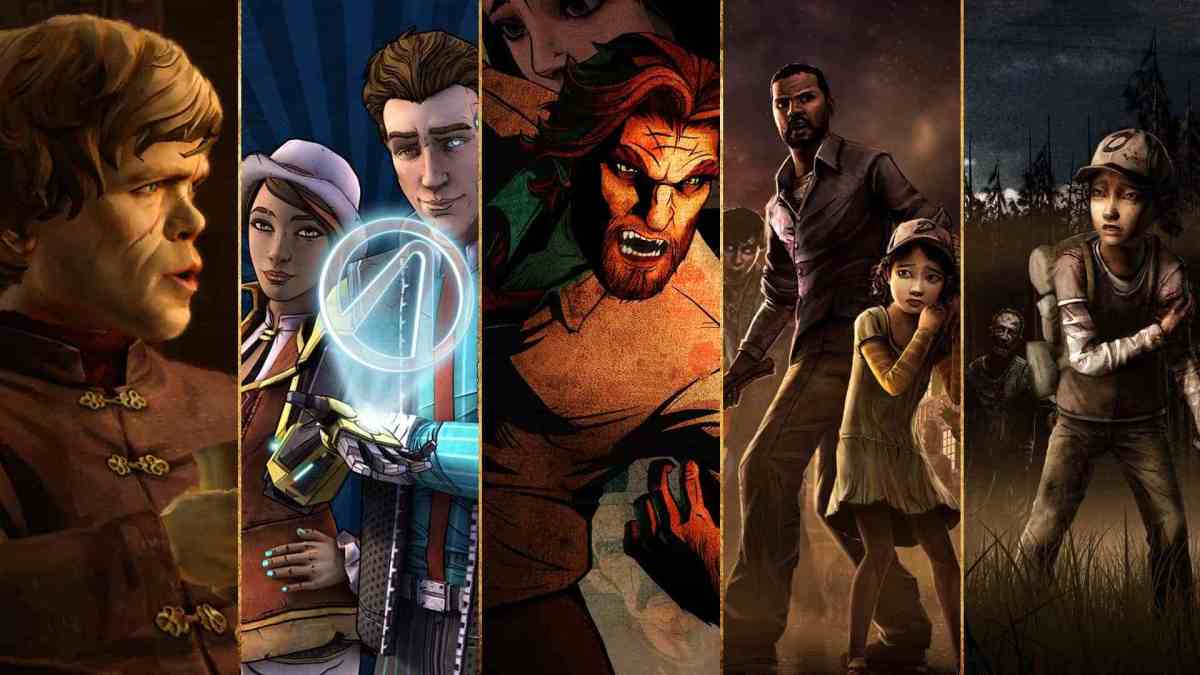
Last week, Telltale games declared that it was going to be shutting down, laying off most of its staff (who were expecting an eventual closure, but not so sudden). Official reports argue that a failed round of funding (the last backer abruptly pulled out) caused the shut down. The company is only staying open in order to finish the Minecraft: Story Mode for Netflix, then is shutting down permanently. This puts a halt to the much anticipated final season of Walking Dead and trashes the production for a Stranger Things game.

While officially, financial problems led to the closure, this development was a long time coming. Telltale games exploded onto the mainstream scene with the insanely popular first season of Walking Dead, released in 2012. Every gamer who was played that game, with streams for the first chapter popping up. As the game had promised that the endings would change based on your actions, people were trying to get the best ending possible. The first season was pretty good at making it seem like it changed based off actions, as well.

However, people quickly realized in the second season that this was not the case. Major events occurred no matter what, taking away the purpose of trying to find different outcomes. Another problem as well was the fact that the only character that remained consistent was Clementine (and later the child), while all other characters seemingly disappeared. Even the spin-off game was a dead end, with none of the characters making it into the actual game. This made it so there was too many characters to get invested in, turning people off.

This also ruined interest in Game of Thrones and Batman, two games that were reportedly good, but too long and unchanging for people to really be invested in. It only goes downhill from there, as Telltale keeps releasing more and more games, none of which had anywhere near the same popularity as the first season of Walking Dead. As a result, the company was merely digging itself into its own grave.

But, it didn’t let that on to its employees. In fact, the company had just hired people weeks before they had the massive layoff, with people even moving across the country in order to come and work. As a result, a massive class-action lawsuit has been filed against the company, as with the sudden layoff with an almost immediate cut-off of benefits, they have violated California labor laws. Some argue that in suing a bankrupt company, they are wasting their time, but it’s important to solidify that these laws apply to gaming companies, who might otherwise think they’re exempt.

The Saturation Complex of Geek Culture

I had mentioned in a post earlier that there is a prevailing idea that misconstrues how geek culture came to be. I can’t really say where this came about, although I strongly suspect that films and TV shows of the 1970s and 1980s paired with gendered conceptions surrounding geek culture are to blame. Whatever the cause, it has fueled this conception, leading to a sort of alienation complex as the geek community shifts and changes.

As a result, there is this saturated version of history, which relies on the idea that women and minorities have not been a part of geek culture until very recently (as in, within the last decade). As a result, there has developed a constant push against women and minorities joining in on geek culture, with particular “tests” placed against women in order to test if they’re “qualified” to partake in the geek community. These blockades grow increasingly pointless as geek culture continues to gain popularity, and yet for some reason persists. Perhaps I can explain why.

You see, it all starts at the source of geek culture: Science Fiction (Sci-Fi). In the saturated version of geek history, the first Sci-Fi author was Jules Vernes, best known for his book Twenty Thousand Leagues Under the Sea. As a result, this causes men who believe this start to think that women and other minorities have no real right to enter and write about Sci-Fi.

However, if you make one quick Google search, you’ll find that this version is incorrect. While Jules Verne was one of the earlier Sci-Fi writers, the real first Sci-Fi author was Mary Shelley, who published Frankenstein in 1818, a whopping fifty years before Jules Verne. This makes the Sci-Fi genre not a “boys only” club, but a club founded by women.

Shelley wasn’t the last female Sci-Fi author, either. Well-known ones include Octavia E. Butler, Margaret Atwood, Ursula K. Le Guin, and Suzanne Collins. Sci-Fi has never been a “boys only” club, although it is often pushed to appear that way.

Comics, by contrast, didn’t really diversify until recently. In its early days, the comic industry was very much “boys only”, mostly outright refusing to hire women and other minorities. This isn’t unusual, however; the entertainment industry as a whole was that way.  That isn’t to say that women and minorities weren’t in those realms, but it was very difficult to break in, particularly from the 1920’s-1970’s. This realm makes it a whole lot easier to promote the saturated history. Since women and other minorities were barred, it was easy to say that they didn’t belong and exist in the space. Despite the fact that the majority of comic readers in the present era greatly outweighs the “traditional” readership (white men), there is still this stigma that pushes women and minorities away.

The same goes for the video game industry. Women and minorities were mostly barred in the early days (as they were discouraged and stigmatized from getting STEM degrees in college), meaning that they couldn’t break in until more recently. This has created a frictional environment that extends beyond game development and into game playing, leading to online harassment and common claims of not being a “real gamer” to anyone that doesn’t fit the geek stereotype. To be honest, the “fake gamer” argument is ridiculous: if you play games, you’re a gamer. You don’t have to be best of the best, but if you play video games as a hobby, then you qualify.

The reason there is such a push back against diversity entering geek culture mostly stems from a victim complex among the “traditional” geeks. Despite the fact that geek culture has been gaining continuous popularity over the last two-three decades (exploding after the premiers of Walking Dead and Game of Thrones), the news for some reason has not hit the geek community. Or, rather, it has not processed.

The “traditional” geeks seem to be in denial about just how popular geek culture is, moaning and groaning how they are such victims and such a minority, while at the same time fighting against anyone that doesn’t fit their own characteristics and pushing them away. They like to act like they’re still the kids that get severely bullied, although just about any kid with a computer nowadays has access to video games and anime. It’s a bizarre complex that sticks out like a sore thumb.