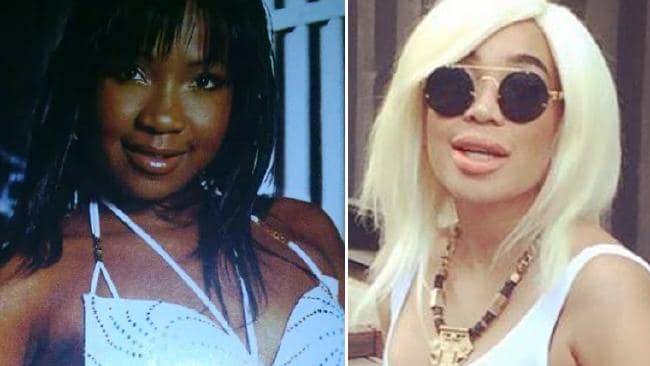
Skin lightening and bleaching is a multi-billion dollar industry that has been on the rise for the past decade-much to the alarm of medical professionals. Particularly in Asia and Africa, skin bleaching ads and commercials are common, promoting products that will guarantee paler, flawless skin-a factor that is often seen as a key to success. However, these products are almost always unregulated, and include ingredients such as mercury, hydroquinone and derivatives, topical steroids, and resorcinol, all of which can cause irreversible skin damage with constant use. These ingredients are also known to break down melanin in the process of bleaching, leaving people more prone to developing skin cancer, particularly in hotter climates.
Products like these can create serious issues, particularly when considering the fact that 1 in 3 women on the African continent use, or have used skin bleaching products, according to a study by the University of Cape Town. Skin bleaching is especially an issue in South Africa, where black market skin bleaching products proliferate, leaving people at a higher risk of damaging their skin. It doesn’t matter that South Africa is one of the few countries in Africa that implements regulations of skin bleaching products produced within the country; black market imports pop up faster than they can be confiscated.
One celebrity in South Africa has gained quite a bit of attention for her skin bleaching, which has drawn harsh criticisms for encouraging young girls to lighten their skin as well. Musician Nomasonto “Mshoza” Mnisi has gained attention for becoming several shades lighter through her skin bleaching treatments, contrasting from her darker appearance from when she first premiered as an artist. She says her new skin makes her feel beautiful and more confident, which can portray badly to darker-skinned South Africans, particularly those already insecure about their appearance.
Mnisi shrugs off criticisms of her appearance, arguing that her choice of skin bleaching is a personal choice, comparing the procedures, which cost around 5,000 rand ($590 USD) each to getting a nose job or breast implants. Unlike much of the rest of the populace both in South Africa and the rest of the continent, the 30-year-old musician uses high-end skin bleaching products, which tend to be much safer than their black market counterparts.
The dangers of using skin bleaching products, particularly non-regulated ones, is that they can cause blood cancers, liver and kidney cancers, and a severe skin condition known as ochronosis, a form of hyper-pigmentation in which the skin turns a dark purple shade, according to a researcher at the University of Cape Town. Few people know of these dangers, however, and the increase in demand is troubling. The World Health Organization has reported that 77% of Nigerian women have used skin bleaching products, the highest of any African country, followed by Togo at 59%, South Africa at 35%, and Mali at 25%. Men are also starting to use skin whitening creams, which is only adding to the increasing demand for the products.
Although it is difficult to pinpoint one sole reason for why people bleach their skin, psychologists say that low self-esteem, and some degree of self-hatred, are common among reasons. Having lighter skin is more desirable throughout the African continent, a result of over 100 years of colonial rule, and with continued discrimination against those with dark skin in terms of education, pop culture, society, and jobs, people desire to lighten their skin and make themselves more “desirable”. The perceptions against darker skin are deeply entrenched into African society and pop culture, which keeps the demand for skin bleaching products alive.

 Pop N' Crunch