How Science Fiction Works Better in TV

I began watching Westworld recently to celebrate turning in my essay, and quickly got invested in it. The world, character arcs, and dynamism of the hosts intrigues me, especially as more of how the whole thing works slowly gets more developed and explained. Seeing how the show introduced its dynamics got me thinking about other sci-fi TV shows, and how they compare to movies of the same genre. The more I thought about it, the more I thought that sci-fi as a genre does much better in the realm of TV than film.

Why is that? Well, sci-fi often involves complex world/story-building when done right, and needs to be set out in a way that doesn’t seem rushed or boring. In film, there is only a two-two and a half hour span to introduce and develop the story and the world. Often times, that means there are aspects that are underdeveloped, rushed, or simply never explained. Which, when portrayed in a particular, more natural way, can work out.

Think of Mad Max: Fury Road. There wasn’t much actual explanation of the post-apocalyptic world, but there was visual representation, paired with just the right amount of explanation where the audience could understand how things worked. Of course, there were aspects left out; but the most important aspects are understood.

Now, the case of Mad Max is a case of sci-fi in films done well. More often than not, however, it takes a film multiple movies in order to explain itself and the world, sometimes dragging out stories that aren’t interesting enough or good past film 1 or 2. Or, in the case where there is only one film, the world is not explained enough, or simply isn’t interesting. Other times the story line is so bad and rushed that the world suffers as a result, too. In any sense, something is missing.

In the case of TV, however, there is a lot more to work with. Worlds can be properly flushed out and can work as an element of intrigue for the audience as it slowly unravels (in good shows, of course). Shows usually have a minimum of eight episodes to work out their world and dynamics, providing much more time and space to develop everything. The added fact that it usually comes out one episode a week even adds more to the suspense, maintaining greater interest than if it came out once every 2+ years. Sci-fi is a large and infinitely creative genre, and needs plenty of space to exist as a valid genre.

Sci-fi has had a long history in both film and movies, but is notably more prolific in TV, and much more recognizable. In the last decade particularly, sci-fi has been on the rise, after a period of falling behind fantasy. Sci-fi in TV shows also has the luxury of existing for longer, as average great shows can have as many as 9 or 10 seasons without appearing old or run-out, a heavy contrast from film. Shows can take on many more story arcs, as well, adding greater levels of complexity that otherwise couldn’t or wouldn’t exist.

Sci-fi can exist in both film and television, and has phenomenal pieces in both sets of media (Star Wars, Star Trek, Stranger Things), paired alongside bad pieces. However, I tend to notice that TV overall has better sci-fi series than film, particularly in recent years, most likely as a result as the care and space provided through TV. TV has provided sci-fi a grander space, and has lent it greater popularity than film, causing the genre to have an overall better quality.
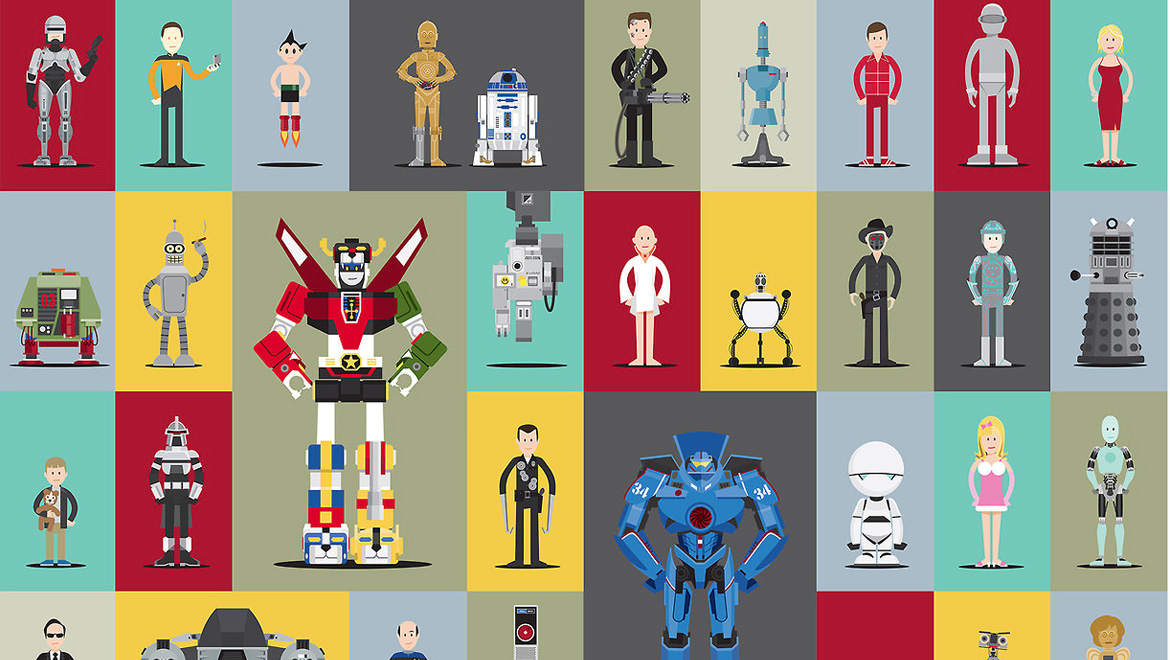
The Saturation Complex of Geek Culture

I had mentioned in a post earlier that there is a prevailing idea that misconstrues how geek culture came to be. I can’t really say where this came about, although I strongly suspect that films and TV shows of the 1970s and 1980s paired with gendered conceptions surrounding geek culture are to blame. Whatever the cause, it has fueled this conception, leading to a sort of alienation complex as the geek community shifts and changes.

As a result, there is this saturated version of history, which relies on the idea that women and minorities have not been a part of geek culture until very recently (as in, within the last decade). As a result, there has developed a constant push against women and minorities joining in on geek culture, with particular “tests” placed against women in order to test if they’re “qualified” to partake in the geek community. These blockades grow increasingly pointless as geek culture continues to gain popularity, and yet for some reason persists. Perhaps I can explain why.

You see, it all starts at the source of geek culture: Science Fiction (Sci-Fi). In the saturated version of geek history, the first Sci-Fi author was Jules Vernes, best known for his book Twenty Thousand Leagues Under the Sea. As a result, this causes men who believe this start to think that women and other minorities have no real right to enter and write about Sci-Fi.

However, if you make one quick Google search, you’ll find that this version is incorrect. While Jules Verne was one of the earlier Sci-Fi writers, the real first Sci-Fi author was Mary Shelley, who published Frankenstein in 1818, a whopping fifty years before Jules Verne. This makes the Sci-Fi genre not a “boys only” club, but a club founded by women.

Shelley wasn’t the last female Sci-Fi author, either. Well-known ones include Octavia E. Butler, Margaret Atwood, Ursula K. Le Guin, and Suzanne Collins. Sci-Fi has never been a “boys only” club, although it is often pushed to appear that way.

Comics, by contrast, didn’t really diversify until recently. In its early days, the comic industry was very much “boys only”, mostly outright refusing to hire women and other minorities. This isn’t unusual, however; the entertainment industry as a whole was that way.  That isn’t to say that women and minorities weren’t in those realms, but it was very difficult to break in, particularly from the 1920’s-1970’s. This realm makes it a whole lot easier to promote the saturated history. Since women and other minorities were barred, it was easy to say that they didn’t belong and exist in the space. Despite the fact that the majority of comic readers in the present era greatly outweighs the “traditional” readership (white men), there is still this stigma that pushes women and minorities away.

The same goes for the video game industry. Women and minorities were mostly barred in the early days (as they were discouraged and stigmatized from getting STEM degrees in college), meaning that they couldn’t break in until more recently. This has created a frictional environment that extends beyond game development and into game playing, leading to online harassment and common claims of not being a “real gamer” to anyone that doesn’t fit the geek stereotype. To be honest, the “fake gamer” argument is ridiculous: if you play games, you’re a gamer. You don’t have to be best of the best, but if you play video games as a hobby, then you qualify.

The reason there is such a push back against diversity entering geek culture mostly stems from a victim complex among the “traditional” geeks. Despite the fact that geek culture has been gaining continuous popularity over the last two-three decades (exploding after the premiers of Walking Dead and Game of Thrones), the news for some reason has not hit the geek community. Or, rather, it has not processed.

The “traditional” geeks seem to be in denial about just how popular geek culture is, moaning and groaning how they are such victims and such a minority, while at the same time fighting against anyone that doesn’t fit their own characteristics and pushing them away. They like to act like they’re still the kids that get severely bullied, although just about any kid with a computer nowadays has access to video games and anime. It’s a bizarre complex that sticks out like a sore thumb.

A Timeline of Alien Films

Aliens, or extra-terrestrials, have had a surprisingly long and interesting history in terms of film. Beginning as early as 1902’s A Trip to the Moon, aliens have made appearances in a variety of genres from horror/thriller to comedy (and even romance), ranging anywhere from mysterious blobs to almost human. I thought I would compile a few of the ones that have made a major impact on alien cinema.

Let’s start with A Trip to the Moon, or La Voyage Dans La Lune, released in 1902 by George Melies. While you may not have heard of it (as with most films from the silent era), it is important for being the first film centered around contact with aliens. Influenced by Jules Verne’s From the Earth to the Moon and Around the Moon, the French film is about a group of astronomers who go to the moon in a cannon-launched capsule. As they explore the moon, they are chased by a strange looking lunar people, or Selenites, one of which they eventually capture and bring back to Earth. Here the aliens look distinctly non-human, setting up the trend for other interpretations of aliens in film.

In the next film of importance, the Blob, released in 1958 by Irvin Yeaworth (note: Superman made his first film appearance in a 1948 serial, but I am skipping over him, as the film centers around his comic origins, rather than its own idea), the non-humanoid alien appearance continues, with the main creature being a mere blob. The Blob arrives in Pennsylvania from a meteorite crash, where it consumes and old man who pokes the meteorite open. The Blob continues to grow and consume everything in its path, only stopped by extreme cold. This film, like the ones that came before it, center around aliens coming to Earth, or are mostly centered around Earth.

Star Wars, however, breaks that trend, taking place in a “galaxy far, far away”. Episode IV, released in 1977 by George Lucas, centers around a young Luke Skywalker, who lives in Tatooine with his aunt and uncle during an intergalactic civil war. After his uncle buys C3PO and R2D2, he discovers a message from the captured Princess Leia, and embarks on a journey to find Obi Wan Kenobi. From there he goes on a journey with the renowned smuggler Han Solo to find and rescue Princess Leia. In this film, and in the trilogy, the aliens come anywhere from entirely human (most of the main cast) to giant monsters, meant to represent a whole galaxy of different species. Star Wars is incredibly well-known, and seems to remain so, with new films from the series coming out every year.

Star Wars was an interesting turn from the norm of alien movies, being action-filled and comical, rather than horror-filled and intense. But the next big film on our list makes a serious return to the horror-thriller genre, coming in the form of Alien in 1979. Directed by Ridley Scott, the film follows the crew of the ship Nostromo who receive a distress signal from the planet LV-426, to which they decide to investigate. On the planet they find a derelict ship, which contains large egg-like objects. When one of the crew members touches on, a creature comes out and attaches itself to his face. It eventually falls off on its own, and after which they return to their own ship. The man who was attacked chokes and dies, however, and a small alien bursts from his chest, disappearing into the ship. From then the crew must try and kill the creature, which quickly grows, and begins to kill and eat the crew. This film was the first in its eventual series, developing into an entire series based around Alien vs. Predator.

The next film, like Star Wars, takes another turn away from the horror-thriller genre, being the heartwarming E.T the Extra-Terrestrial. Released in 1982 by Steven Spielberg, this cult classic follows the tale of E.T, who gets left behind after his group of alien botanists flee from government agents. It hides in a suburban tool shed, where he is discovered and befriended by ten-year old Elliot. They form a connection with one another, working together to try and send a message to E.T’s home. They work against government agents who are trying to capture and study E.T. to try and get his people to come back for him. It’s a heartwarming tale that has retained its popularity throughout the decades, contrasting typical alien films in that the alien this time is a cute wrinkly creature.

While there are plenty more alien films of importance to talk about, I’m going to have to cut it short and focus on a more “recent” one (when I mean recent, I mean late 2000’s). This film is Avatar. Why did I decide to choose this film over anything else? Well, because it not only was a change in how aliens are portrayed, but also how film is made entirely. The film, which was made almost entirely through CGI (a feat almost unheard of), takes place through the perspective of Jake Sully, a paraplegic former marine who partakes on a mission to find an energy source for Earth, after all natural resources had been depleted. They find a valuable source called unobtanium on the planet Pandora, a heavily forested planet inhabited by the 10-foot tall Na’vi. He joins the Avatar program to try and gain access to the unobtanium, but eventually falls in love with the princess Neytiri, and begins to change tune. He works to protect the land of the Na’vi against the humans who want to destroy their environment for resources, becoming one of the Na’vi in the process. I want to point out this film because of the mark it left in film (despite the joke that no one can remember a single line from the film). It was remarkable for its insanely high-production and beautiful scenery and design, and with the amount of CGI that it used, was considered a feat.