I’m going to put this out here before I go into anything else: I love studying ancient Rome. Ancient Greece is interesting, too, but there is just something about Rome’s quirkiness that is a whole other realm of entertaining. Like no Greek has made their horse a senator, and no Greek ruler has ever made all the aristocracy sit during his performances, which went for hours on end. Even if you went into labor during one, you either had to give birth there or wait until the concert was done (good old emperor Nero, right?). The absurdity of ancient Rome is just endlessly entertaining.
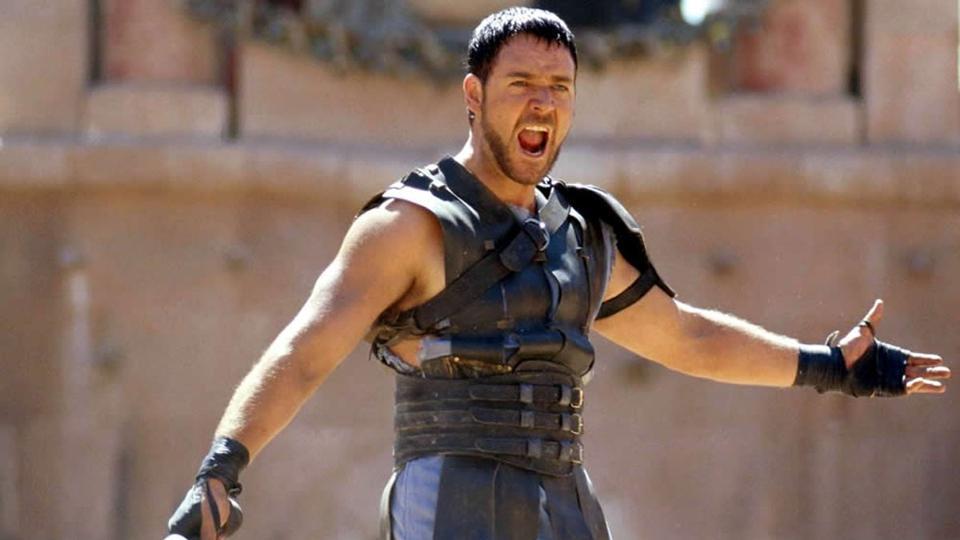
This interest, however (plus studying ancient Greek society and politics for classes), has made me a stickler for detail and historical accuracy. Which is something that doesn’t exist in Hollywood. Or really most forms of media. Ever. Ancient Rome and Greece (particularly Sparta) seem to get constantly portrayed as nations completely consumed by war (which isn’t too far off for Rome, but war never actually happened on the peninsula), with soldiers and generals being the stars. How both are portrayed ignores both the complexity of either society, but also greatly sets up the idea that both were only the super-machismo men that we imagine today. Which is expected, as every culture gets simplified to focus on the more “interesting” aspect of warfare. But I thought I would expand other interesting parts about these cultures that are either sorely left out of media, or not elaborated enough.
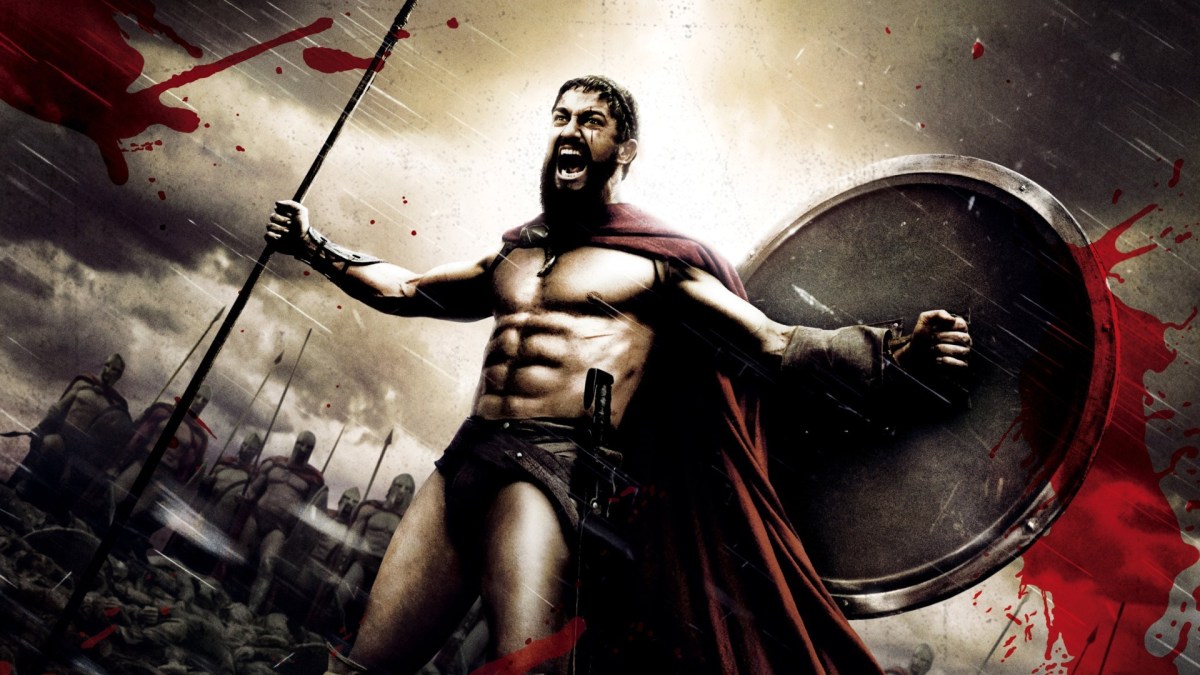
When it comes to Sparta, what you might imagine is the movie 300, or any other films centered around the culture. Sparta is often portrayed as the epitome of super-machismo, with sexy men with ripped bodies in scant uniforms, while the women are often left at home in the traditional Greek tunic. This basis isn’t unfounded. Sparta was known as the “warrior kingdom”, with children training from a young age to be strong warriors and advanced athletes. Yes, I said children. Women were also trained to be fit (although to a lesser extent than guys), and had some of the most rights of all Greek women. Because men had to train to become a “real” Spartan at 30, and people were expected to marry around 18 (late relative to Greece), women had to have quite a bit of freedom, and were expected to maintain athleticism and a healthy diet to raise strong children. They could perform in sporting events, and had the rights to property, making Sparta unlike the rest of ancient Greece.
This difference in culture often attracted criticism by other ancient Greeks, especially by Athenians, who saw Spartan men as “controlled by women”, despite the intense training in athleticism and warfare that Spartan men had to go through. Sparta is often pictured also as an independent piece that focused itself around Persia. This also ignores the massive around of political influence that Sparta had in Greece, with alliances and “sibling-hood” that made up the area called Peloponnese, which would eventually bring the downfall of Athens (no kidding, the Spartans trash the Athenians in the Peloponnesian War). While Persia was an issue, Athens was a bigger issue (but we can’t show them being destroying the birthplace of democracy, can we?).
As for Rome, it often gets shoehorned as purely militaristic, or centered around the time of the rise of Caesar and Cleopatra (one of history’s most famous romances). And for some reason, Rome seems to always be directly under attack, at periods of time when direct invasion of the city just didn’t happen. In fact, most of the peninsula was never invaded until the collapse of Western Rome, brought into the Roman empire through alliances (except for Sicily). The main problems the city of Rome itself faced wasn’t invasion, but fires. Lots of fires.
Plus, after a certain point, Rome stopped trying to spread its empire, and focused on trying to maintain it. At its height, Rome was the largest empire in human history before Britain in the 1800s, extending from the base of Scotland all the way out to Western India. Which also adds another point. The Roman Empire was insanely diverse, with people of many races having the potential to be considered aristocracy (Rome had to maintain hierarchy in the further regions, in order to keep civilizations under control). Others could even rise the rank through military to be considered Roman wealthy, and were allowed to move throughout the empire. It’s important to mention, however, that while there while there was great social mobility, that Rome also brutally suppressed the groups it controlled, wanting to enforce the “Roman way” (another fact left out). There are even artworks in Rome dedicated to various successful suppression campaigns. But who cares about showing how an empire functions? People want to see the expansion and victory.
Also, when the media portrays Rome, it portrays Julius Caesar and Octavian Augustus, the dictator and first emperor, respectively. Their periods were interesting times, however, as it was the change of Rome from a Republic to and Empire, paired alongside the fall of Egypt with the tragedy Cleopatra. However, this ignores some of the biggest military conquests, which happened under emperors like Hadrian, Marcus Aurelius, and others, with the latter being considered one of the “big five” of the best emperors of the empire. The only issue that comes with portraying it is, there’s no easy drama to create with great emperors. There was plenty of drama in Rome’s shift to play off of; Marcus Aurelius and Hadrian didn’t really have that level of drama.
Lastly, the media tends to entirely misconstrue Cleopatra. While she was Egyptian, the story we have of her was documented by the Romans, who changed her image from the powerful and intelligent pharaoh responsible for the prospering of Egypt to a simple seductress that corrupted both Julius Caesar and Mark Anthony. Her love story with them is very commonly known through Western pop culture, with the tragic end of her committing suicide alongside Mark Anthony’s corpse rather than following Octavian Augustus to Rome. But the portrayal often ignores all her achievements, militarily and culturally. Cleopatra is responsible for the revitalization of Egyptian being used in the court, which had fallen out of practice during the Ptolemy period (established under Alexander the Great). She also caused the Egyptian economy to prosper, and revitalize the Egyptian military. She had a major amount of political influence in the Mediterranean, which the Romans vied for, making her a major threat. She spent her reign working towards protecting her empire, causing her to turn to Julius Caesar in the first place, and utilize his growing power to keep Egypt separate. And after his murder, she turned to Mark Anthony.
Her motives are seriously downplayed, as a result of her historical rewrite by the Romans, who didn’t like the fact that a woman had sole power over the empire. No, seriously, Rome was notorious for banning women from even entering the public sphere of influence, especially after getting married. Unlike Sparta, women were unable to own property, divorce their husbands, or even practice sports. The idea of one having such a massive amount of political power was unheard of to them. Cleopatra needed to be knocked down a few pegs in their minds.

 Pop N' Crunch