Awful Teen Romance: How to they Maintain Popularity?

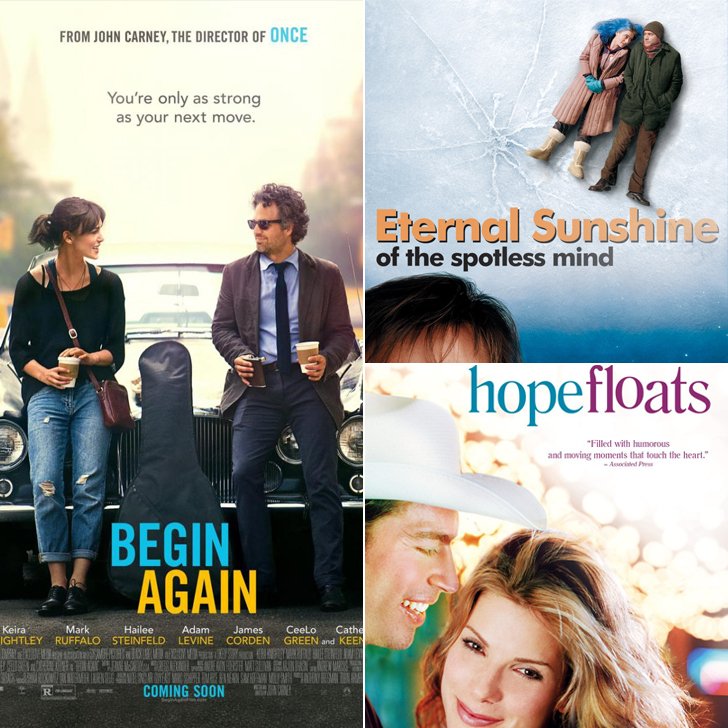
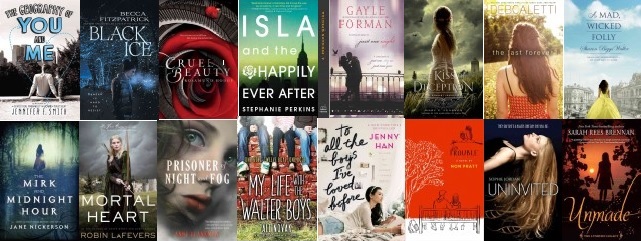
We’ve all at least heard of the genre, whether through the Twilight Saga or some other poorly written teen romance novel/movie. It is the soft-core version of the adult romance novels, whose only big difference is the loads of descriptive sex scenes. The genre is generally known as being poorly written and grossly centered around a most certainly unhealthy romance, and yet it still maintains a decent-sized reader base. How does this happen? Most importantly, who is still reading it, and why? Well, There’s a few different answers to that question.

While the popularity of the teen romance genre has certainly dropped sharply from it’s heyday in the late 2000’s, it still persists in young adult literature. In fact, it not only exists as it’s own genre, it also exists as a sub-genre, and makes an appearance in just about every piece of young adult literature.

You see, while there are the obvious books where the main plot is very much about romance (like the Iron Fae, Fallen, and Eleanor and Park), I’d have to say around 97-99% of all young adult literature has romance as a major story line, even if it isn’t the main one. Which, isn’t too unusual: plenty of adult books have some form of romance in them. The only issue here is that it’s always the same romance, and it is just like the ones found in purely romance novels. I’ve mentioned in a post before talking about the typical “unusual” female protagonist and her male counterpart. That’s basically the story here. It’s always a modest but stubborn, brash, inexperienced (romantically, sexually) girl that is supposed to be a “feminist symbol”, paired with the sarcastic, arrogant, and experienced guy who represents all the dangers of an abuser. But it’s okay, because the guy is secretly a sweetheart who hides behind a shell because of his “broken” past. Literally, this is almost always how it is. When it’s not, it’s shockingly refreshing.

The only issue is, young girls fall for it every time. I fell for it when I was a young teen, also. Why? Well, everyone wants that romance that’s destined to be. At least, when you’re young. As you get older relationship goals get much more realistic (sometimes). But as a young teen with no experience in dating, I didn’t really know what I wanted. I wanted to be that protagonist who kicked butt and got the guy of her dreams. Which, makes sense. When a romance that would in real life be abusive gets romanticized in the novels, everything about the guy seems angelic. It seems attractive, and it’s fictional, so you can get insanely invested without being classified as a stalker. That’s how they get you.

It’s not just young girls, either. I have an aunt that is way too invested in trashy teen romance novels, and she’s certainly not alone. There are plenty of middle-aged mothers who read these kinds of books. Why? Everyone needs an outlet. Whether it’s watching TV, running, drawing, or reading, everyone has to find something. But what about teen romance novels attracts so many middle-aged mothers? Well, I can’t say for sure. Mostly because there’s several theories, that can’t truly be proven by asking them. One is dissatisfaction in marriage.

Dissatisfaction is probably the biggest theory, because usually it’s the most accurate. Women who find themselves in positions where they’re not happy in their relationship, but not too unhappy where they’ll get a divorce, will turn instead to the cheesy teen romance, wanting to imagine themselves young again, being swept off their feet by a dreamy young man. It seems the most reasonable, and least far-fetched, especially when paired with the fact that in the US, there is a 40-50% divorce rate among first-time marriages.

Another theory is they use it as a form of escape. Not just from an unhappy marriage, but from being a middle-aged adult all together. Why not? Use the main protagonist to see yourself as a teen girl in her action-fighting prime, no kids, no job, no taxes to worry about. You want to escape to a fantasy world, especially one where the guy promises to do all the “hard work” for you. What a bargain, right?

Either way, the trashy teen romance genre maintains a solid base from both middle-aged mothers and young girls, and will continue to, as long as it pervades the young adult genre. Which, doesn’t have to be a bad thing, so long as the toxic depictions of the main protagonists gets wiped out. I’m tired of seeing the same male and female protagonist again and again.
The Art of Time Loop: How a Cliche Genre can be Done Right

We’ve all heard of at least one movie were a guy either is stuck in a time loop of the same day, or decides to mess with time. It’s usually either cause he has to get a certain day perfect, or he wants to meddle with time and then realize he has to fix the mess he’s created. The cliche has appeared at least once every two years, so it’s difficult to say that it isn’t a cliche.

But unlike many other cliches, this one can actually be done right. How is that so? Well, there are unique and creative ways that the main guy can be stuck in the time loop. He usually does it to try and get the girl he’s always wanted, but the re-do doesn’t always have to be about that.

The problem is, Hollywood has never tried to do the re-do as anything beyond romance, which adds to the cliche. You can go so many different routes when it comes to the time loop, even going so far as to main the main character do the re-do to affect someone else’s life, rather than just their own.

The main issue with the re-do cliche is that they almost always involve the guy trying to get the girl he thought he wanted, before coming to the realization that she wasn’t the one. It also always a certain day perfect, either their wedding day or some other big event that is heavily tied to their romantic life. It’s never anything else. Making it about something else would actually make the cliche so clean and refreshing. It’s so easy, and yet the Hollywood industry doesn’t want to take that step. Romance is an easy, audience-drawing theme to follow-why do anything else?

The re-do trope has gotten so similar to itself that it’s not even worth watching anymore. Unless they decide to finally branch out, you can just about guess the entire plot of the movie, with some variance give-or-take. It makes it so overtly bland that it’s almost intolerable.

There have been a few horror movies, however, that have taken the time loop in unique, twisted ways. Movies such as Happy Death Day and Before I Fall have been taking the time loop genre out of its original comedy genre, and planting it firmly into horror. It’s interesting to see, and definitely adds to the suspense of a plot. We’ll have to see where it takes us.

How to Win Back a Girl’s Heart: “Change”

In almost every romance, there is a portion where the guy must “win” the girl back after betraying her in some way- either acting like his normal playboy self or just doing something stupid. And just about every time, he does get her back, usually by apologizing or doing something to show that he’s “changed”. But has he really changed? In some instances, the previously reckless male character does actually show a change in attitude or behavior that would warrant a yes. But most often, it’s a big fat no.

In order to examine how the guy hasn’t changed, we must first understand how the typical main guy in a romantic movie starts out. He is most often the reckless playboy, who parties and sleeps around with whoever he wants. He goes to parties, maintains a decent job, and usually an apartment to himself. He doesn’t really care about anyone but himself and his best friend, who always tries to get him to “find a girl”-to which the man always shrugs the suggestion off with a playful scoff.

But then he meets the girl of his dreams. She’s a much more lax person, someone who doesn’t really like to party, or sleep around. She’d rather sit at home and watch a movie marathon, or read a book. She isn’t affected by the guy’s flirtation, which immediately peaks the guy’s attention. He has to find a way to impress her.

After the first time he meets her, they start meeting by chance. After a few times, they finally decide to hang out with each other on purpose. Maybe even date. The guy seems to be settling down. After a few months, he seemed to have changed.

But then he does something stupid. Either indirectly, or just a stupid action he decides to do. Girl finds out, and ditches him, heartbroken. Boy does something to make it back up to her, and they end up getting back together at the end.

Now, this isn’t always how the story goes. In The Big Sick, Kumail wasn’t really a partyer, but a nerdy comedian whose parents were trying to marry him off to a Pakistani girl. This is the point of conflict for his relationship, and he remedies it by sticking up for himself and spilling the truth to his parents. In this situation, he does change. However, in most other situations, the guy doesn’t really have a meaningful change. While he does settle and stop sleeping around, that’s not really giving something up. That’s just getting into a monogamous relationship. Usually the partying also dies down as a result, but that’s usually from finding else to pass the time and satisfy the need to do something. The behavioral changes are not because of an actual effort placed in-just the indirect results of deciding to date someone. There is nothing of real value to it.

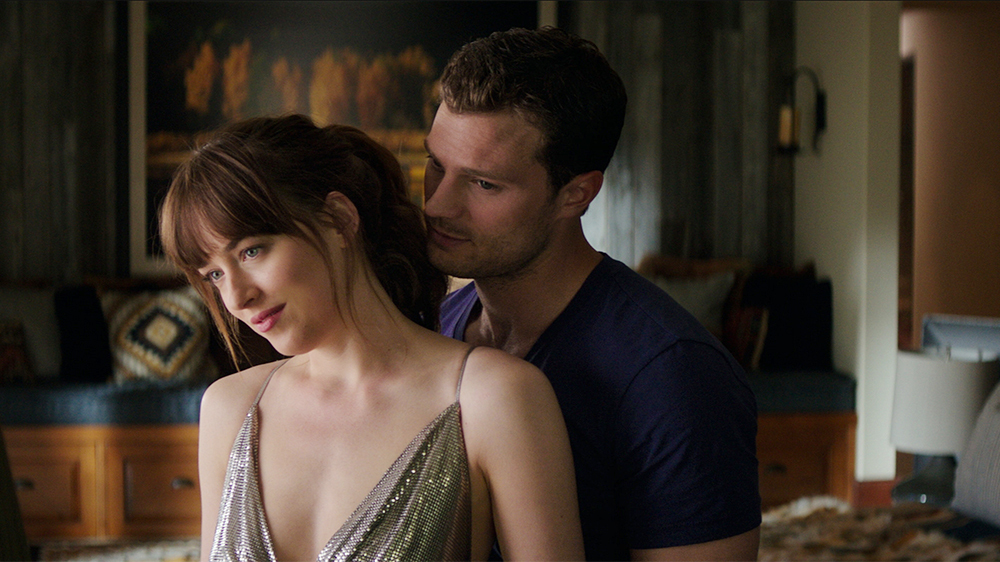
The biggest example of this is the 50 Shades of Grey trilogy. In this case, Christian Grey starts out as a young billionaire who liked to exercise control in everything, rather than the reckless party guy. Anastasia breaks up with him, upset by his violent urges when it comes to BDSM and domination in her life, and he wins her back by promising to change. I’ve only seen the first two, so I will focus on his portrayal in the second film.

To summarize my argument before it starts, let’s just say this; he doesn’t change. His possessive behavior merely shifts, to be controlling in certain ways, but in aspects that almost don’t seem noticeable, who can claim that she has more “freedom”. He buys the publishing company she works for while arguing it’s a business investment, he happens to be in the right places at the right time, and he has the money and power to get people at her work fired. He is a prime example of the faux change that people fall for.

The “Pure Virgin” Trope

For a time not so long ago, there was the common but somehow romantic concept of the “pure” girl who’s never had sex falls in love with the very experienced “bad” boy. Especially in the Young Adult urban fantasy (fantasy meshing with the real world), there was the common trope of the main female protagonist being a tiny but stubborn teenager who butts head with the tall and handsome new kid, eventually falling madly and viciously in love with him (her first love, by the way). Often times as well, girls the same age who have had sex are often placed in the light as pure sluts, with their character being left very one-dimensional. At the same time, the books are promoted as “empowering” to young girls, girls who can be as young as 10 and very impressionable.

Why does this matter? Well, trying to promote this idea (plus promoting romance with male protagonists of questionable choice), this can lead many to be unaware of the toxicity of relationships like that. Let’s break it down a little bit, shall we?

Well first, the fact that the main girl is practically the only one around that is a virgin promotes the idea that she is on a level above every one else, or “pure”. Now this isn’t to say that being a virgin at 16 or 17 is a bad thing- the average age that people lose their virginity at is 17- but having her be the only one that is a virgin is saying something. Plus, these girls usually haven’t even had their first kiss yet, like how much more obvious can you get?

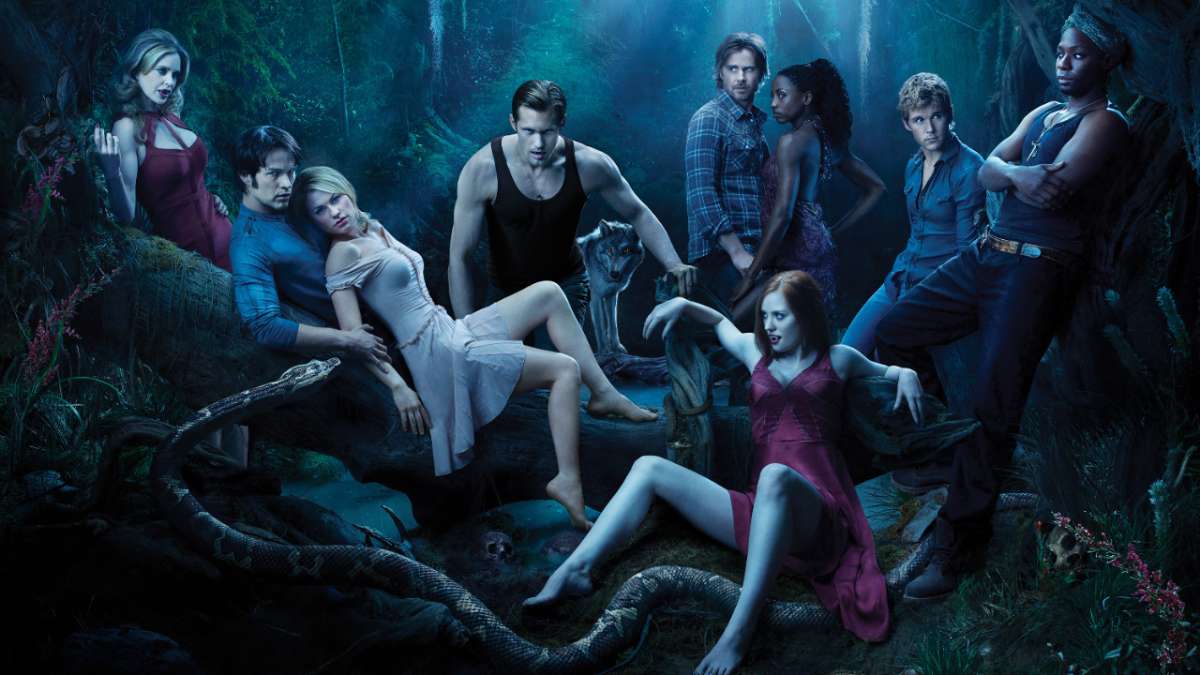
The girl also usually doesn’t have very many friends, being the sort of “loser” in school. She usually has around one or two friends (maybe 3), and there is always a guy that she is closest with, mostly to play the love triangle game. Unless, there is the rare chance that he is gay (True Blood), and then he is just the sassy friend trying to encourage her to get laid. This reinforces another idea-it’s not cool to be “popular”. If you’re “popular”, then you’re just like all the other girls who sleep around and party. You’re not “pure”.

The “pure” aspect contrasts greatly from the main male protagonist, the new bad boy who is always insanely attractive. He usually sleeps around, is sarcastic as all hell, and doesn’t like to follow the rules. He is the kind of guy that’s supposed to be unachievable, but always turns his attention to the nerdy not conventionally pretty female protagonist. He sweeps her off her feet, and rescues her because he knows so much more about the magical world than she does. He becomes the useful one, while she sheepishly has to follow him around for protection, and eventual romance. He takes an interest in her mostly because of her purity (a concept that appears in many different books, TV, and movies), making her all the more desirable. She is the target of his romantic advances because she is “not like other girls”.

Plus, he’s always got a broken, tortured soul for the female protagonist to save. He can have all the problems he desires, but she can’t. She’s supposed to listen to all his problems, without having any actual problems of her own to share. This can be very dangerous for an actual relationship. A girl is not supposed to only be someone’s “savior”, but should also be able to reach out to her partner. If she feels like she can’t, then that’s not a very good relationship.

To make matters worse, the idea of the man acting aggressively protective, and sometimes even controlling, gets romanticized. Any man she hangs out with is a threat (and it’s usually portrayed that way), and she must be “protected” from them. She can’t be friends with male friends either, because it turns out they just want to get in her pants, even though bad boy is the only one for her. And bad boy gets really upset when she talks to other men. Controlling behavior is made to seem romantic here, when it’s really not, which could influence young girls into believing that it is. Her heart and body should only be meant for him, and never any one else ever again, which is also not a healthy thing to romanticize. It’s dangerous and can lead to girls getting trapped in toxic relationships.

Love After Divorce: The Appeal of the “Reborn Woman”

With the recent release of Book Club, I began wondering about the whole “Love After Divorce” genre that seemed to be appearing more often in mass entertainment films. The Book Club, which centers around women in their seventies trying to find new romance after divorce (two divorce, one widow), falls on the older end of the spectrum in terms of age for the genre, but still holds many of the tropes that make it a good representation. Finding a man in his fifties whose rich and attractive, having a happy ending, plenty of women’s bonding moments, struggling to get back into the dating realm, and many others. And despite its worse-for-wear reviews, it was mildly successful, making $53 million in the domestic box office, while the movie had been made with a budget of $10 million.

The success got me thinking-what makes these films so appealing? Upon looking into it, I found blog upon blog of women talking about their favorite “Love After Divorce” films, all with tales about how many of the films they didn’t like until after they got divorced. Which makes sense, as those who face the troubles are divorce are more likely to relate to a light-hearted film about finding love in the time after, but is there that much of a base for it?

Well, according to the American Psychological Association, anywhere between 40 to 50% of all marriages end in divorce after the first marriage in the United States-with the divorce rate for subsequent marriages being even higher than that. With that in mind, the base for the “Love After Divorce” genre becomes that much bigger- especially when divorce happens to women who are middle-aged, and haven’t been in the dating sphere for decades (if at all). The light-heartedness of the films also adds to cheering women up after a rough divorce-as many blog testimonials will tell. And I can’t entirely say that that isn’t possible.

From the “Love After Divorce” films I’ve seen, it’s hard to say that the films are anything beyond cliche chick-flick money-grabs. But then again, I am not divorced, and I am certainly not middle aged. I am not a part of the demographic that is being targeted by these movies, and I can’t relate to someone going through a divorce. Divorce is a rough experience, not just for the spouses but also for any other family member involved. And if it had been a long marriage, it can be rough on self-image and self-esteem. A movie about finding an attractive rich man might just be what someone needs to feel more confident. I can’t knock something like that.

While the films tend to follow the same tropes (which had led to the doom of rom coms), they seem to maintain an appeal and audience, which is something to note.

A Hollywood History of Vampires

With the revival of vampire literature after the release of Twilight back in 2006, vampires, having faded in popularity, suddenly skyrocketed, with shows such as True Blood, Vampire Diaries, and films such as Hotel Transylvania (and of course, the Twilight Saga) pumping out at every turn, amassing massive popularity. But how did the vampire evolve? From the “Golden Age” of Hollywood to now, the vampire has changed quite a bit. But how?

To start, we’ll look at the most famous vampire of all, Dracula (if you thought Edward Cullen, shame on you). The character, having originated in Bram Stoker’s Dracula in 1897, was originally portrayed as a Count from the fictional Eastern European country known as Transylvania. He attempts to move to England and “vampify” the nation, leaving a small team of men and a woman to stop him.

Dracula found his first film appearance as Count Orlok in F.W Murnau’s Nosferatu, which was released in 1922. Although his name was not Dracula, Count Orlok was very similar to Bram Stoker’s character, with the plot closely following the story line of the novel (in fact, it was so similar, Florence Stoker, Bram Stoker’s wife, sued and demanded that every copy of Nosferatu be destroyed). Later, Count Dracula would find himself back on the screen (this time with his namesake) in Universal Studios’ release of Dracula by Tod Browning in 1931. This film, would cause Dracula to become a household name, his character becoming a permanent figure in Hollywood history. This film would gain so much popularity that it would lead to the release of the sequel Dracula’s Daughter in 1936.

In their original forms, vampires represented beings of pure evil, with no remorse over what they were, and nothing to gain sympathy from the audience. However, with the relaxation of Hollywood standards around what could be shown on the screen in the 1960’s and 1970’s, more dimensional elements began creeping into vampire films, in particular, sensuality. These elements would lead to a shift in how the vampire is portrayed, a marker of this being 1983’s “The Hunger”, by Tony Scott. In this film, John, a human lover of the vampire Miriam Blaylock, is hit with “sudden living death”, where he ages rapidly but is still alive. Sexual promiscuity is apparent throughout the film, with Miriam sleeping with both men and women, and trying to tie them to her as lovers to make them “vampire-like”. While still pertaining horror-like qualities, the films adds a new, less horrifying dimension to vampires, setting them up for the eventual “humanization” that would occur in the 1990’s and 2000’s.

Vampires from then on would be defanged-literally. Their fangs would become retractable, and in Buffy the Vampire Slayer they acted just like normal humans. By the release of Twilight in 2008, vampires had become super-sexy almost human beings. During the time period, they were considered the apex of supernatural romance, (although sparkling in the sun rather than burning to death didn’t catch on very well). And it wasn’t just TwilightTrue Blood and Vampire Diaries also boasted super-sexy male vampires, with fans fawning over them at every which way and point.

With Hollywood so drastically changing the vampire from nightmare-inducing to hot and cuddly, it does beg the question- are we stuck with them like this? I don’t think so. While vampires have lost some of their popularity on the big screen, shows like Penny Dreadful and the Strain have portrayed vampires back in their original form-truly terrifying. There is a decent turn away from the romantic protagonist vampire, with vampires once again being seen as the villains, acting sort-of-human but still definitely different. It seems, now, that audiences are getting sick of the “softening” of vampires-which, in my opinion, is probably for the best.