California Expands Film Credit, Adds Animation for the First Time

On July 2, 2025, California Governor Gavin Newsom officially approved the expansion of the state’s Film and Television Tax Credit Program, standing alongside labor representatives, entertainment leaders, and state officials. The program, first started in 2009, offers tax incentives for entertainment companies that choose to film in California. It was enacted as a way to try and counter-act the trend of productions leaving not only Los Angeles, but California as a whole, and has been successful to an extent in bringing productions.
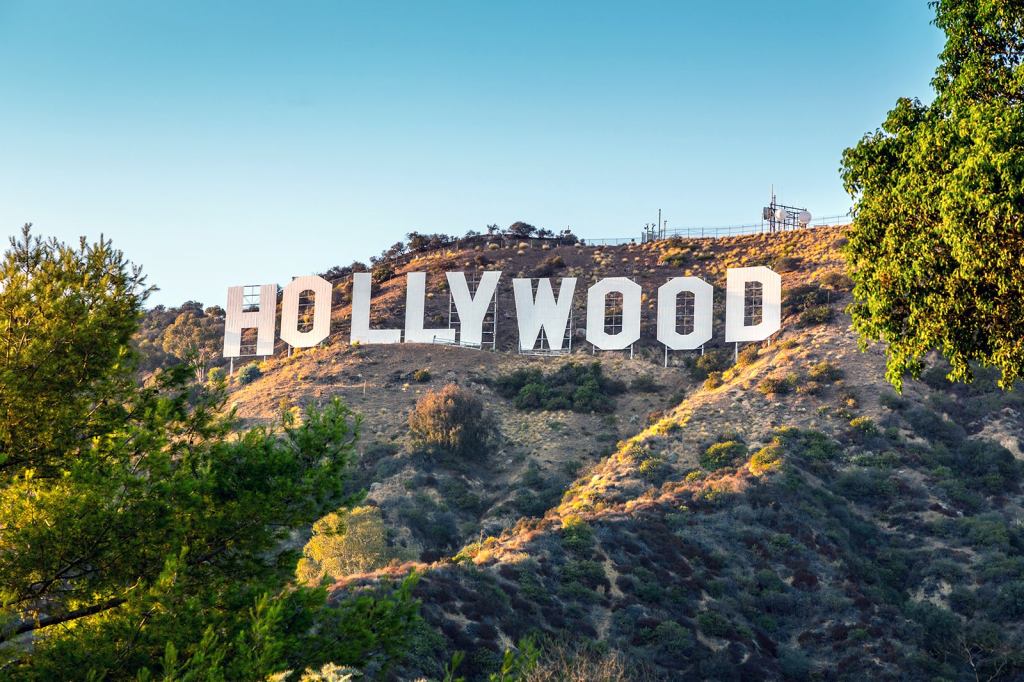
The Hollywood sign in Los Angeles

However, the credit program was far from perfect. In its most recent phase, it offered up to $330 million in a “first come, first serve” basis. Projects that were the quickest to get up and running could get their hands on the tax credit, while those who were slower missed out. This factor created an unfair playing field, with larger more established studios rushing to get their share for readily available projects while smaller studios struggled to catch up. Even worse, there were no separate categories for who could get the tax credits, meaning that animation, which is generally much slower to ramp up than live action, was basically entirely shut out.

Not only that, but as companies found themselves missing out in California, other states and other countries began to offer better and better incentives, which swooped in to sway the companies to go to them. This led to a “production drain” in California that progressively worsened, reaching its peak in the 2020-2024 period. Paired with covid and strike-induced shutdowns, and company cutbacks, and the unemployment rate for entertainment production workers skyrocketed to being one of the worst in decades.

The solution to this problem? The program needed massive changes.

And change it finally has. The process first began on October 27, 2024, when Governor Gavin Newsom suggested a massive overhaul to the Film and Television Tax Credit Program, raising the credit limit to a staggering $750 million per year, more than double the existing limit. If such a change were implemented, it would skyrocket the state’s tax program to be one of the most generous of any state, surpassing New York’s $700 million and only being beaten by Georgia’s limitless credit program.

At the time, the change seemed like a wonderful, but far-fetched dream. California’s budget was tight, and with how bad the state of entertainment was, there was great fear that it was coming too little, too late.

But in 2025, the state legislature began to work with labor unions and entertainment leaders to flesh out the expansion. In June, the legislature passed the expansion with an overwhelming majority. And as of July, the bill is now officially approved.
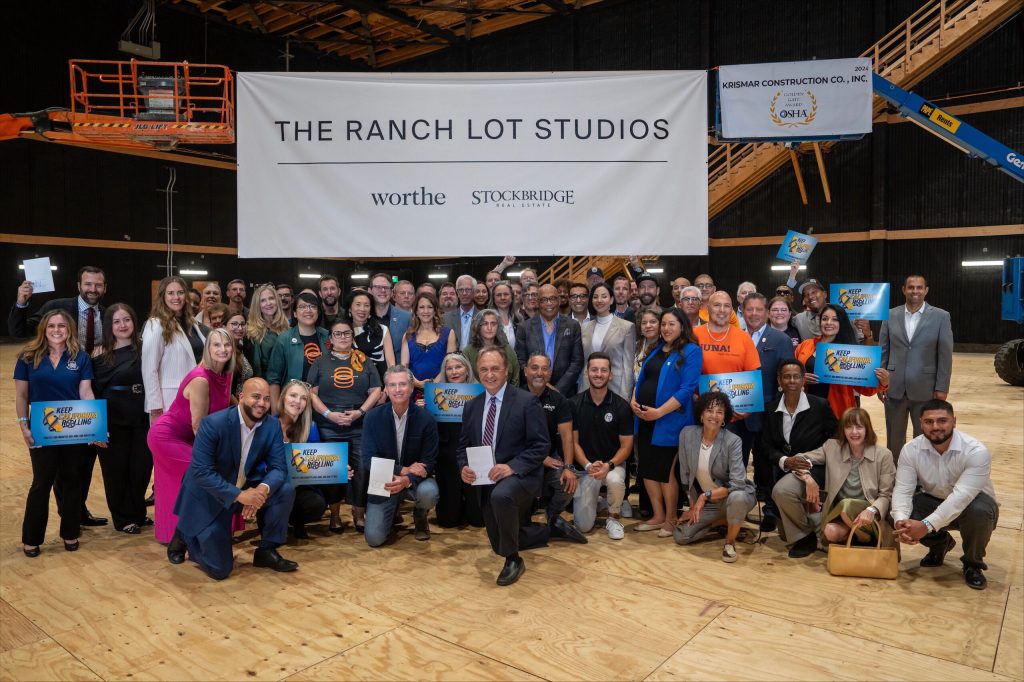
Newsom poses alongside labor representatives, entertainment leaders, and state officials after the passage of the expansion.

But a mere expansion wasn’t the only new element of the program. Alongside it came further adjustments in regards to how the new funds would be allocated, with animation given explicit allocations to prevent any more shut outs. Not only that, but the expansion will also now work to support the film-making ecosystem as a whole, including post-production, scoring, and VFX, which relies heavily on in-state labor.

These new changes are a much-needed adjustment, making the playing field more fair but also allowing for more productions to get their hands on the tax credits and prevent them from having to move out of state. With hope, the new expansion will also help encourage companies to greenlight new productions by helping with budget shortfalls, and help with reducing the unemployment rates for entertainment production.
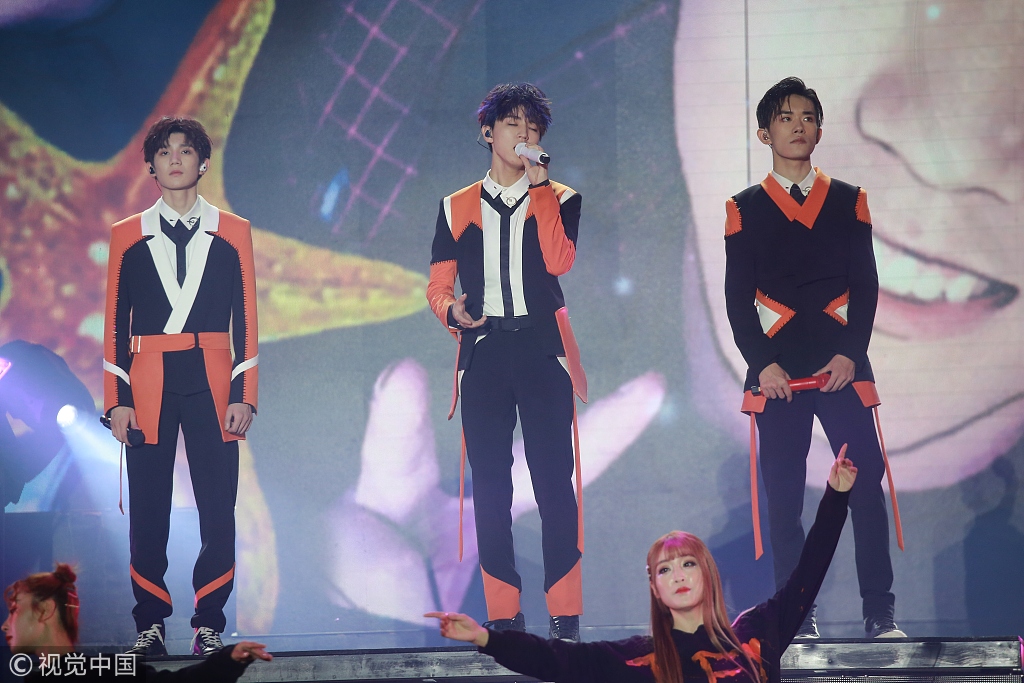
Government Crackdowns on Chinese Pop

Chinese-Pop, despite its popularity within China, Taiwan, and Hong Kong, is rarely though of in the rest of the world. The genre lies continually in the shadows of the longstanding J-Pop, and the now booming K-Pop industries, although it has in recent years drawn more attention.

C-Pop has drawn an increasing amount of attention in recent years as it has come under the eye of government scrutiny for its “moral divergence”. The government, under Xi Jinping’s regime, has pushed for a return to more traditional Confucian morals, which argues a loyalty to hierarchy, and is used as a rejection of Western influence, and has recently turned its attention towards “cleansing” Chinese popular culture.

Back in January of 2018, the Chinese media regulator came out with an edict that said Chinese TV shows “should not feature actors with tattoos (or depict) hip hop culture, sub-culture and immoral culture,” in essence bringing the growing heyday of Chinese hip hop to a grinding halt. Hip Hop, which originated in the urban black population in the US, is a prime target for the “moral straightening” program that the Chinese government is aiming to implement, as it exists as the epitome of Western influence

Another, more recent possible act by the government, was the blurring of men’s pierced ears in January 2019. Both actors and C-Pop singers alike are now appearing on TV with blurred earlobes, which almost immediately drew criticisms from fans. The fans argued that the blurring of earrings, which was never explicitly implemented by the government (although most likely heavily suggested) reinforced the traditional, outdated standards of beauty for men and women.

In the regions outside of the major cities, the move to blur the earrings for the most part seems to have support, as traditional beliefs of hierarchy and gender still dominate. Men wearing earrings, to the rural population, was seen as “degrading” to the social status and strength of men.

The government is suspected with having a heavy hand in the decision to blur the earrings, as it would be another feature of the “moral straightening” of Chinese pop culture, and would function as a rejection again of Western culture.

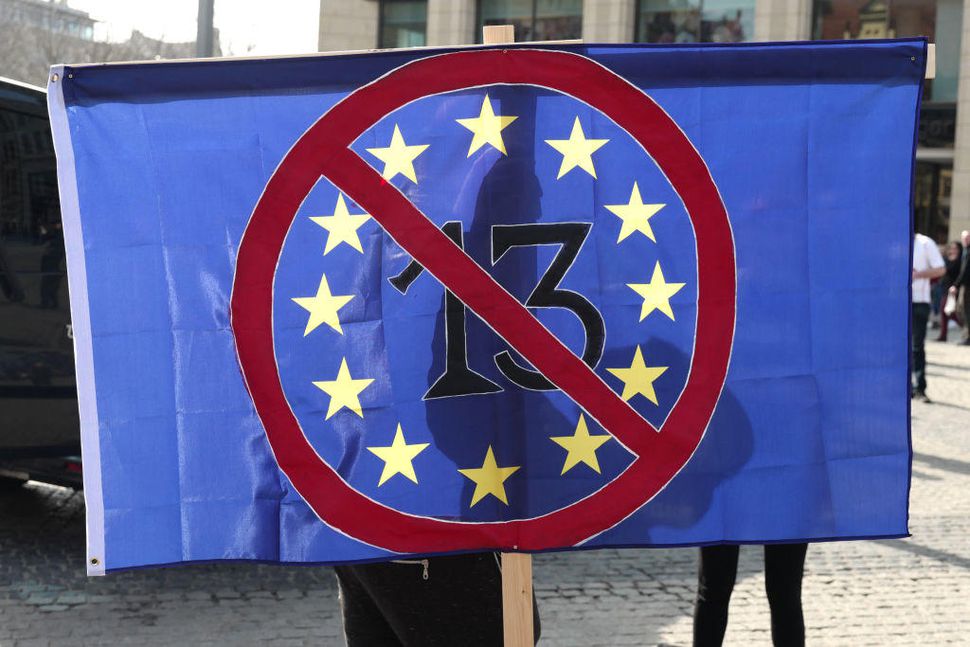
The EU Passes Controversial Article 13

Yesterday, the EU passed a sweeping and wide-range set of copyright protection laws, most of which were rather uncontroversial. One article of the laws, known as Article 13, however, has come under major fire by not just the global populace, but also tech companies, and social media artists for posing the dangerous impact of severely limiting how media is shared.

The article states that companies like Youtube, Facebook, and Spotify will have to keep track of material that are believed to be “copywritten”, or at least against the compliance of an incredibly vague description of what counts as copyright. Certain services such as Wikipedia are exempt from these laws, as they are non-profits that do not benefit from the purposed violating material.

The new article poses a threat to vibrant internet cultures such as memes, which use unlicensed images as part of the culture. The new article would severely hurt such sub-cultures in the European Union, especially if bots, which cannot detect context, are used to track the violating material.

Another group under threat are European streamers, who may get striked or even shut down for streaming what games they are playing. It could cut the amount of streamers out, as these streamers would be afraid to display their games for fear of getting copyright striked.

Another blow the article poses would be to many tech companies, who argue that it would be a limit to free speech, and lead to possible censorship, which has drawn the harshest criticism. The article will also crush smaller news sites and other smaller companies, as they would have to pay to use information and snippets of information just to create news in a method known as the “link tax”. Only larger companies would be able to afford this “link tax” further crushing free speech and encouraging censorship.

There is still much uncertainty about how the article will even be applied, however, especially as it only applies to those within the EU. VPN poses a great challenge to the application of the article, as those with VPN can simply change their region base and gain access to the censored content, completely circumventing the article. Also, it would be just about impossible to catch every single thing that may violate copyright law, especially as different regions interact with one another.

The article, along with the rest of the laws, are not set to go into full effect for two years. There are already calls to overturn the passing of Article 13 by the European populace, who can implement a referendum to do away with Article 13.

The Evolution of Fake News

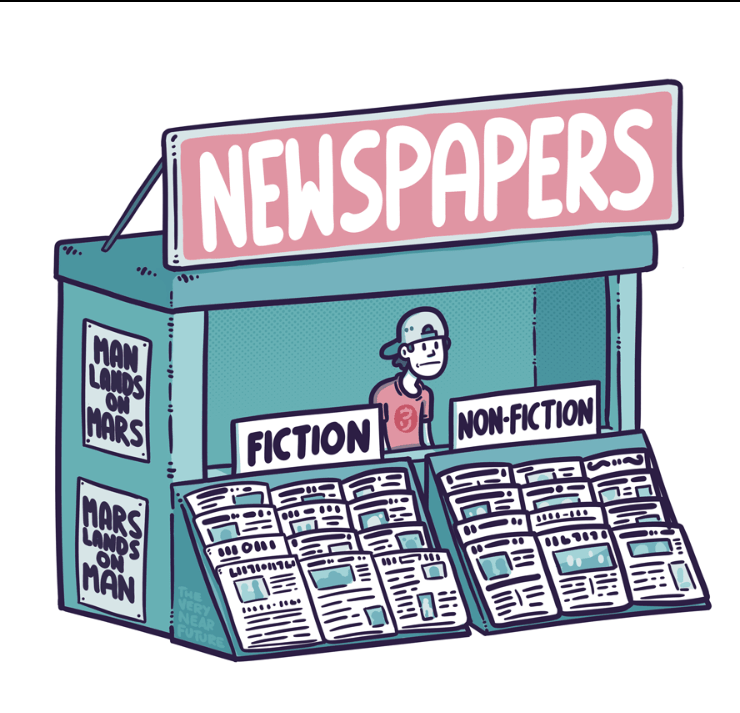
Although the term was popularized in the 2016 US presidential elections, fake news has had a rather long existence, spanning over a century. It’s no new thing, although at the moment, the proliferation of fake news has built up points of great contention, trust, and turmoil.

Fake news can trace it’s history all the way back to the Spanish-American War of 1898, which was, in essence, caused by William Randolph Hearst and his newspaper the New York Journal. During this time period, the “fake news” was classified as “Yellow journalism” as the yellow tint of the printing of Hearst’s paper differentiated it from it’s rival newspaper. Hearst’s newspaper pushed out fabricated stories about the violence of the Spanish towards Americans in the Caribbean, utilizing emotion to encourage the American public to want war. This triggered a period filled with fake news, which became so rampant that a challenging newspaper rewrote it’s tagline to support “real news-not fake news”.

Despite the anxiety over the fake news, yellow journalism was able to successfully turn the people to want war, which kick-started the Spanish-American war.

Fake news did not die after the war. Instead, it went someone dormant, as there was major backlash against such fake news at the dawn of the twentieth century. However, fake news would make a new rise during World War One, churning out propaganda about the barbaric nature of the Germans, particularly against Belgium. Now, this isn’t to say that Germany did not act violently against Belgium, a peaceful country, but the fake news industry blew much of the invasion way out of proportion, churning out stories that rang not just in the US, but throughout the allied nations.

Not only that, but rampant propaganda an fake news actually fooled the entirety of the German public, who thought the entire span of the war that they were winning the war. And since the German military maintained mass press censorship, the public never knew they were losing until Kaiser Wilhelm II declared surrender.

Fake news would keep making appearances in spreading of the First Red Scare in the US, feelings of isolationism both in the US and in Europe, and the decade of harsh reeducation of the German public during the rise of Nazi Germany. Following the end of the second world war, fake news would appear intermittently, spiking during times of conflict, and declining during periods of relative peace. With the dawn of the internet, however, fake news found its new home.

The way that fake news is presented has changed in terms of proliferation, although its function and purpose has not changed in the slightest. It fueled conflict and dissent during the 2016 presidential elections, and continue to fuel political polarization and divide, particularly as the global public is much less likely to do the research to find the truth. Currently, the media stands in a precarious position, being both the source of truth and also of sensationalist fake news, which in turn damages the trust of the public. This problem becomes incredibly difficult to resolve especially as sources of media are so vastly expanded, with just about anyone, including myself, holding the ability to push out news, whether fake or not.

Social Media as an Art Form

For some reason, there seems to be a separation between social media and art. Perhaps it’s the connotation that art is in some sense fine, something of both the classics and genius modern artists. Social media, despite its variance, is seen as something that can’t penetrate the realm of art, save for actual digital artists.

I can’t help but argue against that assumption. Well, now I argue against it, but a few months ago I agreed with it. But in taking a class in media forms, a rather interesting and hefty lecture involved social media as art, and how it reaches different audiences. There was so much to say about artistic involvement through social media as a form of unconventional means, and yet there is almost no academic research about it. When you look into it, social media is a form of affecting society on its own, and not through art. To make matters worse, almost all books on the subject are just self-helps on how to use social media wisely. Nothing on the discourse of social media and art.

Why is this the case? Maybe because social media isn’t quite taken seriously as an art form. For marketing, yes, for social movements, possibly. But art? No way.

I think that social media, when used correctly, can be both a bizarre and powerful medium for artwork and social commentary. And I think the most powerful example of that are memes, and the trend known as vapor wave.

How can memes possibly be art? Not conventionally. Modern art is all about the unconventional, challenging the status quo in order to point out the irony and hypocrisy of something going on. Although I heavily question a good portion of modern art and feel that modern artists in themselves are hypocritical/pretentious, I have to admit that there are ones that are insanely clever, particularly ones that are participatory (the audience can interact with the piece). This opens the space for memes to come in.

Memes, despite their apparent stupidity, are participatory forms of art in their essence. They’re images that are edited, via text post or some other form, to whatever the editor dictates. This in turn can cause more people to edit these images, creating a vast network of repetition, solidifying the original image (or figure, artwork, anything really), as a meme. And memes dwell in the world of social media, shared with and by thousands of people. Meme trends are created, and ultimately are archived for anyone who wants to find it.

Memes also, are often very political. They make fun of the current political climate, a particular figure (George Bush, Ted Cruz, etc.), or news that occur. They take the distasteful and turn it on its head for the sake of humor. Memes also can make fun of culture, society, and just about anything, which in itself is a form of art in how creative the variance can get. Memes, despite their ridiculousness, are just pieces of modern art, baby.

Now, what about vapor wave? What is vapor wave? Well, vapor wave was and is a phenomenon where images are layered in a way that appears like a pseudo-meme (the trend did have an origin in memes), attempting to be both aesthetically pleasing and humorous. Vapor wave takes much of its style from the Neo-Expressionist movement, which occurred from the late 1970s to the early 1990s. The Neo-Expressionist Movement attempted to be nonsensical but aesthetically pleasing through layer imaging, but rather than being humorous, it leans towards the more seriously critical. Vapor wave is almost just like that, except digital rather than physical, and funny rather than critical.

Social media is a powerful medium for the production and reproduction of participatory art, all of which goes under the radar of the connotation of “art”. People, without realizing it, are creating forms of art, which is not really considered art by “modern art” standards”, which I find to be an interesting paradox.

Comic Books Have Always Been Political

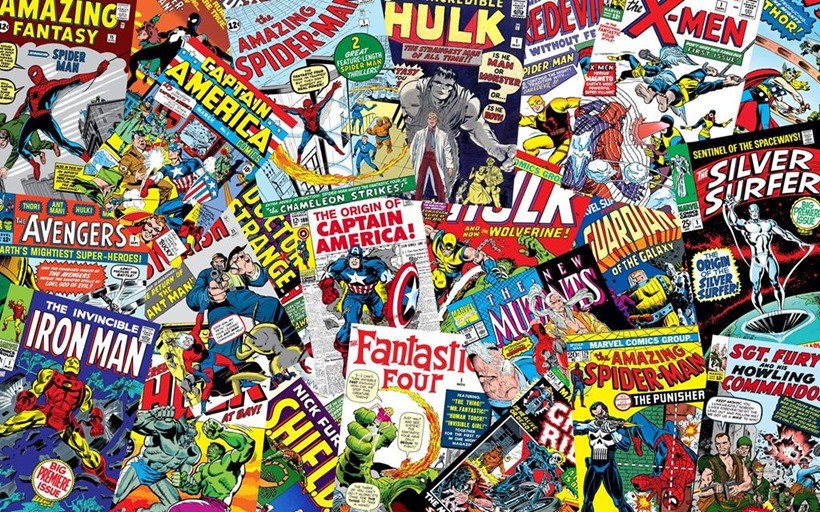
With the releases of Wonder Woman and Black Panther, I couldn’t help but notice quite a few people mentioning that they didn’t like the fact that these movies were “adding” politics to comics. This always bothered me, because anyone who knows anything about comic books (unless they choose to ignore this) knows about how politics have always been a part of comic books. I’ll explain why.

You see, most comics had their main start as anti-Nazi propaganda in the late 1930’s and especially during World War Two. Characters such as Superman and Wonder Woman from DC, and Captain America from Marvel represented the “heroes” of democracy, clad in Star Spangled Banner attire as they kicked the asses of the bad guys, who represented ultimate evil. What even pushes the point further is that the general majority of comic writers during the time period were Jewish, which Nazis despised. The characters and comics were written in support of the US’s involvement on the Western Front, fighting the bad guy and saving the day.

The end of the war was not the end of politics in comics, either. You see, comic books are an art medium, and their one of the most obviously political mediums, as well. However, because of their fictional nature, the political side is often ignored. Which seems odd to me, especially when considering the fact that there will be entire characters created in response to certain affairs on either the national or global sphere. Black Panther came about as a result of the Civil Rights’ Movement. Miss Marvel came about as a combatant to the rise of Islamophobia. X-Men’s whole premise is about discrimination against minorities.

Even comic creators will argue that they, and their works have always been political. They argue that they put their messages in superhero comics, with important messages being portrayed in an obvious-yet-not-quite-obvious way. It could be in an important conversation, or self-reflection, or a grave mistake. In any of these forms, there is a message, more often than not reflective a political or social message.

The fact that people ignore the political side to comics shows not only how well the messages are hidden, but also the success of the popularly sanitized version of nerd culture. What is the sanitized form of nerd culture? Well, it’s a version of anything to do with “nerdy culture” (i.e: Comic books, Sci-fi, fandoms) that erases the political and diverse history of nerd culture so that it only looks like white men were involved in nerd culture until recently. There are many drastic effects of this sanitized view, but I’ll get into that another time. The point is, the sanitized view of nerd culture is the most commonplace, and the most inaccurate form.

All-in-all, to say that comic books have never been political is drastically incorrect. Comics have always been political, and will always be political. To say otherwise is misguided.

The Genius of Who is America?

Most often the first thing that comes to mind when someone hears the name ‘Sacha Baron Cohen’ is “Oh, the dude from Borat!”. The actor, who has played characters such as Ali G, Bruno, and of course, Borat, gained his permanent recognition after the release of Borat: Cultural Learnings of America for Make Benefit Glorious Nation of Kazakhstan back in 2006. In the film, he duped countless people all across the US, with only a few scenes (such as the kidnapping of Pamela Anderson) being fake. His film gained immense popularity, for both bringing out the honest truth from people, and being hilarious at the same time.

Now he’s back, but this time with a TV show. Taking the role of four different characters (Ricky Sherman, Dr. Nira Cain-N’Degeocello, Billy Wayne Ruddick, and Erran Morad), he goes around to people of a variety of political backgrounds, anywhere from small-town folk to big-time politicians, tricking them into absurd (and sometimes career-ending) situations. This comes into to play when he “teaches” controversial House Rep Jason Spencer Krav Mga, causing the man to shout the N-word and run into him with his bare behind.

Of course, this time it is much harder for Cohen to pull off. With his popularity, more people may recognize him, which has happened in the case of trying to dupe a gun shop owner, who recognized him under all the prosthetic makeup. In another, actually filmed case, part of his prosthetic actually came off, but the couple he was trying to dupe played good sportsmanship and kept running with it. Now that Borat is so recognizable, Cohen needs to use more prosthetics, and be much more careful in how he acts, as to not ruin the joke.

His jokes, however, can be quite brutal, but it’s exactly what the nation needs. He makes fun of both liberals and conservatives, calling out the absurdities on both side, and exaggerating stereotypes in order to confuse and make fun of whomever he’s with. It also shows the audience how absurd people can be, and while some think what he’s doing is too far over the edge, it’s a nice break from the safer political comedy that we’ve seen in the past few years. Everyone else has played it safe, and it’s refreshing to see someone who takes safe and rubs it into the ground.

The best part is, his “offensive humor” is not really all that offensive. It’s how the people take his comments and react that show the ugly side of the comedy. That’s what makes his humor especially genius. He gives people an inch and they take it an run a mile, duping themselves in the process. It leads to some interesting situations (actual police roll up to a ‘staged’ Quinceanera that Cohen had tricked some men into making in order to “trap” illegal immigrants. On a sign out front, he posted their words of what they thought the immigrant would be expecting, and setting up the situation to look like they were trying to lure young girls.

The best part is, he wasn’t the one who came up with the situation: the men were. They thought of what when down at a Quinceanera, and what to do in order to drug and deport any “illegals”. They duped themselves, while he sat on the sidelines. He shows the absurdity of such racism, and how it can easily turn against them.

His form of comedy is, in my opinion, exactly what we need; something brutal and honest, showing the worst sides of everybody in order to get a laugh. And it does, in some cases, show the worst side of everybody (from blatant racists to crazy social justice warriors). No one is safe, and I’m excited to see how the show goes on.

Why the Hunger Games Trilogy Should Have Never Been Movies

I was at the end of middle school when the first movie of the Hunger Games Trilogy was released. At the time, I had thought that the film was a serious let-down, with much of the book’s original purpose ripped out in favor of a “Hollywood-style” interpretation. But that was typical, as most books that were being turned into movies were glamified to fit a dramatic Hollywood action movie. But as the movies continued to come out, I got older, and noticed more issues with the films. By the end of it, I thought the films shouldn’t have existed at all.

Why is this? Well, just the idea of the films existing goes against everything that the books aspired to criticize. The books themselves were about a young woman of color (presumably native, based off her town’s physical characteristics) being inspired by a young black girl’s death to lead a rebellion against the glutinous and overly-extravagant Capitol, the head of Panem (which is the Latin word for “bread”).

Panem is a place where the districts closest to the Capitol are the wealthiest, while the furthest are the poorest (and tend to be people of color). But the Capitol itself benefits off of turning the fight to the death between children into a spectacle, watching their every movement and promoting them as though they were nothing more than TV actors. Katniss and Peeta’s romance gets televised and focused on, and throughout the books you can see they were a point of entertainment and propaganda, working to gain “sympathy” from the viewers. Meanwhile, the families of those that have to fight sit agonizingly, watching their children being brutally murdered for entertainment.

All the while, propaganda in support of the regime was constantly emphasized, with police task forces ensuring the peace. The propaganda is representative of the news media, promoting submission to the regime while broadcasting all the issues with it as a form of “entertainment”.

The Hunger Games criticizes everything that supports the oppressive system, which includes mainstream movie media. This is the biggest kicker for why the movies shouldn’t have existed. It was made by a large company (Lionsgate) which altered the feel of the books in order to show what they wanted with the rebellion, without anyone pinpointing back to the US (or other Western) system as a whole. It degrades the whole point of the books.

Not only that, but their marketing adds insult to injury, by promoting “Capitol-inspired” makeup, merchandise, computer games, all of which trivialize the struggle that book Katniss faces going against. It is using luxury as promotion for something that criticizes this very aspect. This wasn’t just for the first movie either; it popped up again in each of later three films as well.

The original movie made the same mistake the Capitol did: focusing on the romance rather than the violence. It wiped out just about half of the point of the first book, turning instead to make it all about the romance when it should not have been. Of course, this gained massive amounts of criticism by viewers, and Lionsgate made it more subtle in later films.

However, they didn’t change the fact that they completely whitewashed much of District Twelve. Rather than having people with brown skin and hair (as the book describes the majority of the district being), they got “lightly tan” people who had to dye their hair the right colors (for Katniss and Gale). Also, the actress who played Katniss refused to “lose weight” for the part, which also takes out the fact that District Twelve was a heavily impoverished district, and it erases much of the struggle of Katniss’s survival. I don’t mean to say that Jennifer Lawrence should have gotten to an unhealthy weight, but to have someone who didn’t look anywhere close to starving play the part of someone who was supposed to be malnourished is a bit of a stretch. The point of her depiction is to show the horrors that the Capitol caused, not to put the biggest name actress you can as the main role.

As popular as the books got, it would have been much better if they had been left as they were-books. Of course the movies made lots of money, and were insanely popular, but that was because people fell into the trap of the entertainment. As long as it’s not real, it’s okay to see it, right? Well, not if the powerful message of the books just get lost.