Artist Portrayals in Media: So Horribly Accurate

In comedy, we’ll always find that artists are either portrayed as air-headed “connected to the earth” white people, or pretentious jerks. That’s how they have always been portrayed since the dawn of the 1990’s and 2000’s, and that’s how they will be portrayed until the end of time. At this point, the portrayals are iconic.

The only problem with these portrayals is how horribly accurate they are. No, really, it’s insanely accurate. Need proof? Go to a modern art museum. Not even that. Just open an art history book or biography. Time and time again, you’ll find that artists tend to be extremely arrogant and pretentious, trying to act like they are on some higher tier of existence than the common folk. This isn’t the case for all artists, but it is the case for a majority of them.

This is especially true in the case of most modern artists, who think they can get away with painting a blank canvas white and selling it for a million dollars. Well, they kind of can, given that the culture surrounding art and art critiques inflates an artist’s ego to the point of no return by going insane over said white-painted canvas. The culture only makes the artist’s attitude that much worse, encouraging them to make paintings that can be done in less than five minutes. Not even paintings, but also sculptures (there was a case where an art piece which was literally a pile of trash was accidentally thrown out by a cleaning lady who didn’t know it was part of the exhibit). The culture helps further the monster. But it doesn’t create it.

No, the artist grows into the stereotype in college, and even high school. They make friends with other artists, learn about art and somehow get it in their head that they are more “unique” and “free” because of it. They invest themselves in their craft, and become infected. Then they get mad when people make fun of said infection. They insist that the stereotypes aren’t true at all, then act exactly like their stereotypes (even down to dressing like them, just without the beret and scarf). It’s almost sad.

But, like I’ve already said, this stereotypes doesn’t apply to all artists. There are a few that lie outside of the stereotype, who are actually fairly normal, and even make fun of the stereotypes and the people who act like them. They are, unfortunately, few and far between.
The Impact of Slasher Films

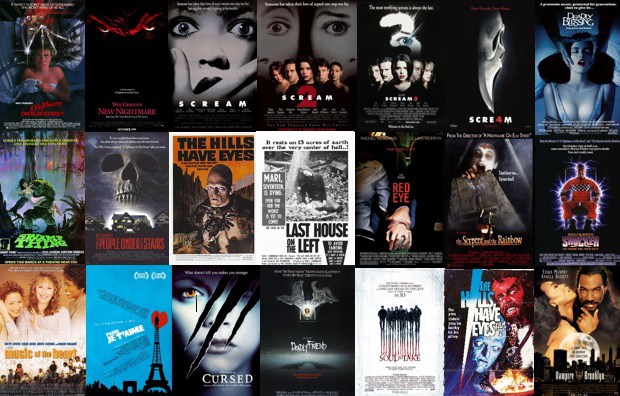
When horror films are analyzed for their greatness, the genre of slasher films is never included in the mix. We always turn to the more complex artistic thrillers such as Dracula, Rosemary’s Baby, the Shining, and An American Werewolf in London in order to present the hallmarks of horror. Some of the very few remarked-on slasher films include Halloween and Psycho, renowned for their complex relationships with their mother, calling homage to Freud’s Oedipus Complex.

But interestingly enough, despite the fact that slasher films are almost never remarked on in film academia (other than to be criticized for their garish nature), they are a major source for parody and imitation. While that may appear counter-intuitive for the genre being taken seriously, the fact that it is so imitated and parodied does say something about where slasher films lie in the horror genre.

Let me explain my argument by first studying the core or slasher films. Slasher films are exactly what the name “slasher” entails- violent murders, heartless serial killers, predatory chases, and other such forms. There is hardly room for the deep psychological thriller aspect, more focused on providing the gore and grotesque. The slasher film’s goals are both to make the audience laugh at the almost cartoonish nature of stable character archetypes and feel uncomfortable by the homage to basic and “savage” animal behavior- not just in the killer, but also among the good guys as well.

What do I mean by that? Well, from what I’ve seen, characters return almost to their basic human instinct-ignoring morals, ignoring civilization, all of that. It becomes merely an act for survival, the play on fight or flight, with airs of sexuality and other such basic functions.

As I’ve also mentioned before, as well, is that the characters in the slasher films have pretty stable archetypes, even as the plots change. They rarely ever change, making it easy to imitate not just for other slasher films, but for parody films as well. It also becomes easier to carry out in sequels and remakes, as expectations for complex characters among the audience is rather low. That’s why you can have a whole series such as Saw or Nightmare on Elm Street.

But where does the impact factor come in, other than imitation? Well, I’ve recently read a piece on slasher films that remarks that students of folklore or mythology will be able to tell you how slasher films are the epitome of oral history. Their archetypes, their diverse and interchangeable story lines, and the accumulation of sequels and imitations all reflect the story patterns of oral history and stories. No telling is exactly the same, and sequels are invited because there is not set story to finish. Because of this, pop culture can take slasher films and go to the moon and back, creatively adding their own takes for the sake of both horror and comedy. This in turn leaves a greater impact on the audience. We start to associate horror with aspects of the slasher, because we see it imitated and extended so much through pop culture, not just in films, but in TV, social media, and other such forms of media. Of course we won’t forget the other types of sub-genre within horror, but we identify and associate more with the slasher.

It’s not just because of their capacity for imitation that we remember the slasher genre so well, however. We also remember it because the genre does get quite creative, without having to be so deep and layered. Chucky and Nightmare on Elm Street are both remembered as horror classics for not just their slasher nature but also their creativeness. Chucky only had two sequels, and yet we remember the first one the most because of it’s take on killer dolls-something that hadn’t really been considered in horror film before. Almost the same goes for Nightmare on Elm Street-despite its numerous sequels, it takes the audience to a place that hadn’t been considered for horror films before- your own dreams.

Slasher films can get just as creative as its other horror counterparts, and leave just as much of an impact. The only thing is, because of their seemingly blunt and gruesome nature, they are sidelined by academics, who either consider the genre beneath them, or just see the genre as part of a “murder fetish”. Slasher is not given the light of day it deserves.