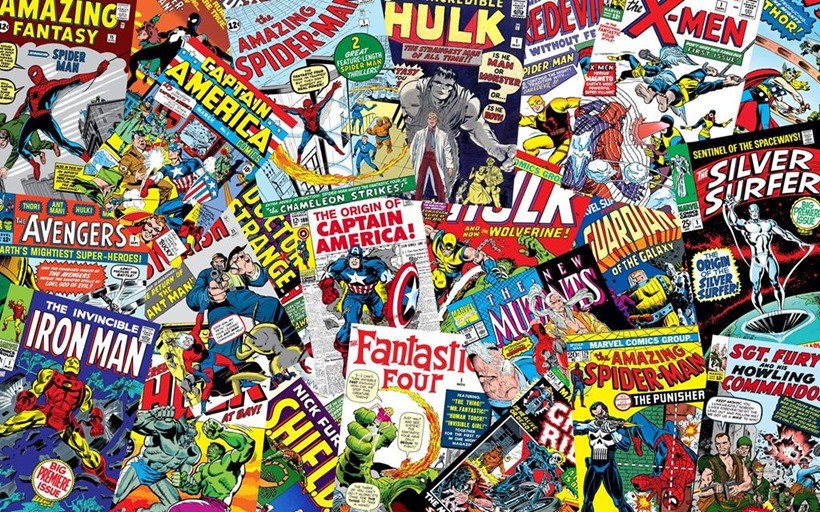
With the releases of Wonder Woman and Black Panther, I couldn’t help but notice quite a few people mentioning that they didn’t like the fact that these movies were “adding” politics to comics. This always bothered me, because anyone who knows anything about comic books (unless they choose to ignore this) knows about how politics have always been a part of comic books. I’ll explain why.
You see, most comics had their main start as anti-Nazi propaganda in the late 1930’s and especially during World War Two. Characters such as Superman and Wonder Woman from DC, and Captain America from Marvel represented the “heroes” of democracy, clad in Star Spangled Banner attire as they kicked the asses of the bad guys, who represented ultimate evil. What even pushes the point further is that the general majority of comic writers during the time period were Jewish, which Nazis despised. The characters and comics were written in support of the US’s involvement on the Western Front, fighting the bad guy and saving the day.
The end of the war was not the end of politics in comics, either. You see, comic books are an art medium, and their one of the most obviously political mediums, as well. However, because of their fictional nature, the political side is often ignored. Which seems odd to me, especially when considering the fact that there will be entire characters created in response to certain affairs on either the national or global sphere. Black Panther came about as a result of the Civil Rights’ Movement. Miss Marvel came about as a combatant to the rise of Islamophobia. X-Men’s whole premise is about discrimination against minorities.
Even comic creators will argue that they, and their works have always been political. They argue that they put their messages in superhero comics, with important messages being portrayed in an obvious-yet-not-quite-obvious way. It could be in an important conversation, or self-reflection, or a grave mistake. In any of these forms, there is a message, more often than not reflective a political or social message.
The fact that people ignore the political side to comics shows not only how well the messages are hidden, but also the success of the popularly sanitized version of nerd culture. What is the sanitized form of nerd culture? Well, it’s a version of anything to do with “nerdy culture” (i.e: Comic books, Sci-fi, fandoms) that erases the political and diverse history of nerd culture so that it only looks like white men were involved in nerd culture until recently. There are many drastic effects of this sanitized view, but I’ll get into that another time. The point is, the sanitized view of nerd culture is the most commonplace, and the most inaccurate form.
All-in-all, to say that comic books have never been political is drastically incorrect. Comics have always been political, and will always be political. To say otherwise is misguided.
 Pop N' Crunch