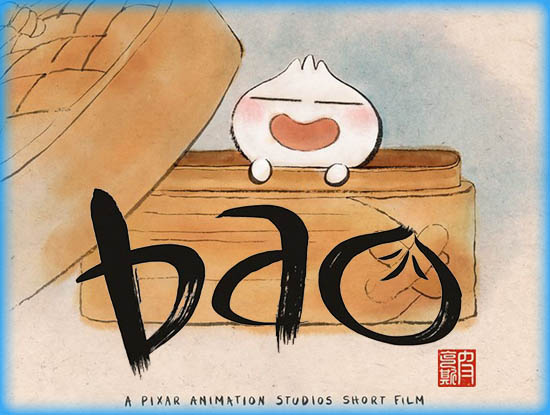
A Month After the Controversy: My Opinion on Pixar’s Bao

Once again coming after all the drama has settled, I have decided to put my two cents in on something. I saw Bao a month ago with my friend, and didn’t think much of it initially. But then all the drama rose and fell surrounding the short, with confusion arising over some aspects of Chinese culture. Is the short worth all the drama? Let’s take a look.

I am going to divide this into three sections: the pros, the cons, and a look at the whole controversy. I’ll try to pinpoint some significant cultural aspects that some people might not understand when looking at this. The analysis here is based off of my opinion, but I’ll try to be factual. This will be spoilery, so if you haven’t seen it and want to, watch out.

The Pros.

What I like the most about the story is the overall message. It was short, and got its story line out without any words. The animation was cohesive and colorful, all the characters being soft lines and not sticking out against the little dumpling child. Everyone was plump and round, and each character was distinctive in characteristic.

I honestly thought the film was a heartwarming tale. I am not quite certain what position the mother is in, but based off of the experiences of my friends’ first generation mothers clashing with them, I imagine there is some influence in there. She clashes with her son, who she sees as acting too far out against her, with the dumpling being a metaphor for her relationship with her son. It really was a powerful portrayal. The short portrays fracturing and reconciliation within a family, with a mother being initially unable to accept her son leaving. It is a story thousands of families face- and it does a decent job at it.

Overall, I thought it was short but had a good story to tell. It was well-animated, and was much better than the last Disney-related short I had to sit through (I’m looking at you, Frozen). I got invested, without needing twenty minutes to do so. It was cohesive and smart, without needing actual dialogue.

The Cons.

I have mentioned that Bao does a decent job at telling it’s story. But it’s not perfect.

The biggest con I can think of for this short is that fact that it relies very heavily on the use of metaphor. Which, works for adults and people who have a concept of metaphor, but not so much for children. In order to explain this, I have to go a little into the plot of the short.

Now, as I mentioned, the dumpling child is a metaphor for the woman’s relationship with her son. She raises the dumpling, but as he grows older he gets more rebellious and distant, eventually trying to leave her. Well, as a resolution, the woman eats the dumpling. Then the son, who looks like the dumpling, steps in from there.

Not bad, right? Well, the problem arises with the fact that most, if not all young children, will not connect the dumpling child as mirroring the son, without really being real. To them, they would see the dumpling child as different, and would think that she actually just murdered a dumpling person. Which, when you think about it, might put kids in distress. And it did-there were reports from audience members of some kids being distressed enough to cry from the scene. The reliance on metaphor is something that most kids-at least the ones that were anything like me-would simply not understand. It’s one flaw, but it’s a big one.

The Controversy.

Now that I’ve given my take, let’s take a look at where the controversy comes from. The short itself was directed by Domee Shi, and was influenced by her experience with Chinese immigrant parents in Canada. And as you can see, you can see the struggles that arise between the mother and the bao as the dumpling grows up and wants to leave and have independence.

How is this a problem? Well, from my friend’s experiences (Korean and Filipino) with their immigrant parents, and from some research, I find that the family and household are very intertwined. The child is not expected to leave the house and suddenly have a career at eighteen-which presents it’s own set of problems in the West-, but are actually expected to stay in the household past eighteen. The family is central, with three or four generations sometimes living in a house together. This idea comes at odds with American culture, especially for the children of immigrants who are surrounded by that culture. It often causes a strain in the relationships (as I’ve seen with some of my best friends and their parents), as the clash in culture causes arguments.

Now, because of my witnessing of these experiences, I am familiar with the cultural clash, especially in Asian immigrant families. However, there were quite a few people (mostly white Americans), who didn’t understand what was happening. This is where the controversy starts. There was an explosion of arguments, as people who didn’t understand the nature and context of the short began social media arguments with people who understood the short all too well. This caused calls of racism and ignorance, when I have to say such sayings might have been a little uncalled for.

Because of social media and the fact that huge portions of the US and Canadian populations live in large, diverse cities, we often forget that there are people who don’t know the experiences of immigrant families, nor understand the context of Asian culture versus Western Culture. When informed, people will grasp it, but when people don’t understand, a pivotal scene like the woman eating the bao would not make much sense. It would just seem like an overreaction to an argument, rather than an important moment that permanently changes the relationship of a family.

Does this mean we should have “dumbed down” the scene for people? No, not at all. While I do think some of the comments I saw were just people who were genuinely confused and not ignorant, I do think some people took advantage to stir up a huge controversy. I don’t think the short should have stirred up that much controversy, but I am not in a position where I understand all sides.
The Art of Time Loop: How a Cliche Genre can be Done Right

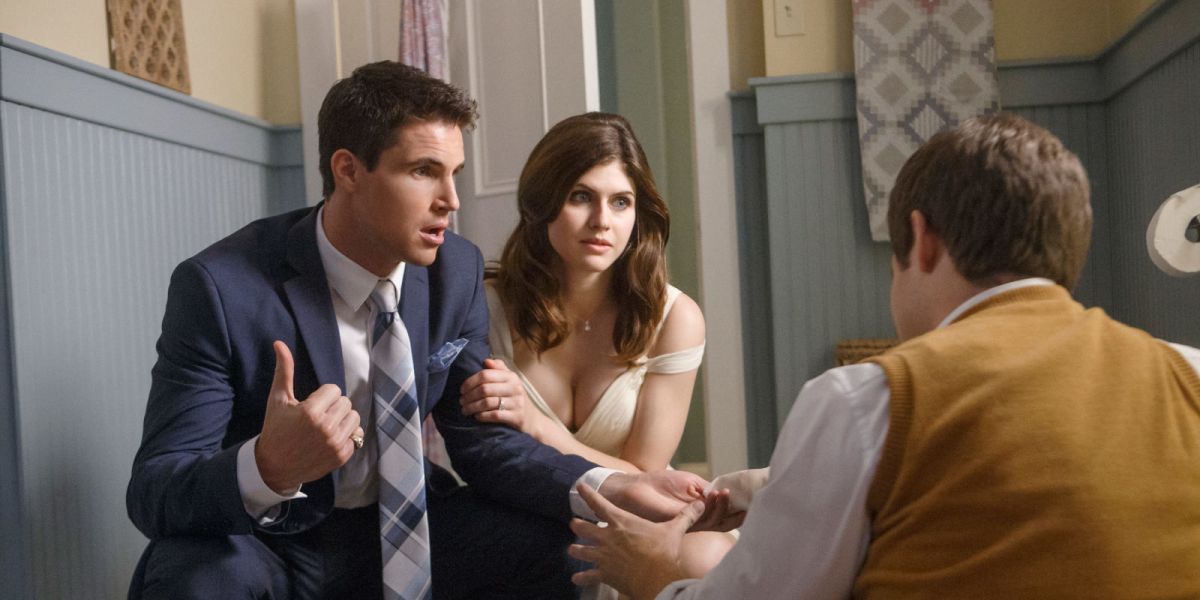
We’ve all heard of at least one movie were a guy either is stuck in a time loop of the same day, or decides to mess with time. It’s usually either cause he has to get a certain day perfect, or he wants to meddle with time and then realize he has to fix the mess he’s created. The cliche has appeared at least once every two years, so it’s difficult to say that it isn’t a cliche.

But unlike many other cliches, this one can actually be done right. How is that so? Well, there are unique and creative ways that the main guy can be stuck in the time loop. He usually does it to try and get the girl he’s always wanted, but the re-do doesn’t always have to be about that.

The problem is, Hollywood has never tried to do the re-do as anything beyond romance, which adds to the cliche. You can go so many different routes when it comes to the time loop, even going so far as to main the main character do the re-do to affect someone else’s life, rather than just their own.

The main issue with the re-do cliche is that they almost always involve the guy trying to get the girl he thought he wanted, before coming to the realization that she wasn’t the one. It also always a certain day perfect, either their wedding day or some other big event that is heavily tied to their romantic life. It’s never anything else. Making it about something else would actually make the cliche so clean and refreshing. It’s so easy, and yet the Hollywood industry doesn’t want to take that step. Romance is an easy, audience-drawing theme to follow-why do anything else?

The re-do trope has gotten so similar to itself that it’s not even worth watching anymore. Unless they decide to finally branch out, you can just about guess the entire plot of the movie, with some variance give-or-take. It makes it so overtly bland that it’s almost intolerable.

There have been a few horror movies, however, that have taken the time loop in unique, twisted ways. Movies such as Happy Death Day and Before I Fall have been taking the time loop genre out of its original comedy genre, and planting it firmly into horror. It’s interesting to see, and definitely adds to the suspense of a plot. We’ll have to see where it takes us.

How to Win Back a Girl’s Heart: “Change”

In almost every romance, there is a portion where the guy must “win” the girl back after betraying her in some way- either acting like his normal playboy self or just doing something stupid. And just about every time, he does get her back, usually by apologizing or doing something to show that he’s “changed”. But has he really changed? In some instances, the previously reckless male character does actually show a change in attitude or behavior that would warrant a yes. But most often, it’s a big fat no.

In order to examine how the guy hasn’t changed, we must first understand how the typical main guy in a romantic movie starts out. He is most often the reckless playboy, who parties and sleeps around with whoever he wants. He goes to parties, maintains a decent job, and usually an apartment to himself. He doesn’t really care about anyone but himself and his best friend, who always tries to get him to “find a girl”-to which the man always shrugs the suggestion off with a playful scoff.

But then he meets the girl of his dreams. She’s a much more lax person, someone who doesn’t really like to party, or sleep around. She’d rather sit at home and watch a movie marathon, or read a book. She isn’t affected by the guy’s flirtation, which immediately peaks the guy’s attention. He has to find a way to impress her.

After the first time he meets her, they start meeting by chance. After a few times, they finally decide to hang out with each other on purpose. Maybe even date. The guy seems to be settling down. After a few months, he seemed to have changed.

But then he does something stupid. Either indirectly, or just a stupid action he decides to do. Girl finds out, and ditches him, heartbroken. Boy does something to make it back up to her, and they end up getting back together at the end.

Now, this isn’t always how the story goes. In The Big Sick, Kumail wasn’t really a partyer, but a nerdy comedian whose parents were trying to marry him off to a Pakistani girl. This is the point of conflict for his relationship, and he remedies it by sticking up for himself and spilling the truth to his parents. In this situation, he does change. However, in most other situations, the guy doesn’t really have a meaningful change. While he does settle and stop sleeping around, that’s not really giving something up. That’s just getting into a monogamous relationship. Usually the partying also dies down as a result, but that’s usually from finding else to pass the time and satisfy the need to do something. The behavioral changes are not because of an actual effort placed in-just the indirect results of deciding to date someone. There is nothing of real value to it.

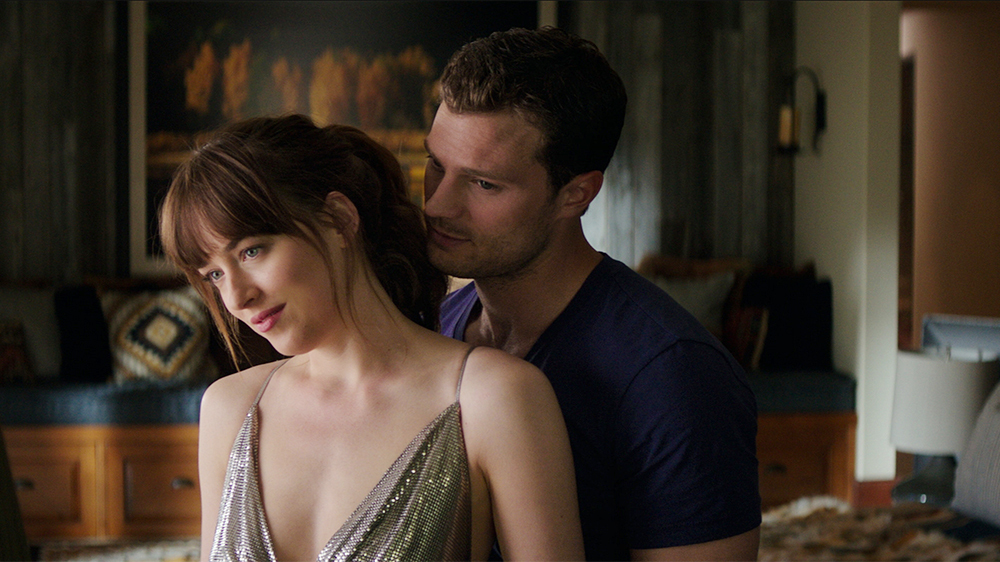
The biggest example of this is the 50 Shades of Grey trilogy. In this case, Christian Grey starts out as a young billionaire who liked to exercise control in everything, rather than the reckless party guy. Anastasia breaks up with him, upset by his violent urges when it comes to BDSM and domination in her life, and he wins her back by promising to change. I’ve only seen the first two, so I will focus on his portrayal in the second film.

To summarize my argument before it starts, let’s just say this; he doesn’t change. His possessive behavior merely shifts, to be controlling in certain ways, but in aspects that almost don’t seem noticeable, who can claim that she has more “freedom”. He buys the publishing company she works for while arguing it’s a business investment, he happens to be in the right places at the right time, and he has the money and power to get people at her work fired. He is a prime example of the faux change that people fall for.

Incredibles 2 and Legend of Korra: Shifting with the Times

I got to see the Incredibles 2 last night with my friend, and I have to say it was a very good film. I did notice in watching the film, however, that there was quite a bit of appeal to the people who were kids when the original Incredibles came out. Because of fourteen year gap between the films, most, if not all of the people who got to enjoy the first film are now in college or beyond (myself included), and have the potential to be the biggest source of income for the movie. And while of course there are elements in kids’ movies that appeal more to the adults, Incredibles 2 seemed to appeal to the older kids more than usual.

Which, makes sense. Like I said, there is a fourteen year gap between the release of Incredibles and Incredibles 2, and the people who would want to see the movie the most are in or out of college already. That gives the freedom to add more “adult” elements, while still calling it a kids’ movie.

The same event happened in Legend of Korra. The show, which was a sequel to Avatar the Last Airbender, brought in darker, more adult elements, appealing to the fan base who watched the original show. Although it was only a four year gap between the two shows, the generation who watched the show had grown quite a bit since the first episode. Plus, with Legend of Korra having a total of four seasons, the kids continue to grow into adulthood. If you contrast this from the Last Airbender, you’ll notice the original show was much more lighthearted in nature, and Korra is more gritty (even the styles are different, the original having more roundish characteristics, and the latter having sharper more realistic imagery).

Both the movie and the show hold the task of appealing to their old fan base, while still attracting a new, younger fan base. It’s a balancing act, having the freedom to stretch beyond the traditional limits of kids’ media while at the same time having to maintain some semblance of it. It’s a difficult task, one that these media seem to do well.