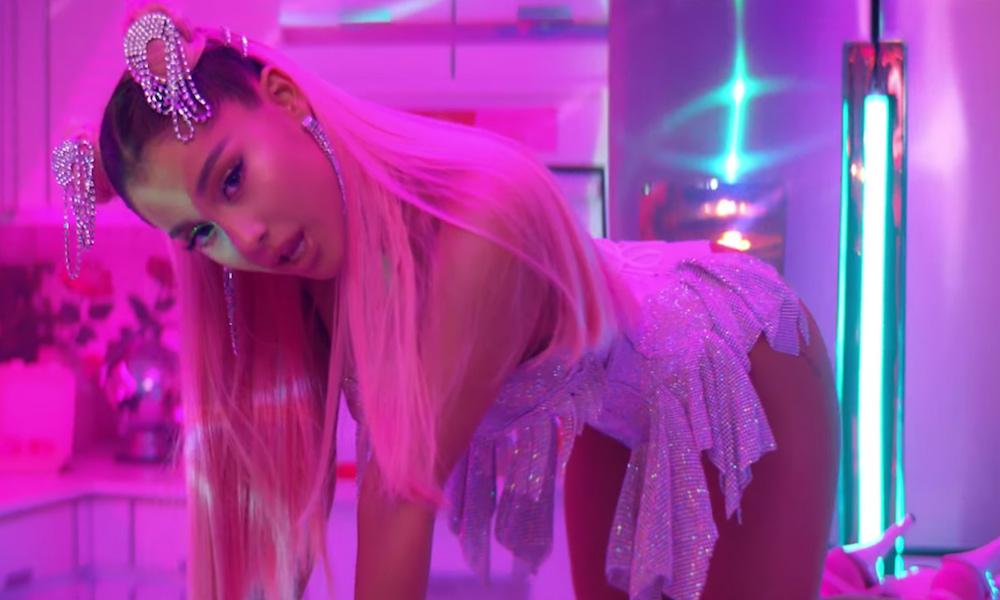
Ariana Grande and the “Tiny BBQ Grill” Incident

Two days ago, singer Ariana Grande posted a tattoo she had gotten on her hand promoting her new song “7 rings” in Japanese, spelled out 七つの指輪. However, instead of having the whole phrase tattooed onto her hand, she was in too much pain to finish it, and instead shortened it to just read 七
輪. While it technically can also mean “7 rings”, in colloquial Japanese, it really means “small barbecue grill”.

Japanese speakers, and those fluent in Japanese, were quick to notice, and make fun of it. All over twitter people were calling Grande out, and some even went so far as to tattoo dumb phrases onto their hand and say it was something else (my personal favorite is someone who wrote “I wanna die” on their hand).

Grande didn’t seem to take this in offense, however, defending herself by saying she actually enjoys tiny barbecue grills, and that she was aware of the incorrect grammar. She also said that since the area was prone to flaking, if she really missed the tattoo, then she would suffer through the pain and get the correct version the next time around.

However, as of this morning, she had the tattoo altered (with licodaine shots), with a message on instagram saying that she would “miss her tiny grill”. It seems the online mockery did get to her. Japanese twitter is still making fun of the mistake however, most likely a result of being tired of having white celebrities use their language for the sake of “aesthetic”. Which would make sense, since it is kind of strange to use a language for aesthetic.

Social Media as an Art Form

For some reason, there seems to be a separation between social media and art. Perhaps it’s the connotation that art is in some sense fine, something of both the classics and genius modern artists. Social media, despite its variance, is seen as something that can’t penetrate the realm of art, save for actual digital artists.

I can’t help but argue against that assumption. Well, now I argue against it, but a few months ago I agreed with it. But in taking a class in media forms, a rather interesting and hefty lecture involved social media as art, and how it reaches different audiences. There was so much to say about artistic involvement through social media as a form of unconventional means, and yet there is almost no academic research about it. When you look into it, social media is a form of affecting society on its own, and not through art. To make matters worse, almost all books on the subject are just self-helps on how to use social media wisely. Nothing on the discourse of social media and art.

Why is this the case? Maybe because social media isn’t quite taken seriously as an art form. For marketing, yes, for social movements, possibly. But art? No way.

I think that social media, when used correctly, can be both a bizarre and powerful medium for artwork and social commentary. And I think the most powerful example of that are memes, and the trend known as vapor wave.

How can memes possibly be art? Not conventionally. Modern art is all about the unconventional, challenging the status quo in order to point out the irony and hypocrisy of something going on. Although I heavily question a good portion of modern art and feel that modern artists in themselves are hypocritical/pretentious, I have to admit that there are ones that are insanely clever, particularly ones that are participatory (the audience can interact with the piece). This opens the space for memes to come in.

Memes, despite their apparent stupidity, are participatory forms of art in their essence. They’re images that are edited, via text post or some other form, to whatever the editor dictates. This in turn can cause more people to edit these images, creating a vast network of repetition, solidifying the original image (or figure, artwork, anything really), as a meme. And memes dwell in the world of social media, shared with and by thousands of people. Meme trends are created, and ultimately are archived for anyone who wants to find it.

Memes also, are often very political. They make fun of the current political climate, a particular figure (George Bush, Ted Cruz, etc.), or news that occur. They take the distasteful and turn it on its head for the sake of humor. Memes also can make fun of culture, society, and just about anything, which in itself is a form of art in how creative the variance can get. Memes, despite their ridiculousness, are just pieces of modern art, baby.

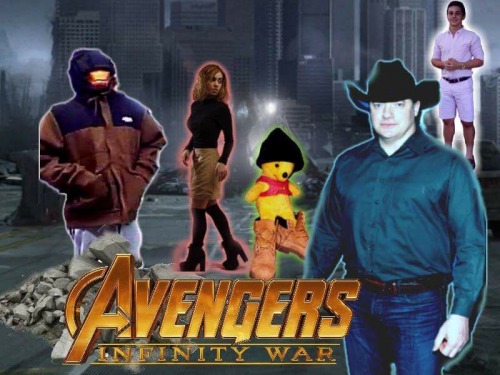
Now, what about vapor wave? What is vapor wave? Well, vapor wave was and is a phenomenon where images are layered in a way that appears like a pseudo-meme (the trend did have an origin in memes), attempting to be both aesthetically pleasing and humorous. Vapor wave takes much of its style from the Neo-Expressionist movement, which occurred from the late 1970s to the early 1990s. The Neo-Expressionist Movement attempted to be nonsensical but aesthetically pleasing through layer imaging, but rather than being humorous, it leans towards the more seriously critical. Vapor wave is almost just like that, except digital rather than physical, and funny rather than critical.

Social media is a powerful medium for the production and reproduction of participatory art, all of which goes under the radar of the connotation of “art”. People, without realizing it, are creating forms of art, which is not really considered art by “modern art” standards”, which I find to be an interesting paradox.
How Movies and Memes have made me Connect Art and Music

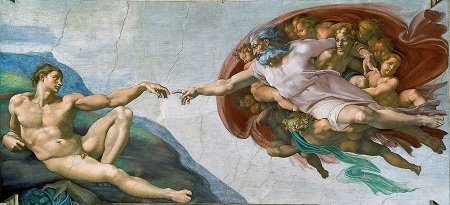
As I was walking through the National Museum of Art in Washington DC, I couldn’t help by hear constant genres of old music (Classical and Medieval), as I walked through the impressively European artwork. While hearing the music for so long (I spent hours in there), I was reminded of the time of when I was in other museums (in Rome, LA, San Francisco), and each time I heard music that I had subconsciously connected the artwork to.

There are only two reasons why this has occurred. The answer: movies and memes. Why these two? Well, I could argue that shows have also helped, but they gained their inspiration from movies and documentaries. Movies and documentaries often connect the old European art to classical music, Native and Polynesian art with traditional flute music, and so on and so forth. Documentaries are really to blame for this, particularly art and culture documentaries, pairing famous artworks alongside music that just gets stuck in your head.

However, it’s not just documentaries, as I mentioned earlier. Movies, too, sometimes only vaguely related to the artwork, can have music that can pop into my head, despite not even being in the same country (in some Roman churches, the soundtrack to Disney’s Hunchback of Notre Dame kept playing in my head). For some reason, my mind connects one to the other, and there’s no way to get out of it. And I’m certainly not the only one.

But where do memes come in? Well memes, the epitome of how people process pop culture and politics in the name of humor. These can take shape in the form of pictures, videos, and just about any other digital medium that you can work with. While sometimes art is used to make clever historical memes (there was a period of Washington painting memes that flooded my dash), the gifs and videos are what really get me.

Oftentimes the gifs are attached to some dumb song or another, and the videos are edited to have music in them. So rather than classy music binding itself to art in my mind, its dumb music that makes me smile or crack up. It’s dumb, but my mind seems keen on connecting my memories to the present, something I’m certain all of our brains do. Brains like to do stuff like that, especially when we get a first glance at famous works via pop culture. Sometimes it’s kind of nice, and other times it’s not.

The Controversial Author of a Beloved Series

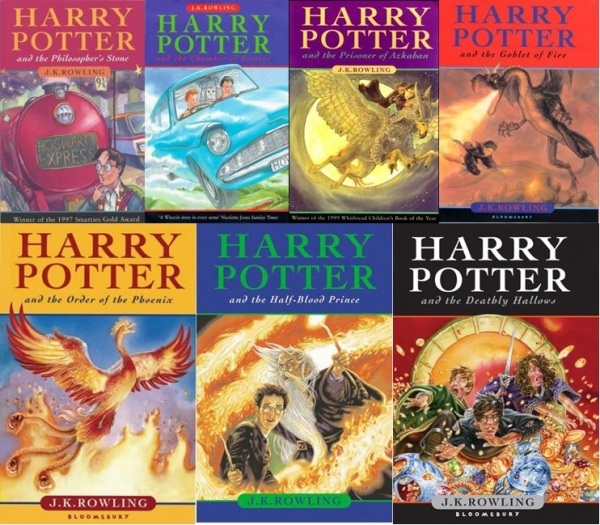
The Harry Potter books and movies have been loved and cherished for around two decades. It was a series that was recognizable to millions of people, to the point so that some of the advertising for Deathly Hallows Part Two didn’t even name the title of the movie. It has also led to the opening of Harry Potter World in both Universal Studios locations (Orlando, Los Angeles), with hundreds of thousands flocking to partake in some of the magic. The Harry Potter series was classified as the hallmark of an entire generation.

While the fandom for Harry Potter seems to be thriving, I can’t help but wonder how much this is done out of pure nostalgia, especially as more negative light turns to the series’ author, J.K. Rowling. As time goes on, I notice that former die-hard fanatics are noticing more issues with the series, particularly with the actual lack of originality that the magic world in the series has. But contrasting from these fans-turned critics are the ones that are still die-hard, constantly taking every house quiz, referencing the series when they can, and even getting permanent tattoos of famous symbols. It’s an interesting mix that I increasingly notice is coming at odds with one another.

In order to analyze why I notice some people being pushed away, we’d have to first look at the history of negative light placed on the author. You see, this all started after the release of Halfblood Prince (the book, of course), in which J.K. Rowling announced that Dumbledore, the father figure to Harry Potter, was actually gay. This came at a celebration of diversity initially, although there were some that questioned the fact that Dumbledore never revealed anything about his sexuality (no reference, no actions, nothing) in either the books or the films. Over time, this move turned purely to criticism, calling the author out for making a cheap shot of queerbaiting, especially with the lack of interaction between Dumbledore and his supposed “lover” in Fantastic Beasts and Where to Find Them 2.

J.K. Rowling only put more bad attention on herself by claiming diversity in the books after the fact, despite never referencing those characters in her series. This gained more negative attention and criticism, although a meme has arisen around her after-the-fact claims, with people claiming ridiculous things to mock her attempts.

Now, you may think “well, she wrote the books in the 1990’s and early 2000’s, she’s from England, so it would make sense that she’d only write about white people”. There’s a few issues with that logic. She had written the books with only white people, which, if you just left it at that, is fine. There’s nothing wrong with admitting that most of the characters are white, and all of them are straight. Most mainstream series and books from that period were like that (especially European books, although they do have a level of diversity that they seem to ignore). If she had just acknowledged that fact, there wouldn’t have been any controversy. But to try and say that you had diversity, while not putting in the effort to display that diversity, or re-editing the books to show real difference, is just weak. It reads as cowardice and band wagoning, which would turn people away.

Another issue, which came up earlier this year, is that J.K. Rowling has been following and liking the posts of TERFs. What is a TERF? A TERF, or Trans-Exclusionary Radical Feminist, is someone that focuses on promoting the equality of “biological” females, claiming that trans-males are traitors and trans-females are women-haters. They claim to be feminist, but are really not, and they are rejected by most of the feminist community, leading them to call discrimination and brainwashing. Their tweets are very difficult not to tell, and J.K. Rowling liked and retweeted several from a known TERF, which were targeted against trans-females. This caused some outrage, but not nearly as much as it should have. In fact, it has almost been completely forgotten, quickly hidden with news of a new interactive Harry Potter game. But it left its mark on me.

Where do I sit on this issue? Well, I was never able to finish the original series, despite the fact that my sister had read all seven books 4 times. I saw the movies, but was never all that invested. But the controversy has made me quite put off from investing my time and money in any of J.K. Rowling’s works or films.