The Beanie Babies of 2025: Labubus and their Doomed Fate

They’re everywhere. Whether in person or online, you’ve more than likely seen them- fuzzy little monsters with wide toothy grins. They come in a variety of colors and poses, and can be small key chains or large decorative figurines. Everyone is obsessed with them, to the point where fights have broken out in stores just for the chance to get one.

But… what are they?

These fuzzy little monsters are called Labubus. They’re the creation of Kasing Lung, a Hong Kong-born artist living in Belgium. They’re one part of his The Monsters collection, which was highly influenced by Nordic folklore and mythology that Lung grew up learning about during his childhood in the Netherlands.
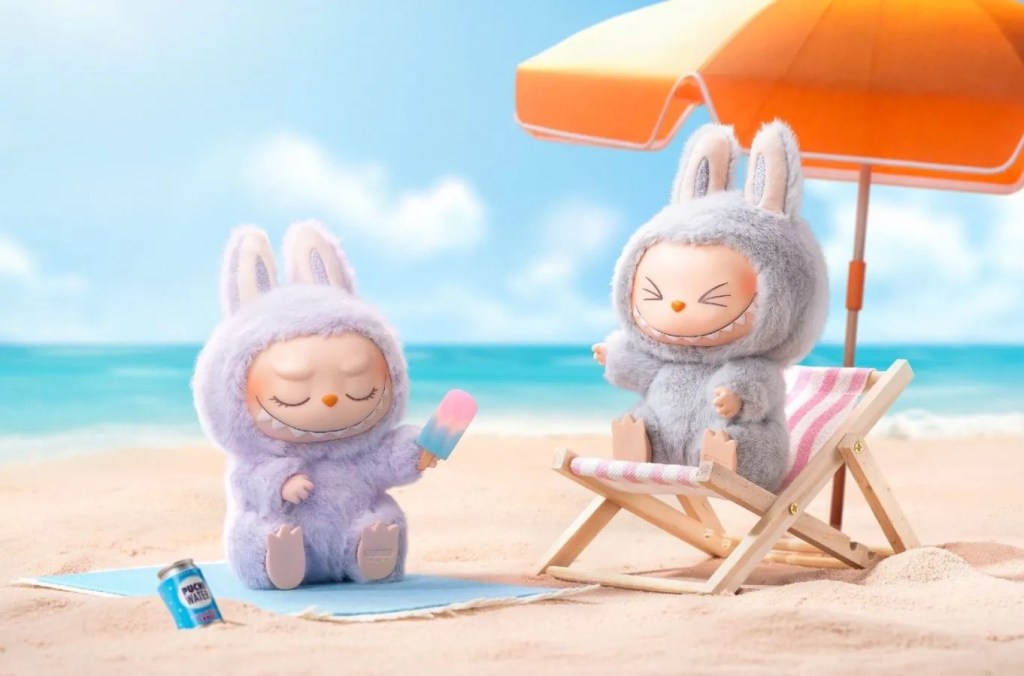
Labubus were actually first introduced ten years back in 2015, the first of their figurines having been produced by How2Work. However, their production and sale shifted over to the Chinese retailer Pop Mart in 2019, where they have been sold from ever since.

While Labubus would start to enjoy wider popularity once they came under Pop Mart, it’s important to note that they didn’t immediately become the overwhelming trend seen currently. In fact, while toy collectors would buy them for collecting purposes, they were a bit reviled by others for being “ugly.”

However, that all changed in April 2025, when the K-Pop idol Lisa from Blackpink posted one attached to her bag on her Instagram story, admitting both that they were her favorite toy and that she loved collecting all of them.
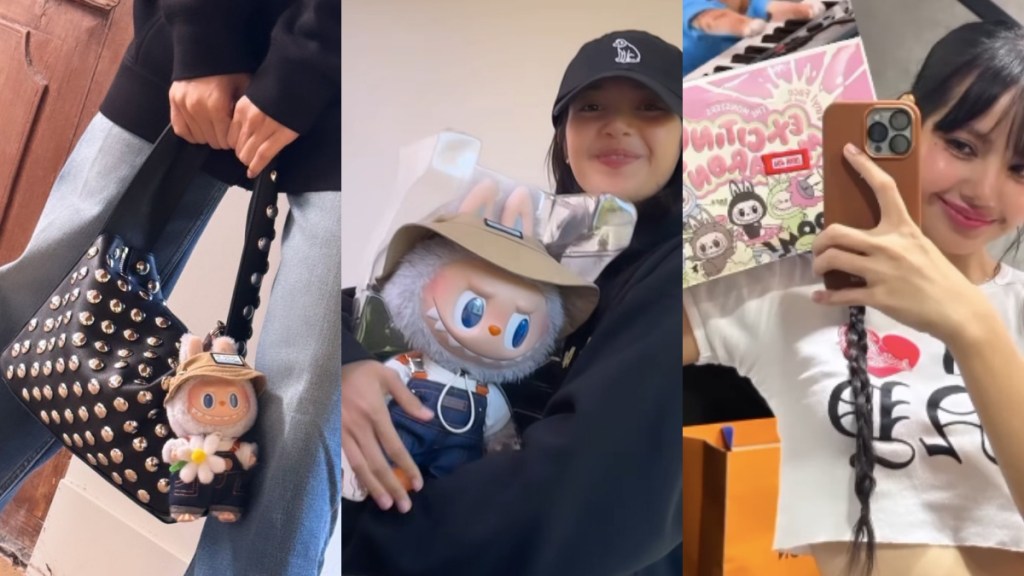
Lisa posting pictures with several of her Labubus

From that point, Labubus became all the rage. Other celebrities have posted showing off their Labubus. They’ve been to Milan fashion week. They’ve been taken on a “tour” of Thailand. They’re going to get an animated series. People have spent hundreds, if not thousands, on the Pop Mart blind boxes trying to collect these little imps, with the rare “mystery color” being the most sought after for each blind box series. They are the “it” thing.

But… if we know anything about trends like this, is that this one is not going to last very long.

Just like Funko Pops and Beanie Babies, Labubus are currently set to follow the same trajectory: a couple of years of excessive hype and popularity, then a sudden market “burst” and devaluation. Then, they’ll appear en masse in thrift stores and land fills, tossed to the wayside by the disinterested masses.

They won’t vanish entirely, of course- just as new funko pops and new beanie babies are released, so too will new Labubus. But they’ll once again return to being a niche toy, mostly forgotten in favor of the next big thing.

This pattern has happened time and time again. Why? Because that is just the nature of trends when it comes to non-essential goods. People don’t exactly need Labubus, or any other type of trending figurine. They don’t even need certain clothing, and clothing technically falls under the category of “essential.” But when something trends, it makes people want the item, out of sense of F.O.M.O., or “fear of missing out.” In our consumer society, people can’t help it.

But never in the history of the world has a trend like this lasted all that long. Especially in the age of social media, when new things are popping up every single day in a relentless wave. It’s simply impossible for the trend to last. Look at Stanley cups, for example: last year people were camping outside of stores and literally rushing to get their hands on the newest color. Now how often do you hear about them?

No matter how overwhelmingly popular Labubus may seem now, it’ll only be a matter of time before something else catches the attention of the general public and they are tossed aside. When or what will that be, is uncertain. But what is certain, is that this trend is doomed to die.
Meet the Man who Spent $100,000 to look like BTS’s Jimin

The TV series Hooked on the Look holds a reputation for its documentation of the extreme in terms of plastic surgery. Having featured figures like the “Real Life Ken Doll” and the Justin Bieber look-alike, having a Londoner named Oli London going to the surgical extremes should be nothing out of the ordinary.

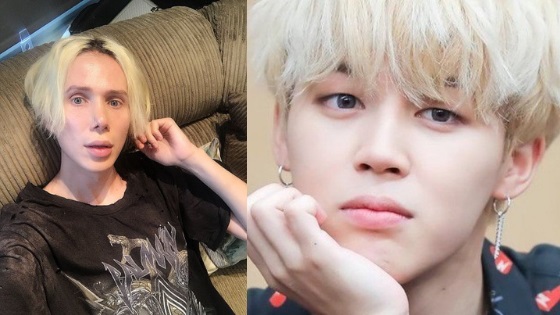
The reason he’s worth noting, however, is for who this man wants to look like. London became a hot topic on social media for the fact that he wants to look like Jimin, one of the lead vocalists from the Kpop group BTS. In essence, the man wants to “change his race”.

This man has gone all out to try and look like the Korean star, from copying his hair, to buying clothes, to getting plenty of procedures to try and emulate Jimin. He’s gotten multiple rhinoplasty procedures, lip fillers, work on his eyes, jaw shaving, and has had all the fatty tissue removed from his chest, among other things. He’s not afraid to spend the money to look like the idol, and he clearly has the money to spend.

Despite all this, London argues that he doesn’t want to change his race, and that he knows that he will always be Caucasian. However, he still wants to try and look Korean because of his love of Jimin (and Kpop idols more generally). In fact, after getting fillers in his eyes and cheeks to look more “like Jimin”, in the show London comments as he looks at himself that he “looks and feels Korean”, which has questionable implications. It brings London into the uncomfortable category of “Koreaboo”, which involves the idolization of Korean culture based on the idea of Kpop and Kdramas, and the fetishization of Koreans.

While London claims he doesn’t want to “be” Korean, he certainly wants to look it, and he especially wants to look like Jimin, which would most likely disturb the actual singer. The Kpop idol already has to deal with sasaengs that follow him and his group around on airplanes and to hotels, and would probably not appreciate hearing that someone has spent an exorbitant amount of money just to look like him.

Blackpink Plays at Coachella

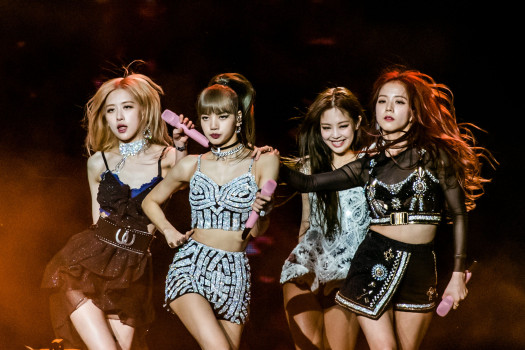
This past weekend, Kpop girl band Blackpink played at the first weekend of Coachella, becoming the first Kpop group to play at the musical event. They played a total of 13 songs, and became number one trending on Twitter, drawing thousands of Tweets by fans.

The quartet was given prime line-up for Coachella, appearing on the main stage Day One. They will also perform again this upcoming weekend, the 2nd weekend of Coachella. This performance will also be their first performance in the United States, although they have announced a full US tour for later this year

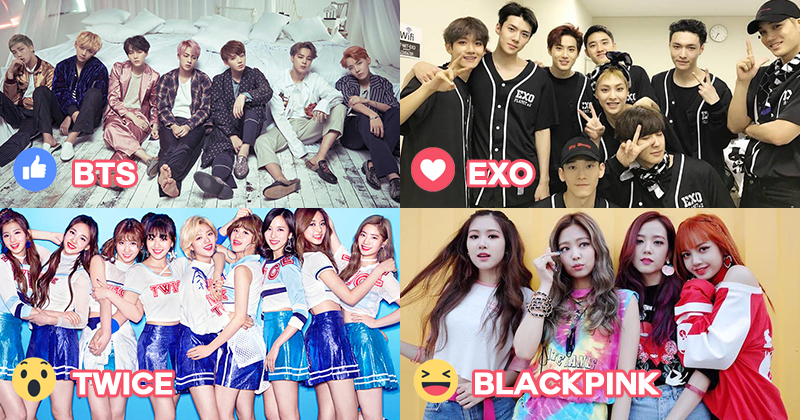
Blackpink, which is comprised of Jennie, Lisa, Jisoo, and Rose, first debuted in 2016 with their hit single “Boombayah”, and blew up to the highest performing female Kpop group with their mega-hit “Ddu-Du-Ddu-Du” just last year. The group comes from YG Entertainment, a key company in the Kpop industry that has recently come under fire for the Seungri scandal.

The band was personally invited to the line-up by the head of Coachella, and joined alt-rock Hyukoh, avant-garde Jambinai, and Japanese electro-funk trio Perfume, drawing lots of attention from fans.

Korean Pop Singer Seungri Calls it Quits After Sex Scandal Charges

Korean singer and actor Seung-ri, known by his stage name V.I. in Japan, was charged recently with providing prostitutes in a sex ring late last week. Despite denying these charges, the 28-year-old announced his retirement from Kpop in order to protect Big Bang and his company YG Entertainment.

The charges, which could lead to a three year prison sentence, came after a police raid of a nightclub in Seoul, one that Seung-ri, who’s real name is Lee Seung-hyun, controls. As a result, YG shares collapsed by a whopping 14 % the next morning.

The police raid, and the new charge, comes after a nightclub assault committed by him in January. Police began investigating into allegations such as supplying drugs to patrons, and giving drug-addled drinks to women to have sex with. The allegations don’t just extend back a few weeks, however. Text messages in 2015 between Seung-ri and three others discussed supplying prostitutes to potential investors to encourage them to invest in his club.

Although Seung-ri made claims that the text messages were fabricated by the journalist that exposed them, but that didn’t stop concerts in Osaka, Japan, and Jakarta, Indonesia from getting cancelled for Big Bang.

Korean Media has also exposed that YG has been throwing out shredded information, although the company denies that none of the information is related to the case.

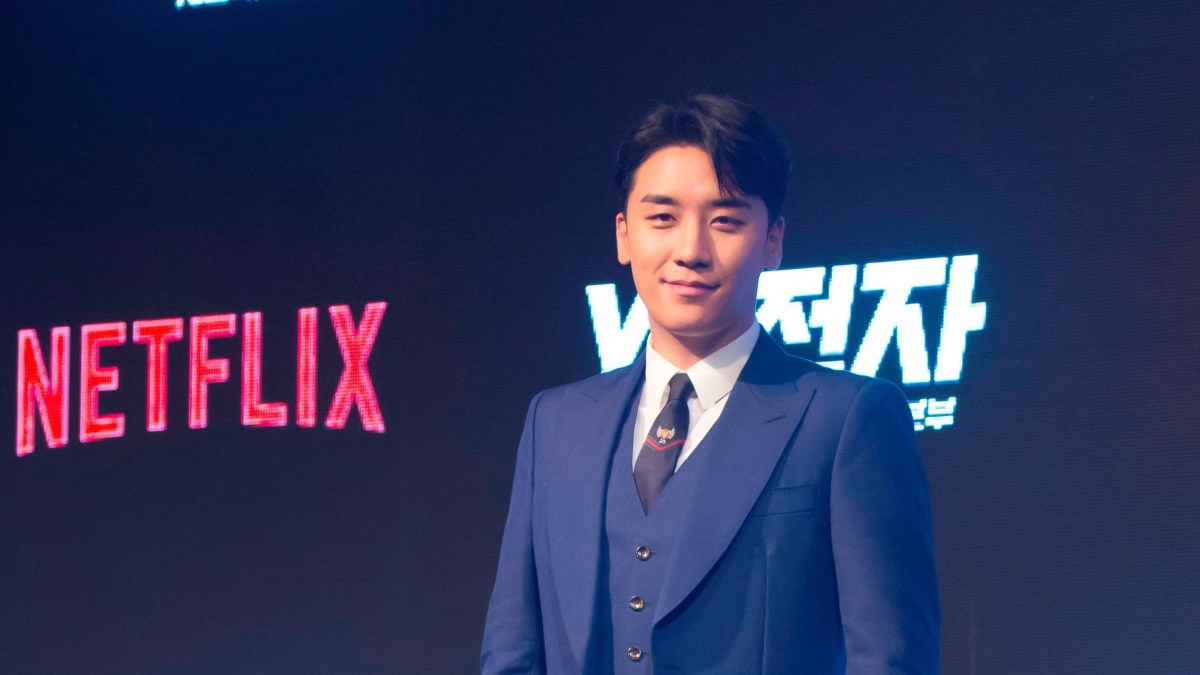
The allegations at the moment come at a time when Seung-ri was both set to star in a sitcom produced by both YG and Netflix, and was a few weeks from going on leave to perform his mandatory military service. This leave will be postponed while the investigation goes on.

Despite the seriousness of these allegations, some staunch fans still avidly support Seung-ri, actively denying the allegations and getting aggressive towards the investigation, insisting that any and all victims were simply lying. Such fanaticism is both interesting and harmful, as it would make any victims feel unsafe speaking out, and would put Seung-ri on a pedestal. Perhaps the defensiveness comes from Big Bang’s legacy, which is both widespread among old-age Kpop fans and extremely positive, as members are known for being very kind. The allegations starkly contrast the reputation of the band, and threaten the legacy of it as well. Such threats trigger fans to get defensive, even if these allegations prove to be true (which at this rate, most likely are).

Now, it’s important to note, while Seung-ri may be the face of this scandal, he is merely alleged to be part of a high-scale and very large ring that involves both politicians and conglomerates in a class-A scandal that seems to deeply involved with nightclubs in Gangnam. Even as the police investigate into the ring, they are also enmeshed in the scandal, with some high-ranking positioned officials having been paid off to not look into the politicians and conglomerates. This relationship is not a one-time occurrence, either. It seems to be entrenched in South Korean politics, which has somewhat of a record for corrupt and closed-door practices, particularly in dealing with business. So, it’ll be interesting to see how the case develops, especially with the police being in a position as both the justice-bringers and as part of the corruption.

KPop is Now in the West, and it’s Here to Stay

The Western pop culture realm was severely shaken up when in 2017 BTS was nominated for a Billboard Music Award, and won. They were the first Korean artists to get nominated for a Western Music award, and were met with a mix of both excitement from their fans and confusion from the general populace. Social media was flooded with questions about who BTS was, and why/how they got nominated in the first place.

Two years later, and Kpop has not only exploded in popularity, but is slowly melding its way into Western music. Artists such as Steve Aoki, Nicki Minaj, Jason Derulo, and Dua Lipa have collaborated with some of the most popular Kpop groups, mixing both Korean and English in a way that had only previous been done with Latin music. Just last week Jason Derulo came out with a song and music video featuring LAY and NCT 127, the former being a Kpop singer and the latter being a Kpop group, called “Shut Up, Let’s Dance”.

Kpop is working its way into Western music, though at a much slower rate relative to the explosion in popularity among Western audiences. The rapid growth in fans of Kpop is rather astonishing, as in just a few months the rate of Kpop fans have skyrocketed, and social media interactions with Kpop groups. For both BTS’s and EXO’s twitters, the rate of interaction with the accounts by fans beat expected interactions by a longshot in 2018, beating out top western artists such as Beyonce and Justin Bieber.

Kpop groups have even made their way into Western advertisements, as BTS has both been on the cover of Billboard magazine and modeled for Vogue. The most popular female group at the moment, Blackpink, just appeared on the cover of Billboard magazine as well, having some of the highest amount of streams on Spotify. Their latest song “Ddu Du Ddu Du” also has topped 695 million views on Youtube, making it one of the most listened to Kpop songs globally.

Kpop is pushing its way into Western Music, and, at least for the time being, it’s here to stay. It’ll be interesting to see how Western music awards, particularly awards such as the Grammy’s, will adapt to the rising popularity of Kpop. Will it add a category specifically for Kpop, which they did for Latin music? Or will they simply meld it in to the preexisting categories, as what occurred with BTS this february? It’ll be interesting to see where the next few years takes us.

Youtube Rewind 2018: For the Corporate

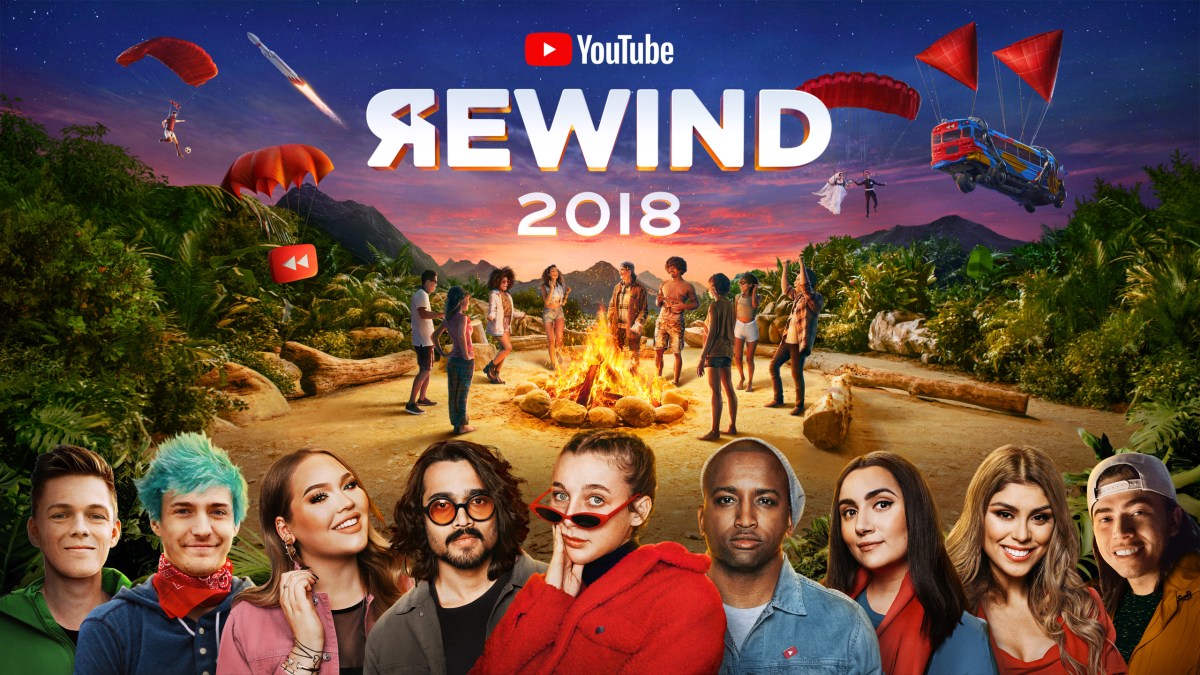
This last week, Youtube Rewind 2018 dropped, receiving not just the most dislikes of any previous rewind, but also the most dislikes of any video on the site ever, getting over 4 million dislikes in 24 hours. Which is ironic, considering that this years rewind was supposed to be “what the people want”.

Youtubers, all over the place jumped on the opportunity to review it. H3H3 even went so far as to compare this year’s rewind to the rewind from 2013, showing how much Youtube has changed to be more about the business than about the creators. This comparison brought to light what Youtube was before the 2016 “Ad-pocalypse”, an event hallmarked by the rush of company ads and investments being removed from Youtube after Pewdiepie’s anti-semitic controversy, and after. It’s a stark difference.

Now, before I go into it, I’m going to put this forward: I’ve seen this year’s rewind, and I hated it. Like, not just in the fact that they had almost no one I could recognize, but the fact that it was just all around cringy. Now, let’s get into details.

The rewind opens up with Will Smith, who not only doesn’t have a Youtube, but also wishes for Fortnite (?). It then leads to showing a Twitch streamer, and a bunch of people I swear I’ve never seen before, before going downhill from there.

I’m not going to do a full breakdown, but the first minute of this rewind should already say enough about how it’s not for the people, even though that was the theme of the video. “Let’s make it about the viewers! Go by the comments!” They said, although no one is really sure how legitimate those comments are. In fact, if you look at the comments below the video, you can see just how upset people are with it. The rewind ignored a lot of big events that happened not just on Youtube, but on social media in general, instead focusing on the…political contributions of some on the platform? It was ridiculous.

The video obviously reflected the Youtube that the company wants to present, which is soft and fun, but more importantly ad-friendly. It’s not accurate, and it avoids any and all “risks”, even though that’s what the platform is known for. The worst part was the Youtubers. A good 90 percent of them I, nor most other people, had ever heard of, and focused on things like mukbangs and ASMR. They had some KPop, copying the new video by BTS (the most widely-known Kpop group right now) without actually mentioning their name. It was just bad.

This video wasn’t for the people, despite what they proclaim. It was just a waste of time and money.

Legends of the Weeaboo

I’ve already spoken about Koreaboos before. The people who want to be Korean, marry a Korean, want to be just like a Kpop idol or Kdrama star. They reject their own culture in the name of adopting Korean culture (or rather, what they think Korean culture is like).

The weeaboo is almost like this. Actually, they are the forefather to this. The weeaboo, rather than being centered around Korean pop culture, is centered around Japan. The weeaboo rejects their own culture in order to adopt what they believe is Japanese culture, proclaiming it as superior to everything else. They base their idea of Japanese culture off of anime and manga, imagining it as some perfect society that is more advanced than any other culture, and that it has had no bad history or political issues.

The weeaboo began to form around the 1990’s, when the West had access to popular anime and manga. Young generations now had access to watching anime, influencing an entire generation, causing some to go a little overboard and become weeaboos.

Except, at the time, they weren’t called weeaboos. Until the mid-2000’s, weeaboos were called “wapanese”, meaning white Japanese (despite people of all races having the potential to be a weeaboo). The old name was mostly given on online forums, with sites such as Reddit and 4chan coining the terms.

However, in the mid-2000’s, some 4chan moderators decided that they were sick of the term. They banned the term wapanese, causing users to scour the internet for another name. This is how they found the term weeaboo. The term came originally from an obscure comic, which is in no way connected to the actual group of people. However, it was a word that also didn’t have a meaning of its own, and was thus made what it is today.

Weeaboos are still going strong, although they now have to compete with koreaboos, causing an ironic and hypocritical battle between the two groups. They are both disgusted with one another, but can’t seem to relate the traits of the other groups back to themselves. It’s kind of weird, but amusing to watch.

How Kpop got its Place in Western Media

Now that the season of music and movies has hit, Spotify has begun releasing a weekly playlist called “New Music Fridays”. I’ll listen to it sometimes to find music to add to my own personal playlists, and am unsurprised with the typical English and Latin music that comes on.

Today was different, however. Today I was pleasantly surprised to hear Blackpink’s “Ddu-Du Ddu-Du”, which had been released today (along with the music video for it). Blackpink is a prominent girl’s Kpop group, whose song “Boombayah” had broken records for being the most viewed debut song on Youtube, and achieving 150 million views in less than six months. Even as I write this, the music video “Ddu-Du Ddu-Du” became the fastest girl group Kpop music video to hit 10 million views. To hear their newest song on a playlist of otherwise Western songs was interesting.

The song (which was pretty good, by the way) got me thinking about Kpop as a whole. Just six years ago, most people outside my neighborhood (I grew up in a Korean neighborhood) had never heard of Kpop. Now, advertisements featuring BTS (the most popular Kpop group of right now) are growing increasingly less uncommon, and just about everyone I’ve spoken too knows about Kpop. This did not happen for no reason.

No, the reason Kpop has burst on to the scene goes beyond the accidental popularity of “Gangnam Style”. South Korea’s entertainment industry sits in an interesting situation, receiving direct funding and advisement from the Korean government while at the same time holding themselves as a private industry. This is because while the South Korean government is promoting a market economy with both a private and public sector, they are promoting it in a way that gives them control over how they promote the nation’s image. They want Kpop and Kdramas to spread and show how “cool” of a country South Korea is. The goal is to have their pop culture be known not only in Eastern and Western markets, but also in what’s called “developing” markets as well.

With the massive amount of funding the entertainment companies receive, they can push out higher quality media, to the levels of Japanese and Western media. They promote a Western appeal (adding rap, street wear), while at the same time keeping a unique flair that is inherent to Korean media. They were trying to make their brand known.

But even with all the effort put in, many were shocked to find that “Gangnam Style”, a lyrical satire about the Beverly Hills of South Korea, took the cake for breaking into Western markets. The song, which makes fun of the mannerisms of the rich in South Korea, was not the song the government wanted to be the first Kpop song that new audiences heard on a large scale. While that isn’t to say that they didn’t want singer Psy to make the song at all (he was a relatively popular artist within South Korea), they certainly didn’t want it to become that popular. But not everything can go according the plan, however.

I can’t say “Gangnam Style” was the song that put Kpop in the spot it holds today.  It seems more like the genre gained a more permanent footing when BTS shocked audiences by snatching the title of Top Social Artist at the American Billboard Awards in 2017, beating out prominent names like Selena Gomez and Justin Bieber. It sent the internet ablaze, being divided between fans who were excited for the win, and quite a few people who were asking “who are these guys?”. And while Kpop was popular already, I felt it opened more people to exposure from Kpop, getting more people to jump on the “Korean Craze”.

Crazy Kpop Fans vs. Koreaboos- the Important Difference

Since the release and popularity of “Gangnam Style” by PSY, Kpop, and Korean pop culture in general, has soared in popularity in Western pop culture. This continuing rise in popularity has led to BTS’s recent performance at the New York New Year’s Show, and the rising presence of Kcon (a convention centered around Kpop and other pop culture). It has also created created a rise to the super fanatics, or the “crazy Kpop fans”, and the koreaboos.

What is the difference between the two? While the koreaboo does classify under the category of “extreme fanaticism” like the crazy Kpop fan, one is distinctly different from the other. How is this so?

Well, the differences come in attributes. For the crazy Kpop fan, which holds the name sasaeng (a Korean term which literally translates to “private life”, referring to the regular invasion of privacy of Kpop artists by their crazy fans), the attributes come in the form of deep psychological and emotional obsession with Kpop, and certain groups in particular. The sasaeng fan are not considered “true fans”, constantly trying to rip off artists’ clothes, kiss them, and stalk them. While the sasaeng fan is in the West is much more virtual-based, writing fan fictions of all sorts about their favorite idols, buying anything and everything that they believe belongs to their favorite idol, and “virtually” stalking their idol, there has been increasing physical contact, with some sasaeng flying out to South Korea in order to try and find their idols.

The Korean sasaeng fan is much more direct, and will break into idols’ rooms, set up cameras, drug the idols, hit the idols, in order to be remembered. They will get in taxis or their own cars in order to follow their favorite idols, which have resulted in previous multi-car accidents and stand offs. They will even go so far as to try and kidnap their favorite idols in order to get close to them. This cultural phenomenon has existed since the 1990s with the rise of “fandoms”, although they are gaining heightened momentum and attention under the digital era, with as many as 100 sasaeng fans following the biggest Kpop idols on a given day. Their behavior is erratic and dangerous, having a direct impact and life-threatening impact on the Kpop idols.

The Koreaboo by contrast, represents a much different and more muted form of harmful. The koreaboo is best described as someone who denies their native culture, idolizing Korean culture (based off of Kpop and Kdramas) and claiming it as their own. The koreaboo wants to be a Korean, seeing them as the “most attractive” or “best” ethnic group, and dreams of moving to Korean and marrying a Korean person. They try to act like how they imagine a Korean person acts (based off of Kpop and Kdramas) and are basically Korean fetishists. Kind of reminds you of Rachel Dolezal and Ja Du, right?

With this is mind, how can they possibly be harmful like the sasaeng fan? Well, they’re more harmful in the way that they ruin things for everyone else. Because of their cultural fetishism, they stigmatize liking Korean popular culture, and make anyone who has an interest in seeing South Korea or learning about their culture look bad. They do not directly harm the lives of their favorite idols, but they do promote cultural stigma, and make enjoying other cultures look “wrong”, particularly among younger populations, who are affected by the Kpop phenomenon the most. They represent a mutation in fanaticism, a minority with a big and memorable voice that exists not just with Korean pop culture but also Japanese pop culture (the weeaboo, which influenced the name koreaboo), and European pop culture (although they are considered much more socially acceptable by the West). They force casual fans to feel “bad” about what they like, and ruin all the fun.