How Aggretsuko and Gudetama Took the World

Hello Kitty has long been the star of the Japanese company Sanrio, since stepping onto the scene in 1964. Since then, numerous characters have been released through the decades, with characters such as Cinnamroll, Bad Badtz-Maru, and Chococat gaining some popularity and recognition.

However, there are two Sanrio characters, both of which are two of the company’s newest characters,  have taken not only social media, but also pop culture, by storm. The first of these two is Gudetama, who’s name is derived from “gude” (the Japanese onomatopoeia for having no energy), and “tama” (taken from the Japanese word for egg, tamago), is exactly what his name prescribes: a lazy egg. Released in Japan in 2013 and internationally 2014, the egg gained almost immediate popularity among Millennials and Generation Z kids for his adorable appearance and lazy attitude. His character release was accompanied by a series of online shorts displaying his daily “adventures”, and little emotes that display his range of laziness.

Gudetama maintains popularity as a result of his cuteness, but also his lazy attitude. Young people relate to his lazy attitude, because they want to be like him, lazy and having no problems to deal with (work, school, taxes, etc.). They want to be able to just do nothing. They also like his “kawaii” nature, his simplistic design making him absolutely adorable.

The character also has a very recognizable aesthetic, adding to his popularity: orange and yellow. Two colors that might otherwise be seen as garish and non-kawaii colors are made a central part of Gudetama’s aesthetic, which works incredibly well. It makes his aesthetic unique. All his merchandise is sold in this aesthetic, with shirts, jewelry, stationery, and other items being sold in the pastel yellow and yoke orange colors. Even the plushies of him tend to center around those colors, adding all the more to his absolute essence.

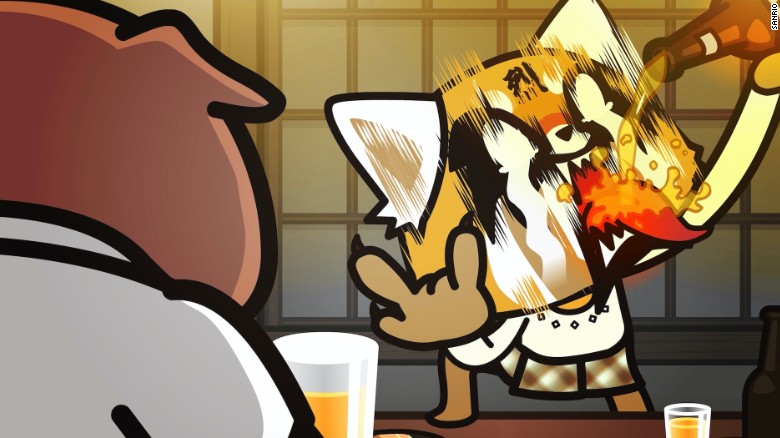
The second character, Aggressive Retsuko, a.k.a Aggretsuko, is a red panda who is an assistant associate at a Japanese company. Her work is oppressive, and she vents her frustration by getting angry, drinking, and singing death metal at a Karaoke bar. She was initially released in Japan in 2016, and then abroad in 2018, paired alongside the anime series about her life. She takes a much more adult perspective than Gudetama, and gained instant popularity because of the fact that she has to deal with her terrible boss (who is an actual pig) and fake coworkers. Many people entering the corporate work force have to deal with these same issues, and only wish they could vent all their frustration in the same way.

Although I haven’t seen much of her merchandise, I know it sells. She’s too popular for it not to sell. She holds a place at anime conventions, and has become a staple for the fact that she’s so relatable. It does help that she’s also very cute.

Both of these characters deal with issues that Millenials and older Gen-Z kids can relate to, although they represent opposite perspectives. Gudetama represents the joy of being able to be endlessly lazy, with no real troubles to deal with, while Aggretsuko deals with releasing stress when faced with the worst of work conditions. It’s interesting to see how they’ve taken off in popularity, and continue to remain popular.
The “Sick Cute” of Harajuku

Harajuku is widely renowned for its pastels and vibrant appearance. Started in the town of Harajuku, Japan, the fashion subculture had grown constantly and evolved since the 1970s, becoming the cutesy couture that inspired Gwen Stefani’s Harajuku Lovers perfume, promoting both happy and negative feelings through fashion

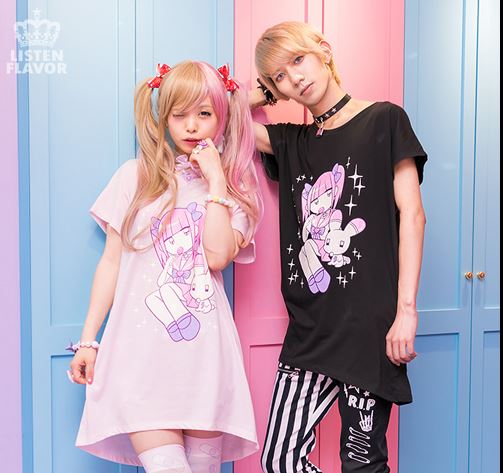
Within the last few years, however, a new side to the negative Harajuku has arisen, one that projects a much darker message, despite still being cute. Yami Kawaii (which literally translates to “sick cute”), is a style that on the surface appears cute and mildly sarcastic, but deeper down portrays a more sinister appearance, with violence and gore in pastel colors and cute appearance.

Although it mostly centers around humor, there is another layer to Yami Kawaii that is tied to why it is gaining popularity- menhera, or “mental health”. This side seems to be epitomized by the character “Menhera Chan”, who looks cute and kawaii at a glance, but wears telling bandages on her wrists and a razor blade in her hand. It contrasts itself with cute characters and soft colors against self-harm and medication, drawing attention to variance in mental health and conformity, while still being holding the Harajuku charm.

The menhera side of Yami Kawaii has gained much traction among the youth for its point in tackling the taboo topic of mental health in Japan, where any disorder from depression to schizophrenia is heavily stigmatized. In Japan, mental health is often seen as a sign of a character flaw such as weakness or bad temperament, rather than as a result of biology or genetics. It is seen as the person’s fault for having a mental disorder, and they are often singled out in a crowd. In a 2013 study by Sosei Yamaguchi and Yuta Aoki, it was discovered that a whopping 61% of employers would never hire someone with mental illness, and 75% of respondents answered that it was okay not to rent a room to someone with mental illness.

As a result of this stigma, plus high pressure to do well and succeed, Japan has the sixth highest suicide rate on the planet, and the bizarre phenomenon of people working themselves to death. The nation even has an infamous “suicide forest” (Aokigahara), where a high rate of suicides occur. With all that in mind, it seems odd that Japan is practically silent on the issue. Yami Kawaii aims to break that silence, by pushing discomforting images to the forefront of their fashion. Will it break the silence on mental health? Well, nothing is for certain. But it is gaining greater traction, both in Japan and abroad, drawing attention to Japan’s silence. So we’ll see.

Tsum Tsum’s and Ufufys: What are they?

If you know of Disney, then by now I’m sure you’ve at least seen a tsum tsum or an ufufy, even without knowing what they are called. These things are everywhere (as with most things Disney)- but what exactly are they?

To start, we have to look at tsum tsums. The first set of tsum tsums premiered in Japan in 2013, as merchandise to go along with the release of the tsum tsum mobile game, where people can match the tsum tsum versions of characters for points and coins.

These stackable versions of Disney and Pixar characters, named after the Japanese word ‘tsumu’, which literally means “to stack”, quickly gained popularity within the nation, for their cute appearance and their variable sizes (anywhere from small to giant).

In 2014, because of their popularity, the tsum tsum line was released in the US, with Paris following quickly thereafter. They are now sold in disney stores, at disneyland and disneyworld, D23, and various other locations around the world. They’re cute, soft, and collectible, which makes them insanely popular. There are even shorts about tsum tsums, which can be found online or showing at a Disney store.

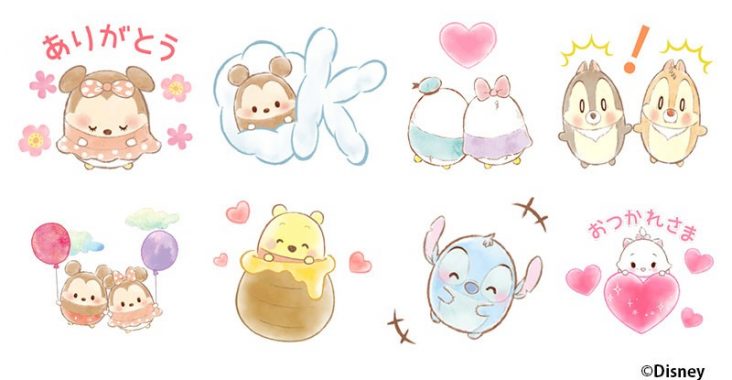
But what about Ufufys? What was the point of them (aside from merchandising)? Well, unlike being tied to a game, the ufufy is simply a part of the “kawaii collection” initially sold exclusively in Japan in 2016. These versions of the characters are supposed to be “born of the clouds”- light, fluffy, and filled with happiness. These characters are pastel colored and in the shape of balls, and they some with a spray to make them smell sweet. They took off without a hitch in Japan, to the point so that they were released in the US and other locations less than a year after their Japanese release (a slightly shorter time period than the tsum tsum).

The word ‘ufufy’, unlike tsum tsum, is not based off a word. It is simply to add to the cuteness of the ufufy. That doesn’t make them any less cute, however (I have a weakness for cute stuffed animals, if you couldn’t already tell).