Ariana Grande and the “Tiny BBQ Grill” Incident

Two days ago, singer Ariana Grande posted a tattoo she had gotten on her hand promoting her new song “7 rings” in Japanese, spelled out 七つの指輪. However, instead of having the whole phrase tattooed onto her hand, she was in too much pain to finish it, and instead shortened it to just read 七
輪. While it technically can also mean “7 rings”, in colloquial Japanese, it really means “small barbecue grill”.

Japanese speakers, and those fluent in Japanese, were quick to notice, and make fun of it. All over twitter people were calling Grande out, and some even went so far as to tattoo dumb phrases onto their hand and say it was something else (my personal favorite is someone who wrote “I wanna die” on their hand).

Grande didn’t seem to take this in offense, however, defending herself by saying she actually enjoys tiny barbecue grills, and that she was aware of the incorrect grammar. She also said that since the area was prone to flaking, if she really missed the tattoo, then she would suffer through the pain and get the correct version the next time around.

However, as of this morning, she had the tattoo altered (with licodaine shots), with a message on instagram saying that she would “miss her tiny grill”. It seems the online mockery did get to her. Japanese twitter is still making fun of the mistake however, most likely a result of being tired of having white celebrities use their language for the sake of “aesthetic”. Which would make sense, since it is kind of strange to use a language for aesthetic.

How Aggretsuko and Gudetama Took the World

Hello Kitty has long been the star of the Japanese company Sanrio, since stepping onto the scene in 1964. Since then, numerous characters have been released through the decades, with characters such as Cinnamroll, Bad Badtz-Maru, and Chococat gaining some popularity and recognition.

However, there are two Sanrio characters, both of which are two of the company’s newest characters,  have taken not only social media, but also pop culture, by storm. The first of these two is Gudetama, who’s name is derived from “gude” (the Japanese onomatopoeia for having no energy), and “tama” (taken from the Japanese word for egg, tamago), is exactly what his name prescribes: a lazy egg. Released in Japan in 2013 and internationally 2014, the egg gained almost immediate popularity among Millennials and Generation Z kids for his adorable appearance and lazy attitude. His character release was accompanied by a series of online shorts displaying his daily “adventures”, and little emotes that display his range of laziness.

Gudetama maintains popularity as a result of his cuteness, but also his lazy attitude. Young people relate to his lazy attitude, because they want to be like him, lazy and having no problems to deal with (work, school, taxes, etc.). They want to be able to just do nothing. They also like his “kawaii” nature, his simplistic design making him absolutely adorable.

The character also has a very recognizable aesthetic, adding to his popularity: orange and yellow. Two colors that might otherwise be seen as garish and non-kawaii colors are made a central part of Gudetama’s aesthetic, which works incredibly well. It makes his aesthetic unique. All his merchandise is sold in this aesthetic, with shirts, jewelry, stationery, and other items being sold in the pastel yellow and yoke orange colors. Even the plushies of him tend to center around those colors, adding all the more to his absolute essence.

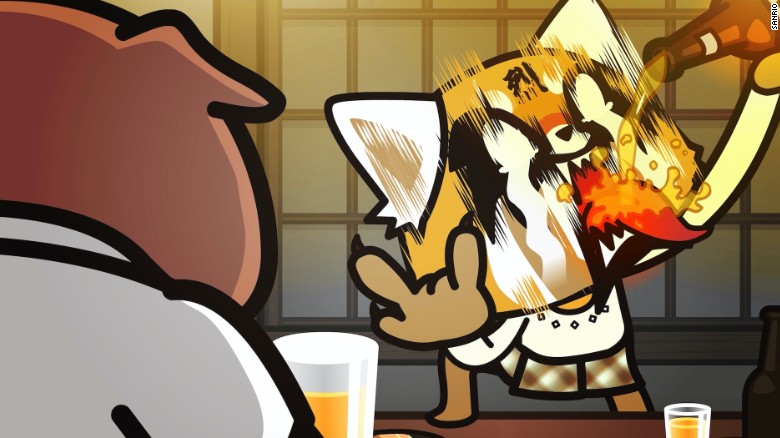
The second character, Aggressive Retsuko, a.k.a Aggretsuko, is a red panda who is an assistant associate at a Japanese company. Her work is oppressive, and she vents her frustration by getting angry, drinking, and singing death metal at a Karaoke bar. She was initially released in Japan in 2016, and then abroad in 2018, paired alongside the anime series about her life. She takes a much more adult perspective than Gudetama, and gained instant popularity because of the fact that she has to deal with her terrible boss (who is an actual pig) and fake coworkers. Many people entering the corporate work force have to deal with these same issues, and only wish they could vent all their frustration in the same way.

Although I haven’t seen much of her merchandise, I know it sells. She’s too popular for it not to sell. She holds a place at anime conventions, and has become a staple for the fact that she’s so relatable. It does help that she’s also very cute.

Both of these characters deal with issues that Millenials and older Gen-Z kids can relate to, although they represent opposite perspectives. Gudetama represents the joy of being able to be endlessly lazy, with no real troubles to deal with, while Aggretsuko deals with releasing stress when faced with the worst of work conditions. It’s interesting to see how they’ve taken off in popularity, and continue to remain popular.

The “Anime Phase”

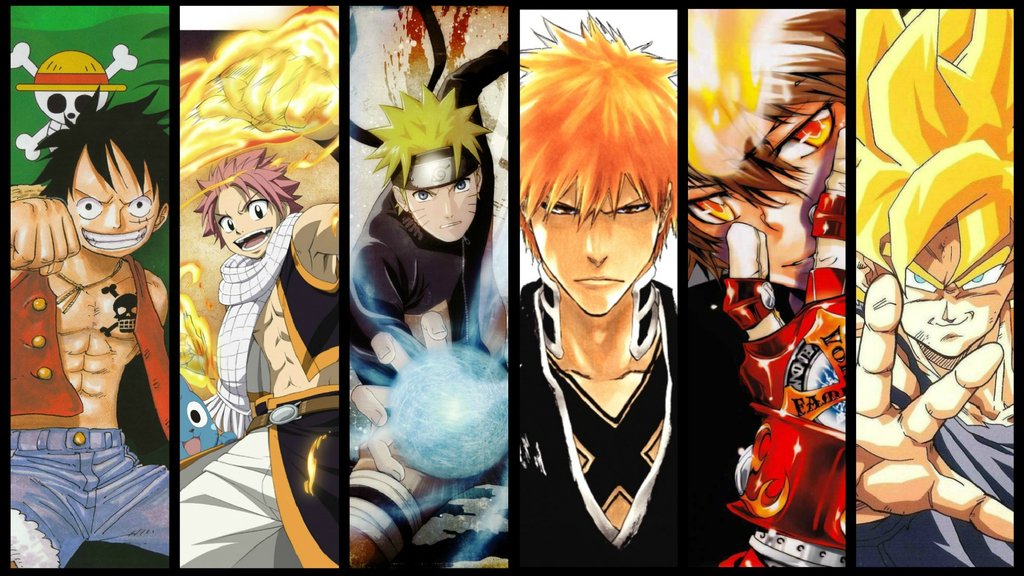
My friends and I all had one. Some of them still haven’t gotten out of it. It’s that period of time where most, if not all of what you watch is Anime, and you join fandoms centered around your favorite ones. It’s a normal part of nerd development, it seems.

For those of you who seem confused by this “Anime Phase”, let me put it into perspective: imagine you had a show or TV genre that you were absolutely obsessed with. You could have been obsessed with it for weeks, months, even years, but it was the center of your attention in terms of being a fan. They’re one in the same. But rather than having it be an American or British TV show/genre, it’s Japanese.

This phase rose out of the Anime Craze of the 1990’s. It came as a result of kids having greater exposure and access to watching Anime, allowing for the phase to blossom. Kids are going through a period of wanting to watch nothing but Anime, and there’s nothing wrong with that.

The Anime Phase can range anywhere from casual (like mine) to all-consuming. I was one of the ones who would watch Anime casually, but wasn’t too far into it. I could watch other shows, and watching Anime didn’t take up my entire day. But there are others, including people I knew, who would spend their day only watching Anime. These are usually the ones that don’t ever leave the Anime Phase, although there are occasions when they do.

In most cases, those who have an Anime Phase never stop watching anime. I can tell you that most of my friends still watch certain anime (mostly to most popular ones), although I find myself unable to sit down and watch one. The last one I saw was three years ago, and although some anime are enticing, I just can’t sit for that long watching. I’ve developed kind of a strange relationship with anime, probably because of overly casual nature of my Anime Phase.

The Anime Phase has been going strong for over twenty years. It’ll be interesting to see how long it continues for, especially with the rise of other popular phases.