Why is 4/20 a Thing in North America?

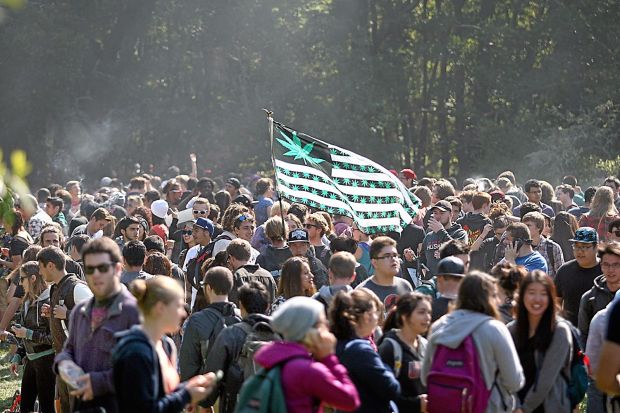
This past saturday, the “unofficial holiday” known as 4/20 occurred, landing on the first day of Passover and the day before Easter Sunday. Events celebrating the “holiday” appeared throughout the US and Canada, with some events even occurring in the UK and New Zealand.

Those in non-cannabis culture countries who see jokes and mentions of the event may be asking “why is this a holiday?” or even “what does 420 even have to do with weed?”. Well, in order to understand the first question, we need to first look at the second.

The association of 420 and marijuana started in the 1970’s in San Rafael, California. A group of high school students and marijuana enthusiasts, going by the name of “Waldos”, met up at 4:20 pm every afternoon by a statue in order to search for that they believed to be a was a pot plot. They never did find the pot plot, but began using the term “420” as a code for anything pot-related.

How did the term expand beyond just the group of Waldos? One of them became involved with the band Grateful Dead, when they worked with said Waldos father on a real estate deal. The bassist of the Grateful Dead became friends with the Waldo, and heard the 420 slang and took a liking to it, kick-starting its spread throughout the United States.

The “holiday” itself came around starting in 1990, and has grown in subsequent years. The event really bloomed internationally in cannabis culture countries in the early 2010’s, when 420 became a popular meme after the legalization of recreational marijuana in the state of Colorado. Recreational marijuana use already existed in Canada, the Netherlands, Luxembourg, Belgium, Portugal, and Chile, although celebration of the 420 event only existed, and only really continues to exist in Canada.

Marijuana remains almost entirely illegal throughout most of the rest of the world, which keeps celebration of the event mostly in North America. Cultural differences and perceptions of marijuana also locks the event within North America for the most part, although the internet has been spreading awareness of the event throughout the West.
BTS Cause an Online Storm with their SNL Performance

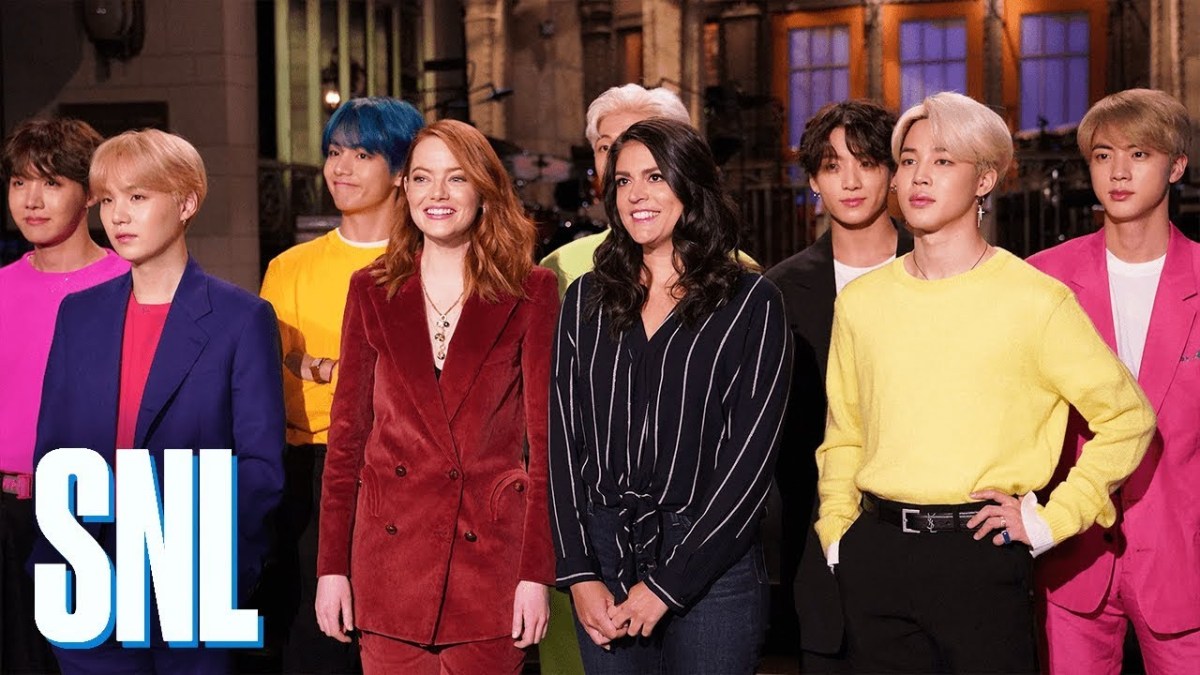
Lat night, Kpop boy band BTS performed on SNL with host Emma Stone, making them the first ever South Korean artists to appear on the show. Their performance was marked by much anticipation, with great excitement from the fans and plenty of advertising from the show itself.

They performed the day after the release of their new album Map of the Soul: Persona, performing their single “Boy with Luv” and their popular “Mic Drop Remix”, causing quite a storm on all social media platforms, namely Twitter. Fans fawned over the perfect choreography and the live singing, and even some mentioned how one of Rm’s outfits was from “Persona: Intro”.

Their performance on the show brought a jump in SNL viewership ratings that hasn’t happened in years. It also put the show as number one on trending lists, another feat for the show.

BTS’s new video for “Boy with Luv”, featuring Halsey, has already broken 116 million views in two days.

The Evolution of Fake News

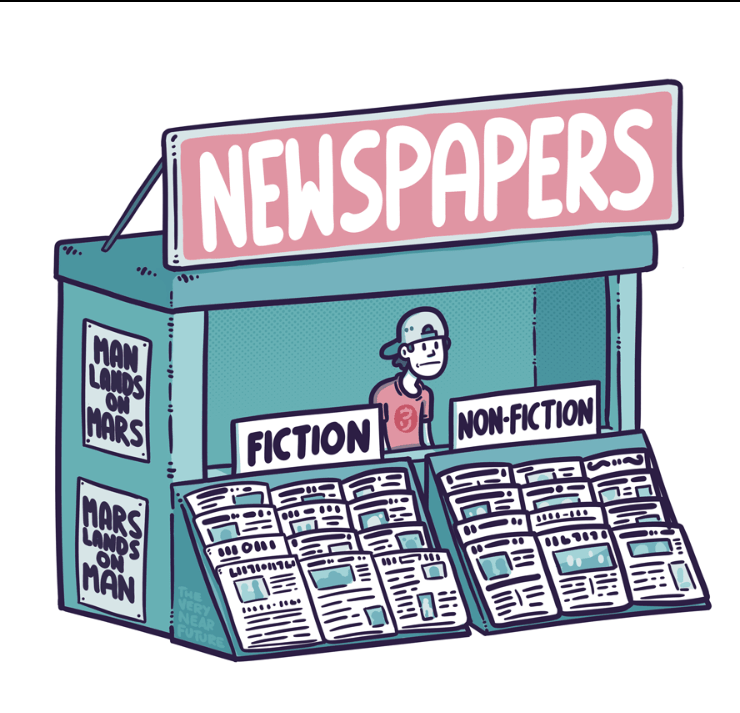
Although the term was popularized in the 2016 US presidential elections, fake news has had a rather long existence, spanning over a century. It’s no new thing, although at the moment, the proliferation of fake news has built up points of great contention, trust, and turmoil.

Fake news can trace it’s history all the way back to the Spanish-American War of 1898, which was, in essence, caused by William Randolph Hearst and his newspaper the New York Journal. During this time period, the “fake news” was classified as “Yellow journalism” as the yellow tint of the printing of Hearst’s paper differentiated it from it’s rival newspaper. Hearst’s newspaper pushed out fabricated stories about the violence of the Spanish towards Americans in the Caribbean, utilizing emotion to encourage the American public to want war. This triggered a period filled with fake news, which became so rampant that a challenging newspaper rewrote it’s tagline to support “real news-not fake news”.

Despite the anxiety over the fake news, yellow journalism was able to successfully turn the people to want war, which kick-started the Spanish-American war.

Fake news did not die after the war. Instead, it went someone dormant, as there was major backlash against such fake news at the dawn of the twentieth century. However, fake news would make a new rise during World War One, churning out propaganda about the barbaric nature of the Germans, particularly against Belgium. Now, this isn’t to say that Germany did not act violently against Belgium, a peaceful country, but the fake news industry blew much of the invasion way out of proportion, churning out stories that rang not just in the US, but throughout the allied nations.

Not only that, but rampant propaganda an fake news actually fooled the entirety of the German public, who thought the entire span of the war that they were winning the war. And since the German military maintained mass press censorship, the public never knew they were losing until Kaiser Wilhelm II declared surrender.

Fake news would keep making appearances in spreading of the First Red Scare in the US, feelings of isolationism both in the US and in Europe, and the decade of harsh reeducation of the German public during the rise of Nazi Germany. Following the end of the second world war, fake news would appear intermittently, spiking during times of conflict, and declining during periods of relative peace. With the dawn of the internet, however, fake news found its new home.

The way that fake news is presented has changed in terms of proliferation, although its function and purpose has not changed in the slightest. It fueled conflict and dissent during the 2016 presidential elections, and continue to fuel political polarization and divide, particularly as the global public is much less likely to do the research to find the truth. Currently, the media stands in a precarious position, being both the source of truth and also of sensationalist fake news, which in turn damages the trust of the public. This problem becomes incredibly difficult to resolve especially as sources of media are so vastly expanded, with just about anyone, including myself, holding the ability to push out news, whether fake or not.

What is Black Friday Really?

While this event is portrayed most often as being exclusive to the US, there are actually over 20 other nations that participate in this event. Every year, a few more countries seem to jump on the bandwagon, as well, as the idea of making more money through providing massive sales is becoming increasingly more appealing to international businesses, despite declining sales in the US. But the US is the birth-land of this event, so I will be focusing on it for the sake of fully explaining what it is.

Despite what most stories have you believe, Black Friday started around 1960 in Philadelphia, Pennsylvania, as hordes of suburban shoppers and tourists would flood the city the day after Thanksgiving to be prepared for the Army-Navy football game that happened on that Saturday of each year. Cops were overworked trying to deal with all the people, and shoplifters ran free, causing the term “black friday” to be pinned to the day.

Black Friday didn’t really take off as a national commercial event until the late 1980’s, when companies took advantage of the name and decided to try and make the event appear more positive. The only problem was, that developed an entire culture around bombarding stores in order to get that early holiday shopping done.

I’ll give you a hint about how that happened: pop culture and media advertisements. Stores began advertising their “Black Friday” deals, pushing to the public that it would be a one-day only sale of a lifetime deal. This happened on TV, radio, anything they could push it to that would gain an audience. And it did.

By the 1990’s, you start seeing depictions of it in movies and TV shows, with whole episodes or portions being dedicated to people trying to go Black Friday shopping, waiting in line or getting hindered for some reason. Even going as far as the mid-2000’s, shows, particularly comedy shows, would frame at least one episode about trying and failing to go Black Friday shopping, or going Black Friday shopping and basically participating in a Battle Royal-type scenario because of it. It became ingrained in US pop culture for a long while, only fueling the drive for Black Friday shopping.

Even now, there are still adverts for Black Friday sales. It gets mentioned on the news, on social media, on Youtube channels.  People make memes about it, we hear news about it (especially from Walmart, who is notorious for having straight brawls in their store).
It still gets talked about and remembered, meaning it will not be going away for a long while.

You Can’t Rely on Old Media for Depictions of the West

Recently, Rockstar has announced that Red Dead Redemption 2, the sequel to its instant classic of Red Dead Redemption, will add black cowboys, portraying a more realistic perspective of how the Wild West would have been.

However, like all things with time period games, there are those who dissent to having these characters added. Fortunately, it’s not nearly on the same scale as some other games, but it still exists. One argument of the dissent that stuck out to me was the idea of how historically “inaccurate” it was to have black cowboys. These arguments are based off of old Hollywood and TV portrayals of the West, somehow justifying their arguments. If P.O.Cs were not portrayed then, then therefore they simply weren’t actually present, right?

Wrong. Let me give a little insight on the actual realm of the West. The West, with its notoriety for being a “lawless wasteland”, was much more racially open than the rest of the United States. A former part of land owned and controlled by Spain (and later Mexico), the wide and mostly unpopulated expanse had plenty or room for the proliferation of Vaqueros, or the precursor to cowboys.

The Vaquero lifestyle was mostly used by Mexicans and some Natives, who gained influence from the Spanish ranchers on the Missions. However, when the land was won over by the US in the Mexican-American War, the Vaquero stopped being a purely Hispanic profession. Caucasian and later black cowboys began making an appearance on the scene, taking up the Vaquero (later renamed cowboy) lifestyle to live a “free rancher” life.

Black cowboys initially started as slaves tending to their masters’ cattle ranches while they were away at war in Texas, although there were some that escaped West before incorporation into the US to escape their former masters. In this, black Vaqueros gained the skills that would make them invaluable to the cattle industry, allowing them to prosper following the end of the Civil War. As many as 1 in 4 cowboys were Black, travelling throughout the West to help ranchers herd their cattle.

Now, this didn’t make the West some racial paradise, as discrimination against Latinos, Blacks, Native Americans, and later Asians (who came in to help build train tracks that would help connect the Continental US) was still a common phenomenon. But it allowed more freedom than other parts of the US.

Now, with all that in mind, how does this relate to old media? Well, if you’ve watched any spaghetti Western film or TV, you’ll easily notice that the diverse history of the West simply does not exist. If there’s a Native, they’re violent savages killing the poor white woman for fun. The Asians are portrayed as dirty, cheap, and lying. There’s not even a mention of Blacks or Hispanics.

No, the Western shows and films represent and idealized White version of the West, one which claims the cowboy as purely American made, despite its Hispanic origins. It’s about the finding the Classic love in the Wild and Gritty West, centered around White actors in a purely whitewashed realm.

Even as late into the 1990’s, media surrounding the West was heavily geared towards portraying it as white dominant, with only a few outliers that portrayed otherwise. It was only in recent years with Django Unchained, Hateful Eight and Magnificent Seven that the whites-only narrative has fallen back, showing another, previously unacknowledged side of diversity in the Wild West.

Old Media has a particular representation for portraying false narratives, and is unreliable for arguments trying to prove historical accuracy. Media changes stories and narratives all the time for entertainment, especially in older films and TV shows.

Most Horror Movies Suck

Most horror movies suck. This isn’t a result of a new phenomenon, where an over-reliance on jump scares and cheap tricks has lowered the quality of horror movies. No, this is something that has existed since the dawn of the horror genre in film.

Now, you might be saying, “There’s plenty of classic horror movies”, or “there’s been good ones all the time”. Yeah, I’m not talking about the classics. I’m talking about everything else.

Let me put it into perspective: in the entire movie medium as a whole, there is a very disproportionate level of bad movies to good ones. For every great film, there are plenty of okay or even mediocre ones that came out before it. The ratio for horror films is even worse. The horror film industry is a very prolific one, meaning that combined with the critically-acclaimed classics (some recent ones including Cloverfield, Get Out, a Quiet Place, and Hereditary) come many, many more bad horror films. And that’s just on the level of mainstream media.

The problem is, although the production value for horror films has increased exponentially (in the earliest years, most horror films were pushed to the side-lines, almost to the level of B movie films. That isn’t to say that any weren’t, however: quite a few were. The difference in levels of production value drew more attention to the really good horror films, making them classics.

The good classics were remarkably known for their story line and the emotional investment of the actors, paired with excellent and perfectly timed cinematography. Suspense was deeply intertwined with these films, causing the audience to actually be invested, even long after the further development of movie effects and realism to make films pop more. The bad ones by contrast knew they weren’t very good. They made the most out of lowered budget and “lesser” actors, becoming mindless entertainment. Even the high quality bad horror films knew they were bad, at least to some level. There was a distinction in how the bad movies presented themselves, specifically separating themselves from the good ones.

Nowadays, it’s much harder to tell. With the increase in production value all around, and the overall increase in popularity for horror films, even the bad ones take themselves seriously. They try to act like the good ones, hiding otherwise boring, similar plots under the guise of an enticing trailer. The only indication might be picking up the ridiculousness or the stupidity of the plot in the trailer, and even then sometimes they’re misleading. I’ve been tricked into seeing plenty of horror films that look promising, only to see the same story line played out. The only difference would be the positioning of the jump scares.

Another issue is, when a great horror film comes out, there are often sequels that follow. And usually with each sequel that comes out, the quality of the film gets worse (exceptions include Cloverfield). As a result, the whole series, including the first film, gets devalued.

Horror films have the unfortunate trend of having a few really good horror films within a few years, and tons of bad horror films. Although This trend is starting to shift (2018 was an unusual year for having more good horror films than bad ones), there is a long history of really bad horror movies. There’s nothing wrong with that, as rom coms also had the same trend. The difference is, there is still some creativity to horror coming back, which has kept it alive through a particular decade of flops. Rom coms and horror films had a shared decade of mediocre majority films, but rom coms, holding too much to the classic formula, fell to the background. Horror films were able to barely cling on, until recent films have fully pushed it back onto its feet. We’ll see how horror movies evolve over the next few years.

The Downfall of Telltale Games

Now, I am a few days late to this whole drama, but that has let me get a glimpse of a little extra content.

Last week, Telltale games declared that it was going to be shutting down, laying off most of its staff (who were expecting an eventual closure, but not so sudden). Official reports argue that a failed round of funding (the last backer abruptly pulled out) caused the shut down. The company is only staying open in order to finish the Minecraft: Story Mode for Netflix, then is shutting down permanently. This puts a halt to the much anticipated final season of Walking Dead and trashes the production for a Stranger Things game.

While officially, financial problems led to the closure, this development was a long time coming. Telltale games exploded onto the mainstream scene with the insanely popular first season of Walking Dead, released in 2012. Every gamer who was played that game, with streams for the first chapter popping up. As the game had promised that the endings would change based on your actions, people were trying to get the best ending possible. The first season was pretty good at making it seem like it changed based off actions, as well.

However, people quickly realized in the second season that this was not the case. Major events occurred no matter what, taking away the purpose of trying to find different outcomes. Another problem as well was the fact that the only character that remained consistent was Clementine (and later the child), while all other characters seemingly disappeared. Even the spin-off game was a dead end, with none of the characters making it into the actual game. This made it so there was too many characters to get invested in, turning people off.

This also ruined interest in Game of Thrones and Batman, two games that were reportedly good, but too long and unchanging for people to really be invested in. It only goes downhill from there, as Telltale keeps releasing more and more games, none of which had anywhere near the same popularity as the first season of Walking Dead. As a result, the company was merely digging itself into its own grave.

But, it didn’t let that on to its employees. In fact, the company had just hired people weeks before they had the massive layoff, with people even moving across the country in order to come and work. As a result, a massive class-action lawsuit has been filed against the company, as with the sudden layoff with an almost immediate cut-off of benefits, they have violated California labor laws. Some argue that in suing a bankrupt company, they are wasting their time, but it’s important to solidify that these laws apply to gaming companies, who might otherwise think they’re exempt.

The Saturation Complex of Geek Culture

I had mentioned in a post earlier that there is a prevailing idea that misconstrues how geek culture came to be. I can’t really say where this came about, although I strongly suspect that films and TV shows of the 1970s and 1980s paired with gendered conceptions surrounding geek culture are to blame. Whatever the cause, it has fueled this conception, leading to a sort of alienation complex as the geek community shifts and changes.

As a result, there is this saturated version of history, which relies on the idea that women and minorities have not been a part of geek culture until very recently (as in, within the last decade). As a result, there has developed a constant push against women and minorities joining in on geek culture, with particular “tests” placed against women in order to test if they’re “qualified” to partake in the geek community. These blockades grow increasingly pointless as geek culture continues to gain popularity, and yet for some reason persists. Perhaps I can explain why.

You see, it all starts at the source of geek culture: Science Fiction (Sci-Fi). In the saturated version of geek history, the first Sci-Fi author was Jules Vernes, best known for his book Twenty Thousand Leagues Under the Sea. As a result, this causes men who believe this start to think that women and other minorities have no real right to enter and write about Sci-Fi.

However, if you make one quick Google search, you’ll find that this version is incorrect. While Jules Verne was one of the earlier Sci-Fi writers, the real first Sci-Fi author was Mary Shelley, who published Frankenstein in 1818, a whopping fifty years before Jules Verne. This makes the Sci-Fi genre not a “boys only” club, but a club founded by women.

Shelley wasn’t the last female Sci-Fi author, either. Well-known ones include Octavia E. Butler, Margaret Atwood, Ursula K. Le Guin, and Suzanne Collins. Sci-Fi has never been a “boys only” club, although it is often pushed to appear that way.

Comics, by contrast, didn’t really diversify until recently. In its early days, the comic industry was very much “boys only”, mostly outright refusing to hire women and other minorities. This isn’t unusual, however; the entertainment industry as a whole was that way.  That isn’t to say that women and minorities weren’t in those realms, but it was very difficult to break in, particularly from the 1920’s-1970’s. This realm makes it a whole lot easier to promote the saturated history. Since women and other minorities were barred, it was easy to say that they didn’t belong and exist in the space. Despite the fact that the majority of comic readers in the present era greatly outweighs the “traditional” readership (white men), there is still this stigma that pushes women and minorities away.

The same goes for the video game industry. Women and minorities were mostly barred in the early days (as they were discouraged and stigmatized from getting STEM degrees in college), meaning that they couldn’t break in until more recently. This has created a frictional environment that extends beyond game development and into game playing, leading to online harassment and common claims of not being a “real gamer” to anyone that doesn’t fit the geek stereotype. To be honest, the “fake gamer” argument is ridiculous: if you play games, you’re a gamer. You don’t have to be best of the best, but if you play video games as a hobby, then you qualify.

The reason there is such a push back against diversity entering geek culture mostly stems from a victim complex among the “traditional” geeks. Despite the fact that geek culture has been gaining continuous popularity over the last two-three decades (exploding after the premiers of Walking Dead and Game of Thrones), the news for some reason has not hit the geek community. Or, rather, it has not processed.

The “traditional” geeks seem to be in denial about just how popular geek culture is, moaning and groaning how they are such victims and such a minority, while at the same time fighting against anyone that doesn’t fit their own characteristics and pushing them away. They like to act like they’re still the kids that get severely bullied, although just about any kid with a computer nowadays has access to video games and anime. It’s a bizarre complex that sticks out like a sore thumb.

Comic Books Have Always Been Political

With the releases of Wonder Woman and Black Panther, I couldn’t help but notice quite a few people mentioning that they didn’t like the fact that these movies were “adding” politics to comics. This always bothered me, because anyone who knows anything about comic books (unless they choose to ignore this) knows about how politics have always been a part of comic books. I’ll explain why.

You see, most comics had their main start as anti-Nazi propaganda in the late 1930’s and especially during World War Two. Characters such as Superman and Wonder Woman from DC, and Captain America from Marvel represented the “heroes” of democracy, clad in Star Spangled Banner attire as they kicked the asses of the bad guys, who represented ultimate evil. What even pushes the point further is that the general majority of comic writers during the time period were Jewish, which Nazis despised. The characters and comics were written in support of the US’s involvement on the Western Front, fighting the bad guy and saving the day.

The end of the war was not the end of politics in comics, either. You see, comic books are an art medium, and their one of the most obviously political mediums, as well. However, because of their fictional nature, the political side is often ignored. Which seems odd to me, especially when considering the fact that there will be entire characters created in response to certain affairs on either the national or global sphere. Black Panther came about as a result of the Civil Rights’ Movement. Miss Marvel came about as a combatant to the rise of Islamophobia. X-Men’s whole premise is about discrimination against minorities.

Even comic creators will argue that they, and their works have always been political. They argue that they put their messages in superhero comics, with important messages being portrayed in an obvious-yet-not-quite-obvious way. It could be in an important conversation, or self-reflection, or a grave mistake. In any of these forms, there is a message, more often than not reflective a political or social message.

The fact that people ignore the political side to comics shows not only how well the messages are hidden, but also the success of the popularly sanitized version of nerd culture. What is the sanitized form of nerd culture? Well, it’s a version of anything to do with “nerdy culture” (i.e: Comic books, Sci-fi, fandoms) that erases the political and diverse history of nerd culture so that it only looks like white men were involved in nerd culture until recently. There are many drastic effects of this sanitized view, but I’ll get into that another time. The point is, the sanitized view of nerd culture is the most commonplace, and the most inaccurate form.

All-in-all, to say that comic books have never been political is drastically incorrect. Comics have always been political, and will always be political. To say otherwise is misguided.

Youtubers Becoming Authors: The Self-Help Trend

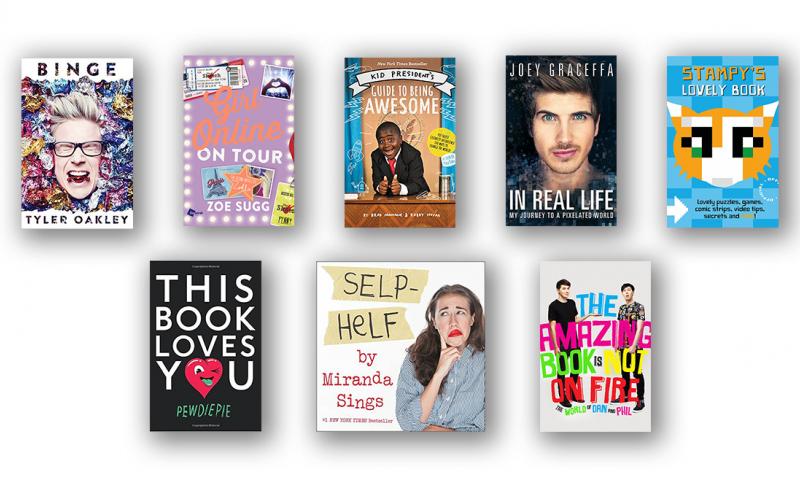
In the last five years, there have been a number of Youtubers releasing books, some fictional (like Joey Graceffa’s Dystopian trilogy), and others non-fictional (like Shane Dawson, Miranda Sings, Tyler Oakley, and so many others). Youtubers, using their influence, often write books of “self-help”, or a series of essays, or something similar to memoirs. They provide advice, despite the fact that they are only in their mid-to-late twenties. It’s a bizarre case, one that I have been feeling the need to unpack for a long time.

Now, while John Green is technically the first youtuber to release a book, he was an author first, so I will just skip him.

The first youtubers to publish a book after gaining their popularity were Blaire and Elle Fowler, publishing the fiction book Beneath the Glitter, in 2012. From then on, Youtubers began publishing their non-fiction books, with books such as I Hate Myself and In Real Life: My Journey to a Pixelated World gaining quite a bit of traction. Most of these centered around Youtubers’ tales of their childhood, functioning as a pseudo-memoir despite the fact that most of the authors were in their early-to-mid twenties.

It wasn’t until 2014 that the first actual “help” books came out from a Youtuber, with Hannah Hart’s My Drunk Kitchen: a Guide to Eating, Drinking and Going with Your Gut. It’s help aspect comes from the fact that this is a recipe book, although within the next three years tons of “self-help” books came out.

Now, while I have no qualms with things such as recipe books and fictional novels, the memoirs and self-help books kind of get to me. And it’s not like it’s business or fashion advice, either (Michelle Phan published Make-up: Your Life Guide to Beauty, Style, and Success- Online and Off in 2014, which offers both business and fashion advice, as well as maintaining a healthy attitude), but rather actual life advice. This isn’t to say that someone who isn’t in their twenties can’t give life advice. It just seems odd that someone who is in their twenties are offering advice books to their audience-most of which are in their early or mid teens.

To me it’s difficult to imagine my teen-self or any of my friends following the advice of someone who, quite often, never got their degree in college, and made their career in a  very competitive environment. It also seems weird to read a memoir about someone who hasn’t even made it to their thirties, yet. Most people don’t write memoirs until they’re almost in their fifties, or even later. It’s usually after they have lived quite a bit. That isn’t to say that a lot hasn’t happened to a young person, but most Youtubers’ memoirs are quite mundane. They have childhoods that may be tough, but are often not unusual.

Of course, some of these Youtubers can provide some insight that their younger audiences can relate to. Things such as mental illness, eating disorders, being a part of the LGBT spectrum, and other such hardships may connect to people who are stuck in similar positions. The only problem is that the writers are so young themselves, still growing and learning, that what they write in one book won’t be how they feel ten years down the line.

Perhaps rather than sticking to full on life advice, they should stick to subcategories that they excel in for now. There are so many ways that you can provide advice to young people without it being how to live. There are also many ways to write personal anecdotes without writing full memoirs. It’s better not to rush into things so young, despite our tendency to do so.

The “Anime Phase”

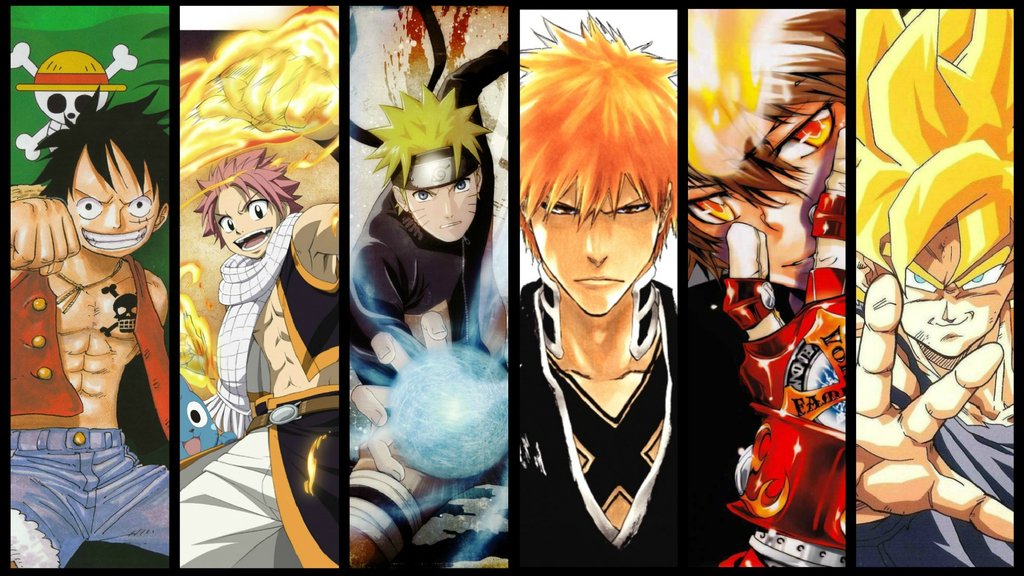
My friends and I all had one. Some of them still haven’t gotten out of it. It’s that period of time where most, if not all of what you watch is Anime, and you join fandoms centered around your favorite ones. It’s a normal part of nerd development, it seems.

For those of you who seem confused by this “Anime Phase”, let me put it into perspective: imagine you had a show or TV genre that you were absolutely obsessed with. You could have been obsessed with it for weeks, months, even years, but it was the center of your attention in terms of being a fan. They’re one in the same. But rather than having it be an American or British TV show/genre, it’s Japanese.

This phase rose out of the Anime Craze of the 1990’s. It came as a result of kids having greater exposure and access to watching Anime, allowing for the phase to blossom. Kids are going through a period of wanting to watch nothing but Anime, and there’s nothing wrong with that.

The Anime Phase can range anywhere from casual (like mine) to all-consuming. I was one of the ones who would watch Anime casually, but wasn’t too far into it. I could watch other shows, and watching Anime didn’t take up my entire day. But there are others, including people I knew, who would spend their day only watching Anime. These are usually the ones that don’t ever leave the Anime Phase, although there are occasions when they do.

In most cases, those who have an Anime Phase never stop watching anime. I can tell you that most of my friends still watch certain anime (mostly to most popular ones), although I find myself unable to sit down and watch one. The last one I saw was three years ago, and although some anime are enticing, I just can’t sit for that long watching. I’ve developed kind of a strange relationship with anime, probably because of overly casual nature of my Anime Phase.

The Anime Phase has been going strong for over twenty years. It’ll be interesting to see how long it continues for, especially with the rise of other popular phases.

The Popular Myth of July and August

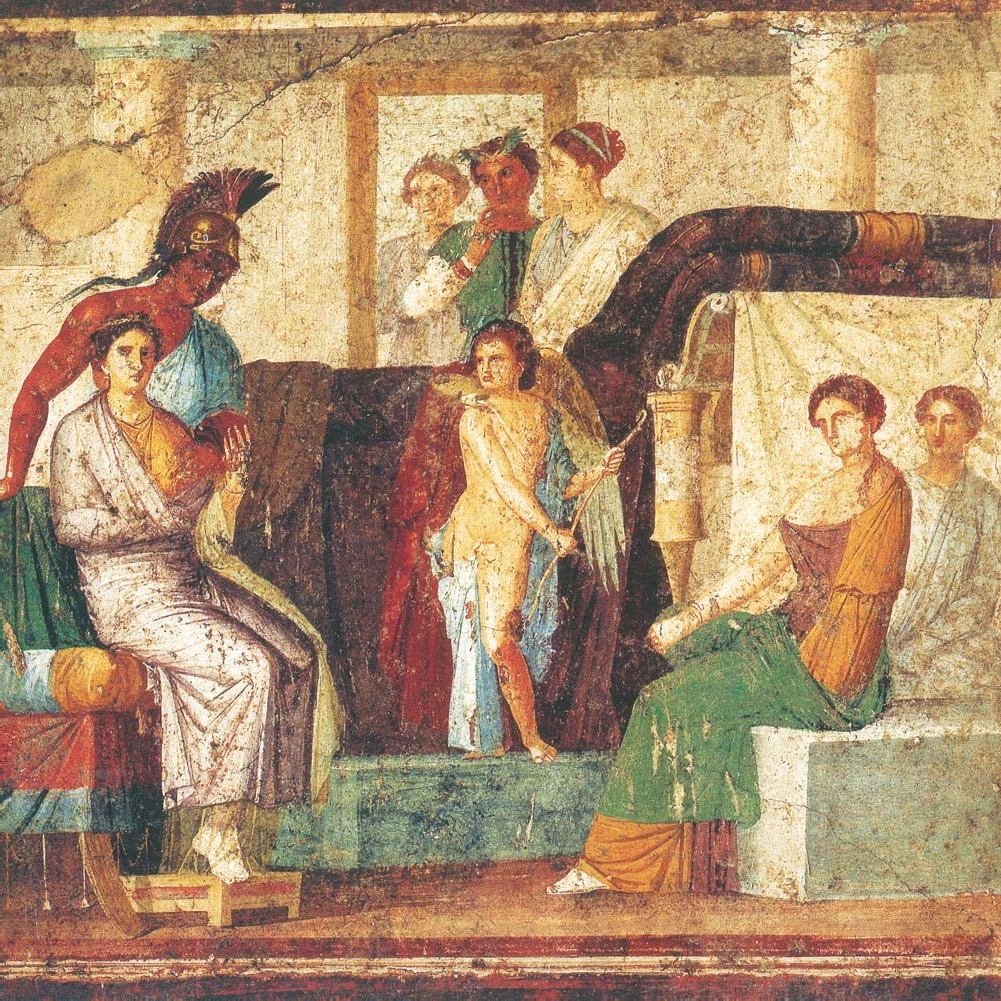
There is a common myth that Julius Caesar and Octavian Augustus added the months of July and August, respectively. But there’s a reason that myth never makes an appearance in any popular culture surrounding the two men: because it’s a myth.

Well, it’s not entirely a myth. But I will get into that later. You see, the months that were added to the calendar that we use today were actually January and February, with February originally being placed at the end of the month. This is thanks to the Roman ruler Numa Pompilius (a Roman king), who decided to make the calendar longer after realizing that the calendar was far too short to make up for the actual year. This comes as a result of the original Roman calendar, which was merely taken from it’s lunar Greek predecessor, was only 304 days long. When Numa added the two months, the calendar got pushed up to 355 days, eliminating the need for adding an extra month(s) just to play catch-up to the rotation of the sun.

So, if January and February were actually the months that were added, where did July and August come from? Well, Before the dictator and emperor came in, the calendar looked like this: January, Martius, Aprilis, Maius, Juniius, Quintilis, Sextilis, September, October, November, December, and February. Can you see which ones were changed? Well, Quintilis wouldn’t be changed until after Julius Caesar’s death. As a part of his divination by the people, Augustus changed the month of Quintilis (which means fifth in Latin) to July, in honor of Caesar’s birth month.

August, however, would be implemented while Augustus was still emperor, with Sextilis being the one that gets renamed. This is in honor of his good emperorship in 8 BC, presented by the Senate. His birth month is not in August, however, but rather September. So why did Sextilis get changed? Possibly to show the sign of lineage. Augustus wanted the month to follow July, as a show of his relation to the popular dictator (he was adopted by Julius Caesar). Plus, since both July and August had 31 days, it would also show his equal greatness to his predecessor.

So, why the popular myth, then? Most likely as a show of the two men’s inflated egos, or even because they were the only two months whose names were changed. No other month would have their name changed (although February would find itself moved to be between January and Martius in the fifth century). Either theory would make sense, although it is difficult to say how inflated the men’s egos were. They were certainly grand, although that might just be because they were Romans (the Romans were quite extravagant and egotistical normally). So, I can’t really say why the myth exists, or why it persists.

The Rise of Drag Culture

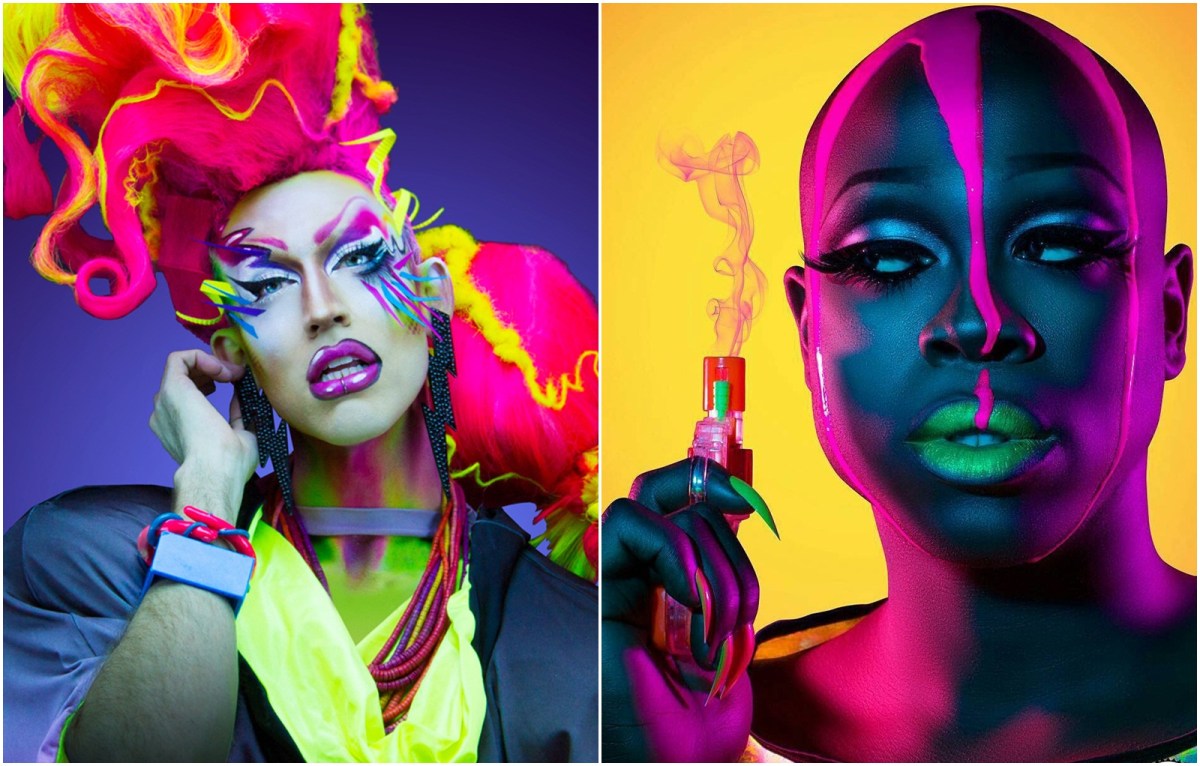
In the US, particularly in major cities, Drag Culture, a subset of the gay culture where (typically) men dress as exaggerated forms of women as a play on gender identity and for entertainment, has grown rapidly in popularity within the last decade. Boosted by the success of Rupaul’s Drag Race, drag culture has faced a resurgence in popularity in pop culture, putting names such as Bianca Del Rio, Chad Michaels, and Latrice Royale alongside Rupaul and Lady Bunny. However, this current rise does not mean that Drag Culture is a new thing. Drag Culture extends far back, much farther than the 1980’s and 1990’s, providing a rich insight into the cultural history of performances.

While the official rise in drag began in the 1870’s, you can look even further back to the times of Greece and Rome, where women were not allowed to act in mainstream performances. Young boys were chosen to play the roles, a factor that continued through the Shakespearean period of performance. This didn’t just exist in Europe, either. In Japan, the famous Kabuki theater historically did not allow women to perform, with the role of those who take the female character being known as the onnagata. They did not have to be young boys, either: they could be all the way into their middle ages, performing the role of a young girl.

The real start for drag culture though did begin, as I said earlier, in the 1870’s. However, they weren’t the iconic LGBT+ performances that we see today. Rather, they were merely men who, wanting to mock women, would dress in exaggerated forms and act as though they were women, representing femininity. The use of drag in LGBT+ communities doesn’t begin until the 1920’s and 1930’s, when the first “gay bars” were established. Members of the queer community could meet there and watch performances, drag included.

Drag Culture would take a hit in the 1950’s and 1960’s, however, as public policy and law began cracking down on the LGBT+ community. In order for a man in drag to not get arrested, he had to wear no less than three articles of male clothing. As a form of protection and activism, the “Imperial Court System” founded by Jose Julio Sarria, came to be. In this system, there was the creation of Drag Balls, a fraternity-type system where “Mother” Drag Queens formed a “house”, taking other drag queens under their wing. These would continue into the modern era, being mentioned by some of the younger queens on Rupaul’s Drag Race.

In the 1980’s, Drag Culture began getting recognized by the general public again (following the LGBT+ Right’s Movement following the events at Stonewall), with prominent queens going on TV shows, movies, and musicals, most notably the role of the Tracy’s Mom in Hairspray being taken by drag queen Divine in the original film. We also start to see the rise of Lady Bunny, being most known for her comedy and DJ skills.

And of course, in the 1990’s, we see the rise of Rupaul. With the release of the hit “Supermodel”, Rupaul changed the Drag game permanently. This would only be added when in 2009 he released the first season of the hit show Rupaul’s Drag Race, which continues to shape the Drag Queen game and allow up-and-coming queens to promote themselves to a massive audience.

A History of the Mouse that Roared

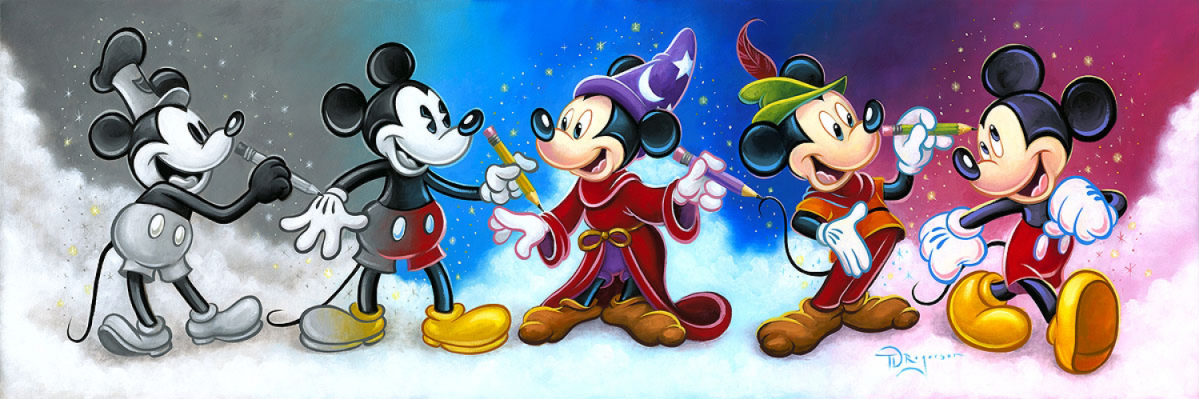
On November 18 of this year, Mickey Mouse turns 90 years old. This mascot of Walt Disney Studios has had a long history, changing from his original form to his current squat and recognizable version. I thought I might provide a little history on this famous mouse, commemorating all that he has contributed to the Walt Disney brand.

Mickey Mouse’s story doesn’t start with himself, however. It starts with a cute little rabbit. This was Oswald the Lucky Rabbit, created in 1927 by Walt Disney when Disney Brothers Studio was just another part of Universal’s animation branch. He was an instant hit, and a star of Universal’s animation sector. However, when Disney met with Universal to negotiate another contract in 1928, he found himself in a position where all his employees had been hired away and the rights to Oswald had been ripped from him. He had been offered to become an employee for a lower salary, but had refused, leaving with loyal animator Ub Iwerks to find a replacement for Oswald.

They made a new character, a mouse, who originally went by the name of Mortimer. But the name didn’t last, and by the time of his debut, he was Mickey.

Now, Mickey wasn’t an immediate hit like Oswald. In fact, his first two shorts drew almost no attention. However, Disney made a big break with the release of Steamboat Willie, the first animation to have synchronized music and sound, on November 18 1928. Within a matter of months, a line of animated shorts appeared, and by the end of the year Mickey Mouse was a national fad. Walt Disney began lining up Mickey Mouse merchandise, and within two years the Mickey Mouse Club was up and running.

Mickey Mouse in his original form was more round, which limited the amount of movement that he had in animation. However, in 1935 animator Fred Moore gave him a more pear-shaped body, pupils, white gloves and a shorter snout, making him more dynamic and cute. This appearance made its big appearance in the Sorcerer’s Apprentice, a musical short that appeared in 1936’s Fantasia.

By the end of the 1930’s, Mickey Mouse had been in dozens of shorts, having starred in countless adventures. His popularity would continue throughout the 1940’s and into the early 1950’s, when major motion films such as Bambi and Sleeping Beauty began to take audiences by storm. With the rise of the “Golden Age” of Disney films came the fall of the popularity of Mickey Mouse. Starting in 1953, Mickey Mouse would be entirely out of commission until 1983, with the release of Mickey’s Christmas Carol.

Despite this decline, Mickey Mouse is still one of the most recognizable animated characters of the 20th and 21st centuries, still maintaining a whopping 40 percent of merchandise sales, and still appearing in popular video games such as Kingdom Hearts. He is the face of Walt Disney, and more generally Disney itself, maintaining a permanent presence. He is a small mouse with the voice of a lion, making himself known wherever he goes.

Hollywood vs. The Gladiators

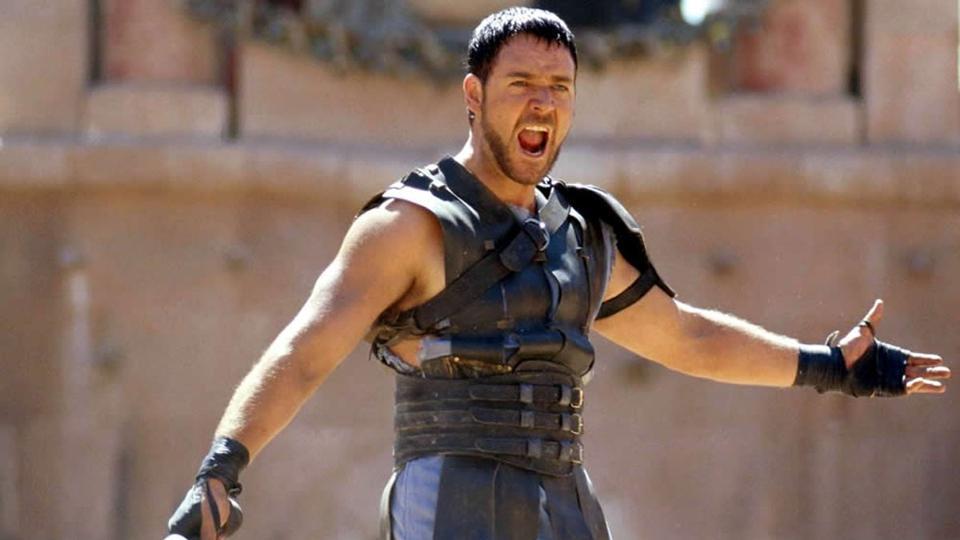
As with everything, Hollywood likes to take creative liberties with how history works. This is especially true when it comes to Rome’s viciousness and Gladiator fights.

The big thing when it comes to Gladiator fights in the media is the idea of fighting to the death. There are even jokes made about it, the famous emperor pointing his thumb down being a staple in parodies, music videos, and other satirical scenes to call for the death of the loser. Another big image is the idea of the malicious emperor always being defeated by his champion being killed, signalling the victory of the good guy. Plus, usually the gladiator fights depict a fight to the death.

In actuality, though, gladiator fights were almost nothing like the sort. In reality, only around ten percent of gladiators actually died in battle, either from fighting animals or receiving wounds that were too severe to be healed. Gladiators were expensive to invest in, always being put through gladiator training. Investors and sponsors spent a lot of money on each gladiator, and to lose one was to lose quite a bit of money. Mercy was often granted especially, in order for the gladiator fight to be fair and more balanced. If a gladiator was tired or already wounded, he would be put at an automatic disadvantage over their opponent.

Gladiators were also like the rock stars of ancient Rome, something that wouldn’t happen if they died all the time. They could become insanely wealthy, buying their freedom (if they came in as slaves or prisoners of war), and living in the life of luxury. There are even tombstones of gladiators who were able to retire and live a long life.

Rather, gladiator fights were ended when one gladiator was able to hold a sword to the other gladiator’s throat, or get him in some position where he can no longer fight. That isn’t to say these fights weren’t brutal; like I said, some could sustain injuries bad enough where it killed them. But this was not all that often.

With the image of the sinister emperor controlling the games, almost every emperor attended the gladiator games, good or bad. He would sit in a booth along with the six Vestal Virgins who guard the eternal flame that “keeps” Rome alive. Another thing to note: there are only six Vestal Virgins at one time. They are dressed all in white. If you see lines of them, it’s not accurate.

Besides, the emperor didn’t have all the power in the world. The Senate got a nice set of marble seating not far from the main stage, nearby his private booth. The emperor may have some say in the fate of the battle (granting mercy before the fight), but he usually just sat by. Gladiator fights were for the entertainment of the people, not just the emperor.