The Impact of Slasher Films

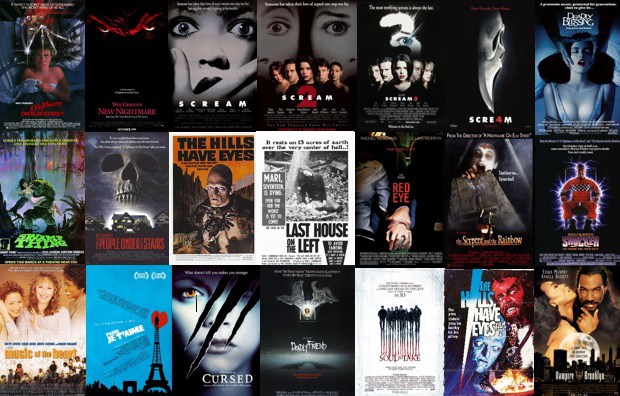
When horror films are analyzed for their greatness, the genre of slasher films is never included in the mix. We always turn to the more complex artistic thrillers such as Dracula, Rosemary’s Baby, the Shining, and An American Werewolf in London in order to present the hallmarks of horror. Some of the very few remarked-on slasher films include Halloween and Psycho, renowned for their complex relationships with their mother, calling homage to Freud’s Oedipus Complex.

But interestingly enough, despite the fact that slasher films are almost never remarked on in film academia (other than to be criticized for their garish nature), they are a major source for parody and imitation. While that may appear counter-intuitive for the genre being taken seriously, the fact that it is so imitated and parodied does say something about where slasher films lie in the horror genre.

Let me explain my argument by first studying the core or slasher films. Slasher films are exactly what the name “slasher” entails- violent murders, heartless serial killers, predatory chases, and other such forms. There is hardly room for the deep psychological thriller aspect, more focused on providing the gore and grotesque. The slasher film’s goals are both to make the audience laugh at the almost cartoonish nature of stable character archetypes and feel uncomfortable by the homage to basic and “savage” animal behavior- not just in the killer, but also among the good guys as well.

What do I mean by that? Well, from what I’ve seen, characters return almost to their basic human instinct-ignoring morals, ignoring civilization, all of that. It becomes merely an act for survival, the play on fight or flight, with airs of sexuality and other such basic functions.

As I’ve also mentioned before, as well, is that the characters in the slasher films have pretty stable archetypes, even as the plots change. They rarely ever change, making it easy to imitate not just for other slasher films, but for parody films as well. It also becomes easier to carry out in sequels and remakes, as expectations for complex characters among the audience is rather low. That’s why you can have a whole series such as Saw or Nightmare on Elm Street.

But where does the impact factor come in, other than imitation? Well, I’ve recently read a piece on slasher films that remarks that students of folklore or mythology will be able to tell you how slasher films are the epitome of oral history. Their archetypes, their diverse and interchangeable story lines, and the accumulation of sequels and imitations all reflect the story patterns of oral history and stories. No telling is exactly the same, and sequels are invited because there is not set story to finish. Because of this, pop culture can take slasher films and go to the moon and back, creatively adding their own takes for the sake of both horror and comedy. This in turn leaves a greater impact on the audience. We start to associate horror with aspects of the slasher, because we see it imitated and extended so much through pop culture, not just in films, but in TV, social media, and other such forms of media. Of course we won’t forget the other types of sub-genre within horror, but we identify and associate more with the slasher.

It’s not just because of their capacity for imitation that we remember the slasher genre so well, however. We also remember it because the genre does get quite creative, without having to be so deep and layered. Chucky and Nightmare on Elm Street are both remembered as horror classics for not just their slasher nature but also their creativeness. Chucky only had two sequels, and yet we remember the first one the most because of it’s take on killer dolls-something that hadn’t really been considered in horror film before. Almost the same goes for Nightmare on Elm Street-despite its numerous sequels, it takes the audience to a place that hadn’t been considered for horror films before- your own dreams.

Slasher films can get just as creative as its other horror counterparts, and leave just as much of an impact. The only thing is, because of their seemingly blunt and gruesome nature, they are sidelined by academics, who either consider the genre beneath them, or just see the genre as part of a “murder fetish”. Slasher is not given the light of day it deserves.

How Science Fiction Works Better in TV

I began watching Westworld recently to celebrate turning in my essay, and quickly got invested in it. The world, character arcs, and dynamism of the hosts intrigues me, especially as more of how the whole thing works slowly gets more developed and explained. Seeing how the show introduced its dynamics got me thinking about other sci-fi TV shows, and how they compare to movies of the same genre. The more I thought about it, the more I thought that sci-fi as a genre does much better in the realm of TV than film.

Why is that? Well, sci-fi often involves complex world/story-building when done right, and needs to be set out in a way that doesn’t seem rushed or boring. In film, there is only a two-two and a half hour span to introduce and develop the story and the world. Often times, that means there are aspects that are underdeveloped, rushed, or simply never explained. Which, when portrayed in a particular, more natural way, can work out.

Think of Mad Max: Fury Road. There wasn’t much actual explanation of the post-apocalyptic world, but there was visual representation, paired with just the right amount of explanation where the audience could understand how things worked. Of course, there were aspects left out; but the most important aspects are understood.

Now, the case of Mad Max is a case of sci-fi in films done well. More often than not, however, it takes a film multiple movies in order to explain itself and the world, sometimes dragging out stories that aren’t interesting enough or good past film 1 or 2. Or, in the case where there is only one film, the world is not explained enough, or simply isn’t interesting. Other times the story line is so bad and rushed that the world suffers as a result, too. In any sense, something is missing.

In the case of TV, however, there is a lot more to work with. Worlds can be properly flushed out and can work as an element of intrigue for the audience as it slowly unravels (in good shows, of course). Shows usually have a minimum of eight episodes to work out their world and dynamics, providing much more time and space to develop everything. The added fact that it usually comes out one episode a week even adds more to the suspense, maintaining greater interest than if it came out once every 2+ years. Sci-fi is a large and infinitely creative genre, and needs plenty of space to exist as a valid genre.

Sci-fi has had a long history in both film and movies, but is notably more prolific in TV, and much more recognizable. In the last decade particularly, sci-fi has been on the rise, after a period of falling behind fantasy. Sci-fi in TV shows also has the luxury of existing for longer, as average great shows can have as many as 9 or 10 seasons without appearing old or run-out, a heavy contrast from film. Shows can take on many more story arcs, as well, adding greater levels of complexity that otherwise couldn’t or wouldn’t exist.

Sci-fi can exist in both film and television, and has phenomenal pieces in both sets of media (Star Wars, Star Trek, Stranger Things), paired alongside bad pieces. However, I tend to notice that TV overall has better sci-fi series than film, particularly in recent years, most likely as a result as the care and space provided through TV. TV has provided sci-fi a grander space, and has lent it greater popularity than film, causing the genre to have an overall better quality.

Awful Teen Romance: How to they Maintain Popularity?

We’ve all at least heard of the genre, whether through the Twilight Saga or some other poorly written teen romance novel/movie. It is the soft-core version of the adult romance novels, whose only big difference is the loads of descriptive sex scenes. The genre is generally known as being poorly written and grossly centered around a most certainly unhealthy romance, and yet it still maintains a decent-sized reader base. How does this happen? Most importantly, who is still reading it, and why? Well, There’s a few different answers to that question.

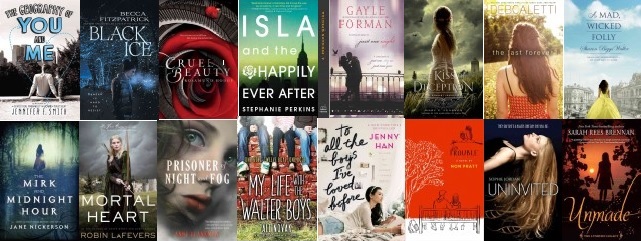
While the popularity of the teen romance genre has certainly dropped sharply from it’s heyday in the late 2000’s, it still persists in young adult literature. In fact, it not only exists as it’s own genre, it also exists as a sub-genre, and makes an appearance in just about every piece of young adult literature.

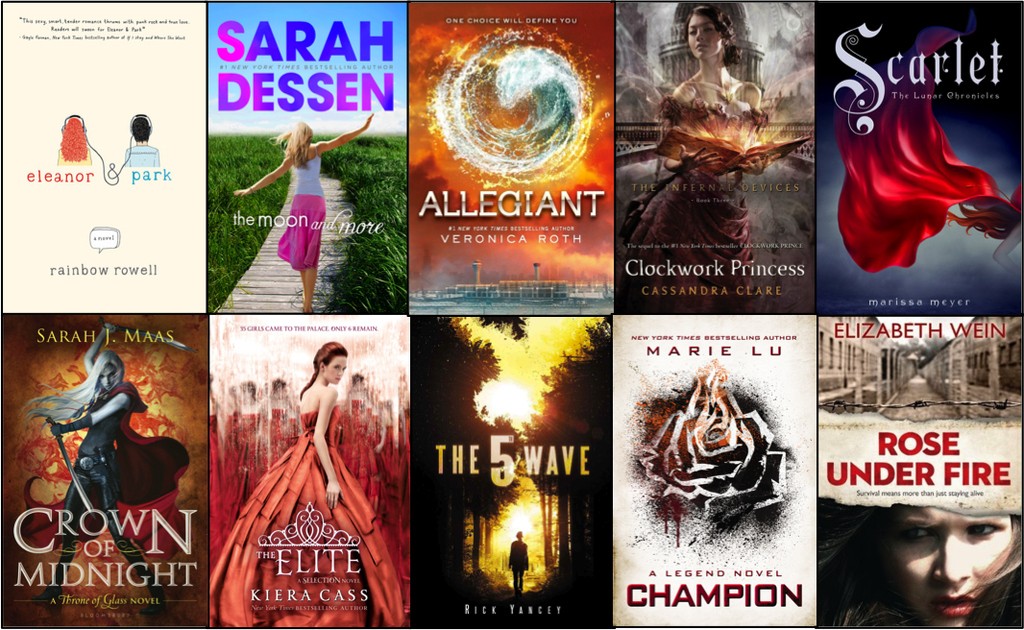
You see, while there are the obvious books where the main plot is very much about romance (like the Iron Fae, Fallen, and Eleanor and Park), I’d have to say around 97-99% of all young adult literature has romance as a major story line, even if it isn’t the main one. Which, isn’t too unusual: plenty of adult books have some form of romance in them. The only issue here is that it’s always the same romance, and it is just like the ones found in purely romance novels. I’ve mentioned in a post before talking about the typical “unusual” female protagonist and her male counterpart. That’s basically the story here. It’s always a modest but stubborn, brash, inexperienced (romantically, sexually) girl that is supposed to be a “feminist symbol”, paired with the sarcastic, arrogant, and experienced guy who represents all the dangers of an abuser. But it’s okay, because the guy is secretly a sweetheart who hides behind a shell because of his “broken” past. Literally, this is almost always how it is. When it’s not, it’s shockingly refreshing.

The only issue is, young girls fall for it every time. I fell for it when I was a young teen, also. Why? Well, everyone wants that romance that’s destined to be. At least, when you’re young. As you get older relationship goals get much more realistic (sometimes). But as a young teen with no experience in dating, I didn’t really know what I wanted. I wanted to be that protagonist who kicked butt and got the guy of her dreams. Which, makes sense. When a romance that would in real life be abusive gets romanticized in the novels, everything about the guy seems angelic. It seems attractive, and it’s fictional, so you can get insanely invested without being classified as a stalker. That’s how they get you.

It’s not just young girls, either. I have an aunt that is way too invested in trashy teen romance novels, and she’s certainly not alone. There are plenty of middle-aged mothers who read these kinds of books. Why? Everyone needs an outlet. Whether it’s watching TV, running, drawing, or reading, everyone has to find something. But what about teen romance novels attracts so many middle-aged mothers? Well, I can’t say for sure. Mostly because there’s several theories, that can’t truly be proven by asking them. One is dissatisfaction in marriage.

Dissatisfaction is probably the biggest theory, because usually it’s the most accurate. Women who find themselves in positions where they’re not happy in their relationship, but not too unhappy where they’ll get a divorce, will turn instead to the cheesy teen romance, wanting to imagine themselves young again, being swept off their feet by a dreamy young man. It seems the most reasonable, and least far-fetched, especially when paired with the fact that in the US, there is a 40-50% divorce rate among first-time marriages.

Another theory is they use it as a form of escape. Not just from an unhappy marriage, but from being a middle-aged adult all together. Why not? Use the main protagonist to see yourself as a teen girl in her action-fighting prime, no kids, no job, no taxes to worry about. You want to escape to a fantasy world, especially one where the guy promises to do all the “hard work” for you. What a bargain, right?

Either way, the trashy teen romance genre maintains a solid base from both middle-aged mothers and young girls, and will continue to, as long as it pervades the young adult genre. Which, doesn’t have to be a bad thing, so long as the toxic depictions of the main protagonists gets wiped out. I’m tired of seeing the same male and female protagonist again and again.

The Art of Time Loop: How a Cliche Genre can be Done Right

We’ve all heard of at least one movie were a guy either is stuck in a time loop of the same day, or decides to mess with time. It’s usually either cause he has to get a certain day perfect, or he wants to meddle with time and then realize he has to fix the mess he’s created. The cliche has appeared at least once every two years, so it’s difficult to say that it isn’t a cliche.

But unlike many other cliches, this one can actually be done right. How is that so? Well, there are unique and creative ways that the main guy can be stuck in the time loop. He usually does it to try and get the girl he’s always wanted, but the re-do doesn’t always have to be about that.

The problem is, Hollywood has never tried to do the re-do as anything beyond romance, which adds to the cliche. You can go so many different routes when it comes to the time loop, even going so far as to main the main character do the re-do to affect someone else’s life, rather than just their own.

The main issue with the re-do cliche is that they almost always involve the guy trying to get the girl he thought he wanted, before coming to the realization that she wasn’t the one. It also always a certain day perfect, either their wedding day or some other big event that is heavily tied to their romantic life. It’s never anything else. Making it about something else would actually make the cliche so clean and refreshing. It’s so easy, and yet the Hollywood industry doesn’t want to take that step. Romance is an easy, audience-drawing theme to follow-why do anything else?

The re-do trope has gotten so similar to itself that it’s not even worth watching anymore. Unless they decide to finally branch out, you can just about guess the entire plot of the movie, with some variance give-or-take. It makes it so overtly bland that it’s almost intolerable.

There have been a few horror movies, however, that have taken the time loop in unique, twisted ways. Movies such as Happy Death Day and Before I Fall have been taking the time loop genre out of its original comedy genre, and planting it firmly into horror. It’s interesting to see, and definitely adds to the suspense of a plot. We’ll have to see where it takes us.

YA Novels and the Curse of the “Unconventional” Protagonist

Note: when I say “unconventional”, I don’t mean diverse or unusual protagonists: I mean that they are slightly different variations of the same thing. The “unconventional” protagonist always has a similar appearance and an identical attitude, no matter the genre or book. I call them a curse, because they are usually the markers of a bad book, even for ones that had the potential to be good.

Now, the curse of the “unconventional” protagonist. had been a huge part in the young adults novels of my teenage years. It was practically everywhere; the same pale short girl that’s never a brunette, who isn’t “conventionally beautiful” like their mom.

Their main staple is their lack of curves, making them look like twelve years olds (when they’re adamantly sixteen). They have seemingly messy or bland hair, usually an unusual color, and they are always pale. They’re not conventionally attractive, but they have pleasant features, making them appealing to their main love interest. They look like their mothers, but their mothers, being taller, are somehow much the most gorgeous people to walk the face of the Earth, while they’re “cute”. Dressing nice or scandalous is taboo; modest clothes all around. They’re almost always useless and cause more trouble when they do involve themselves, but they’re stubborn, and never take the blame for anything they’ve done.

Almost every young adult book I read, the protagonist can best be identified by what I said above. It almost never changed (the big exception here is the Hunger Games, which featured a non-white woman who was tall and useful) and always had the same outcomes. It caused a lot of serious issues with how I perceived things during my teenage years.

Of course, I wasn’t about to charge into situations I knew I wasn’t useful in. In fact, the stubborn and useless factor actually got on my nerves. It even got to the point where I’d skip entire portions of books if I knew the protagonist was about to do something insanely stupid because “they’re not a useless child”. What really hurt was my perceptions of myself and romance.

My appearance heavily contrasts from the typical main protagonist; I am tall, I have olive skin that tans really easily, and I have dark brown eyes and hair. I lean more on the conventional side of attractiveness, in that I don’t look like a twelve year old. As a teenager, this made me very insecure about my features. I wanted to be like the main protagonists (before I realized how much of a stupid idea that was). I wanted to be short, and pale, and curve-less. I wanted unusual hair and eye colors. You may think that’s stupid, but when it’s all you see in the books you read, it doesn’t seem so stupid. At least, it didn’t seem so stupid to thirteen year-old me.

Girls that I look like get constantly trashed in comparison to the main protagonist, getting written off as sluts and mean girls who are insanely preppy and stupid. At the same time, the books with the “unconventional” protagonist gets pushed as “beneficial for all girls”, despite the obvious bashing of “conventional” girls. When that idea is getting shoved down your throat all the time, it really starts to affect how you see yourself. They’re extremely damaging, and can psychologically affect girls as young as ten to see themselves in a negative light. Worst part is, most won’t even realize until they’re practically adults, if then.

Now, I have seen improvements in the YA genre. I have noticed a growing diversification in main protagonists, which is quite refreshing. But the curse is still there, and it still maintains a presence. A weakening presence, but a presence. It needs to be targeted, and stopped once and for all.

Love After Divorce: The Appeal of the “Reborn Woman”

With the recent release of Book Club, I began wondering about the whole “Love After Divorce” genre that seemed to be appearing more often in mass entertainment films. The Book Club, which centers around women in their seventies trying to find new romance after divorce (two divorce, one widow), falls on the older end of the spectrum in terms of age for the genre, but still holds many of the tropes that make it a good representation. Finding a man in his fifties whose rich and attractive, having a happy ending, plenty of women’s bonding moments, struggling to get back into the dating realm, and many others. And despite its worse-for-wear reviews, it was mildly successful, making $53 million in the domestic box office, while the movie had been made with a budget of $10 million.

The success got me thinking-what makes these films so appealing? Upon looking into it, I found blog upon blog of women talking about their favorite “Love After Divorce” films, all with tales about how many of the films they didn’t like until after they got divorced. Which makes sense, as those who face the troubles are divorce are more likely to relate to a light-hearted film about finding love in the time after, but is there that much of a base for it?

Well, according to the American Psychological Association, anywhere between 40 to 50% of all marriages end in divorce after the first marriage in the United States-with the divorce rate for subsequent marriages being even higher than that. With that in mind, the base for the “Love After Divorce” genre becomes that much bigger- especially when divorce happens to women who are middle-aged, and haven’t been in the dating sphere for decades (if at all). The light-heartedness of the films also adds to cheering women up after a rough divorce-as many blog testimonials will tell. And I can’t entirely say that that isn’t possible.

From the “Love After Divorce” films I’ve seen, it’s hard to say that the films are anything beyond cliche chick-flick money-grabs. But then again, I am not divorced, and I am certainly not middle aged. I am not a part of the demographic that is being targeted by these movies, and I can’t relate to someone going through a divorce. Divorce is a rough experience, not just for the spouses but also for any other family member involved. And if it had been a long marriage, it can be rough on self-image and self-esteem. A movie about finding an attractive rich man might just be what someone needs to feel more confident. I can’t knock something like that.

While the films tend to follow the same tropes (which had led to the doom of rom coms), they seem to maintain an appeal and audience, which is something to note.