Some Horror Favorites

I’m not going to lie when I say that for the most part, my favorite horror movies are almost all classics. I definitely prefer the classic thriller to the modern ghost story, mostly because most of the horror movies I’ve seen are just repetitions of the same plot. Of course, there are exceptions to this rule, hardcore exceptions, but I can’t help but turn towards the older films. I thought as a good way to wrap up my horror movie month that I would display four of my favorite horror films.

The Shining

For some reason, everyone thinks that this movie is overtly scary. While I would agree it has its moments, I would rather argue that its a layered and complex psychological thriller. This is especially helped by the fact that I watched it three times in three weeks at night when I was twelve. No nightmares came out of it, and I wasn’t deterred from roaming through my house. I enjoy the film’s cinematography, and how the story is structured. It spends most of the time slowly-building the father’s psychological deterioration, before culminating in the quick attempts at murder. The hotel is quickly developed as a source of evil and darkness, something the son, and eventually the father, pick up on. It’s artfully done.

Coraline

While this is a kid’s movie, I think it certainly belongs on my list of favorites. Coraline centers around a girl who feels like she doesn’t quite belong in her family, who seems to ignore her in favor of work. She discovers a fantasy land that caters to her every desire, but quickly realizes that it’s everything but. It’s creatively designed, providing drastic color differences to contrast the real world from the fake one, making the fake world all the more desirable. The film’s plot, as well, is well-executed; not feeling rushed or too cheesy, but working well in tandem with the plot. Coraline is smart, sassy, and atypical in terms of kid’s characters for it’s time. And on top of that, the villain is actually quite freaky looking. She’s bony, disfigured, spidery, and cruel, and as a kid I was actually quite freaked out by her.

Silence of the Lambs

Now, this is one that I was okay with the first time I saw it, mostly because I didn’t really pay much attention. I was fresh off of reading the book (yes, there is a book), and spent most of my time just comparing the two, rather than just enjoying the film in itself. I saw it again a few days ago, and I have to say I enjoy it much more. It’s not really scary, more just gruesome and anxiety-inducing, tugging on the senses to make the audience feel uncomfortable or worried at just the right points. While I’ll admit it does rely a little too much on the close-up shots, which are used mostly during conversations, it is otherwise an extremely good movie. Each character has their own distinctive personality and characteristics, and all are seemingly well-fleshed out (although I would have preferred they fleshed out the villain just a bit more). The film has earned its spot on my list.

Pan’s Labyrinth

Last but not least, this film is one that I only saw this year. I’ve known about it, but never got around to watching it until I was invited to go to one of the midnight viewings that happen during the fall in my town. I have to say I don’t regret going.

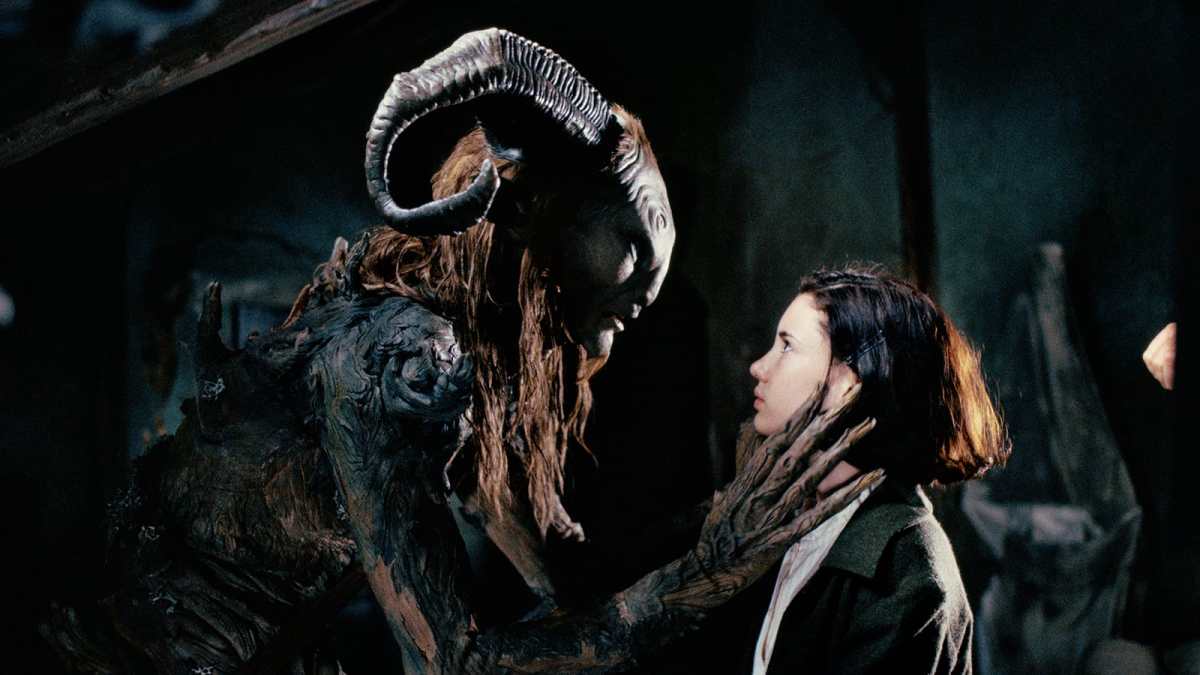
Pan’s Labyrinth is not so much a horror, film. It leans much more towards tragedy. It takes place in the aftermath of the Spanish Civil War, focusing on the changeling Ofelia trying to find her way back to the land under the hill. The film utilizes the contrast of hot and cool colors, having the realm of the Fae be much warmer in tones than the human world. It also makes an interesting parallel between the dangers of the human world versus the dangers of the land of the Fae, with the dangers of the latter being more conquerable than the former. It blends fantasy with reality to make an incredible comparison between what the innocent child can see versus what the disenchanted adult can see. Each character dynamic is fluid and distinct, leading to a lovely film.
Returning to the World I Knew Before

I don’t know if I’ve indicated before, but I have a long history of being a huge nerd.

Or rather, a geek (yes, there is a difference). I wasn’t the techy “build your own computer and digs math” type, which would have classified me as a nerd (by stereotypical standards). No, I have always preferred pop culture and literature, preferring to spend my time playing games and dabbling in a bit of anime. But the biggest highlight of being a geek was going to conventions.

The two biggest conventions I went to were Wondercon, which functions as a mini-Comic Con, situated in Anaheim, and Anime Expo, the largest Anime convention in North America. I went to these conventions every year from when I was thirteen until I went to college, when scheduling began interfering. It got to a point where I kind of got sick of them.

But in college, things changed. For some reason, I had it in my head that I should “grow out” of my geekiness, or at least keep it more private. Perhaps it was because I looked around and saw all the other geeks around me at school made me uncomfortable. They were just too stereo-typically geeky. That’s not to say that some of my high school friends weren’t, but these guys just fit the bill too well.

The disassociation might also have been partially influenced by the fact that I never fit the bit for someone who was geeky. Yeah, I wear glasses and at one point cut my hair short and dressed less-than-pleasantly, but I’m not talking about that. I’m talking about my face, my figure. I looked more like the kind of person geeks and nerds would wish would be into the same stuff as them. And this isn’t out of an inflation of my own ego. I’ve had enough creepy experiences to know exactly what position I was in. I look more like I belong in a Starbucks.

This was a factor that had always plagued my adolescent years. Especially during the height of gamer gate, where you could get called a fake gamer or fake nerd for just about breathing the “wrong way”. They never judged the people that looked like (stereotypical) geeks and nerds. They judged the people that didn’t.

It didn’t help that my Mom and sister would make fun of me for being a geek. My sister has become more involved in the culture herself in recent years, which has lightened her take on it, but my Mom would always roll her eyes. She still thinks I’m into things that I’m not (i.e: she thinks everything I watch is anime for some reason). She didn’t stop me from being a part of geek culture, but she didn’t much like the fact that I was so into it, either.

So for most of my college years, I kind of kept things under wrap. I stopped investing myself in geek culture for the most part, although I couldn’t help having my closest friends know what I was into. Everything was going fine.

But then, I started to miss the geek world. I started to miss being involved in the newest game, and missed going to conventions. I missed being a geek. I wasn’t going to suddenly stop dressing decent, but I didn’t want to let go of something I actually enjoyed. It was a big part of my life, and it was something cool to do. I got to see artists I follow in person, discover new artists, and find new things that I didn’t know before in geek culture.

So I’ve decided to come back. My Dad says he can get us into Comic Con, and I am planning on going to Anime Expo, so I guess that’s a good start to breaking back in. While I don’t have much time to be “full geek” (I have school and work), I do plan on enjoying the things I once did.

You Can’t Rely on Old Media for Depictions of the West

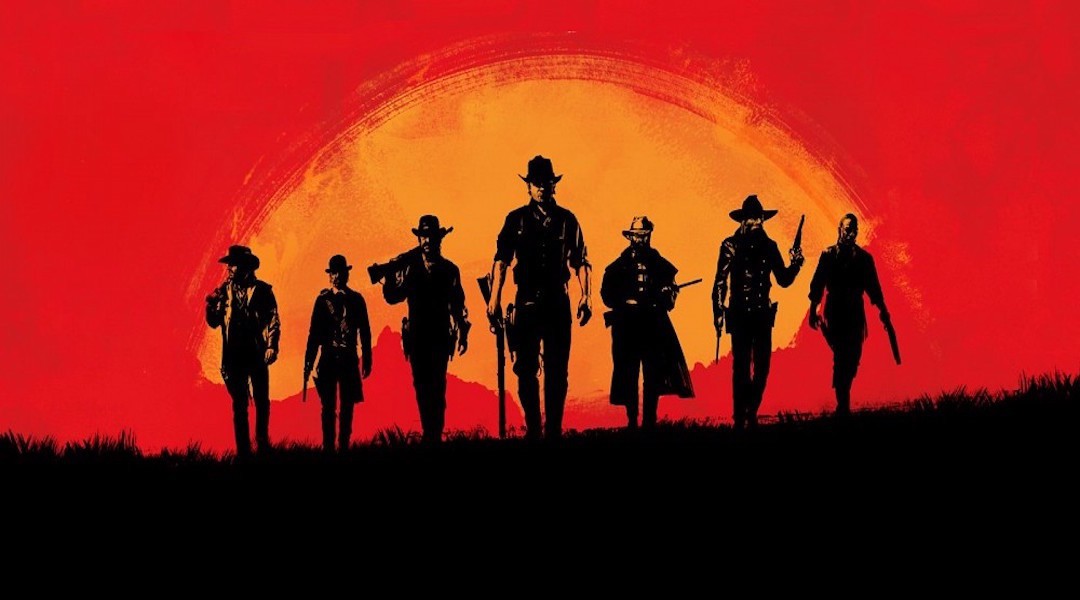
Recently, Rockstar has announced that Red Dead Redemption 2, the sequel to its instant classic of Red Dead Redemption, will add black cowboys, portraying a more realistic perspective of how the Wild West would have been.

However, like all things with time period games, there are those who dissent to having these characters added. Fortunately, it’s not nearly on the same scale as some other games, but it still exists. One argument of the dissent that stuck out to me was the idea of how historically “inaccurate” it was to have black cowboys. These arguments are based off of old Hollywood and TV portrayals of the West, somehow justifying their arguments. If P.O.Cs were not portrayed then, then therefore they simply weren’t actually present, right?

Wrong. Let me give a little insight on the actual realm of the West. The West, with its notoriety for being a “lawless wasteland”, was much more racially open than the rest of the United States. A former part of land owned and controlled by Spain (and later Mexico), the wide and mostly unpopulated expanse had plenty or room for the proliferation of Vaqueros, or the precursor to cowboys.

The Vaquero lifestyle was mostly used by Mexicans and some Natives, who gained influence from the Spanish ranchers on the Missions. However, when the land was won over by the US in the Mexican-American War, the Vaquero stopped being a purely Hispanic profession. Caucasian and later black cowboys began making an appearance on the scene, taking up the Vaquero (later renamed cowboy) lifestyle to live a “free rancher” life.

Black cowboys initially started as slaves tending to their masters’ cattle ranches while they were away at war in Texas, although there were some that escaped West before incorporation into the US to escape their former masters. In this, black Vaqueros gained the skills that would make them invaluable to the cattle industry, allowing them to prosper following the end of the Civil War. As many as 1 in 4 cowboys were Black, travelling throughout the West to help ranchers herd their cattle.

Now, this didn’t make the West some racial paradise, as discrimination against Latinos, Blacks, Native Americans, and later Asians (who came in to help build train tracks that would help connect the Continental US) was still a common phenomenon. But it allowed more freedom than other parts of the US.

Now, with all that in mind, how does this relate to old media? Well, if you’ve watched any spaghetti Western film or TV, you’ll easily notice that the diverse history of the West simply does not exist. If there’s a Native, they’re violent savages killing the poor white woman for fun. The Asians are portrayed as dirty, cheap, and lying. There’s not even a mention of Blacks or Hispanics.

No, the Western shows and films represent and idealized White version of the West, one which claims the cowboy as purely American made, despite its Hispanic origins. It’s about the finding the Classic love in the Wild and Gritty West, centered around White actors in a purely whitewashed realm.

Even as late into the 1990’s, media surrounding the West was heavily geared towards portraying it as white dominant, with only a few outliers that portrayed otherwise. It was only in recent years with Django Unchained, Hateful Eight and Magnificent Seven that the whites-only narrative has fallen back, showing another, previously unacknowledged side of diversity in the Wild West.

Old Media has a particular representation for portraying false narratives, and is unreliable for arguments trying to prove historical accuracy. Media changes stories and narratives all the time for entertainment, especially in older films and TV shows.

The Saturation Complex of Geek Culture

I had mentioned in a post earlier that there is a prevailing idea that misconstrues how geek culture came to be. I can’t really say where this came about, although I strongly suspect that films and TV shows of the 1970s and 1980s paired with gendered conceptions surrounding geek culture are to blame. Whatever the cause, it has fueled this conception, leading to a sort of alienation complex as the geek community shifts and changes.

As a result, there is this saturated version of history, which relies on the idea that women and minorities have not been a part of geek culture until very recently (as in, within the last decade). As a result, there has developed a constant push against women and minorities joining in on geek culture, with particular “tests” placed against women in order to test if they’re “qualified” to partake in the geek community. These blockades grow increasingly pointless as geek culture continues to gain popularity, and yet for some reason persists. Perhaps I can explain why.

You see, it all starts at the source of geek culture: Science Fiction (Sci-Fi). In the saturated version of geek history, the first Sci-Fi author was Jules Vernes, best known for his book Twenty Thousand Leagues Under the Sea. As a result, this causes men who believe this start to think that women and other minorities have no real right to enter and write about Sci-Fi.

However, if you make one quick Google search, you’ll find that this version is incorrect. While Jules Verne was one of the earlier Sci-Fi writers, the real first Sci-Fi author was Mary Shelley, who published Frankenstein in 1818, a whopping fifty years before Jules Verne. This makes the Sci-Fi genre not a “boys only” club, but a club founded by women.

Shelley wasn’t the last female Sci-Fi author, either. Well-known ones include Octavia E. Butler, Margaret Atwood, Ursula K. Le Guin, and Suzanne Collins. Sci-Fi has never been a “boys only” club, although it is often pushed to appear that way.

Comics, by contrast, didn’t really diversify until recently. In its early days, the comic industry was very much “boys only”, mostly outright refusing to hire women and other minorities. This isn’t unusual, however; the entertainment industry as a whole was that way.  That isn’t to say that women and minorities weren’t in those realms, but it was very difficult to break in, particularly from the 1920’s-1970’s. This realm makes it a whole lot easier to promote the saturated history. Since women and other minorities were barred, it was easy to say that they didn’t belong and exist in the space. Despite the fact that the majority of comic readers in the present era greatly outweighs the “traditional” readership (white men), there is still this stigma that pushes women and minorities away.

The same goes for the video game industry. Women and minorities were mostly barred in the early days (as they were discouraged and stigmatized from getting STEM degrees in college), meaning that they couldn’t break in until more recently. This has created a frictional environment that extends beyond game development and into game playing, leading to online harassment and common claims of not being a “real gamer” to anyone that doesn’t fit the geek stereotype. To be honest, the “fake gamer” argument is ridiculous: if you play games, you’re a gamer. You don’t have to be best of the best, but if you play video games as a hobby, then you qualify.

The reason there is such a push back against diversity entering geek culture mostly stems from a victim complex among the “traditional” geeks. Despite the fact that geek culture has been gaining continuous popularity over the last two-three decades (exploding after the premiers of Walking Dead and Game of Thrones), the news for some reason has not hit the geek community. Or, rather, it has not processed.

The “traditional” geeks seem to be in denial about just how popular geek culture is, moaning and groaning how they are such victims and such a minority, while at the same time fighting against anyone that doesn’t fit their own characteristics and pushing them away. They like to act like they’re still the kids that get severely bullied, although just about any kid with a computer nowadays has access to video games and anime. It’s a bizarre complex that sticks out like a sore thumb.

The Fun of “Geek” Makeup

Despite the fact that Geek culture has been in the mainstream for nearly a decade, it was only recently that I discovered Geek-inspired makeup. Maybe this is due to the fact that I didn’t like makeup all the much until around two years ago, but it was still strange that I had never heard of it. I’ve been to cons, I’ve involved myself in many fandoms, how did I not hear about it?

Well, this is excluding the main-stream geek culture collections. Of course I’ve seen Star Wars themed lines, and also Hunger Games collections from Cover Girl and L’Oreal. And of course I’ve seen the Disney-inspired makeup. But I had never seen stores purely devoted to producing Geek-inspired makeup.

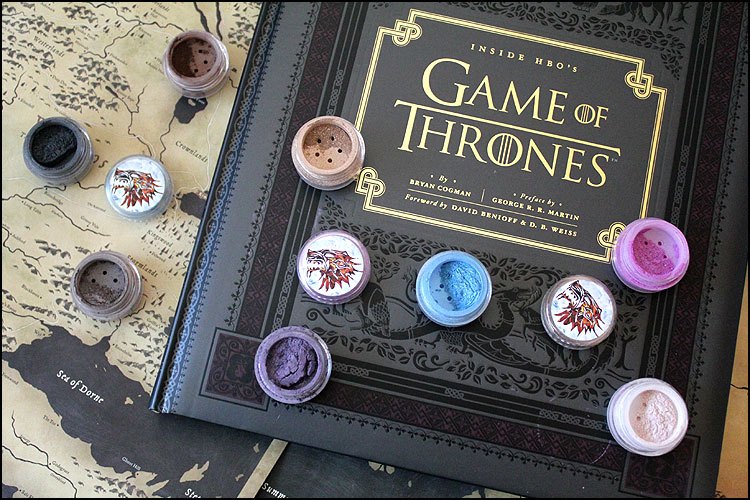
I had only discovered the makeup by chance, stumbling upon Shiro Cosmetics as I was looking for cruelty-free makeup. Looking into their site, I found they had a series of collections based off of popular media and memes, having collections centered around Game of Thrones, Into the Unknown, and Avengers, particularly eye shadows. They have cute little drawings that they come with on top, and lots of funny designs. And the reviews seem to like them.

The discovery of this site led me to start looking around for other Geeky makeup, and I was able to find quite a bit of collections. I found Geek Chic, Espionage Cosmetics, Nerdastic, and Black Pheonix Alchemy Lab, all of which had many items based around pop culture. It was astonishing, especially with the fact that the most of the colors looked so pretty. And most of them were cruelty-free.

The makeup usually has fun names, with fun designs, although if you’re looking for eyeshadow, don’t expect to many pressed palettes. Most of them are loose powder, with a few pressed palettes, which can be a little off-putting for some.

Geek-inspired makeup really started blowing up around 2015, as bigger companies began pushing out lines for the new Star Wars (Force Awakens), inadvertently boosting smaller makeup companies that based their whole existence around Geek culture. While still being considered “underground” and definitely “artisan”, Geek makeup has found its place and audience, and will only continue to grow as more people discover them.