Some Horror Favorites

I’m not going to lie when I say that for the most part, my favorite horror movies are almost all classics. I definitely prefer the classic thriller to the modern ghost story, mostly because most of the horror movies I’ve seen are just repetitions of the same plot. Of course, there are exceptions to this rule, hardcore exceptions, but I can’t help but turn towards the older films. I thought as a good way to wrap up my horror movie month that I would display four of my favorite horror films.

The Shining

For some reason, everyone thinks that this movie is overtly scary. While I would agree it has its moments, I would rather argue that its a layered and complex psychological thriller. This is especially helped by the fact that I watched it three times in three weeks at night when I was twelve. No nightmares came out of it, and I wasn’t deterred from roaming through my house. I enjoy the film’s cinematography, and how the story is structured. It spends most of the time slowly-building the father’s psychological deterioration, before culminating in the quick attempts at murder. The hotel is quickly developed as a source of evil and darkness, something the son, and eventually the father, pick up on. It’s artfully done.

Coraline

While this is a kid’s movie, I think it certainly belongs on my list of favorites. Coraline centers around a girl who feels like she doesn’t quite belong in her family, who seems to ignore her in favor of work. She discovers a fantasy land that caters to her every desire, but quickly realizes that it’s everything but. It’s creatively designed, providing drastic color differences to contrast the real world from the fake one, making the fake world all the more desirable. The film’s plot, as well, is well-executed; not feeling rushed or too cheesy, but working well in tandem with the plot. Coraline is smart, sassy, and atypical in terms of kid’s characters for it’s time. And on top of that, the villain is actually quite freaky looking. She’s bony, disfigured, spidery, and cruel, and as a kid I was actually quite freaked out by her.

Silence of the Lambs

Now, this is one that I was okay with the first time I saw it, mostly because I didn’t really pay much attention. I was fresh off of reading the book (yes, there is a book), and spent most of my time just comparing the two, rather than just enjoying the film in itself. I saw it again a few days ago, and I have to say I enjoy it much more. It’s not really scary, more just gruesome and anxiety-inducing, tugging on the senses to make the audience feel uncomfortable or worried at just the right points. While I’ll admit it does rely a little too much on the close-up shots, which are used mostly during conversations, it is otherwise an extremely good movie. Each character has their own distinctive personality and characteristics, and all are seemingly well-fleshed out (although I would have preferred they fleshed out the villain just a bit more). The film has earned its spot on my list.

Pan’s Labyrinth

Last but not least, this film is one that I only saw this year. I’ve known about it, but never got around to watching it until I was invited to go to one of the midnight viewings that happen during the fall in my town. I have to say I don’t regret going.

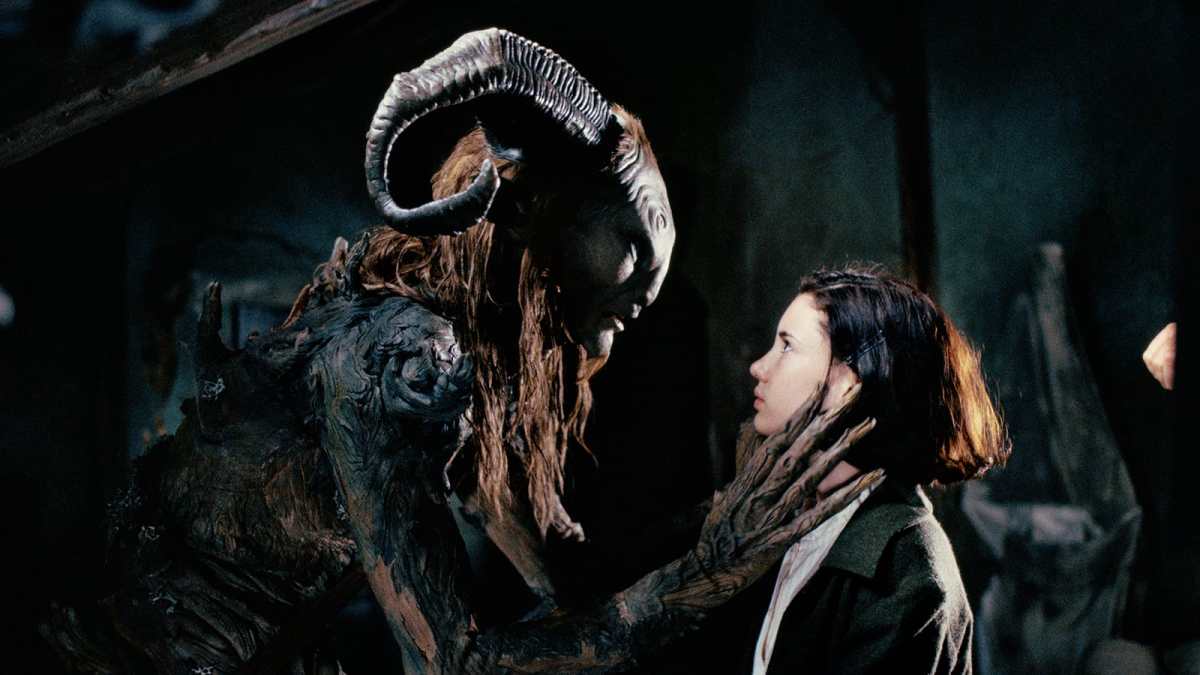
Pan’s Labyrinth is not so much a horror, film. It leans much more towards tragedy. It takes place in the aftermath of the Spanish Civil War, focusing on the changeling Ofelia trying to find her way back to the land under the hill. The film utilizes the contrast of hot and cool colors, having the realm of the Fae be much warmer in tones than the human world. It also makes an interesting parallel between the dangers of the human world versus the dangers of the land of the Fae, with the dangers of the latter being more conquerable than the former. It blends fantasy with reality to make an incredible comparison between what the innocent child can see versus what the disenchanted adult can see. Each character dynamic is fluid and distinct, leading to a lovely film.
Returning to the World I Knew Before

I don’t know if I’ve indicated before, but I have a long history of being a huge nerd.

Or rather, a geek (yes, there is a difference). I wasn’t the techy “build your own computer and digs math” type, which would have classified me as a nerd (by stereotypical standards). No, I have always preferred pop culture and literature, preferring to spend my time playing games and dabbling in a bit of anime. But the biggest highlight of being a geek was going to conventions.

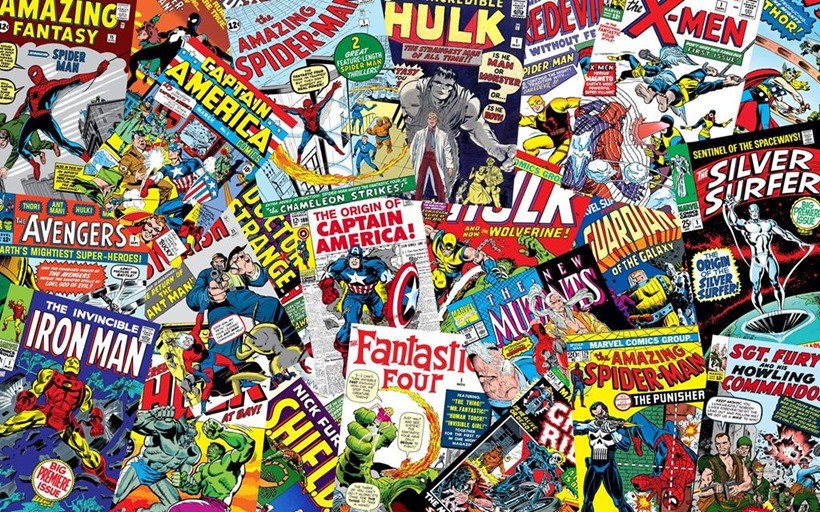
The two biggest conventions I went to were Wondercon, which functions as a mini-Comic Con, situated in Anaheim, and Anime Expo, the largest Anime convention in North America. I went to these conventions every year from when I was thirteen until I went to college, when scheduling began interfering. It got to a point where I kind of got sick of them.

But in college, things changed. For some reason, I had it in my head that I should “grow out” of my geekiness, or at least keep it more private. Perhaps it was because I looked around and saw all the other geeks around me at school made me uncomfortable. They were just too stereo-typically geeky. That’s not to say that some of my high school friends weren’t, but these guys just fit the bill too well.

The disassociation might also have been partially influenced by the fact that I never fit the bit for someone who was geeky. Yeah, I wear glasses and at one point cut my hair short and dressed less-than-pleasantly, but I’m not talking about that. I’m talking about my face, my figure. I looked more like the kind of person geeks and nerds would wish would be into the same stuff as them. And this isn’t out of an inflation of my own ego. I’ve had enough creepy experiences to know exactly what position I was in. I look more like I belong in a Starbucks.

This was a factor that had always plagued my adolescent years. Especially during the height of gamer gate, where you could get called a fake gamer or fake nerd for just about breathing the “wrong way”. They never judged the people that looked like (stereotypical) geeks and nerds. They judged the people that didn’t.

It didn’t help that my Mom and sister would make fun of me for being a geek. My sister has become more involved in the culture herself in recent years, which has lightened her take on it, but my Mom would always roll her eyes. She still thinks I’m into things that I’m not (i.e: she thinks everything I watch is anime for some reason). She didn’t stop me from being a part of geek culture, but she didn’t much like the fact that I was so into it, either.

So for most of my college years, I kind of kept things under wrap. I stopped investing myself in geek culture for the most part, although I couldn’t help having my closest friends know what I was into. Everything was going fine.

But then, I started to miss the geek world. I started to miss being involved in the newest game, and missed going to conventions. I missed being a geek. I wasn’t going to suddenly stop dressing decent, but I didn’t want to let go of something I actually enjoyed. It was a big part of my life, and it was something cool to do. I got to see artists I follow in person, discover new artists, and find new things that I didn’t know before in geek culture.

So I’ve decided to come back. My Dad says he can get us into Comic Con, and I am planning on going to Anime Expo, so I guess that’s a good start to breaking back in. While I don’t have much time to be “full geek” (I have school and work), I do plan on enjoying the things I once did.

Youtubers Becoming Authors: The Self-Help Trend

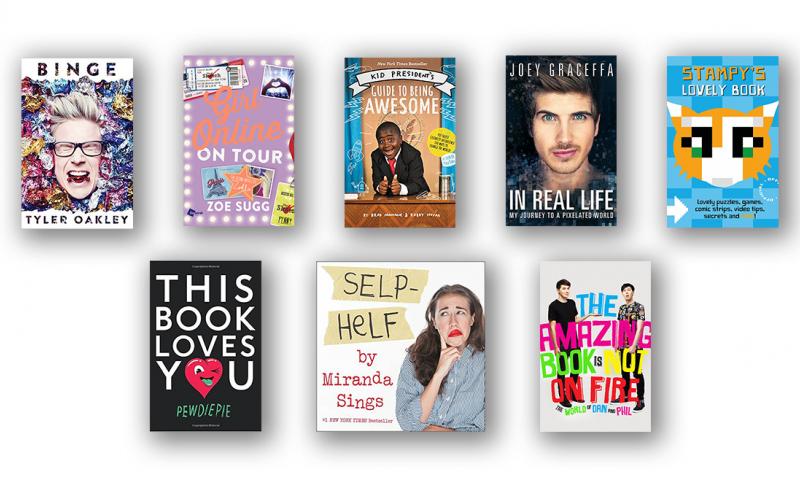
In the last five years, there have been a number of Youtubers releasing books, some fictional (like Joey Graceffa’s Dystopian trilogy), and others non-fictional (like Shane Dawson, Miranda Sings, Tyler Oakley, and so many others). Youtubers, using their influence, often write books of “self-help”, or a series of essays, or something similar to memoirs. They provide advice, despite the fact that they are only in their mid-to-late twenties. It’s a bizarre case, one that I have been feeling the need to unpack for a long time.

Now, while John Green is technically the first youtuber to release a book, he was an author first, so I will just skip him.

The first youtubers to publish a book after gaining their popularity were Blaire and Elle Fowler, publishing the fiction book Beneath the Glitter, in 2012. From then on, Youtubers began publishing their non-fiction books, with books such as I Hate Myself and In Real Life: My Journey to a Pixelated World gaining quite a bit of traction. Most of these centered around Youtubers’ tales of their childhood, functioning as a pseudo-memoir despite the fact that most of the authors were in their early-to-mid twenties.

It wasn’t until 2014 that the first actual “help” books came out from a Youtuber, with Hannah Hart’s My Drunk Kitchen: a Guide to Eating, Drinking and Going with Your Gut. It’s help aspect comes from the fact that this is a recipe book, although within the next three years tons of “self-help” books came out.

Now, while I have no qualms with things such as recipe books and fictional novels, the memoirs and self-help books kind of get to me. And it’s not like it’s business or fashion advice, either (Michelle Phan published Make-up: Your Life Guide to Beauty, Style, and Success- Online and Off in 2014, which offers both business and fashion advice, as well as maintaining a healthy attitude), but rather actual life advice. This isn’t to say that someone who isn’t in their twenties can’t give life advice. It just seems odd that someone who is in their twenties are offering advice books to their audience-most of which are in their early or mid teens.

To me it’s difficult to imagine my teen-self or any of my friends following the advice of someone who, quite often, never got their degree in college, and made their career in a  very competitive environment. It also seems weird to read a memoir about someone who hasn’t even made it to their thirties, yet. Most people don’t write memoirs until they’re almost in their fifties, or even later. It’s usually after they have lived quite a bit. That isn’t to say that a lot hasn’t happened to a young person, but most Youtubers’ memoirs are quite mundane. They have childhoods that may be tough, but are often not unusual.

Of course, some of these Youtubers can provide some insight that their younger audiences can relate to. Things such as mental illness, eating disorders, being a part of the LGBT spectrum, and other such hardships may connect to people who are stuck in similar positions. The only problem is that the writers are so young themselves, still growing and learning, that what they write in one book won’t be how they feel ten years down the line.

Perhaps rather than sticking to full on life advice, they should stick to subcategories that they excel in for now. There are so many ways that you can provide advice to young people without it being how to live. There are also many ways to write personal anecdotes without writing full memoirs. It’s better not to rush into things so young, despite our tendency to do so.

The “Anime Phase”

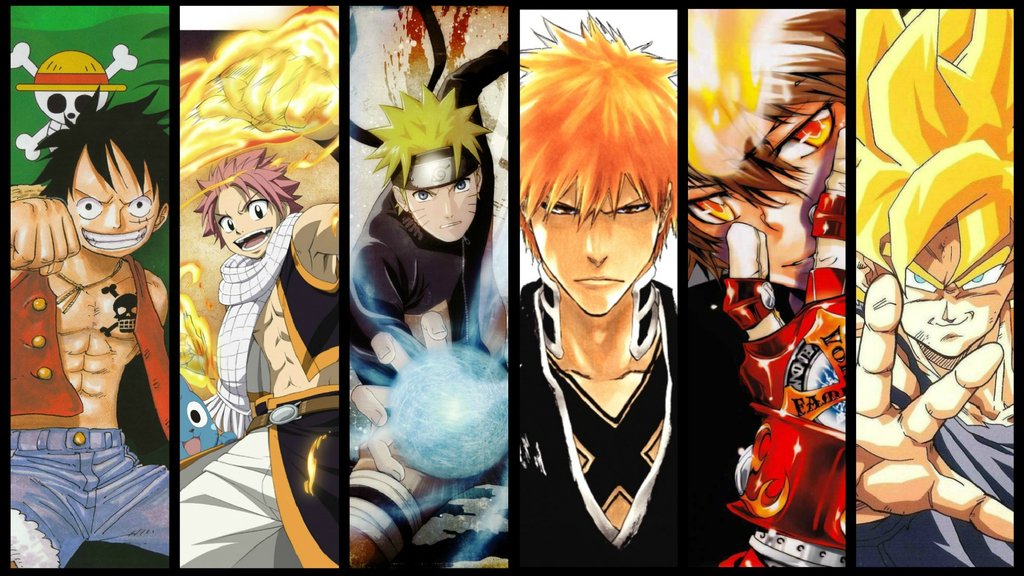
My friends and I all had one. Some of them still haven’t gotten out of it. It’s that period of time where most, if not all of what you watch is Anime, and you join fandoms centered around your favorite ones. It’s a normal part of nerd development, it seems.

For those of you who seem confused by this “Anime Phase”, let me put it into perspective: imagine you had a show or TV genre that you were absolutely obsessed with. You could have been obsessed with it for weeks, months, even years, but it was the center of your attention in terms of being a fan. They’re one in the same. But rather than having it be an American or British TV show/genre, it’s Japanese.

This phase rose out of the Anime Craze of the 1990’s. It came as a result of kids having greater exposure and access to watching Anime, allowing for the phase to blossom. Kids are going through a period of wanting to watch nothing but Anime, and there’s nothing wrong with that.

The Anime Phase can range anywhere from casual (like mine) to all-consuming. I was one of the ones who would watch Anime casually, but wasn’t too far into it. I could watch other shows, and watching Anime didn’t take up my entire day. But there are others, including people I knew, who would spend their day only watching Anime. These are usually the ones that don’t ever leave the Anime Phase, although there are occasions when they do.

In most cases, those who have an Anime Phase never stop watching anime. I can tell you that most of my friends still watch certain anime (mostly to most popular ones), although I find myself unable to sit down and watch one. The last one I saw was three years ago, and although some anime are enticing, I just can’t sit for that long watching. I’ve developed kind of a strange relationship with anime, probably because of overly casual nature of my Anime Phase.

The Anime Phase has been going strong for over twenty years. It’ll be interesting to see how long it continues for, especially with the rise of other popular phases.

Planning a Trip to Disneyland

Disneyland in Anaheim is a park that receives millions of visitors in a year. It’s the first one ever opened, and is most known for the fact. It is also known to have a major overcrowding problem, pushing ticket prices up seemingly every year. It’s an issue that especially affects socal locals, who not only need to plan around the traffic, but also be ready to drop a minimum of $200 a person. Which often pushes them away (unless you’re one of the ones who buys an annual pass and goes every weekend). But, if you are willing to splurge once a year or every other year, here’s a few habits my friends and I picked up trying to make the most out of our visits.

The first habit we picked up was going during “off seasons”. An “off season” are the seasons where tourist traffic is lower than average (late summer/early fall to december, january to april). You might think “but LA always has tourists.” That’s why I said lower than average traffic. The months are important, because they center around when people need to go back to school, and when they go one winter break. Going during an “off season” can make all the difference in wait times, which can be cut by as much as half. Choosing a weekday is also important, as it guarantees people will be in school (which helps if you have vacation during the quarter system, which is different from everyone else).

The second is to be very picky of where we get our food. Disneyland food is especially pricey, and you have to know where you’re going to get the most bang for your buck. If you get a park hopper pass, I would just recommend that you go to California Adventure, where the food tends to be cheaper. But if you’re stuck in just Disneyland, go to Downtown Disney (you can always come back into the park). But the food in the New Orleans area of Disneyland isn’t bad.

The third habit we picked up was fast passing the biggest rides. You can only take out one fast pass at a time, but its worth getting them for Space Mountain, Indiana Jones, and Splash Mountain. Those tend to be the rides within Disneyland park that have the longest waits (although Matterhorn can be up to 110 minute wait, as well). In California Adventure, getting a fast pass for Cars Ride, and Guardians of the Galaxy are the ones you need to get. While getting the fast pass for the ride is helpful, if the lines are short enough, it may just be more worth it just to wait in the line.

The last important habit I can say is try to stay all day. You have the make the most out of your trip, especially if it was a hassle getting there in the first place, and staying all day and trying to see as much as you can is the least you can do. The crowds can be a bit tedious, however, and if it threatens to chase you away, that’s okay. Just stay out of the fantasyland area and you avoid most of the people with strollers.