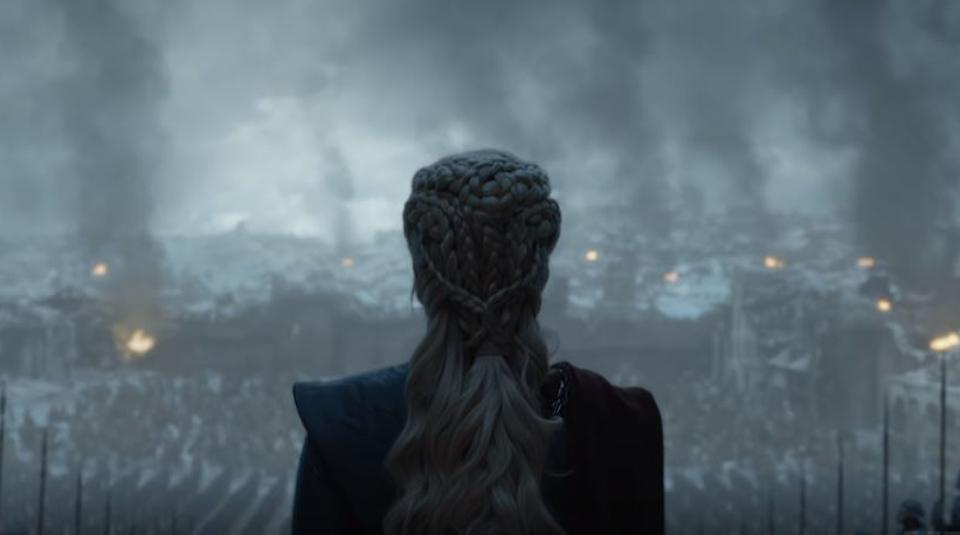
The End of Game of Thrones: How a Good Show Can End Badly

*Warning for major Game of Thrones spoilers down below*

Last night was the series finale of Game of Thrones, which brought the end of both the show and a decade-long era. The eight-season show was both the most expensive ever produced, clocking in at around $10 million an episode, and the most globally popular.

However, even as the show ends with record viewership, the final two seasons left both fans of the books and of the show extremely disappointed. Episode after episode left a stream of complaints and critiques on social media, culminating in an explosion against the final two episodes.

Many fans wonder: what went wrong? It could be argued that the directors and writers of the show gained too much liberty once the show passed the point where the books have (hopefully temporarily) stopped. The writers and directors were only given a vague idea of where the author George R.R. Martin wanted to go, and had to fill in the rest while wrapping everything up by season eight. With such a colossal and complex plot to wrap up with little idea of where to go, it becomes easy to cut too many corners and create a disappointing ending.

Another argument for what went wrong can be timing. As the show progressed, the seasons got shorter, while the episodes stayed the same length. The show was attempting to eliminate major antagonists like Cersei Lannister and the Night King too quickly in order to wrap up on a planned schedule, which left fans feeling disappointed, and with the sense that wins against the villains were undeserved. It took four seasons to kill Tywin Lannister. It took six to uproot the Boltons from power and take back Winterfell. All of the sudden the Night King, who had been an important antagonist since season 2, is defeated in one single battle? And Cersei, who had been a mastermind of manipulation to maintain power, is killed by falling rocks? The wins feel completely undeserved.

Finally, and possibly the most important argument of where the show could have gone wrong, was the progression of character arcs. Before season 6, the show had the complex and already establish character arcs to work with, which allowed for incredibly interesting characters that attracted viewers. They may have diverged at certain major points, but the characters still acted how they most likely would have in the books.

Once they went beyond that point, they progressively lost sight of those character arcs. They held on pretty well for the sixth season, started getting shaky for the seventh season, and completely threw the characters away for the final season. Jaime Lannister, who had grown so much throughout the seasons, all the sudden was back to being a selfish person only interested in Cersei. All character development was thrown out just before his death, causing outrage among viewers.

The more notorious case, however, is Daenerys Targaryen. The beloved Mother of Dragons fell quickly into madness, becoming everything she tried to avoid. Which is all fine and well, if it had been properly fleshed out. Rather, her sudden fall to madness was crammed in two episodes, culminating in the final snap and turn to destruction. It was a slap in the face, both for the character and for the viewers. Perhaps if there had been more episodes the develop the madness arc, then there would not have been such an issue as there was. But because it was shoved in the span of a few episodes, it didn’t feel like a deserved fate for Daenerys.

The show overall left a bitter taste in the mouths of many disappointed fans. There have been petitions to change the final season (which is not going to happen), and constant criticisms flowing through social media. People have likened the show’s end to that of How I Met Your Mother and Lost, both of which had very disappointing endings.

How I Can’t let some Books go

I read a lot of books. More so when I was younger, and had a lot more time to read around school, but that doesn’t stop me from buying potential books to read.

As a result I’ve invested my time and energy into many books, both good and bad, and even some okay. The good ones I usually keep in my room, and the bad ones usually go to the sad and lonely shelf in the middle of a hallway in my house. Trust me, there’s plenty of bad and okay books on that shelf. But hey, when you read a bunch of YA novels, you’re bound to run into many bad ones before you find a good one.

Most of the bad books I’ve read I’ve already forgotten. However, there are a few series that I just can’t let go. This might be because of the fact that among the bad series, there was a good book that I actually enjoyed. Usually this would be the first or second book, getting ruined by the third or whatever else book (In the Mortal Instruments, it was the opposite: I thought the first three books were decent enough, but liked the fifth book the most). Two series that exemplify the above for me are Hunger Games and A Court of Thorns and Roses. I thought the second books in both series were the best, but I didn’t much appreciate reading the third book, to put it politely.

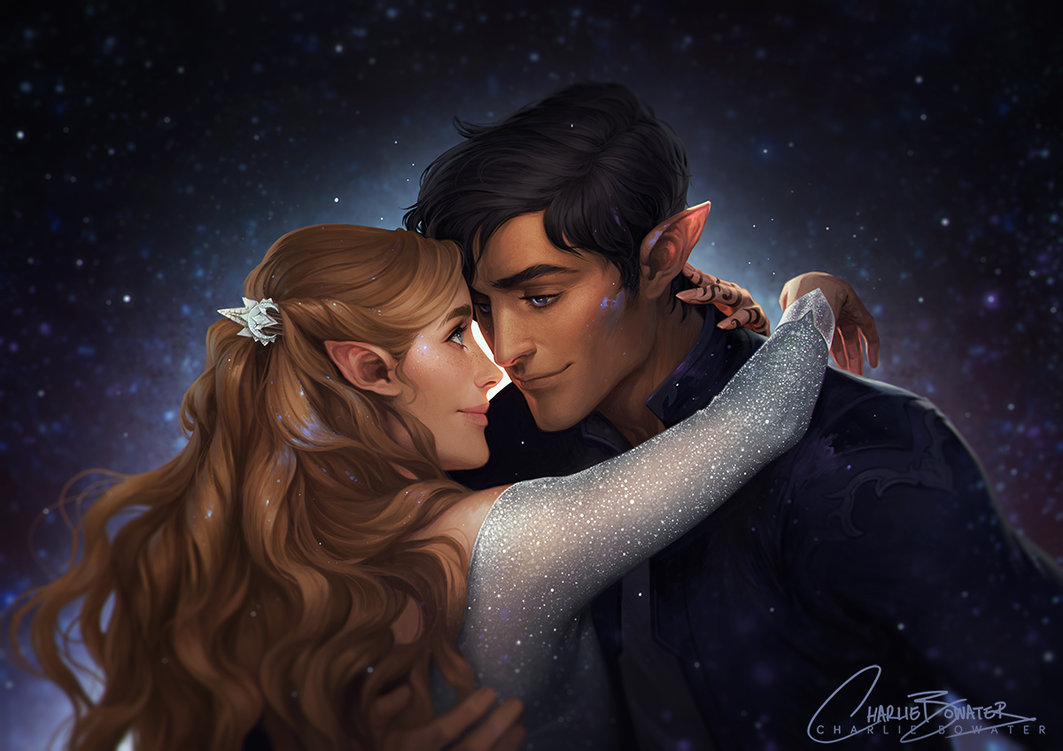
But if only one or two books were really exceptional to me, why do I still cling onto its fandom? Well, I’m usually reminded of the series when I see fan art or something else of the sort. It gives me a sort of nostalgic feeling, and makes me want to re-read my favorite parts of the books I liked. It keeps me hooked onto the fandom, even if merely grabbing the barest shreds so I don’t get too invested in the culture again. Fandom culture has gotten pretty toxic over the years, and I don’t like to involve myself much in them anymore. Discussing their evolution will be saved for a different time, however.

As for the fan art, it’s not just any old fan art. It’s usually drawn by artists I follow, who happen to have read or currently read the same books as me. When I see their interpretation of certain scenes or characters, I am redrawn to those books, even if I haven’t touched them in over two or three years. I blame nostalgia and the familiarity of the characters. My brain recognizes the characters and clicks, triggering a sense of desire to pick up the books.

Art Credit @ Charlie Bowater

The “Pure Virgin” Trope

For a time not so long ago, there was the common but somehow romantic concept of the “pure” girl who’s never had sex falls in love with the very experienced “bad” boy. Especially in the Young Adult urban fantasy (fantasy meshing with the real world), there was the common trope of the main female protagonist being a tiny but stubborn teenager who butts head with the tall and handsome new kid, eventually falling madly and viciously in love with him (her first love, by the way). Often times as well, girls the same age who have had sex are often placed in the light as pure sluts, with their character being left very one-dimensional. At the same time, the books are promoted as “empowering” to young girls, girls who can be as young as 10 and very impressionable.

Why does this matter? Well, trying to promote this idea (plus promoting romance with male protagonists of questionable choice), this can lead many to be unaware of the toxicity of relationships like that. Let’s break it down a little bit, shall we?

Well first, the fact that the main girl is practically the only one around that is a virgin promotes the idea that she is on a level above every one else, or “pure”. Now this isn’t to say that being a virgin at 16 or 17 is a bad thing- the average age that people lose their virginity at is 17- but having her be the only one that is a virgin is saying something. Plus, these girls usually haven’t even had their first kiss yet, like how much more obvious can you get?

The girl also usually doesn’t have very many friends, being the sort of “loser” in school. She usually has around one or two friends (maybe 3), and there is always a guy that she is closest with, mostly to play the love triangle game. Unless, there is the rare chance that he is gay (True Blood), and then he is just the sassy friend trying to encourage her to get laid. This reinforces another idea-it’s not cool to be “popular”. If you’re “popular”, then you’re just like all the other girls who sleep around and party. You’re not “pure”.

The “pure” aspect contrasts greatly from the main male protagonist, the new bad boy who is always insanely attractive. He usually sleeps around, is sarcastic as all hell, and doesn’t like to follow the rules. He is the kind of guy that’s supposed to be unachievable, but always turns his attention to the nerdy not conventionally pretty female protagonist. He sweeps her off her feet, and rescues her because he knows so much more about the magical world than she does. He becomes the useful one, while she sheepishly has to follow him around for protection, and eventual romance. He takes an interest in her mostly because of her purity (a concept that appears in many different books, TV, and movies), making her all the more desirable. She is the target of his romantic advances because she is “not like other girls”.

Plus, he’s always got a broken, tortured soul for the female protagonist to save. He can have all the problems he desires, but she can’t. She’s supposed to listen to all his problems, without having any actual problems of her own to share. This can be very dangerous for an actual relationship. A girl is not supposed to only be someone’s “savior”, but should also be able to reach out to her partner. If she feels like she can’t, then that’s not a very good relationship.

To make matters worse, the idea of the man acting aggressively protective, and sometimes even controlling, gets romanticized. Any man she hangs out with is a threat (and it’s usually portrayed that way), and she must be “protected” from them. She can’t be friends with male friends either, because it turns out they just want to get in her pants, even though bad boy is the only one for her. And bad boy gets really upset when she talks to other men. Controlling behavior is made to seem romantic here, when it’s really not, which could influence young girls into believing that it is. Her heart and body should only be meant for him, and never any one else ever again, which is also not a healthy thing to romanticize. It’s dangerous and can lead to girls getting trapped in toxic relationships.