Meet the Man who Spent $100,000 to look like BTS’s Jimin

The TV series Hooked on the Look holds a reputation for its documentation of the extreme in terms of plastic surgery. Having featured figures like the “Real Life Ken Doll” and the Justin Bieber look-alike, having a Londoner named Oli London going to the surgical extremes should be nothing out of the ordinary.

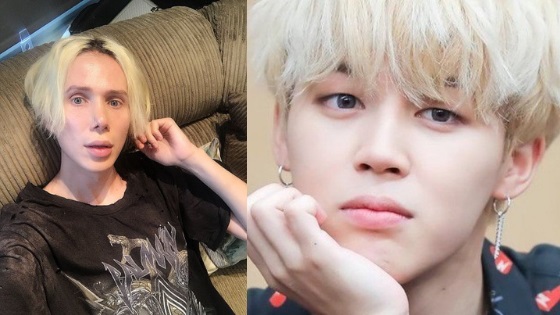
The reason he’s worth noting, however, is for who this man wants to look like. London became a hot topic on social media for the fact that he wants to look like Jimin, one of the lead vocalists from the Kpop group BTS. In essence, the man wants to “change his race”.

This man has gone all out to try and look like the Korean star, from copying his hair, to buying clothes, to getting plenty of procedures to try and emulate Jimin. He’s gotten multiple rhinoplasty procedures, lip fillers, work on his eyes, jaw shaving, and has had all the fatty tissue removed from his chest, among other things. He’s not afraid to spend the money to look like the idol, and he clearly has the money to spend.

Despite all this, London argues that he doesn’t want to change his race, and that he knows that he will always be Caucasian. However, he still wants to try and look Korean because of his love of Jimin (and Kpop idols more generally). In fact, after getting fillers in his eyes and cheeks to look more “like Jimin”, in the show London comments as he looks at himself that he “looks and feels Korean”, which has questionable implications. It brings London into the uncomfortable category of “Koreaboo”, which involves the idolization of Korean culture based on the idea of Kpop and Kdramas, and the fetishization of Koreans.

While London claims he doesn’t want to “be” Korean, he certainly wants to look it, and he especially wants to look like Jimin, which would most likely disturb the actual singer. The Kpop idol already has to deal with sasaengs that follow him and his group around on airplanes and to hotels, and would probably not appreciate hearing that someone has spent an exorbitant amount of money just to look like him.
Korean Pop Singer Seungri Calls it Quits After Sex Scandal Charges

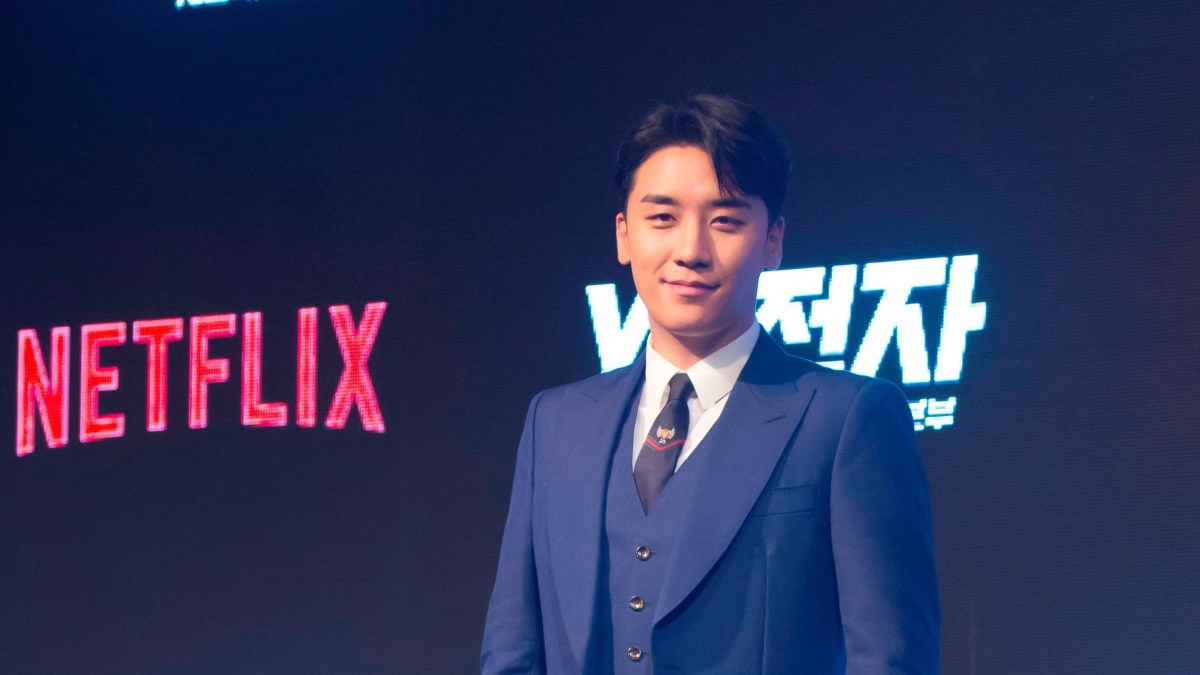
Korean singer and actor Seung-ri, known by his stage name V.I. in Japan, was charged recently with providing prostitutes in a sex ring late last week. Despite denying these charges, the 28-year-old announced his retirement from Kpop in order to protect Big Bang and his company YG Entertainment.

The charges, which could lead to a three year prison sentence, came after a police raid of a nightclub in Seoul, one that Seung-ri, who’s real name is Lee Seung-hyun, controls. As a result, YG shares collapsed by a whopping 14 % the next morning.

The police raid, and the new charge, comes after a nightclub assault committed by him in January. Police began investigating into allegations such as supplying drugs to patrons, and giving drug-addled drinks to women to have sex with. The allegations don’t just extend back a few weeks, however. Text messages in 2015 between Seung-ri and three others discussed supplying prostitutes to potential investors to encourage them to invest in his club.

Although Seung-ri made claims that the text messages were fabricated by the journalist that exposed them, but that didn’t stop concerts in Osaka, Japan, and Jakarta, Indonesia from getting cancelled for Big Bang.

Korean Media has also exposed that YG has been throwing out shredded information, although the company denies that none of the information is related to the case.

The allegations at the moment come at a time when Seung-ri was both set to star in a sitcom produced by both YG and Netflix, and was a few weeks from going on leave to perform his mandatory military service. This leave will be postponed while the investigation goes on.

Despite the seriousness of these allegations, some staunch fans still avidly support Seung-ri, actively denying the allegations and getting aggressive towards the investigation, insisting that any and all victims were simply lying. Such fanaticism is both interesting and harmful, as it would make any victims feel unsafe speaking out, and would put Seung-ri on a pedestal. Perhaps the defensiveness comes from Big Bang’s legacy, which is both widespread among old-age Kpop fans and extremely positive, as members are known for being very kind. The allegations starkly contrast the reputation of the band, and threaten the legacy of it as well. Such threats trigger fans to get defensive, even if these allegations prove to be true (which at this rate, most likely are).

Now, it’s important to note, while Seung-ri may be the face of this scandal, he is merely alleged to be part of a high-scale and very large ring that involves both politicians and conglomerates in a class-A scandal that seems to deeply involved with nightclubs in Gangnam. Even as the police investigate into the ring, they are also enmeshed in the scandal, with some high-ranking positioned officials having been paid off to not look into the politicians and conglomerates. This relationship is not a one-time occurrence, either. It seems to be entrenched in South Korean politics, which has somewhat of a record for corrupt and closed-door practices, particularly in dealing with business. So, it’ll be interesting to see how the case develops, especially with the police being in a position as both the justice-bringers and as part of the corruption.

Revisiting Disney Fanaticism

A few months back, I wrote about some of the world of Disney fanaticism. I had kind of forgotten about it for a while, but was reminded of the world when I not only saw lots of people from back home posting about going to Disneyland (all this weekend, mind you), but also stumbled upon Youtube channels dedicated to analyzing different things about Disney, namely DisneyDan.

I decided to watch some of these videos, particularly the evolution of different character portrayals in Disney parks, and felt very strange. Maybe it’s because of the level of detailed analysis that these people go into (these videos could be 30 minutes or longer). Or perhaps it’s from the fact that almost every time, these people will mention seeing all the performances that the character participates in that they could, plus going to multiple meet-and-greets for that character.

The videos surprised me, and spurred me into researching more Disney fanaticism, namely through looking at fan merchandising. It wasn’t hard to stumble upon a treasure trove. Mickey Mouse ears were everywhere, with so many different themes that it was impossible to find an end. There were also limited edition plushies, clothes, posters, art, just about anything that wasn’t a Disney park itself.

I was surprised by the creativity put into making some of the products (namely the Mickey ears-someone made Dolewhip themed ones), but not at all surprised by the quantity of items to get. I know how far fanaticism can go, although even now it’s still hard to comprehend. I’m fine with getting the occasional plush, and going to Disneyland about once a year; when I see these people go all-in I wonder where their supply of spending money comes from. Disney is expensive.

But let’s revisit the videos I watched, for a second. They’re tied to the money thing, as these Disney analysts almost always mention going out to Disney on Ice, or seeing all the different shows within the Disney park-all that adds up. The amount of personal research (plus, all the Disney history they go into to get a fully fleshed-out story line, is honestly quite impressive. I mean, it’s an interesting topic, but I’m not quite sure I’d be willing to go as much into detail as some of these people. It got me wondering what kind of people they were, centered around their intense attachment to Disney. How much merch did they have, did they have annual passes, do they work for Disney. So many questions run through my mind, ones that I don’t really know if I want to find the answer to. For me, it’s better to appreciate from afar in this kind of situation

The Gatekeepers of Nerdom: The Small but Obnoxious Minority

It doesn’t take a genius to tell that being nerdy is “cool”. It’s been this way for the last decade, with pop culture trends that were once considered “lame” exploding in popularity, and fandom merch being sold at practically every corner. Conventions are appearing all over the place, and old ones (Comicon, Wondercon, Anime Expo) are growing larger every year. In 2015, more than 150 million people in the United States play video games, with 42 percent of Americans playing video games regularly. The nerd is no longer a joke of a subculture.

But for some reason, the news didn’t seem to have spread to one small group, known as the “Gatekeepers of Nerdom”- a group of nerds who argue that nerds are incredibly oppressed, while at the same time zealously trying to disprove the nerdiness of others, particularly of women. They seem to believe that they’re still stuck in 1980, when nerds were the typical bully subject in films. They also seem to believe that girls won’t date them because they’re nerdy, even though they’re really just not getting dates because they harass every girl who shows signs of nerdiness, trying to disprove them wherever they can.

The Gatekeepers are a small group, but are obnoxiously loud on social media, appearing where no one asked them to. Trying to find the “real” nerds seem to be their righteous mission, making many hate them- making the group in turn see themselves as “greatly oppressed”. Acknowledging the ever-growing diversity of the nerdom in any pop culture media is considered to be “SJW bs” by them.

How do they persist? Well, the Gatekeepers seem to push this continuous cycle where they harass people, get made fun of for it, and imagine they’re oppressed, causing them to continue existing. There is also the issue of the purity complex, where minority groups in fandoms, video games, and other aspects will try and prove that they are the most “pure” of anyone else, who is fake because they aren’t. The purity complex is a toxic form of trying to prove realness, especially in the realm of nerd, where there is no real purity. The nerdom has grown so much that finding a “pure” version of a nerd is utterly impossible.

The fortunate thing is, at least, that no one takes the Gatekeepers seriously. How do you take them seriously, when they are viciously trying to “protect” a subculture like it’s still 1980? And their harassment is kind of hilarious in itself. They appear suddenly in your feed, ask a “trivia question” trying to prove that you’re not a real nerd, and get mad when you either answer it correctly or ignore them. They’re not much of a real foe. It is entertaining to watch someone interact with one of them, though.

Planning a Trip to Disneyland

Disneyland in Anaheim is a park that receives millions of visitors in a year. It’s the first one ever opened, and is most known for the fact. It is also known to have a major overcrowding problem, pushing ticket prices up seemingly every year. It’s an issue that especially affects socal locals, who not only need to plan around the traffic, but also be ready to drop a minimum of $200 a person. Which often pushes them away (unless you’re one of the ones who buys an annual pass and goes every weekend). But, if you are willing to splurge once a year or every other year, here’s a few habits my friends and I picked up trying to make the most out of our visits.

The first habit we picked up was going during “off seasons”. An “off season” are the seasons where tourist traffic is lower than average (late summer/early fall to december, january to april). You might think “but LA always has tourists.” That’s why I said lower than average traffic. The months are important, because they center around when people need to go back to school, and when they go one winter break. Going during an “off season” can make all the difference in wait times, which can be cut by as much as half. Choosing a weekday is also important, as it guarantees people will be in school (which helps if you have vacation during the quarter system, which is different from everyone else).

The second is to be very picky of where we get our food. Disneyland food is especially pricey, and you have to know where you’re going to get the most bang for your buck. If you get a park hopper pass, I would just recommend that you go to California Adventure, where the food tends to be cheaper. But if you’re stuck in just Disneyland, go to Downtown Disney (you can always come back into the park). But the food in the New Orleans area of Disneyland isn’t bad.

The third habit we picked up was fast passing the biggest rides. You can only take out one fast pass at a time, but its worth getting them for Space Mountain, Indiana Jones, and Splash Mountain. Those tend to be the rides within Disneyland park that have the longest waits (although Matterhorn can be up to 110 minute wait, as well). In California Adventure, getting a fast pass for Cars Ride, and Guardians of the Galaxy are the ones you need to get. While getting the fast pass for the ride is helpful, if the lines are short enough, it may just be more worth it just to wait in the line.

The last important habit I can say is try to stay all day. You have the make the most out of your trip, especially if it was a hassle getting there in the first place, and staying all day and trying to see as much as you can is the least you can do. The crowds can be a bit tedious, however, and if it threatens to chase you away, that’s okay. Just stay out of the fantasyland area and you avoid most of the people with strollers.

Incredibles 2 and Legend of Korra: Shifting with the Times

I got to see the Incredibles 2 last night with my friend, and I have to say it was a very good film. I did notice in watching the film, however, that there was quite a bit of appeal to the people who were kids when the original Incredibles came out. Because of fourteen year gap between the films, most, if not all of the people who got to enjoy the first film are now in college or beyond (myself included), and have the potential to be the biggest source of income for the movie. And while of course there are elements in kids’ movies that appeal more to the adults, Incredibles 2 seemed to appeal to the older kids more than usual.

Which, makes sense. Like I said, there is a fourteen year gap between the release of Incredibles and Incredibles 2, and the people who would want to see the movie the most are in or out of college already. That gives the freedom to add more “adult” elements, while still calling it a kids’ movie.

The same event happened in Legend of Korra. The show, which was a sequel to Avatar the Last Airbender, brought in darker, more adult elements, appealing to the fan base who watched the original show. Although it was only a four year gap between the two shows, the generation who watched the show had grown quite a bit since the first episode. Plus, with Legend of Korra having a total of four seasons, the kids continue to grow into adulthood. If you contrast this from the Last Airbender, you’ll notice the original show was much more lighthearted in nature, and Korra is more gritty (even the styles are different, the original having more roundish characteristics, and the latter having sharper more realistic imagery).

Both the movie and the show hold the task of appealing to their old fan base, while still attracting a new, younger fan base. It’s a balancing act, having the freedom to stretch beyond the traditional limits of kids’ media while at the same time having to maintain some semblance of it. It’s a difficult task, one that these media seem to do well.

Crazy Kpop Fans vs. Koreaboos- the Important Difference

Since the release and popularity of “Gangnam Style” by PSY, Kpop, and Korean pop culture in general, has soared in popularity in Western pop culture. This continuing rise in popularity has led to BTS’s recent performance at the New York New Year’s Show, and the rising presence of Kcon (a convention centered around Kpop and other pop culture). It has also created created a rise to the super fanatics, or the “crazy Kpop fans”, and the koreaboos.

What is the difference between the two? While the koreaboo does classify under the category of “extreme fanaticism” like the crazy Kpop fan, one is distinctly different from the other. How is this so?

Well, the differences come in attributes. For the crazy Kpop fan, which holds the name sasaeng (a Korean term which literally translates to “private life”, referring to the regular invasion of privacy of Kpop artists by their crazy fans), the attributes come in the form of deep psychological and emotional obsession with Kpop, and certain groups in particular. The sasaeng fan are not considered “true fans”, constantly trying to rip off artists’ clothes, kiss them, and stalk them. While the sasaeng fan is in the West is much more virtual-based, writing fan fictions of all sorts about their favorite idols, buying anything and everything that they believe belongs to their favorite idol, and “virtually” stalking their idol, there has been increasing physical contact, with some sasaeng flying out to South Korea in order to try and find their idols.

The Korean sasaeng fan is much more direct, and will break into idols’ rooms, set up cameras, drug the idols, hit the idols, in order to be remembered. They will get in taxis or their own cars in order to follow their favorite idols, which have resulted in previous multi-car accidents and stand offs. They will even go so far as to try and kidnap their favorite idols in order to get close to them. This cultural phenomenon has existed since the 1990s with the rise of “fandoms”, although they are gaining heightened momentum and attention under the digital era, with as many as 100 sasaeng fans following the biggest Kpop idols on a given day. Their behavior is erratic and dangerous, having a direct impact and life-threatening impact on the Kpop idols.

The Koreaboo by contrast, represents a much different and more muted form of harmful. The koreaboo is best described as someone who denies their native culture, idolizing Korean culture (based off of Kpop and Kdramas) and claiming it as their own. The koreaboo wants to be a Korean, seeing them as the “most attractive” or “best” ethnic group, and dreams of moving to Korean and marrying a Korean person. They try to act like how they imagine a Korean person acts (based off of Kpop and Kdramas) and are basically Korean fetishists. Kind of reminds you of Rachel Dolezal and Ja Du, right?

With this is mind, how can they possibly be harmful like the sasaeng fan? Well, they’re more harmful in the way that they ruin things for everyone else. Because of their cultural fetishism, they stigmatize liking Korean popular culture, and make anyone who has an interest in seeing South Korea or learning about their culture look bad. They do not directly harm the lives of their favorite idols, but they do promote cultural stigma, and make enjoying other cultures look “wrong”, particularly among younger populations, who are affected by the Kpop phenomenon the most. They represent a mutation in fanaticism, a minority with a big and memorable voice that exists not just with Korean pop culture but also Japanese pop culture (the weeaboo, which influenced the name koreaboo), and European pop culture (although they are considered much more socially acceptable by the West). They force casual fans to feel “bad” about what they like, and ruin all the fun.

D23: the World of Disney Fanaticism

With a convention for just about everything with a fan following, for a long time it seemed odd to me that there was no convention for Disney fans (especially growing up in LA, where it was impossible not to meet at least a few people who didn’t go to Disneyland practically every weekend). Disney fans always fascinated me, because there was always a certain quality that struck as almost cult worship. So it seemed odd that I had never heard of a convention devoted to Disney when so many other pop up conventions existed.

That was, until I was seventeen, when one of my old friends mentioned that she and her family had gone to D23.

“What’s that?” I had asked her. She had initially answered that it was a convention devoted to Disney, but when I looked into it, I found it was so much more than that. You see, in its most general form, is Disney’s “Official Fan Club” founded in 2009, which features articles about movie easter eggs, park history, along with character searches and other such Disney-related topics. There are multiple levels of membership for this club, the General membership being free, and the Gold membership being around $80, and the Gold Family membership being $105.

Gaining a membership seems to get you a series of discounts and offers to exclusive Disney items, including jewelry, clothes, toys, and hotel rooms at Disney resorts. Gold members also get early bird access and special prices to the biannual D23 expo. This convention, which happens in Anaheim (right next to the Disneyland Park), and Tokyo (at the Tokyo Disneyland Resort). What happens at this convention? Think of everything related to Disney ever and smash it into a convention (kind of like Comic-con). They have panels for movies, meetings with Disney legends, and plenty of vendors selling Disney items. Oftentimes as well, there will be “exclusive D23” Disney merch, sold only at the convention, making it practically invaluable to Disney fans (I will admit that I have a D23 Japan exclusive tsum tsum hat, but that was a by luck find on ebay). It’s the place to be if you are a part of the Disney-fever club.

And of course, as with any convention, there are plenty of cosplayers, or someone who dresses up as a fictional character. People get in costume as a character anywhere from Disney itself to Marvel and now Star Wars, as thousands of people want to dive fully into the atmosphere of the D23 expo.

I have never been to a D23 expo (nor do I plan on going to one), so I can’t say in great depth what exactly goes on at one of those conventions. But I could probably guess that its exactly what you would expect when you hear the words “Disney convention”.