
The Evolution of Fake News

Although the term was popularized in the 2016 US presidential elections, fake news has had a rather long existence, spanning over a century. It’s no new thing, although at the moment, the proliferation of fake news has built up points of great contention, trust, and turmoil.

Fake news can trace it’s history all the way back to the Spanish-American War of 1898, which was, in essence, caused by William Randolph Hearst and his newspaper the New York Journal. During this time period, the “fake news” was classified as “Yellow journalism” as the yellow tint of the printing of Hearst’s paper differentiated it from it’s rival newspaper. Hearst’s newspaper pushed out fabricated stories about the violence of the Spanish towards Americans in the Caribbean, utilizing emotion to encourage the American public to want war. This triggered a period filled with fake news, which became so rampant that a challenging newspaper rewrote it’s tagline to support “real news-not fake news”.

Despite the anxiety over the fake news, yellow journalism was able to successfully turn the people to want war, which kick-started the Spanish-American war.

Fake news did not die after the war. Instead, it went someone dormant, as there was major backlash against such fake news at the dawn of the twentieth century. However, fake news would make a new rise during World War One, churning out propaganda about the barbaric nature of the Germans, particularly against Belgium. Now, this isn’t to say that Germany did not act violently against Belgium, a peaceful country, but the fake news industry blew much of the invasion way out of proportion, churning out stories that rang not just in the US, but throughout the allied nations.

Not only that, but rampant propaganda an fake news actually fooled the entirety of the German public, who thought the entire span of the war that they were winning the war. And since the German military maintained mass press censorship, the public never knew they were losing until Kaiser Wilhelm II declared surrender.

Fake news would keep making appearances in spreading of the First Red Scare in the US, feelings of isolationism both in the US and in Europe, and the decade of harsh reeducation of the German public during the rise of Nazi Germany. Following the end of the second world war, fake news would appear intermittently, spiking during times of conflict, and declining during periods of relative peace. With the dawn of the internet, however, fake news found its new home.

The way that fake news is presented has changed in terms of proliferation, although its function and purpose has not changed in the slightest. It fueled conflict and dissent during the 2016 presidential elections, and continue to fuel political polarization and divide, particularly as the global public is much less likely to do the research to find the truth. Currently, the media stands in a precarious position, being both the source of truth and also of sensationalist fake news, which in turn damages the trust of the public. This problem becomes incredibly difficult to resolve especially as sources of media are so vastly expanded, with just about anyone, including myself, holding the ability to push out news, whether fake or not.
How “Daddy” got Popular in all the Wrong Ways

It was a mere six years ago when the term “daddy”, which holds it’s place as a part of the Daddy/Little Girl/Boy kink, broke the scene into mainstream Internet media. Once a niche kink that was relatively unknown, the Daddy/Little Girl/Boy kink became widely known, with much criticism following it. The term “daddy” especially gained criticism, while at the same time becoming a meme within social media. Now it is a permanent fixture, although for many it has ruined the original pure meaning of the term.

But first: what is the Daddy/Little Girl/Boy kink? The kink consists of two consenting partners, in which one, the “Daddy” is the dominating male, and the other, the “Little Girl/Boy”, is the submissive type. It is kind of like age play (where one person pretends to be much younger), except more mature, with the submissive figure playing the “cutesy little kitten” type. The submissive will even address the dominant as “Daddy” in a sexual way, trying to get their attention and be used for sexual acts. There are not that many people in this kink, although within recent years it has gained more traction.

When the term “Daddy” broke onto the scene, it permanently changed how many teens and young adults saw the term. People started to use it in a mock sexual and comedic manner, although it’s innocent beginning for most was tarnished. Even I’ve been affected, and every time I hear the word used in a non-mocking manner makes me uncomfortable.

A few years ago, however, the backlash finally arose against the use of “daddy” in a sexual manner. People wanted its innocent meaning to be at the forefront again, and for its use in a sexual manner to sink back out of existence. Anyone who tried to argue in defense of the kink was shot down by the masses, and it was pushed down.

Going into the modern era, the term is much less common, but still tainted. It is still used as a joke, which keeps it’s dirty meaning from fully fading among young adults, although it doesn’t seem to be presenting itself to younger teens, anymore. But it will be a long time before it’s finally gone.

The Downfall of Greek Myths in Movies

Greek mythology often finds itself in the spotlight of Hollywood films. Usually avoiding the Odyssey, Jason and the Argonauts and Persesus are the most commonly found, although differing interpretations on Greek mythology, like the Percy Jackson movies (although we don’t speak of those), do make appearances.

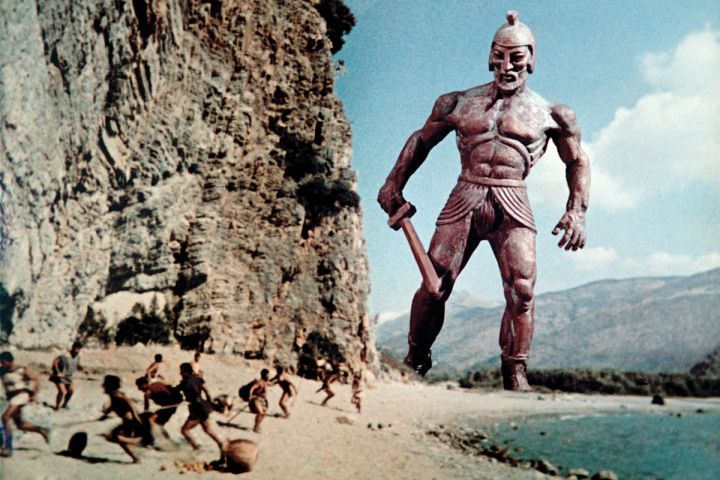
Turning Greek myths into movies found its height from the 1960’s to the 1980’s, when claymation monsters dominated the screen rather than advanced CGI. I can’t knock the use of claymation, however- filmmakers got creative with it, and were able to make it work fairly well. As comical as they look to audiences nowadays, you have to admit that for their time, they were genius moves.

Now, however, Hollywood has lost its way when it comes to showing off the legendary epics. What used to be just portraying the tales as is (with some creative difference, but not much), is now a strange and unsuccessful attempt to make the stories more “original”. They use an excessive amount of CGI, turning the classic mischievous and playful Greek gods into serious and dramatic figures, erasing some of their most bizarre origins and reactions. The myths portray the Greek Gods as divine and powerful but characteristically flawed (they are perfect at something, hence their God status). Movies now simply turn them into perfect but overly angry figures, exaggerating their temperamental behavior.

The legendary figures also find themselves changed, too, turning figures like Jason and Perseus into gritty and dramatic figures, when they show a variety of behavior, portraying a story of morality on a complex hero. In modern movies they are now meant to fight these giant monsters, getting girl while playing a one-note tune of being a one-dimensional hero. The main hero finds himself enveloped under the fold of the typical cliche action hero, completely ruining the point of the original Greek Epic or legend that they appear in.

The aesthetic of the new Greek myth movies also are much darker. Rather than being more realistic of showing an environment like daytime Greece, they show changing skies and darker backgrounds, making the story seem much less real. Of course, they are portraying stories, but compare them to their predecessors; compare the sky, the backdrop, and most importantly, the clothes. The cloths all look Spartan based, rather than showing the diversity of Ancient Greece (which wasn’t a unified country). It all makes seeing the Greek myths on screen that much less popular.