The American Meme, and Unnecessary Drama

For the past few days, I had been in a funk about writing. I didn’t have any inspiration to write about anything, which was kind of annoying, because I wanted to at least write about something. That was, at least, until I watched the American Meme on Netflix with my friend last night.

God, this documentary was something else. I don’t think I’ve ever rolled my eyes harder than when I watched this. It wasn’t because the documentary was necessarily bad-just filled with whiny, obnoxious people who complained about being social media influencers, while at the same time refusing to leave it.

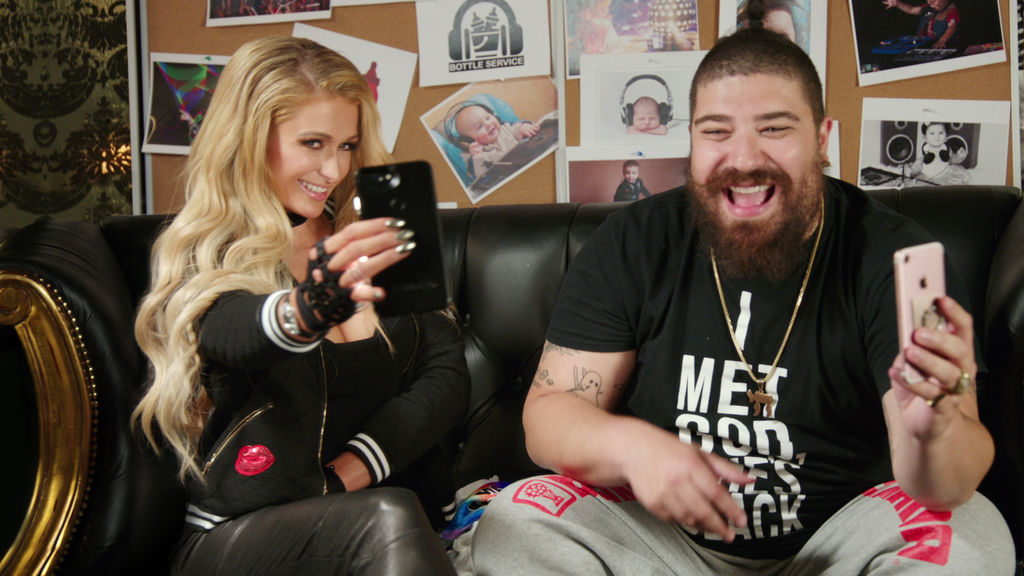
I’m not kidding. Literally ninety percent of the documentary was about these people complaining about being influencers. How they “hate people” or “their life sucks”, but they also continue to do their job because “what else can I do?” The only person I had any real sympathy for was Paris Hilton, who did get chased around by paparazzi, and did have a private sex tape released without her consent. That, I can understand.

But everyone else? I’m sorry, but I have none for them. They’re literally all the same types- kids who move out to LA to make it big, don’t get any parts, and then turn to social media to pay the bills. Then they complain because the pathway they chose sucks and is competitive and fake, but don’t leave or move back home. They claim to be hooked on the attention, which may be true, but seriously, it’s not that hard. Being an influencer is cut-throat. Don’t like it? Leave.

I do realize in writing this that my sympathy may be lessened by the fact that they moved to LA, especially to become actors, which grates on my nerves to no end. I, like most other native Angelinos, hate those kinds of people. The transplants that come here to be in the entertainment industry, then refuse to leave when they get jaded. They increase the traffic, the housing prices, the cost of living. They add to the gentrification of long-standing communities, all the while flaunting how they’re from a small town or some other state. Sorry, but you won’t find sympathy from me.

Another thing that got on my nerves: how these people claimed they had to be crazy to get views, and how everyone in Hollywood dresses up and calls the paparazzi to them now. Which isn’t true in the slightest. Most traditional entertainers (actors, musicians), don’t have the paparazzi coming to them, and don’t get all flashy. They blend into the regular population, eating at restaurants or going to the gym. Most of them stay out of the limelight, going entirely against the claim Mark Henderson made about Hollywood.

And as for social media influencers, I follow plenty of them (and live near a few) that don’t at all do crazy things for the sake of social media. They don’t make fools of themselves, and still get millions of views on a youtube video they release, or an Instagram photo that they send out. This documentary tries to say otherwise, but facts are facts.

This documentary, to a certain extent, was a load of bs. I won’t lie and say that social media is nothing like this (because any creative platform can be pretty cut-throat and strenuous), but the extent to which these people make their claims is so exaggerated. The people interviewed also act like there’s no way out, but then contradict themselves (like Kirill was saying he had ‘no other option’ than to party like crazy for Instagram, and then it goes and talks about how Paris Hilton used her fame to start a bunch of brands), to the point where is just seems ridiculous. To me, the documentary was just a way for people to complain about their lives without actually changing anything about it.
My Takeaway from the Jake Paul Series

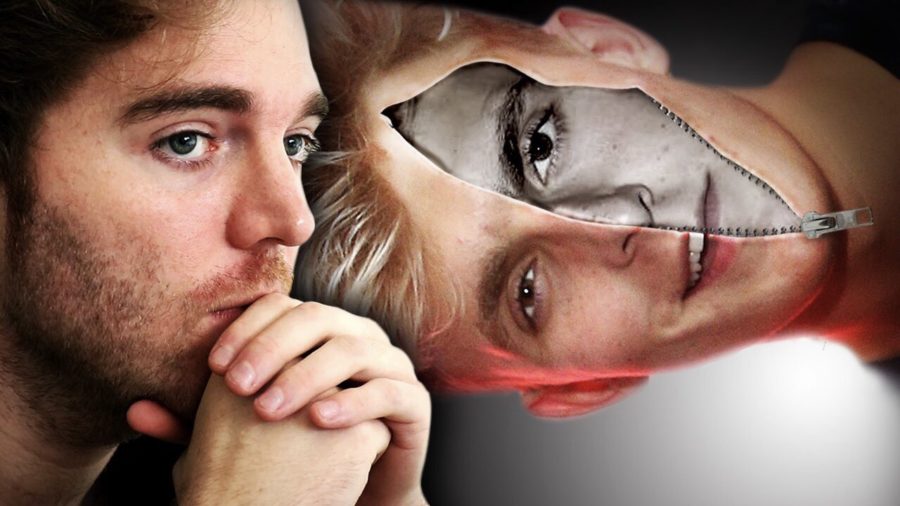
If you’ve been involved in the Youtube world, then you would know that a few days ago, Shane Dawson wrapped up his eight-part series on Jake Paul. The series ended in an almost two-hour long finale, a good 90 percent centered around the final interview that Shane had been building up to throughout the series.

Despite my qualms about the second episode, I watched the series in its entirety. I will say that while I admire the amount of research Shane went through, approaching multiple different people that were involved in Jake Paul’s life in order to get their perspectives, I have to say that in the end, Shane let his bias show a little too brightly.

Not in the sense that he ignored that Jake Paul is a sociopath (which he’s not), but in the sense that in the end he went a little too light on calling out his past. He did ask about the assault case, the cheating situation, and other such things that people had been wondering about. He provided advice on what Jake Paul should do, to which the latter figure seemed enthusiastic to accept. But the interview as a whole was a little underwhelming. Shane promised that the interview would allow no mercy, and spent the whole series making that promise, but when he got to the actual interview, I couldn’t help but be bored. I sat there, constantly checking how much time was left, wondering when the harder questions were going to come in. In the end, I felt that we weren’t given what we were promised, because Shane learned to like Jake Paul.

And, to be honest, I did feel some sympathy towards Jake Paul. Throughout the show, the strained and frayed family dynamic came up, which provides some insight on who Jake Paul is behind the scenes. His Dad raised him to believe it was okay to act like this, and his brother did some awful things that would mess with someone. Working with a father and brother, as well, is also very dangerous, as it blurs the line between work and family. It can destroy families.

There’s also the fact that Jake Paul holds himself in a toxic situation, living in the Team 10 house and almost never taking a break. Even his girlfriend can sense it, and wants them to move away so that they aren’t constantly in the limelight. That kind of situation would mess with anyone.

And yet, at the same time, I hesitate to sympathize. The situation between Alyssa and Jake still makes me wonder, especially as some aspects to each side of their stories holds differences, making it difficult to believe one person or another. Shane never fully fleshed out the situation through third-parties without bias, adding a sense of dissatisfaction and uncertainty. The uncertainty makes me hesitate.

Also, despite him being in a messed up situation, we can’t ignore the fact that Jake Paul has done some crappy things. There were bad choices he made outside of the ones discussed in the series, and they were choices that he made. Of course, college males can act as dumb as him, but being an influential figure, especially with a demographic of kids 8-16, he needs to know better. And I’m glad Shane pointed that out, cause in certain ways Jake didn’t seem to understand the amount of influence he actually had on kids. Constant merch plugging, his music, and pranks, his talk against school, all of that can leave an impact on a kid, shaping their views. He didn’t seem to understand that.

Now, in the end, Jake promised to change things. But words don’t mean anything if no one acts on them. I want to see him act on it, and the best way I can imagine that being is taking an extended break from Youtube-possibly even moving back out to Ohio. To think on himself and his actions, to come back and change his content. I won’t believe the guy until he’s actually presented the social sphere with his change, and possibly moved himself into a situation where he has a break from the chaos. While I do hope that he does improve, I will only believe it when I see it.

The Problem of Shane Dawson’s “The Mind of Jake Paul”

The Internet roared when Shane Dawson announced that he would make an eight-part documentary series on the controversial Youtube star Jake Paul. Dawson had been known for making “DocuYoutube” series on other controversial figures (including Tana Mongeau and Jeffree Star), but this person, known for several strings of awful behavior, was a step too far. Dawson did announce that he would not be lenient or forgiving to this person, and that he was making the series to analyze why the younger Paul brother behaved in such a way.

With the release of the first episode, all seemed well enough. Within the first few days the episode got 15,000,000 views, a viewing higher than some of the most popular TV shows on air. The controversy arises in the second episode however, when discussing the idea of sociopaths, as an attempt to analyze if Jake Paul qualifies as a sociopath. This controversy centers mostly around the psychologist he meets with and the framing of a sociopath.

Now, here’s a few details on a sociopath. A sociopath classifies under antisocial personality disorder, mainly marked by superficial charm and an inability to regard moral or social standards. Sociopaths lack the ability to relate and sympathize with others, and often learn to mimic behavior by studying how other people react. They usually have poor behavioral/impulse control, and often need high amounts of stimulation. Sociopaths, which is the extreme end of antisocial personality disorder, affects about 4% of the population, or 3% of males and 1% of females.

Now, sociopaths aren’t inherently bad people. They often do things that are considered bad or callous because they lack the capability of understanding them. Oftentimes, however, sociopaths are confused with psychopaths, who are dangerous, as they share some similar traits. This creates a massive stigma against sociopaths, a stigma that oftentimes prevents people from getting help or living a relatively normal life.

Now, here’s where the Shane Dawson controversy comes in. He frames the description of a sociopath with scary music and themes, making a sociopath appear more like a serial-killer psychopath. He also makes it seem like a sociopath is some born horrible mental illness, rather than being a personality disorder born out of deep childhood trauma. He reinforces a stigma around mental and personalities disorders, which is ironic, given his history or eating disorders and depression. He has been open about his mental health issues, so to cast a disorder that people can’t help as something scary on such a mainstream platform only boosts the stigma against mental illness and personality disorders.

The second controversy comes in the fact that the psychologist he was talking to began diagnosing people. Any undergrad student who is serious about becoming a psychologist or psychiatrist can tell you that a therapist is not supposed to diagnose people. A therapist’s main job is to help guide someone on their own journey and let the person discover themselves, or have testing done in order to get a definitive answer. They are not supposed to sit there and tell you what they think you have. Any therapist who does so is not a good therapist. The fact that she was labeling Jake Paul as a sociopath without having ever met him is bad practice (also, her implication that all Youtubers are sociopaths with Narcissistic tendencies is kind of ridiculous). She only fueled the fire of placing sociopaths in a bad light.

Although Shane has apologized for this move in subsequent videos, the fact that he even did it in the first place for ambiance was just poor taste.

Demi Lovato, and the Trials of Rehabilitation

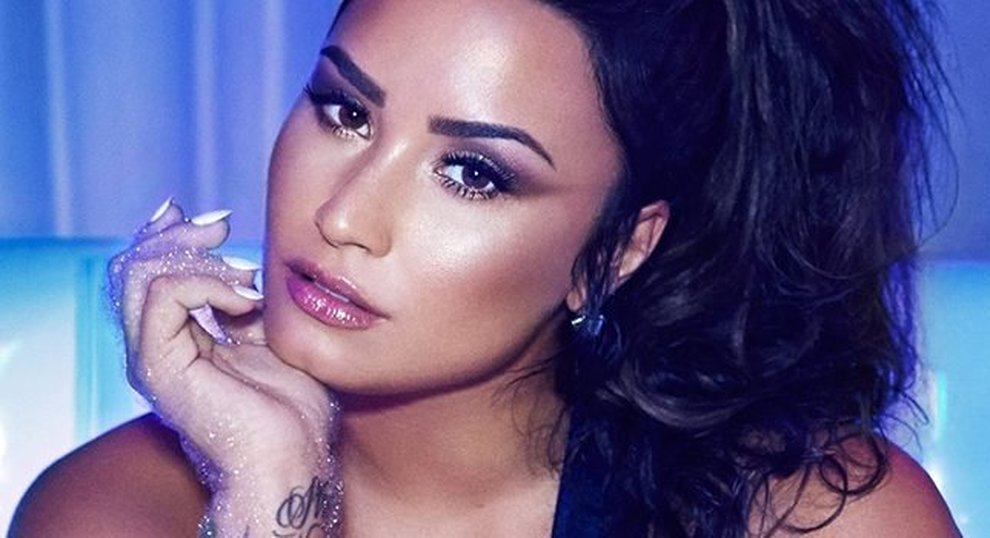
On Tuesday night, singer and former Disney Star was found and admitted to the hospital on assumed drug overdose, after a night of partying with her friends. Fortunately, she has survived the overdose, unlike so many other recent stars that suffered the same fate. But unfortunately, this surprise overdose has come at a shock to many, who had previously believed Lovato to have been sober for a long time.

Well, that is if you didn’t know about one of her newer songs, titled “Sober”, proclaiming her sorrow over her relapse after six years. It was released a month ago, shocking fans with the line “I’m not Sober Anymore” appearing so prominently in the chorus. Her relapse and hospitalization, and the deaths of so many other celebrities, tell of the struggles of overcoming addiction and staying sober.

So, what happened with Demi Lovato? Well, even before finishing her days with Disney, she had fallen into a cocaine and Xanax addiction, to which she eventually went to her first time for. However, she relapsed not long after, and has said in her documentary Simply Complicated that “I hadn’t been ready to get sober” when talking about her first time out of rehab (2017). Not long after, she went to rehab again, this time with a more committed attitude. By the time she became a judge on X-Factor in 2013, she had started living in a “sober” apartment, one with other recovering addicts as they adjust back to living independent lives.

In 2017, Demi Lovato made the aforementioned documentary Simply Complicated, where she documents her struggle with not only drug addiction, but also her bulimia and bipolar disorder. She opens all to her fans, inspiring millions with her heart-felt truth.

In March of this year, Demi Lovato celebrated her sixth year of being sober with a tweet reading “Just officially turned 6 years sober. So grateful for another year of joy, health and happiness. It IS possible.”

With her openness about her struggle and fight for sobriety, many looked up to her as a role model, seeing the image of successful rehabilitation. But with the release of “Sober”, the image of a sober Demi came to a screeching halt. The song revealed that she had relapsed a few months prior to the song’s release, and that culminated into her hospitalization on Tuesday night. Her story is a classic, but sad one, one that happens all too often.

I understand that the idea that Demi Lovato relapsed after 6 years might seem bizarre. The longer you spend without drugs, the less you’ll want them, right? Well, if that was the case, then how was Carrie Fisher found with substances during her autopsy? She may not have died of overdose, but the fact that she did have drugs in her system after being sober for so long does say something.

You see, trying to stay sober doesn’t work with time. It’s a constant battle, one that continues throughout a former addict’s whole life. You see, when you’re an addict, three major parts of the brain are affected: the basil ganglia (positive forms of motivation), the extended amygdala (deals with stressful emotions and thoughts), and the prefontal cortex (deals with decision making). All of these are the most important for fighting addiction, and are also the most affected.

Particularly with cocaine, this comes as a result of a surge of natural neurotransmitters released as a result, disrupting the normal recycling process for the brain. When it suddenly has to function again, it begins to crave that rush. When a person gets stressed, it begins to crave that rush. The brain is complex but lazy, and when faced with problems, it will immediately want what is easily accessible to it. The person has to have a strong enough will to fight the craving, and is not always able to do so.

Documentary Now!, and the Beauty of Subtle Satire

I had almost forgotten about Documentary Now!, until I found the second season on Netflix last night while looking for something to watch. I had always enjoyed the show, and I thought the first two episodes kept their satirical charm. It was at the same time subtle and obvious, with a real appearance and an unreal story line.

Continue reading “Documentary Now!, and the Beauty of Subtle Satire”