Why I’m Not Excited to See ‘The Rise of Skywalker’

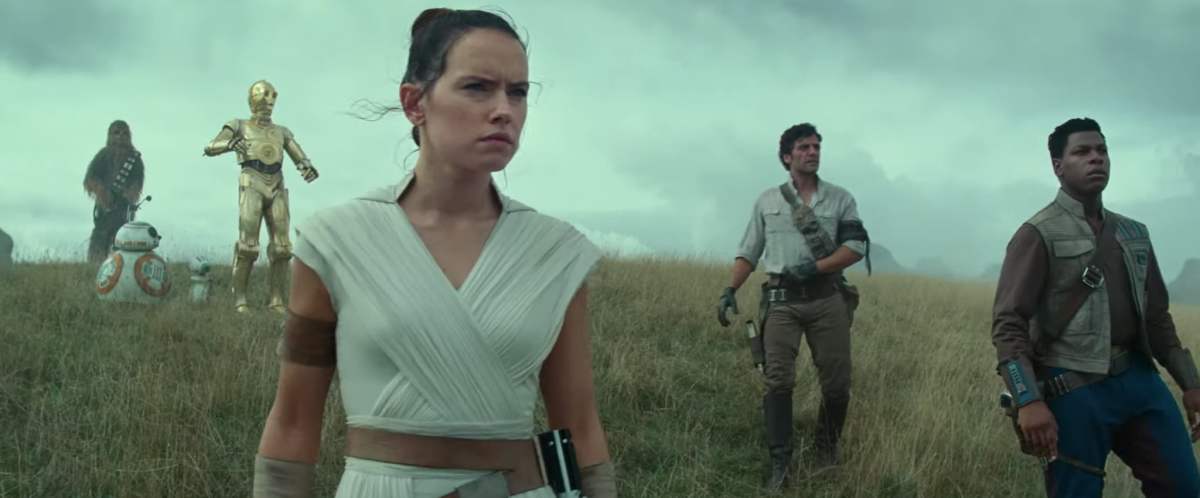
Yesterday morning, Lucasfilms released the newest trailer for Star Wars: The Rise of Skywalker. The trailer has brought about quite a bit of excitement for the film, which is expected to be released December 20 of this year. I can’t say I fall into this same boat.

My disinterest in the newest episode, which will wrap up the new sequel trilogy, isn’t because the jedi is a woman, or there is “too much diversity”, whatever that means. It’s more the fact of just how disappointing the trilogy has been up until this point. The new trilogy, when first announced, had so much potential to be good and unique, and actually bring something new to the Star Wars series, but fell short on so many points.

The biggest problem I saw was just how copy-paste the story line for both Episodes 7 and 8 were. Episode 7, which which kicked off the new trilogy, was mostly taken straight from Episode 4, with a sprinkling of Episodes 5 and 6 in there. It was unoriginal, but the production value and potential that existed in each of characters made it forgivable.

Episode 8, however, was unforgivable. It was literally Episode 5 in reverse, with an attempt at an original plot line that had ultimately no purpose other than to build a half-baked “romantic” relationship between Finn and Rose. It was an unnecessary waste of an entire hour.

The other unforgivable aspect was how they turned Rey into a Mary Sue. For those of you who don’t know what that is, a Mary Sue is pretty much a basic female character that is insanely overly powerful, and is instantly an expert at whatever they do. Rey, who had the potential to become a really good jedi, was wasted as she practically became a master jedi in about two weeks, rather than the months and even years Luke spent training. The jedi, canonically throughout both the original and the prequel series, spend years mastering their jedi capabilities, but apparently that’s not actually necessary cause Rey is suddenly just became a master. It ignores everything that’s been established about the jedi until that point.

Episode 8 as a whole was a pain to watch, and the series is bad for wasting so much potential by being unoriginal in order to “appeal” to people and make money. And its not like it’s because they can’t make original plot lines that are good. They 100 percent can, and did, with Rogue One. It’s just pure laziness. They simply want to push out “canon” content that will make immediate money, and don’t quite care how its done.

Strange Disneyland Incidents

Disneyland, despite its uptight nature about making sure everything is functioning and clean, has had its fair share of strange and bizarre accidents and malfunctions. The park has made headlines for having events such as a “selfie-stick shutdown” and a massive measles outbreak, plus many more that aren’t even mentioned. I’d thought I’d list a few of the strangest/funniest incidents that occurred within the resort.

Selfie-Stick Fiasco

The Incredicoaster (known formerly as California Screamin’) was shut down not once, but twice, after a passenger tried bringing a selfie stick with them on the ride. The first time this happened occurred in 2015, prompting the later ban on selfie-sticks in the Disneyland park. The second time occurred a year later, leading to the ride being shut down and evacuated for an hour.

Drunk Superman

In 2012, a reportedly drunk 53-year-old man attempted to attack a worker at the Twilight Zone Tower of Terror (now Guardians of the Galaxy). The worker pepper-sprayed the man multiple times in the face, but rather than deter the man, it only angered him more. It took several guests to subdue the man until security arrived. Why the man attacked is unknown. But you can watch what the fight on Youtube.

Vaccination Station

In 2014, a whopping 40 people contracted measles at the Disneyland park, causing an outbreak. Despite public speculation, the patient zero is thought to be an international visitor. The impact of the outbreak still left its mark, however, as it led to a Senate bill requiring vaccinations in schools.

The First Fatality

Disneyland’s reported first fatality occurred in 1964, when a fifteen-year-old boy stood up on the Matterhorn and fell out. The boy died of his injuries three days later in the hospital. It was reported that his harnesses were undone by his companion.

Mickey Mouse Drop

In 1972, four teenage girls were riding on the PeopleMover when one of the girls lost her Mickey ears cap. She and her cousin jumped off of their car to retrieve it, before realizing that they had to get on another cart. While the original girl made it onto a car, her cousin found a tunnel exit and ran through it, only to fall 30 feet (9 m) into a guard rail and onto concrete. She survived with many broken bones, and sued Disney for their negligence about the exit warning.

Revisiting Disney Fanaticism

A few months back, I wrote about some of the world of Disney fanaticism. I had kind of forgotten about it for a while, but was reminded of the world when I not only saw lots of people from back home posting about going to Disneyland (all this weekend, mind you), but also stumbled upon Youtube channels dedicated to analyzing different things about Disney, namely DisneyDan.

I decided to watch some of these videos, particularly the evolution of different character portrayals in Disney parks, and felt very strange. Maybe it’s because of the level of detailed analysis that these people go into (these videos could be 30 minutes or longer). Or perhaps it’s from the fact that almost every time, these people will mention seeing all the performances that the character participates in that they could, plus going to multiple meet-and-greets for that character.

The videos surprised me, and spurred me into researching more Disney fanaticism, namely through looking at fan merchandising. It wasn’t hard to stumble upon a treasure trove. Mickey Mouse ears were everywhere, with so many different themes that it was impossible to find an end. There were also limited edition plushies, clothes, posters, art, just about anything that wasn’t a Disney park itself.

I was surprised by the creativity put into making some of the products (namely the Mickey ears-someone made Dolewhip themed ones), but not at all surprised by the quantity of items to get. I know how far fanaticism can go, although even now it’s still hard to comprehend. I’m fine with getting the occasional plush, and going to Disneyland about once a year; when I see these people go all-in I wonder where their supply of spending money comes from. Disney is expensive.

But let’s revisit the videos I watched, for a second. They’re tied to the money thing, as these Disney analysts almost always mention going out to Disney on Ice, or seeing all the different shows within the Disney park-all that adds up. The amount of personal research (plus, all the Disney history they go into to get a fully fleshed-out story line, is honestly quite impressive. I mean, it’s an interesting topic, but I’m not quite sure I’d be willing to go as much into detail as some of these people. It got me wondering what kind of people they were, centered around their intense attachment to Disney. How much merch did they have, did they have annual passes, do they work for Disney. So many questions run through my mind, ones that I don’t really know if I want to find the answer to. For me, it’s better to appreciate from afar in this kind of situation

Aladdin, the One Live Action Remake I’m Excited For

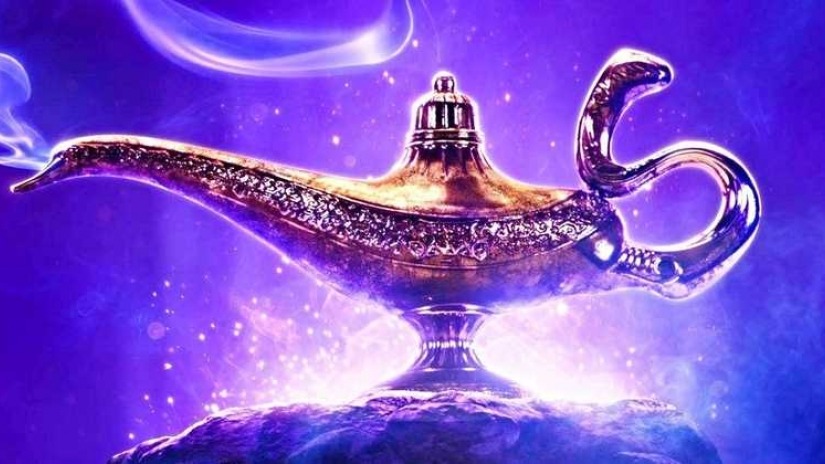
A few days ago, Disney released the teaser trailer for the live-action remake of 2019’s Aladdin. Although the teaser trailer mostly displayed the grandeur of their CGI backgrounds, it hinted at some of the story with the overlay of a revamped “Friend Like Me”. In all honesty, it made me kind of excited.

I had always liked the original Aladdin. It was kind of like a blend of Vegas meets generic Middle East, but it worked surprisingly well. It was entertaining, aesthetically pleasing, and the songs were very good. Although it did have its flaws, I had to say overall it was an interesting film.

Usually, liking the original animated film in those ways is an automatic recipe for not liking a remake-especially when the Disney live-action remakes tend not to put that much effort into “retelling” the original. They do add some elements, but overall, the films haven’t been all that interesting or creative (especially not Beauty and the Beast, which I analyzed earlier).

But for some reason, I got genuinely excited about the live-action remake. And when I looked into who was the cast and who worked on the music, I got even more excited. I like to imagine that it’s because they are keeping the movie a musical, which means there’s going to be a whole new look to how they portray some of their most happening songs. What makes it even better is that they are still using Alan Menkel, the original composer, for these songs, even using him to compose a new song for Jasmine.

They kept the cast predominantly Middle Eastern, as well. The one fully white character is supposed to be a suitor for Jasmine, and was added to create a new dynamic of nation-politics. But other than that, everyone fits the bill for the location of Agrabba, which is a plus. Other movies have tried casting white actors for Middle Eastern roles, but increasingly they have been unsuccessful as they face public backlash. Disney played smart in casting, this time around.

I really can’t explain fully, however, why I want to see this new remake. I can’t explain why this one sparks my curiosity when none of the others have, and why I’m actually excited to see it. I can’t argue that it’s good old nostalgia, because if that were the case, I would have been excited to see the other remakes. But I wasn’t. Maybe it’s because this is the most fantastical one. There’s so much that happened in the original in terms of design and setup, that perhaps I’m curious about seeing how it can appear in a more solid form. I don’t know.

The Differences Between LA Theme Parks

There is an industry in Los Angeles that goes mostly unacknowledged, but still draws millions of tourists every year. That industry is theme parks.

Now, you might be wondering how that goes unacknowledged. LA is the home of Disneyland, Universal Studios, and Six Flags Magic Mountain, all of which are major amusement parks. Millions of people come from all over the country, and even the world just to visit these places. They will never be forgotten.

What I mean by the fact that they go unacknowledged is the fact that no one ever tells you the difference between each park. And I don’t mean the obvious, each being owned by different companies and centering around their own respective shows and films. I mean their actual core, what you can expect to find attending these parks. For me, having grown up in LA, the difference are obvious. For someone who’s either only visited one or even none of the locations, you might not know the difference.

Well, to put it shortly, the difference are this: Magic Mountain is for rides, Universal is for attractions, and Disneyland is for something in-between. Let me break it down a little more.

Magic Mountain is part of a larger chain or theme parks, with this location in particular being located in Valencia, on the northern end of Los Angeles County. The theme of this park is DC universe, and you will find plenty of rides and areas following that theme (Batman, Riddler’s Revenge, Superman, etc.). The park wastes no time in displaying what it is; a theme park for roller coasters. It doesn’t have really any attractions, more focused on providing an adrenaline rush with various and innovative new rides. They do have a kid section with Loony Toons, but I wouldn’t say it’s a place to bring your children.

Disneyland, on the other hand, has some more leeway. Located in Anaheim, in the heart of Orange County, it’s a place with both attractions and rides, putting more into the combination experience that allows children both young and old. Although, I don’t really see the point of bringing a child under three or four to Disneyland: first, they can’t really go on any rides, and second, they won’t remember anything about the park. Disneyland focuses on different films that it owns the rights to, and builds rides and areas centering around them (Star Wars land, opening 2019, is expected to be one of the largest world expansions to the park). Disneyland wants to provide a more general and rounded experience, which explains why it has both rides and attractions.

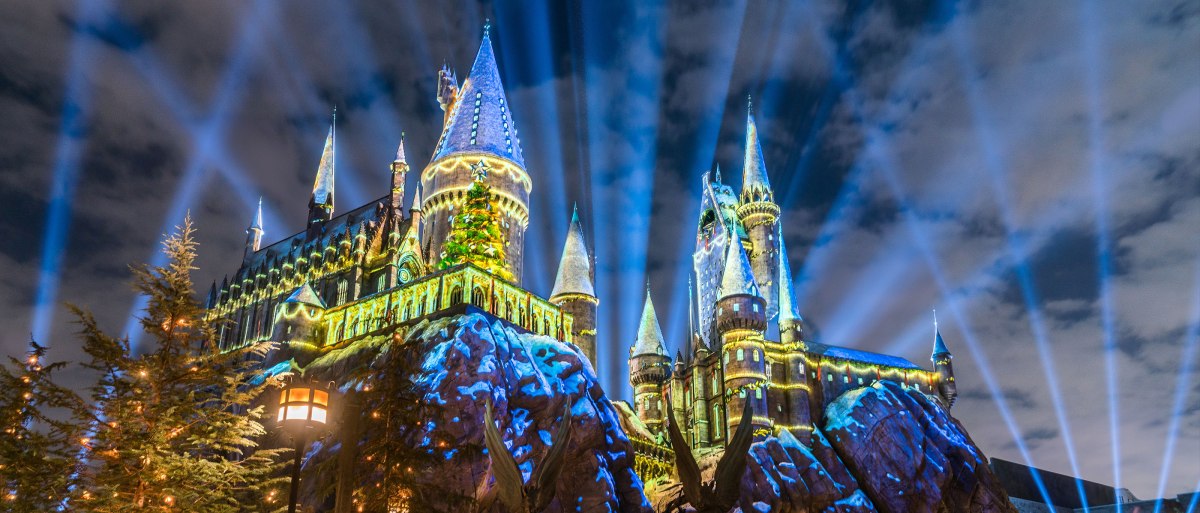
Universal, located in Studio City, focuses almost purely on attractions. That isn’t to say it doesn’t have some rides, like Ride of the Hypogriff, Revenge of the Mummy, and Jurassic Park (now being renovated to Jurassic World), the vast majority of its “rides” are actually attractions, using CGI and moving cars to create almost VR experiences. It once again focuses on films that it has the rights to use, even if it doesn’t own the films itself (Harry Potter World and the upcoming Nintendo Land are big ones). This park isn’t very kid-friendly, meant more for teenagers and adults. There are few attractions meant for young kids, especially considering how dark some of the attractions can get. Universal’s take on rides is unique to me, as most other parks don’t invest so much into perfecting the rides in the same way.

Beauty and the Beast, and the Case of Disney Getting it all Wrong

I have certainly missed the craze of analysis over the Disney live action films. That all happened after the release of the live action Beauty and the Beast, with some people ranting and raving about how much they loved it, and others harshly criticizing the film for its lack of originality. I am far from the first to talk about this film, and I will not be the last. However, I’ve noticed that most criticisms of the film often ignore certain aspects that I felt were especially irking, and fail to connect what happened in this film to the overall live action trend. So I thought I would put in my own two cents, and see where this takes us.

Now, the whole Disney live action trends started with the success of Maleficent in 2014 and Cinderella in 2015, both of which provide different perspectives of the stories told. Maleficent  provides an alternative look at the tales of the original 1959 classic Sleeping Beauty, although it was a rather half-baked attempt. I thought that Disney might be getting their footing with the release of Cinderella and Jungle Book, which flesh out relationships and motives and situations just a bit more, without only repeating the story.

I was proven greatly wrong, however, with the release of Beauty and the Beast in 2017.

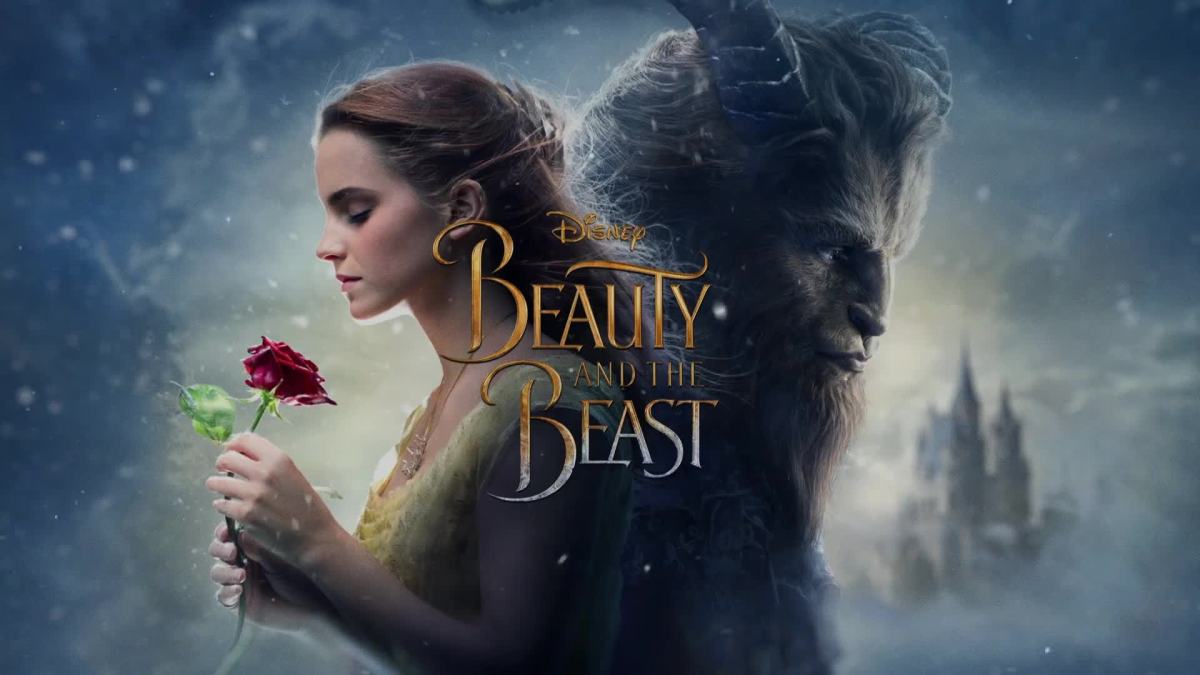
Not only was the film a straight copy-paste of the original story with almost no additions, but the changes they did make just degraded an already good story. This film, like the other three before it, attempted to correct past criticisms of the original work, despite the fact that the film they are trying to correct something that is negligible. Cinderella provided insight on what happened to her father, which the original film failed to do. It explained why Cinderella dealt with the abuse, something the original film didn’t do. This film tries to elaborate on how the magic works in the castle, something that the original film didn’t need to do.

There it is, folks. This film tries to provide logic to a world of magic, something that didn’t really need to be elaborated on. Like the magic dishes, and some other things that move in the house. Not everything that moves needs to have a soul attached to it, which in turn explains the trashed furniture in the West Wing. The Beast didn’t just straight murder his servants. You can assume that a castle would have furniture in it before everyone else got turned into furniture.

Which leads me to my next problem with the film- the fact that the furniture explain the West Wing to Belle completely ruins a major plot point in the film. They not only convince the Beast to give her a better room, rather than let him make the decision for himself, but also give her a tour of the castle, mentioning the West Wing and thereby ruining the impact of Belle actually going to the West Wing. The betrayal aspect of her going to the West Wing despite his wishes is lost.

Which leads me to my next point: they completely wash out the relationship between Belle and the Beast. They ruin the complex relationship between the characters, making Beast an asshole who needs a life coach, and Belle the life coach, rather than having them learn off of each other. Belle was kind and patient, but could also call out the Beast’s bad attitude in the original film. In this one, they just fight, and he never learns to do better. Their relationship becomes basic and Hollywood-style, and the ending doesn’t feel like it was deserved.

Now, in a turn away from the more interaction aspect, I am going to turn more to the other issues I have with the film. This one can be narrowed down into bullet points.

Belle’s voice:

Why, why, why didn’t they just have an actual singer dub Emma Watson’s voice? Hollywood has dubbed hundred’s of actor’s singing before, and the attempt the avoid this in this film ground my ears out. They auto-tuned Emma Watson’s singing to the point where it sounded like a robot made it, heavily contrasting from the fact that literally no one else has a robotic voice. Literally no one else.

What made it worse was the classic reprise of the song “Belle”, where Belle has a powerful soliloquy (done flawlessly by the original voice actor Paige O’Hara). In the live action version, we just get a shotty, robotic voice that just washes out with the music. Every time she opened her mouth the sing, I would be ripped out of the moment.

Belle’s Dress:

I know they tried to do what they did in Cinderella with giving the dress a much needed update, but it really wasn’t necessary. Unlike Cinderella’s kind of odd-looking dress in the original, there was nothing wrong with Belle’s dress. In fact, her’s was a favorite among many, and was a popular costume for young children. The fact that they tried to change it to something as blase as they had in the live action film got some much deserved out-roar. How do you replace such an iconic dress with something that looked like three pieces of yellow tissue paper stuck together? It just doesn’t make any sense.

Gaston:

Why try to make him unlikeable? The whole point of his original character was that he was attractive, popular, and charismatic, and was easily able to influence the ignorant townsmen into joining him for the “final battle” at the castle.

In this case, he’s a character that is considered untrustworthy by the town, leading to Le Fou paying people to sing and up Gaston’s ego. Such a move was totally pointless. You should have just kept him the same. It would have saved a lot of time on the pointlessness of trying to make him a complex character. Focus on fleshing the two main characters out, not the villain, who didn’t need to be fleshed out.

The Plot Overall:

Last but not least, I have a problem with the plot overall. Let’s face it- it’s just a pure retelling of the original story, with some pointless additions slapped on to take up more time. There was nothing of real value added, degrading the plot of the story. What was changed really had no purpose, unlike the films before it (except Maleficent, but that’s for another time). I came into that film expecting something and left it feeling like the original story was just wronged. Which doesn’t make sense, as the live action version and the original were both made by the same company.

But, that’s the problem with the desire to make money and deal with criticism. It just didn’t work here. It turned what was once an Oscar-nominated film into a straight mess. It was just unnecessary.

The Fun of “Geek” Makeup

Despite the fact that Geek culture has been in the mainstream for nearly a decade, it was only recently that I discovered Geek-inspired makeup. Maybe this is due to the fact that I didn’t like makeup all the much until around two years ago, but it was still strange that I had never heard of it. I’ve been to cons, I’ve involved myself in many fandoms, how did I not hear about it?

Well, this is excluding the main-stream geek culture collections. Of course I’ve seen Star Wars themed lines, and also Hunger Games collections from Cover Girl and L’Oreal. And of course I’ve seen the Disney-inspired makeup. But I had never seen stores purely devoted to producing Geek-inspired makeup.

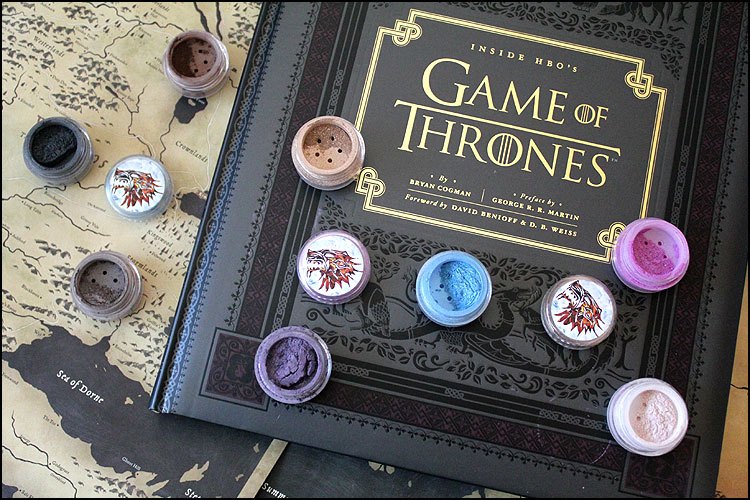
I had only discovered the makeup by chance, stumbling upon Shiro Cosmetics as I was looking for cruelty-free makeup. Looking into their site, I found they had a series of collections based off of popular media and memes, having collections centered around Game of Thrones, Into the Unknown, and Avengers, particularly eye shadows. They have cute little drawings that they come with on top, and lots of funny designs. And the reviews seem to like them.

The discovery of this site led me to start looking around for other Geeky makeup, and I was able to find quite a bit of collections. I found Geek Chic, Espionage Cosmetics, Nerdastic, and Black Pheonix Alchemy Lab, all of which had many items based around pop culture. It was astonishing, especially with the fact that the most of the colors looked so pretty. And most of them were cruelty-free.

The makeup usually has fun names, with fun designs, although if you’re looking for eyeshadow, don’t expect to many pressed palettes. Most of them are loose powder, with a few pressed palettes, which can be a little off-putting for some.

Geek-inspired makeup really started blowing up around 2015, as bigger companies began pushing out lines for the new Star Wars (Force Awakens), inadvertently boosting smaller makeup companies that based their whole existence around Geek culture. While still being considered “underground” and definitely “artisan”, Geek makeup has found its place and audience, and will only continue to grow as more people discover them.

A Month After the Controversy: My Opinion on Pixar’s Bao

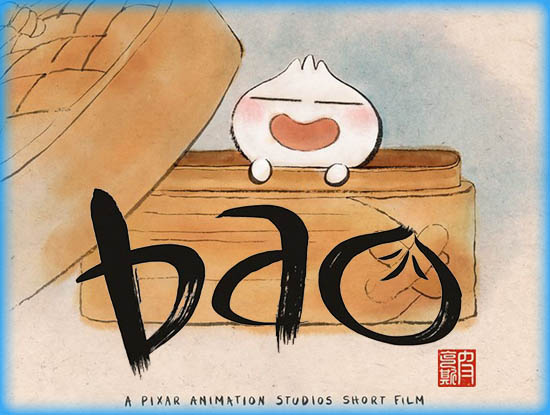
Once again coming after all the drama has settled, I have decided to put my two cents in on something. I saw Bao a month ago with my friend, and didn’t think much of it initially. But then all the drama rose and fell surrounding the short, with confusion arising over some aspects of Chinese culture. Is the short worth all the drama? Let’s take a look.

I am going to divide this into three sections: the pros, the cons, and a look at the whole controversy. I’ll try to pinpoint some significant cultural aspects that some people might not understand when looking at this. The analysis here is based off of my opinion, but I’ll try to be factual. This will be spoilery, so if you haven’t seen it and want to, watch out.

The Pros.

What I like the most about the story is the overall message. It was short, and got its story line out without any words. The animation was cohesive and colorful, all the characters being soft lines and not sticking out against the little dumpling child. Everyone was plump and round, and each character was distinctive in characteristic.

I honestly thought the film was a heartwarming tale. I am not quite certain what position the mother is in, but based off of the experiences of my friends’ first generation mothers clashing with them, I imagine there is some influence in there. She clashes with her son, who she sees as acting too far out against her, with the dumpling being a metaphor for her relationship with her son. It really was a powerful portrayal. The short portrays fracturing and reconciliation within a family, with a mother being initially unable to accept her son leaving. It is a story thousands of families face- and it does a decent job at it.

Overall, I thought it was short but had a good story to tell. It was well-animated, and was much better than the last Disney-related short I had to sit through (I’m looking at you, Frozen). I got invested, without needing twenty minutes to do so. It was cohesive and smart, without needing actual dialogue.

The Cons.

I have mentioned that Bao does a decent job at telling it’s story. But it’s not perfect.

The biggest con I can think of for this short is that fact that it relies very heavily on the use of metaphor. Which, works for adults and people who have a concept of metaphor, but not so much for children. In order to explain this, I have to go a little into the plot of the short.

Now, as I mentioned, the dumpling child is a metaphor for the woman’s relationship with her son. She raises the dumpling, but as he grows older he gets more rebellious and distant, eventually trying to leave her. Well, as a resolution, the woman eats the dumpling. Then the son, who looks like the dumpling, steps in from there.

Not bad, right? Well, the problem arises with the fact that most, if not all young children, will not connect the dumpling child as mirroring the son, without really being real. To them, they would see the dumpling child as different, and would think that she actually just murdered a dumpling person. Which, when you think about it, might put kids in distress. And it did-there were reports from audience members of some kids being distressed enough to cry from the scene. The reliance on metaphor is something that most kids-at least the ones that were anything like me-would simply not understand. It’s one flaw, but it’s a big one.

The Controversy.

Now that I’ve given my take, let’s take a look at where the controversy comes from. The short itself was directed by Domee Shi, and was influenced by her experience with Chinese immigrant parents in Canada. And as you can see, you can see the struggles that arise between the mother and the bao as the dumpling grows up and wants to leave and have independence.

How is this a problem? Well, from my friend’s experiences (Korean and Filipino) with their immigrant parents, and from some research, I find that the family and household are very intertwined. The child is not expected to leave the house and suddenly have a career at eighteen-which presents it’s own set of problems in the West-, but are actually expected to stay in the household past eighteen. The family is central, with three or four generations sometimes living in a house together. This idea comes at odds with American culture, especially for the children of immigrants who are surrounded by that culture. It often causes a strain in the relationships (as I’ve seen with some of my best friends and their parents), as the clash in culture causes arguments.

Now, because of my witnessing of these experiences, I am familiar with the cultural clash, especially in Asian immigrant families. However, there were quite a few people (mostly white Americans), who didn’t understand what was happening. This is where the controversy starts. There was an explosion of arguments, as people who didn’t understand the nature and context of the short began social media arguments with people who understood the short all too well. This caused calls of racism and ignorance, when I have to say such sayings might have been a little uncalled for.

Because of social media and the fact that huge portions of the US and Canadian populations live in large, diverse cities, we often forget that there are people who don’t know the experiences of immigrant families, nor understand the context of Asian culture versus Western Culture. When informed, people will grasp it, but when people don’t understand, a pivotal scene like the woman eating the bao would not make much sense. It would just seem like an overreaction to an argument, rather than an important moment that permanently changes the relationship of a family.

Does this mean we should have “dumbed down” the scene for people? No, not at all. While I do think some of the comments I saw were just people who were genuinely confused and not ignorant, I do think some people took advantage to stir up a huge controversy. I don’t think the short should have stirred up that much controversy, but I am not in a position where I understand all sides.
The Dark Tales Behind Disney’s Classic Films

It’s no surprise that when Disney does a retelling of a classic fairy tale, they definitely make it more “kid-friendly”. The once morally imbued and rather dark stories have found themselves remembered as sweet and innocent tales, one of happily ever afters and all the like. But what are the original tales? How were they in their most original form, and how has Disney mellowed them out?

I think to answer that, we have to look at the oldest Disney feature length film, Snow White. Much of the first part of the film follows that of the German story- the Queen is vain, and tries to kill Snow White when she surpasses her in beauty. But rather than telling the Huntsmen to retrieve her liver and lung, the Queen instead asks for her heart.

From then on in the story, Snow White still goes to the house of the seven dwarves to live there. But rather than try to get rid of Snow White once, the Queen actually attempts to kill her three times: first with lace, then with a poisoned comb, and finally with a poisoned apple. When Snow White is in a death-like state, the Prince stumbles upon her glass coffin (that the dwarves had placed her in rather than let her be buried in the ground), and immediately falls in love with her appearance. He persuades the dwarves to let him take her coffin so that he could look at her, and as his men lift her coffin, the piece of apple she had bitten falls out of her mouth. She wakes up, and they decide to get married, inviting the Evil Queen. The Queen, not knowing that the other queen was Snow White, attends the wedding, and is forced to dance on hot coals until she drops dead.

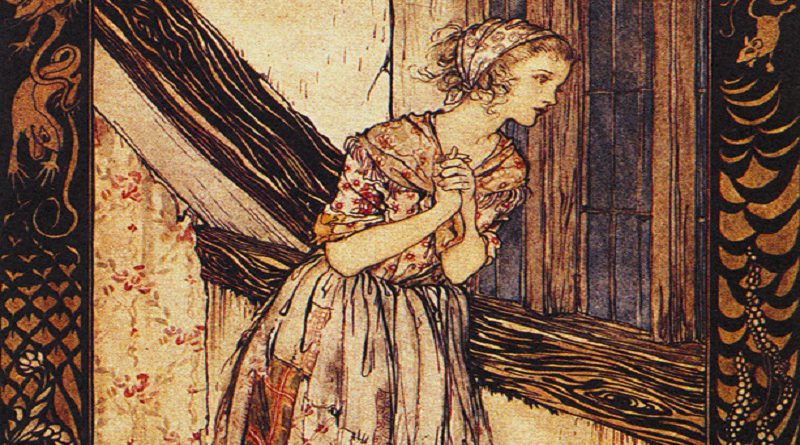
The next big fairy tale comes from the french original of Cinderella, also documented by the Grimm brothers. In this book the father never disappears, but is complacent in letting his second wife and stepdaughters turn Cinderella into a house servant. She works all day and all nice, cleaning the fire place, and doing other chores, and must sleep next to the fireplace at night, covering herself in ash and dust. She was given the name Cinderella, as a way to taunt her. Everyday she goes to her mother’s grave and weeps, and finds that a white dove hangs above her grave, granting her wishes.

On the dawn of the festival that the Prince was hosting, the stepmother forbid Cinderella from attending the ball, insisting that she was too dirty and embarrassing. Cinderella went to her mother’s grave and wept, calling on the bird to throw gold and silver down upon her. For three days she called upon the bird to dress her extravagantly, attending the ball and gaining the sole attention of the Prince. She keeps evading the Prince so that she couldn’t be recognized, but on the third night, the Prince had set a trap, causing her to lose one of her (golden) shoes.

The Prince decides to use the shoe to find her, and goes to the house of the Evil Stepsisters. They both try on the shoe, the older one cutting off her big toe and the younger one cutting off her heel to fit in the shoe. The Prince initially takes each one, only to be turned around by birds. Finally, despite the protest of her family, the Prince places the shoe on Cinderella, and realizes it’s her. They host a wedding, and the Evile Stepsisters try to go to Cinderella to gain her favor, only to have their eyes poked out by pigeons.

The third classic fairy tale I’m going to talk about is Sleeping Beauty, or Sun, Moon, and Talia. In the story, there is no slighted fairy (that would come in later versions), but rather a horoscope cast that she would face danger at a spinning flax. Aurora (or in this case, Talia), finds an old woman spinning as a teenager and asks to be taught how to spin. She gets the flax trapped in her thumb, and falls into a deep slumber, one that she cannot be woken up from.

She is left in the palace seemingly abandoned but attended by fairies, when one day a King stumbles upon the palace while on a hunt. He climbs a latter into her room, and is stunned by her beauty. After trying to wake her initially (unsuccessfully), he decides rather to rape her and be on his way, forgetting about her. Nine months later Talia gives birth to twins in her sleep, one boy and one girl. One of the children, trying to find her breast, actually sucks on her thumb, sucking the flax out and waking Talia up.

Not long later the King comes to see her again, and is joyous at finding her awake and with children. They fall in love after a few days, and he leaves again, promising to take her and the children with him next time.

The King’s first wife, realizing what has happened, plots to have Talia and the children killed, but is ultimately unsuccessful. She had ordered the twins to be cooked up and served to the king, but the chef, being kind-hearted, keeps them alive. She also tries to have Talia burned alive. But the king appears just in time and has his wife burned alive instead, marrying Talia and living with the children.

Remakes and Sequels in Hollywood, and How it’s Not a New Thing

The common phrase that pops up when someone mentions Hollywood nowadays is that Hollywood has run out of ideas. This phrase comes up in particular when constant remakes and sequels comes up, mixed with only a sprinkling of original movies. However, the modern situation isn’t new. In fact, it’s not only been an old tradition in Hollywood, but also Nollywood and Bollywood as well.

Ever wonder about all the sequels to Alien, Godzilla, and other films? Not the modern connections, but the ones that go as far back as the 1950’s? The many romantic comedies that came out during the 1950’s and 1960’s? Remakes and sequels have always been a quintessential part of Hollywood, since it’s inception. The sequels in particular, come when a series is popular- Hollywood is a business, and will run with a popular idea until it dries up. Such a tactic is not modern, nor unique. It has been happening.

Remakes, on the other hand, are usually made when a director decides that there is something to be improved upon in the original film, something that can be different. Of course, this choice is not always for the better, as we’ve seen with the remakes of Clash of the Titans and Willy Wonka and the Chocolate Factory. Usually, though, a director or screenwriter wants to improve on the story, and tries to portray their vision of how the film should be. This has worked, even, with the 2015 release of Mad Max: Fury Road. The films were an original series of films in the 1980’s, revamped in order to try an alternative story route, one that actually worked.

On top of the remakes, Hollywood has had a long history of taking from books and myths, despite the modern criticism that Hollywood only does it to get a guaranteed fan base. Characters such as Dracula and Perseus have found themselves on the big screen on multiple occasions in multiple forms, adapting them and re-adapting them to try and make a take on a story or myth unique. Especially from the 1970’s through the 1990’s with movies such as Psycho, the Shining, and Silence of the Lambs, all of which being smash hits, the tradition of bringing books to the big screen is nothing unheard of. Shakespeare has found his most famous play Romeo and Juliet in multiple movie retellings. Hell, just about all of Disney’s 2D animated films are based around different fairy tales (and even some 3D ones, such as Frozen and Tangled). To say that based off the fact that Hollywood makes films from stories and books is the key to showing that it no longer has originality is a farse.

Now, if you’re keen on the international films industries, you might be saying that they’re much more original. Now that may be true in some cases, you will find the retelling of famous stories and legends in Bollywood, Nollywood, and K-dramas. They do the same thing as Hollywood. Plus, they straight up make remakes of Hollywood films as well. Movies such as Resevoir Dogs, the Godfather, Silence of the Lambs, and When Harry Met Sally all have successful Bollywood remakes, and Nollywood is pushing to have a TV show based around Black Panther. To say that they don’t pull the same tactics as Hollywood would be ignoring a portion of their production system.

This isn’t to say that Hollywood is in the clear, however. Large companies often get trapped in the idea of making remakes or sequels, hoping to gain an automatic audience (increasingly without success). They’re trying to play it safe, but that’s clearly not what the audience wants (i.e: the box-office flops of Solo and the Mummy). People want more unique films to come back into Hollywood, and as usual, Hollywood is going slow in its response. Hopefully, however, it does respond soon.

A History of the Mouse that Roared

On November 18 of this year, Mickey Mouse turns 90 years old. This mascot of Walt Disney Studios has had a long history, changing from his original form to his current squat and recognizable version. I thought I might provide a little history on this famous mouse, commemorating all that he has contributed to the Walt Disney brand.

Mickey Mouse’s story doesn’t start with himself, however. It starts with a cute little rabbit. This was Oswald the Lucky Rabbit, created in 1927 by Walt Disney when Disney Brothers Studio was just another part of Universal’s animation branch. He was an instant hit, and a star of Universal’s animation sector. However, when Disney met with Universal to negotiate another contract in 1928, he found himself in a position where all his employees had been hired away and the rights to Oswald had been ripped from him. He had been offered to become an employee for a lower salary, but had refused, leaving with loyal animator Ub Iwerks to find a replacement for Oswald.

They made a new character, a mouse, who originally went by the name of Mortimer. But the name didn’t last, and by the time of his debut, he was Mickey.

Now, Mickey wasn’t an immediate hit like Oswald. In fact, his first two shorts drew almost no attention. However, Disney made a big break with the release of Steamboat Willie, the first animation to have synchronized music and sound, on November 18 1928. Within a matter of months, a line of animated shorts appeared, and by the end of the year Mickey Mouse was a national fad. Walt Disney began lining up Mickey Mouse merchandise, and within two years the Mickey Mouse Club was up and running.

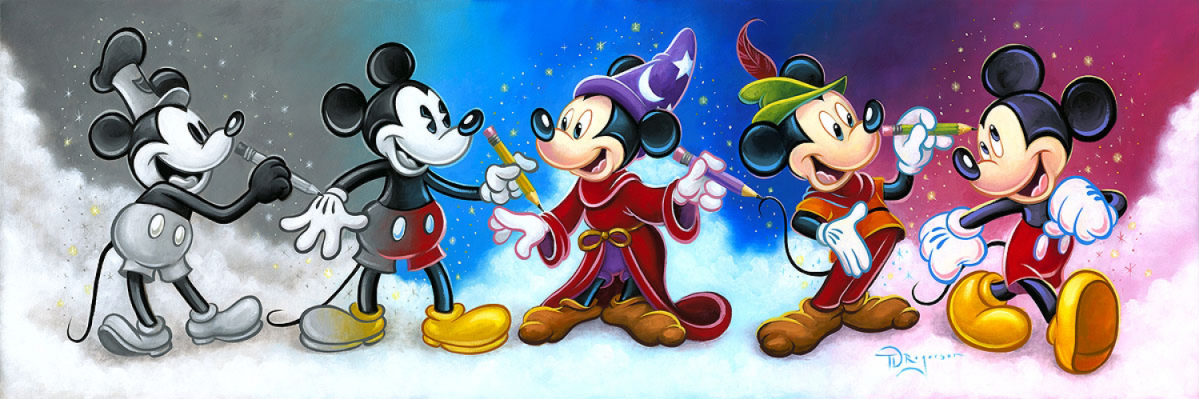
Mickey Mouse in his original form was more round, which limited the amount of movement that he had in animation. However, in 1935 animator Fred Moore gave him a more pear-shaped body, pupils, white gloves and a shorter snout, making him more dynamic and cute. This appearance made its big appearance in the Sorcerer’s Apprentice, a musical short that appeared in 1936’s Fantasia.

By the end of the 1930’s, Mickey Mouse had been in dozens of shorts, having starred in countless adventures. His popularity would continue throughout the 1940’s and into the early 1950’s, when major motion films such as Bambi and Sleeping Beauty began to take audiences by storm. With the rise of the “Golden Age” of Disney films came the fall of the popularity of Mickey Mouse. Starting in 1953, Mickey Mouse would be entirely out of commission until 1983, with the release of Mickey’s Christmas Carol.

Despite this decline, Mickey Mouse is still one of the most recognizable animated characters of the 20th and 21st centuries, still maintaining a whopping 40 percent of merchandise sales, and still appearing in popular video games such as Kingdom Hearts. He is the face of Walt Disney, and more generally Disney itself, maintaining a permanent presence. He is a small mouse with the voice of a lion, making himself known wherever he goes.

The Odd but Refreshing Creativity of Kid Films

Hollywood’s big-budget movies have fallen into the trend of being either a sequel, or entirely not creative. The creative and unique movies seem to be released purely to be nominated for Oscars, drawing a great amount of criticism and the phrase that “Hollywood is unoriginal”.

While this may seem true for the most part, there seems to be a faction of Hollywood left untouched by the trend- kids’ movies. Despite being meant to entertain children with a set happy ending ever time, I’ve noticed that these films take a variety of creative routes and themes to get there. I would even go so far as to say that they display a human variance that almost never appears in other films anymore. Despite knowing how the ending goes, I am always surprised to see what paths are taken to get there.

Kids films place forth unique ideas (well, for the most part), with settings ranging anywhere from Norse dragons to Polynesian Gods, taking risks with entirely original stories, pushing the boundaries without worrying about the risk of failure. It makes each film that much more refreshing and enjoyable. It allows people to get so much more invested and interested into the film.

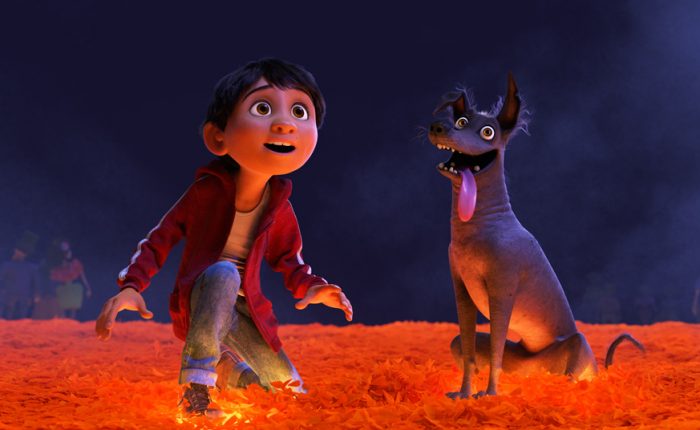
I will say there are exceptions to this, however. Angry Birds and The Emoji Movie are the two big ones that I could think of. Also, sequels that are deemed unnecessary (cough cough Toy Story 4) can fall under the trap. While many modern kids’ films are original, that isn’t to say that all are.

Planning a Trip to Disneyland

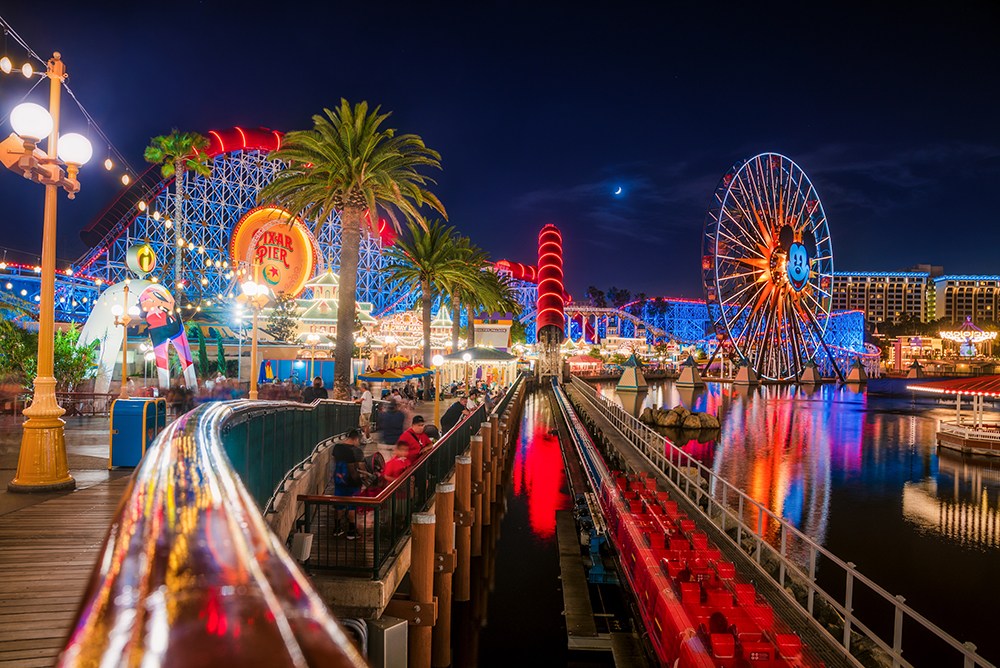
Disneyland in Anaheim is a park that receives millions of visitors in a year. It’s the first one ever opened, and is most known for the fact. It is also known to have a major overcrowding problem, pushing ticket prices up seemingly every year. It’s an issue that especially affects socal locals, who not only need to plan around the traffic, but also be ready to drop a minimum of $200 a person. Which often pushes them away (unless you’re one of the ones who buys an annual pass and goes every weekend). But, if you are willing to splurge once a year or every other year, here’s a few habits my friends and I picked up trying to make the most out of our visits.

The first habit we picked up was going during “off seasons”. An “off season” are the seasons where tourist traffic is lower than average (late summer/early fall to december, january to april). You might think “but LA always has tourists.” That’s why I said lower than average traffic. The months are important, because they center around when people need to go back to school, and when they go one winter break. Going during an “off season” can make all the difference in wait times, which can be cut by as much as half. Choosing a weekday is also important, as it guarantees people will be in school (which helps if you have vacation during the quarter system, which is different from everyone else).

The second is to be very picky of where we get our food. Disneyland food is especially pricey, and you have to know where you’re going to get the most bang for your buck. If you get a park hopper pass, I would just recommend that you go to California Adventure, where the food tends to be cheaper. But if you’re stuck in just Disneyland, go to Downtown Disney (you can always come back into the park). But the food in the New Orleans area of Disneyland isn’t bad.

The third habit we picked up was fast passing the biggest rides. You can only take out one fast pass at a time, but its worth getting them for Space Mountain, Indiana Jones, and Splash Mountain. Those tend to be the rides within Disneyland park that have the longest waits (although Matterhorn can be up to 110 minute wait, as well). In California Adventure, getting a fast pass for Cars Ride, and Guardians of the Galaxy are the ones you need to get. While getting the fast pass for the ride is helpful, if the lines are short enough, it may just be more worth it just to wait in the line.

The last important habit I can say is try to stay all day. You have the make the most out of your trip, especially if it was a hassle getting there in the first place, and staying all day and trying to see as much as you can is the least you can do. The crowds can be a bit tedious, however, and if it threatens to chase you away, that’s okay. Just stay out of the fantasyland area and you avoid most of the people with strollers.

Incredibles 2 and Legend of Korra: Shifting with the Times

I got to see the Incredibles 2 last night with my friend, and I have to say it was a very good film. I did notice in watching the film, however, that there was quite a bit of appeal to the people who were kids when the original Incredibles came out. Because of fourteen year gap between the films, most, if not all of the people who got to enjoy the first film are now in college or beyond (myself included), and have the potential to be the biggest source of income for the movie. And while of course there are elements in kids’ movies that appeal more to the adults, Incredibles 2 seemed to appeal to the older kids more than usual.

Which, makes sense. Like I said, there is a fourteen year gap between the release of Incredibles and Incredibles 2, and the people who would want to see the movie the most are in or out of college already. That gives the freedom to add more “adult” elements, while still calling it a kids’ movie.

The same event happened in Legend of Korra. The show, which was a sequel to Avatar the Last Airbender, brought in darker, more adult elements, appealing to the fan base who watched the original show. Although it was only a four year gap between the two shows, the generation who watched the show had grown quite a bit since the first episode. Plus, with Legend of Korra having a total of four seasons, the kids continue to grow into adulthood. If you contrast this from the Last Airbender, you’ll notice the original show was much more lighthearted in nature, and Korra is more gritty (even the styles are different, the original having more roundish characteristics, and the latter having sharper more realistic imagery).

Both the movie and the show hold the task of appealing to their old fan base, while still attracting a new, younger fan base. It’s a balancing act, having the freedom to stretch beyond the traditional limits of kids’ media while at the same time having to maintain some semblance of it. It’s a difficult task, one that these media seem to do well.

Wanda’s Wasted Role in Avengers: Infinity War

I know I’m almost a month late to the party, but that’s because I didn’t see Avengers Infinity War until last night. I hadn’t even planned on seeing the movie, but my friend, who had just finished Thor Ragnarok, had insisted that I come with her to see this one.

I walked into the movie knowing the synopsis of the film already, and knowing what happens in the comics (I’m going to try and keep this as spoiler-free as possible, as people are still trying to see the film), so I wasn’t really surprised by any of what happens in the main story arc. What happened instead was that I got confused.

It’s difficult to make a film as big as Infinity War, with so many character arcs, not confusing. Half the time there was so much going on at once that my brain was going into a mild overload. But what really got me confused was what I have to say was the biggest plot hole of the movie- Wanda’s power.

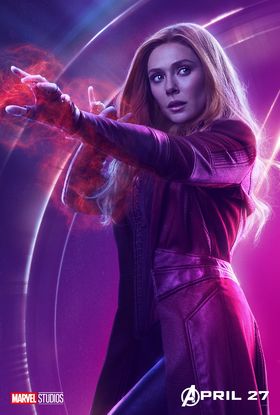
In the film series, she is known to be a very powerful mutant. In Captain America: Civil War, she was even described as a “weapon of mass destruction”, which rings pretty true to her original comic character. Wanda seems to have an endless amount of capabilities, and has enough power to destroy an infinity stone. But how her powers are portrayed, powerful as they are, are very toned down from her comic version.

In the comic series, Wanda Maximoff, or Scarlet Witch, is what is known as a Nexus Being, which is a living focal point of Earth dimension’s energy. She gained her abilities by being born in proximity to the elder energies of the god Chthon with her twin, where she developed a mystic bond with the god. The result gave her unimaginable power. She has the power to alter reality on a grand scale, which includes reviving dead ones and reincarnating others, although she does not have the full training to control all her powers.

In the film series, she is not a Nexus being, having been created through experimentation with a special branch of Hydra. As the films develop, the power she has seems to multiply (that or she is gaining more control over it), although she has yet to bend reality on a large scale. An important matter is though, that Wanda can destroy an infinity stone.

Why is this important? Well, when you look at the context of the whole film, it was about preventing Thanos from obtaining all six stones. While destroying the time stone seemed almost impossible, given that Doctor Strange was nowhere near Wanda, Wanda had the capability to destroy the other ones from the start, and perhaps even the gauntlet itself. She could have easily useful as a forefront for destroying the gauntlet, but throughout the film one slap would knock her down for a seemingly endless amount of time. The ability for her to be knocked down so easily, despite having such power, was to me kind of a cheap shot to make it that much easier for the plot to occur (and for subsequent films to happen). She had some cool fight scenes, but was ultimately muted (come on, she could have totally done more damage on the battlefield than Thor).

But, you know what? To try and show the full might of Wanda’s powers might have been too complex for an already complicated film. Yes, she could have easily done a lot of things throughout the film series, and in particular in Infinity Wars, but trying to have it all there might have added a detail too much. But still, seeing her get knocked down for ages by one slap was a bit infuriating.