K-Beauty: A Trend with a Dark Side

K-Beauty has been the “hot in-thing” on the beauty market for the last few years, each year growing exponentially more popular. People are going crazy for the various face masks, lotions, BB cream, dark spot treatment, CC cream, and many other products that hold a reputation for giving you a “dewy, young-looking face”. Youtubers and beauty bloggers only add to this craze, providing yearly top tens and list of best products. Now, in just about every pharmacy or beauty store, you’ll find a section devoted purely to Korean beauty and Korean companies.

But as with anything, the world of K-beauty has a vicious dark side. But this dark side isn’t an international issue. It only extends to the edges of the South Korean borders.

What do I mean by this? South Korea has interestingly harsh beauty standards, which can range anywhere from having a thin figure to having a certain face shape. Yes, a certain face shape. South Korea is currently known as the “plastic surgery capital of the world”, having the highest rates of plastic surgery per capita of any other country, with over 980,000 operations reported in 2014 (Business Insider, 2015) . The country also attracts hundreds of thousands of “medical tourists”, most of whom come to get cosmetic procedures, according a report by Chang-Won Koh (2017).

No, this isn’t the most alarming thing in the world. Despite the rather high levels of plastic surgery, South Korea ranks third in terms of the total number of plastic surgeries, trailing behind the US and Brazil by over 1,000,000 procedures (WorldAtlas, 2015). But you also have to consider that the population of South Korea ranges just around 55 million people, versus the 325 million in the US and the 209 million in Brazil. But I digress. It’s not so much the plastic surgery itself that’s the issue. It’s the culture surrounding it.

This culture is incredibly strict, and applies much more the girls than boys (although boys are not unaffected). The beauty culture actually even expects people to get plastic surgery to fit an impossible beauty ideal, with the most famous examples of this occurring being the fact that in just about every long-term K-pop idol contract, plastic surgery is one of the requirements.

But the beauty culture doesn’t just stop at plastic surgery. Skin bleaching is also a common problem, with illegal skin bleaching products flooding the beauty market every year in South Korea. There is a harsh expectation to be as white as possible (a result of a long-standing social issue where the nobility were white-skinned while the peasantry were dark-skinned from working in the sun). This expectation doesn’t just exist in South Korea (it exists throughout all of Asia, Africa, and Latin America), but South Korea is known for promoting ads that claim that being dark-skinned is being a failure in life (which has attracted much international backlash). The skin bleaching, which is known to break down melanin and leave skin much more likely to get skin cancer, can be compared to excessive tanning, which also leaves people at risk of the same effects.

But I can’t get on South Korea too harshly. The West also has incredibly high beauty standards, though with slightly less restrictions than South Korea. As I said earlier, the US ranks number one in terms of total amount of plastic surgery per year, having over 4 million procedures in 2015 alone. We also have a problem with tanning products, with products all over the market claiming to let you tan yourself from home, and tanning places existing all over the place. Are we really any better than South Korea?
Narcissists: Funny in Pop Culture, Awful in Real Life

There’s nothing like seeing family for the holidays that inspires you to write again. And no, fortunately most of my family are not narcissists (or narcs, as I’ll say throughout the rest of this).

What is a narcissist? There are several definitions. The most common version that we see of narcissism (which is coined from the name “Narcissus”, who was so in love with himself that he slowly starved to death) is narcissistic personality disorder, which can be diagnosed by a therapist. Someone with this disorder is manipulative, self-centered, has a victim complex, and is generally a wretched human being.

NPD is not the only form of narcissism that exists. There is a spectrum for those who have narcissistic tendencies, but generally don’t qualify as narcissists. It’s much more common and obvious to notice by outsiders (people outside the family), and are generally brushed off as negative traits.

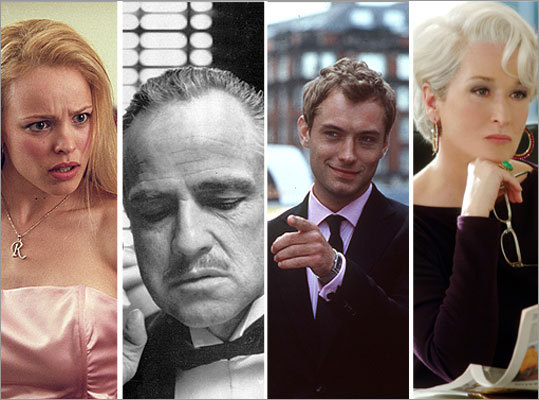
So, I won’t go into any detail, but hanging out with family for the holidays got me thinking about the contrast between how narcs are portrayed in pop culture versus how they are in real life. Narcs in both film and television are often portrayed in a funny light. They’re self-centered, but that in turn makes them the but of the joke as if eventually works out against them. They are obviously bad people, who are bad at getting their way and only put themselves in embarrassing situations because of it. They are a perfect and easy way to add a joke surrounding the rudeness of people.

Narcs in real life, however, are awful and deceptive. They care only about themselves, and not about anyone else, including their own children. A good example of this kind of behavior would be to mention something I’ve witnessed. A kid was asked by an adult what they got for Christmas, to which they responded that they got nothing. Upon the adult investigating further, he found that this was allegedly because money was “tight”, according to one of the kid’s parents. Well, interestingly enough, this person had just come back from not one, but two trips, one on a cruise, and the other to Las Vegas.

The parent in question had also turned down a job offer (that would have offered great pay, great benefits, and a long-term job), in order to go on the cruise. Now that parent complains about not having a job, acting on the permanent victim-complex that narcs seem to have.

That was only a mild example of a narcissist. Scrolling through the subreddit r/raisedbynarcissists, I read about some of the horrors these people faced at the hands of their families, who were narcs. I won’t disclose any of these stories, as I don’t have permission, but I encourage anyone who wants to to view some of the stuff that these people must face.

The point of comparison is that narcs are hardly funny outside of pop culture. Yes, some of their behavior is odd and sparks a good bit of laughter, but for the most part, it is atrocious and scarring. They’re also manipulative, gaining favor and sympathy from others, which in turn turns them against the victims of the narc behavior. They’re not obvious in nature, which also contrasts from their pop culture portrayal, making it much more difficult for people to actually see when someone is a narc.

Brand Adverts in K-Dramas

Brand advertisements in Korean dramas (known as K-Dramas) are rather interesting. Their always in the form of rather obvious product placement, contrasting from other types of shows that I’ve seen (Canadian, American, Mexican, Norwegian, etc.). It is very easy to tell when a brand is being product placed within a show, making it look almost comical.

How does product placement in K-Dramas differ from shows from other regions? All shows have brand advertising in some way, shape, or form, as a show of sponsorship and brand advertisements. Product Placement was even made fun of in the movie Wayne’s World, where they obviously showed off different products while saying that they would do no such thing. So what makes product placement in K-Dramas so special?

Well, because of how obvious it is. When a show has product placement, it’s not just an almost-subtle appearance-it’s noticeable. Let’s take two examples-cars and phones. When a phone (often Samsung, a Korean company) is advertised in a show, it’s usually in the form of all the main characters having the newest version of that phone (or, getting an upgrade to that version, if they didn’t have it before). Old phones are made fun of or remarked on as ‘ancient’, calling attention to the phone. By contrast, product placement for phones in shows from other regions are much more subtle, mostly through a particular character’s (only one) use of the phone for interaction. Not all characters have the same phone (there are some exceptions to this, but they are exceptions).

As for cars, they are like phones, in that all the main characters, if they can afford one, has the same car (just different colors). The cars roll up in a cool-shot scene, practically flexing the brand. These cars are also commented on, drawing more attention to the product, especially their luxurious and sleek look. They are obvious and out there for the audience, letting you know that it is definitely a brand advert.

Now, there isn’t anything particularly wrong with having obvious product placement in K-Dramas. If that’s what gets people interesting in the product, then that’s what works. It’s just kind of funny to see the way in which products are placed in K-Dramas, and how it’s so different from other kinds of shows.

Note: This type of advertisement only really applies to the ones that take place in modern South Korea (which is a majority of them).

How Science Fiction Works Better in TV

I began watching Westworld recently to celebrate turning in my essay, and quickly got invested in it. The world, character arcs, and dynamism of the hosts intrigues me, especially as more of how the whole thing works slowly gets more developed and explained. Seeing how the show introduced its dynamics got me thinking about other sci-fi TV shows, and how they compare to movies of the same genre. The more I thought about it, the more I thought that sci-fi as a genre does much better in the realm of TV than film.

Why is that? Well, sci-fi often involves complex world/story-building when done right, and needs to be set out in a way that doesn’t seem rushed or boring. In film, there is only a two-two and a half hour span to introduce and develop the story and the world. Often times, that means there are aspects that are underdeveloped, rushed, or simply never explained. Which, when portrayed in a particular, more natural way, can work out.

Think of Mad Max: Fury Road. There wasn’t much actual explanation of the post-apocalyptic world, but there was visual representation, paired with just the right amount of explanation where the audience could understand how things worked. Of course, there were aspects left out; but the most important aspects are understood.

Now, the case of Mad Max is a case of sci-fi in films done well. More often than not, however, it takes a film multiple movies in order to explain itself and the world, sometimes dragging out stories that aren’t interesting enough or good past film 1 or 2. Or, in the case where there is only one film, the world is not explained enough, or simply isn’t interesting. Other times the story line is so bad and rushed that the world suffers as a result, too. In any sense, something is missing.

In the case of TV, however, there is a lot more to work with. Worlds can be properly flushed out and can work as an element of intrigue for the audience as it slowly unravels (in good shows, of course). Shows usually have a minimum of eight episodes to work out their world and dynamics, providing much more time and space to develop everything. The added fact that it usually comes out one episode a week even adds more to the suspense, maintaining greater interest than if it came out once every 2+ years. Sci-fi is a large and infinitely creative genre, and needs plenty of space to exist as a valid genre.

Sci-fi has had a long history in both film and movies, but is notably more prolific in TV, and much more recognizable. In the last decade particularly, sci-fi has been on the rise, after a period of falling behind fantasy. Sci-fi in TV shows also has the luxury of existing for longer, as average great shows can have as many as 9 or 10 seasons without appearing old or run-out, a heavy contrast from film. Shows can take on many more story arcs, as well, adding greater levels of complexity that otherwise couldn’t or wouldn’t exist.

Sci-fi can exist in both film and television, and has phenomenal pieces in both sets of media (Star Wars, Star Trek, Stranger Things), paired alongside bad pieces. However, I tend to notice that TV overall has better sci-fi series than film, particularly in recent years, most likely as a result as the care and space provided through TV. TV has provided sci-fi a grander space, and has lent it greater popularity than film, causing the genre to have an overall better quality.

Most Horror Movies Suck

Most horror movies suck. This isn’t a result of a new phenomenon, where an over-reliance on jump scares and cheap tricks has lowered the quality of horror movies. No, this is something that has existed since the dawn of the horror genre in film.

Now, you might be saying, “There’s plenty of classic horror movies”, or “there’s been good ones all the time”. Yeah, I’m not talking about the classics. I’m talking about everything else.

Let me put it into perspective: in the entire movie medium as a whole, there is a very disproportionate level of bad movies to good ones. For every great film, there are plenty of okay or even mediocre ones that came out before it. The ratio for horror films is even worse. The horror film industry is a very prolific one, meaning that combined with the critically-acclaimed classics (some recent ones including Cloverfield, Get Out, a Quiet Place, and Hereditary) come many, many more bad horror films. And that’s just on the level of mainstream media.

The problem is, although the production value for horror films has increased exponentially (in the earliest years, most horror films were pushed to the side-lines, almost to the level of B movie films. That isn’t to say that any weren’t, however: quite a few were. The difference in levels of production value drew more attention to the really good horror films, making them classics.

The good classics were remarkably known for their story line and the emotional investment of the actors, paired with excellent and perfectly timed cinematography. Suspense was deeply intertwined with these films, causing the audience to actually be invested, even long after the further development of movie effects and realism to make films pop more. The bad ones by contrast knew they weren’t very good. They made the most out of lowered budget and “lesser” actors, becoming mindless entertainment. Even the high quality bad horror films knew they were bad, at least to some level. There was a distinction in how the bad movies presented themselves, specifically separating themselves from the good ones.

Nowadays, it’s much harder to tell. With the increase in production value all around, and the overall increase in popularity for horror films, even the bad ones take themselves seriously. They try to act like the good ones, hiding otherwise boring, similar plots under the guise of an enticing trailer. The only indication might be picking up the ridiculousness or the stupidity of the plot in the trailer, and even then sometimes they’re misleading. I’ve been tricked into seeing plenty of horror films that look promising, only to see the same story line played out. The only difference would be the positioning of the jump scares.

Another issue is, when a great horror film comes out, there are often sequels that follow. And usually with each sequel that comes out, the quality of the film gets worse (exceptions include Cloverfield). As a result, the whole series, including the first film, gets devalued.

Horror films have the unfortunate trend of having a few really good horror films within a few years, and tons of bad horror films. Although This trend is starting to shift (2018 was an unusual year for having more good horror films than bad ones), there is a long history of really bad horror movies. There’s nothing wrong with that, as rom coms also had the same trend. The difference is, there is still some creativity to horror coming back, which has kept it alive through a particular decade of flops. Rom coms and horror films had a shared decade of mediocre majority films, but rom coms, holding too much to the classic formula, fell to the background. Horror films were able to barely cling on, until recent films have fully pushed it back onto its feet. We’ll see how horror movies evolve over the next few years.

The Downfall of Greek Myths in Movies

Greek mythology often finds itself in the spotlight of Hollywood films. Usually avoiding the Odyssey, Jason and the Argonauts and Persesus are the most commonly found, although differing interpretations on Greek mythology, like the Percy Jackson movies (although we don’t speak of those), do make appearances.

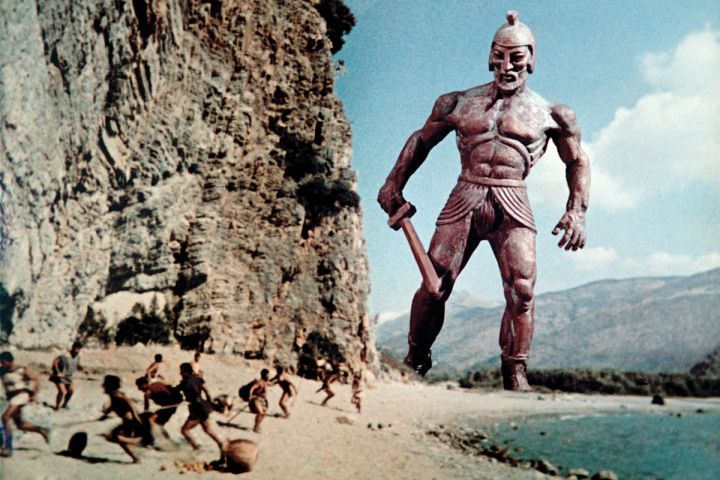
Turning Greek myths into movies found its height from the 1960’s to the 1980’s, when claymation monsters dominated the screen rather than advanced CGI. I can’t knock the use of claymation, however- filmmakers got creative with it, and were able to make it work fairly well. As comical as they look to audiences nowadays, you have to admit that for their time, they were genius moves.

Now, however, Hollywood has lost its way when it comes to showing off the legendary epics. What used to be just portraying the tales as is (with some creative difference, but not much), is now a strange and unsuccessful attempt to make the stories more “original”. They use an excessive amount of CGI, turning the classic mischievous and playful Greek gods into serious and dramatic figures, erasing some of their most bizarre origins and reactions. The myths portray the Greek Gods as divine and powerful but characteristically flawed (they are perfect at something, hence their God status). Movies now simply turn them into perfect but overly angry figures, exaggerating their temperamental behavior.

The legendary figures also find themselves changed, too, turning figures like Jason and Perseus into gritty and dramatic figures, when they show a variety of behavior, portraying a story of morality on a complex hero. In modern movies they are now meant to fight these giant monsters, getting girl while playing a one-note tune of being a one-dimensional hero. The main hero finds himself enveloped under the fold of the typical cliche action hero, completely ruining the point of the original Greek Epic or legend that they appear in.

The aesthetic of the new Greek myth movies also are much darker. Rather than being more realistic of showing an environment like daytime Greece, they show changing skies and darker backgrounds, making the story seem much less real. Of course, they are portraying stories, but compare them to their predecessors; compare the sky, the backdrop, and most importantly, the clothes. The cloths all look Spartan based, rather than showing the diversity of Ancient Greece (which wasn’t a unified country). It all makes seeing the Greek myths on screen that much less popular.

The Dark Tales Behind Disney’s Classic Films

It’s no surprise that when Disney does a retelling of a classic fairy tale, they definitely make it more “kid-friendly”. The once morally imbued and rather dark stories have found themselves remembered as sweet and innocent tales, one of happily ever afters and all the like. But what are the original tales? How were they in their most original form, and how has Disney mellowed them out?

I think to answer that, we have to look at the oldest Disney feature length film, Snow White. Much of the first part of the film follows that of the German story- the Queen is vain, and tries to kill Snow White when she surpasses her in beauty. But rather than telling the Huntsmen to retrieve her liver and lung, the Queen instead asks for her heart.

From then on in the story, Snow White still goes to the house of the seven dwarves to live there. But rather than try to get rid of Snow White once, the Queen actually attempts to kill her three times: first with lace, then with a poisoned comb, and finally with a poisoned apple. When Snow White is in a death-like state, the Prince stumbles upon her glass coffin (that the dwarves had placed her in rather than let her be buried in the ground), and immediately falls in love with her appearance. He persuades the dwarves to let him take her coffin so that he could look at her, and as his men lift her coffin, the piece of apple she had bitten falls out of her mouth. She wakes up, and they decide to get married, inviting the Evil Queen. The Queen, not knowing that the other queen was Snow White, attends the wedding, and is forced to dance on hot coals until she drops dead.

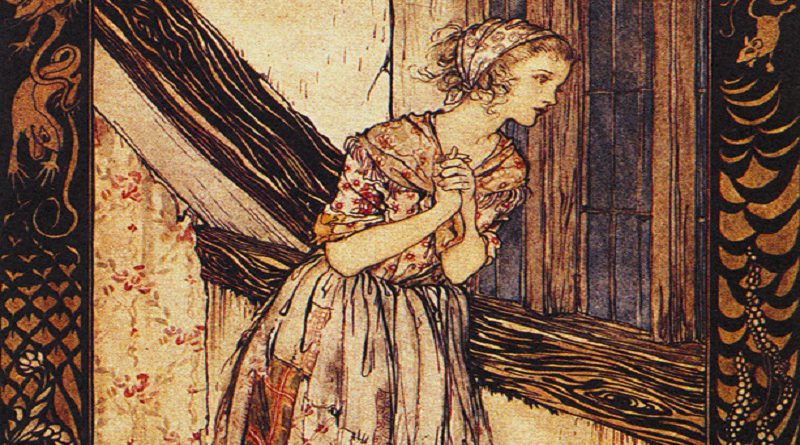
The next big fairy tale comes from the french original of Cinderella, also documented by the Grimm brothers. In this book the father never disappears, but is complacent in letting his second wife and stepdaughters turn Cinderella into a house servant. She works all day and all nice, cleaning the fire place, and doing other chores, and must sleep next to the fireplace at night, covering herself in ash and dust. She was given the name Cinderella, as a way to taunt her. Everyday she goes to her mother’s grave and weeps, and finds that a white dove hangs above her grave, granting her wishes.

On the dawn of the festival that the Prince was hosting, the stepmother forbid Cinderella from attending the ball, insisting that she was too dirty and embarrassing. Cinderella went to her mother’s grave and wept, calling on the bird to throw gold and silver down upon her. For three days she called upon the bird to dress her extravagantly, attending the ball and gaining the sole attention of the Prince. She keeps evading the Prince so that she couldn’t be recognized, but on the third night, the Prince had set a trap, causing her to lose one of her (golden) shoes.

The Prince decides to use the shoe to find her, and goes to the house of the Evil Stepsisters. They both try on the shoe, the older one cutting off her big toe and the younger one cutting off her heel to fit in the shoe. The Prince initially takes each one, only to be turned around by birds. Finally, despite the protest of her family, the Prince places the shoe on Cinderella, and realizes it’s her. They host a wedding, and the Evile Stepsisters try to go to Cinderella to gain her favor, only to have their eyes poked out by pigeons.

The third classic fairy tale I’m going to talk about is Sleeping Beauty, or Sun, Moon, and Talia. In the story, there is no slighted fairy (that would come in later versions), but rather a horoscope cast that she would face danger at a spinning flax. Aurora (or in this case, Talia), finds an old woman spinning as a teenager and asks to be taught how to spin. She gets the flax trapped in her thumb, and falls into a deep slumber, one that she cannot be woken up from.

She is left in the palace seemingly abandoned but attended by fairies, when one day a King stumbles upon the palace while on a hunt. He climbs a latter into her room, and is stunned by her beauty. After trying to wake her initially (unsuccessfully), he decides rather to rape her and be on his way, forgetting about her. Nine months later Talia gives birth to twins in her sleep, one boy and one girl. One of the children, trying to find her breast, actually sucks on her thumb, sucking the flax out and waking Talia up.

Not long later the King comes to see her again, and is joyous at finding her awake and with children. They fall in love after a few days, and he leaves again, promising to take her and the children with him next time.

The King’s first wife, realizing what has happened, plots to have Talia and the children killed, but is ultimately unsuccessful. She had ordered the twins to be cooked up and served to the king, but the chef, being kind-hearted, keeps them alive. She also tries to have Talia burned alive. But the king appears just in time and has his wife burned alive instead, marrying Talia and living with the children.

Flying in a Plane in the Movies vs. Flying in a Plane in Real Life

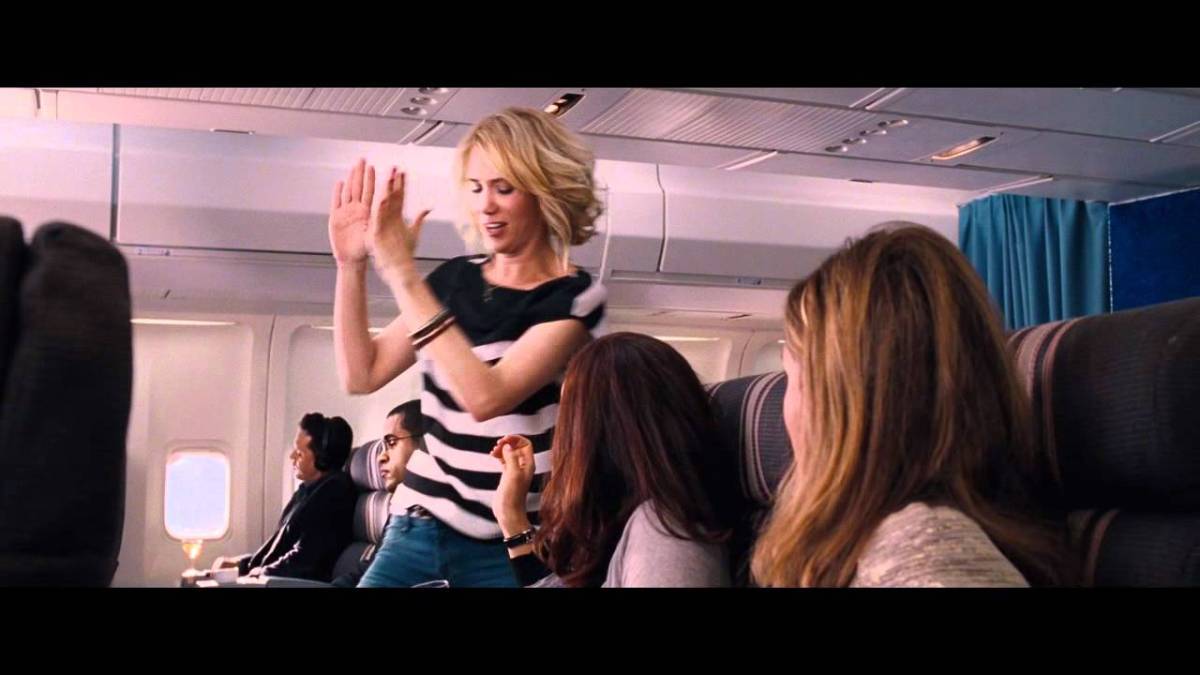
Whenever flying is displayed in the movies, they are glitzed and glammed up to be something magical. Excited people gleefully sit and party on the plane, going to a new country with their hair done perfectly and their outfits expensive. They’re ready to party in whatever place they go to.

The reality of flying a plane is, however, boring and gross. If you fly anywhere beyond an hour, flying is painfully boring, with the occasional infant screaming their head off over who knows what. All your dirt and oils start to build up, especially on long flights. Combine that with the germs and dirty seats of the hundreds who sat in it before you, and you’ve got a breakout coming on. It’s a guarantee to not looking glamorous when you get off.

Plus, you don’t want to wear nice looking clothes on a plane. Yeah, it’s a good-sounding idea to come off ready to go like in the movies, but the reality is you’ll be really uncomfortable. It’s better to just wear looser pants if you can. Sitting in skinny jeans on a 10 hour flight is one of the worst things you can do. Also, wearing clunky jewelry probably won’t make you feel any better.

Besides, no one is loud or getting buck-wild with booze like in the movies. Everyone is pretty quiet, especially on planes that have overnight time differences. People would get mad at you really quick. You just watch movies and make a few comments hear and there, but otherwise there is nothing really going on. Especially if you’re in coach, which most people in the movies are. It’s only the rare moments when the character is shown a new rich life and gets impressed that the person flies either first class or in a private jet. For the rest of the folk, though, they get shown in a clean, spacious coach, when 99 percent of the time that’s not the case. They’re not unclean, but unless they’re new they’re guaranteed to have not been deep cleaned in a while.