Marvel Announces New Filipino Superhero

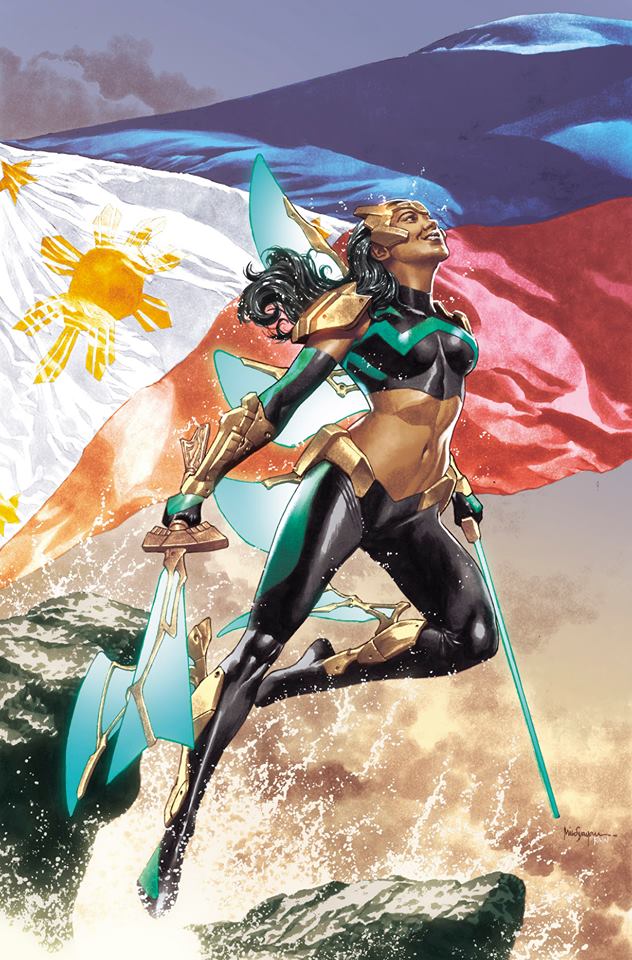
Today Marvel revealed an exclusive cover featuring the new superhero Wave from the Philippines, who will join the Agents of Atlas team in the upcoming crossover War of Realms: New Agents of Atlas.

Director and comic writer Greg Pak first revealed Wave on Twitter back in February, and then posted a first photo of what she looks like March 8. Artist Mico Suayan, who did the new cover for “War of Realms” Issue 1, revealed earlier today that he based the image of Wave on the new cover off of Filipina actress Nadine Lustre, sparking rumors of whether or not she will portray her in possible future adaptations.

Wave, whose alter-ego is Pearl Pangan, wields two long swords based off the Filipino kampilan, the weapons of the ancient hero Lapu-Lapu. She is part of a new set of Asian superheroes that will appear in the new storyline, which will be set in Asia.

The new issue will be released in May, though preorders for the comic have been opened up. The reveal has drawn overwhelmingly positive reactions from fans, particularly from the Filipino community.

The End of an Era with Stan Lee

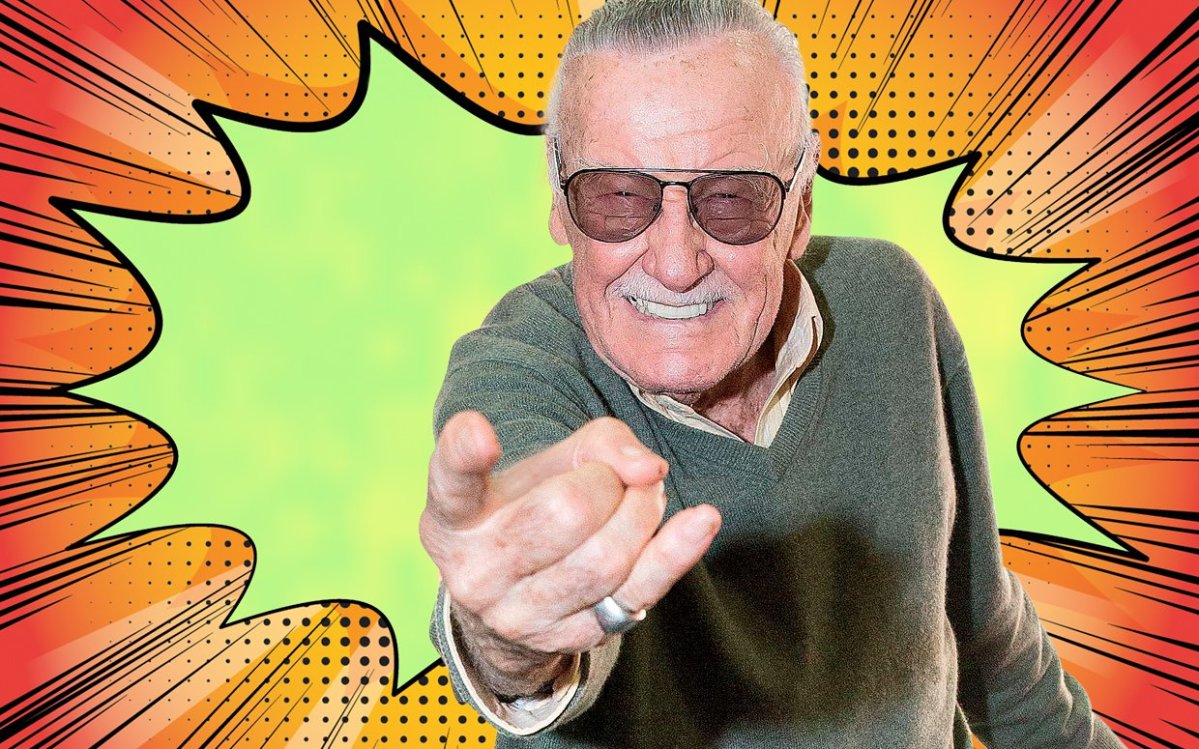
This morning, comic book artist, editor, and publisher Stan Lee passed away, signalling the end of both an icon and an era in the comic book universe. Stan Lee was not just a famous figure in terms of Marvel, but was also responsible for being one of the leaders of comic book and superhero culture, marking his place in pop culture history.

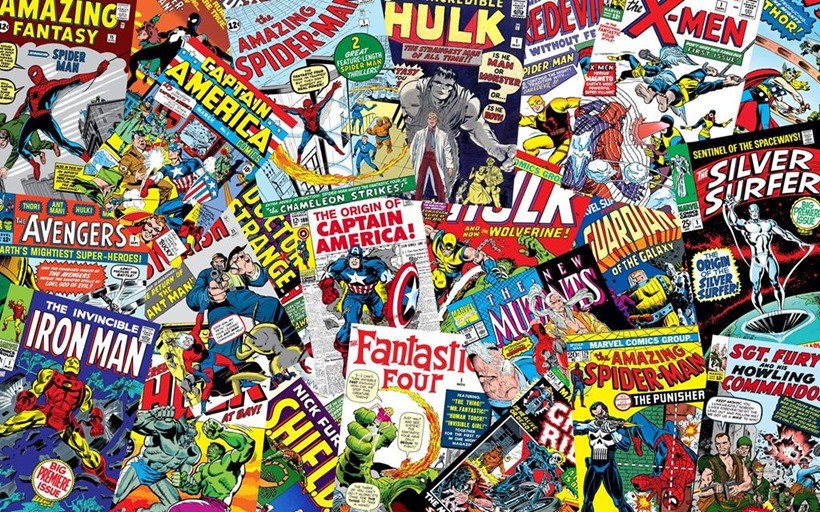
Stan Lee has had a major impact on Marvel comics, creating figures such as the Fantastic FourSpiderman, Thor, X-Men, and Hulk. Stan Lee has also been responsible for multimedia projects and acting as a brand ambassador for Marvel, despite past lawsuits against the companies for appropriate compensation for artists. In 2001, he founded the intellectual property company POW!, and later on received the Medal of Arts honor. He also published his autobiography Excelsior! The Amazing Life of Stan Lee.

Lee also helped build Marvel’s blockbuster brand, inspiring the production of Iron Man, X-Man, Thor and the Avengers. The man was also known for making a cameo in almost every Marvel film, the new Fantastic Four being an exception (to which he had jokingly remarked that that was the reason the film had flopped).

Stan Lee was an important person for pop culture, and his contributions to it will not be forgotten anytime in the near future. He helped spearhead Marvel into what it is today, and his death with certainly leave an impact on the company and the people who follow it. You will be missed.

The Saturation Complex of Geek Culture

I had mentioned in a post earlier that there is a prevailing idea that misconstrues how geek culture came to be. I can’t really say where this came about, although I strongly suspect that films and TV shows of the 1970s and 1980s paired with gendered conceptions surrounding geek culture are to blame. Whatever the cause, it has fueled this conception, leading to a sort of alienation complex as the geek community shifts and changes.

As a result, there is this saturated version of history, which relies on the idea that women and minorities have not been a part of geek culture until very recently (as in, within the last decade). As a result, there has developed a constant push against women and minorities joining in on geek culture, with particular “tests” placed against women in order to test if they’re “qualified” to partake in the geek community. These blockades grow increasingly pointless as geek culture continues to gain popularity, and yet for some reason persists. Perhaps I can explain why.

You see, it all starts at the source of geek culture: Science Fiction (Sci-Fi). In the saturated version of geek history, the first Sci-Fi author was Jules Vernes, best known for his book Twenty Thousand Leagues Under the Sea. As a result, this causes men who believe this start to think that women and other minorities have no real right to enter and write about Sci-Fi.

However, if you make one quick Google search, you’ll find that this version is incorrect. While Jules Verne was one of the earlier Sci-Fi writers, the real first Sci-Fi author was Mary Shelley, who published Frankenstein in 1818, a whopping fifty years before Jules Verne. This makes the Sci-Fi genre not a “boys only” club, but a club founded by women.

Shelley wasn’t the last female Sci-Fi author, either. Well-known ones include Octavia E. Butler, Margaret Atwood, Ursula K. Le Guin, and Suzanne Collins. Sci-Fi has never been a “boys only” club, although it is often pushed to appear that way.

Comics, by contrast, didn’t really diversify until recently. In its early days, the comic industry was very much “boys only”, mostly outright refusing to hire women and other minorities. This isn’t unusual, however; the entertainment industry as a whole was that way.  That isn’t to say that women and minorities weren’t in those realms, but it was very difficult to break in, particularly from the 1920’s-1970’s. This realm makes it a whole lot easier to promote the saturated history. Since women and other minorities were barred, it was easy to say that they didn’t belong and exist in the space. Despite the fact that the majority of comic readers in the present era greatly outweighs the “traditional” readership (white men), there is still this stigma that pushes women and minorities away.

The same goes for the video game industry. Women and minorities were mostly barred in the early days (as they were discouraged and stigmatized from getting STEM degrees in college), meaning that they couldn’t break in until more recently. This has created a frictional environment that extends beyond game development and into game playing, leading to online harassment and common claims of not being a “real gamer” to anyone that doesn’t fit the geek stereotype. To be honest, the “fake gamer” argument is ridiculous: if you play games, you’re a gamer. You don’t have to be best of the best, but if you play video games as a hobby, then you qualify.

The reason there is such a push back against diversity entering geek culture mostly stems from a victim complex among the “traditional” geeks. Despite the fact that geek culture has been gaining continuous popularity over the last two-three decades (exploding after the premiers of Walking Dead and Game of Thrones), the news for some reason has not hit the geek community. Or, rather, it has not processed.

The “traditional” geeks seem to be in denial about just how popular geek culture is, moaning and groaning how they are such victims and such a minority, while at the same time fighting against anyone that doesn’t fit their own characteristics and pushing them away. They like to act like they’re still the kids that get severely bullied, although just about any kid with a computer nowadays has access to video games and anime. It’s a bizarre complex that sticks out like a sore thumb.
Comic Books Have Always Been Political

With the releases of Wonder Woman and Black Panther, I couldn’t help but notice quite a few people mentioning that they didn’t like the fact that these movies were “adding” politics to comics. This always bothered me, because anyone who knows anything about comic books (unless they choose to ignore this) knows about how politics have always been a part of comic books. I’ll explain why.

You see, most comics had their main start as anti-Nazi propaganda in the late 1930’s and especially during World War Two. Characters such as Superman and Wonder Woman from DC, and Captain America from Marvel represented the “heroes” of democracy, clad in Star Spangled Banner attire as they kicked the asses of the bad guys, who represented ultimate evil. What even pushes the point further is that the general majority of comic writers during the time period were Jewish, which Nazis despised. The characters and comics were written in support of the US’s involvement on the Western Front, fighting the bad guy and saving the day.

The end of the war was not the end of politics in comics, either. You see, comic books are an art medium, and their one of the most obviously political mediums, as well. However, because of their fictional nature, the political side is often ignored. Which seems odd to me, especially when considering the fact that there will be entire characters created in response to certain affairs on either the national or global sphere. Black Panther came about as a result of the Civil Rights’ Movement. Miss Marvel came about as a combatant to the rise of Islamophobia. X-Men’s whole premise is about discrimination against minorities.

Even comic creators will argue that they, and their works have always been political. They argue that they put their messages in superhero comics, with important messages being portrayed in an obvious-yet-not-quite-obvious way. It could be in an important conversation, or self-reflection, or a grave mistake. In any of these forms, there is a message, more often than not reflective a political or social message.

The fact that people ignore the political side to comics shows not only how well the messages are hidden, but also the success of the popularly sanitized version of nerd culture. What is the sanitized form of nerd culture? Well, it’s a version of anything to do with “nerdy culture” (i.e: Comic books, Sci-fi, fandoms) that erases the political and diverse history of nerd culture so that it only looks like white men were involved in nerd culture until recently. There are many drastic effects of this sanitized view, but I’ll get into that another time. The point is, the sanitized view of nerd culture is the most commonplace, and the most inaccurate form.

All-in-all, to say that comic books have never been political is drastically incorrect. Comics have always been political, and will always be political. To say otherwise is misguided.

The Gatekeepers of Nerdom: The Small but Obnoxious Minority

It doesn’t take a genius to tell that being nerdy is “cool”. It’s been this way for the last decade, with pop culture trends that were once considered “lame” exploding in popularity, and fandom merch being sold at practically every corner. Conventions are appearing all over the place, and old ones (Comicon, Wondercon, Anime Expo) are growing larger every year. In 2015, more than 150 million people in the United States play video games, with 42 percent of Americans playing video games regularly. The nerd is no longer a joke of a subculture.

But for some reason, the news didn’t seem to have spread to one small group, known as the “Gatekeepers of Nerdom”- a group of nerds who argue that nerds are incredibly oppressed, while at the same time zealously trying to disprove the nerdiness of others, particularly of women. They seem to believe that they’re still stuck in 1980, when nerds were the typical bully subject in films. They also seem to believe that girls won’t date them because they’re nerdy, even though they’re really just not getting dates because they harass every girl who shows signs of nerdiness, trying to disprove them wherever they can.

The Gatekeepers are a small group, but are obnoxiously loud on social media, appearing where no one asked them to. Trying to find the “real” nerds seem to be their righteous mission, making many hate them- making the group in turn see themselves as “greatly oppressed”. Acknowledging the ever-growing diversity of the nerdom in any pop culture media is considered to be “SJW bs” by them.

How do they persist? Well, the Gatekeepers seem to push this continuous cycle where they harass people, get made fun of for it, and imagine they’re oppressed, causing them to continue existing. There is also the issue of the purity complex, where minority groups in fandoms, video games, and other aspects will try and prove that they are the most “pure” of anyone else, who is fake because they aren’t. The purity complex is a toxic form of trying to prove realness, especially in the realm of nerd, where there is no real purity. The nerdom has grown so much that finding a “pure” version of a nerd is utterly impossible.

The fortunate thing is, at least, that no one takes the Gatekeepers seriously. How do you take them seriously, when they are viciously trying to “protect” a subculture like it’s still 1980? And their harassment is kind of hilarious in itself. They appear suddenly in your feed, ask a “trivia question” trying to prove that you’re not a real nerd, and get mad when you either answer it correctly or ignore them. They’re not much of a real foe. It is entertaining to watch someone interact with one of them, though.

Wanda’s Wasted Role in Avengers: Infinity War

I know I’m almost a month late to the party, but that’s because I didn’t see Avengers Infinity War until last night. I hadn’t even planned on seeing the movie, but my friend, who had just finished Thor Ragnarok, had insisted that I come with her to see this one.

I walked into the movie knowing the synopsis of the film already, and knowing what happens in the comics (I’m going to try and keep this as spoiler-free as possible, as people are still trying to see the film), so I wasn’t really surprised by any of what happens in the main story arc. What happened instead was that I got confused.

It’s difficult to make a film as big as Infinity War, with so many character arcs, not confusing. Half the time there was so much going on at once that my brain was going into a mild overload. But what really got me confused was what I have to say was the biggest plot hole of the movie- Wanda’s power.

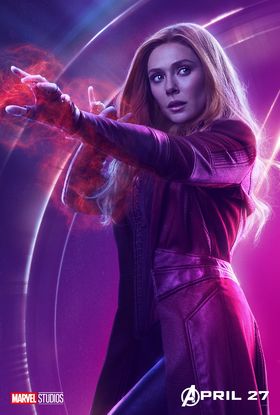
In the film series, she is known to be a very powerful mutant. In Captain America: Civil War, she was even described as a “weapon of mass destruction”, which rings pretty true to her original comic character. Wanda seems to have an endless amount of capabilities, and has enough power to destroy an infinity stone. But how her powers are portrayed, powerful as they are, are very toned down from her comic version.

In the comic series, Wanda Maximoff, or Scarlet Witch, is what is known as a Nexus Being, which is a living focal point of Earth dimension’s energy. She gained her abilities by being born in proximity to the elder energies of the god Chthon with her twin, where she developed a mystic bond with the god. The result gave her unimaginable power. She has the power to alter reality on a grand scale, which includes reviving dead ones and reincarnating others, although she does not have the full training to control all her powers.

In the film series, she is not a Nexus being, having been created through experimentation with a special branch of Hydra. As the films develop, the power she has seems to multiply (that or she is gaining more control over it), although she has yet to bend reality on a large scale. An important matter is though, that Wanda can destroy an infinity stone.

Why is this important? Well, when you look at the context of the whole film, it was about preventing Thanos from obtaining all six stones. While destroying the time stone seemed almost impossible, given that Doctor Strange was nowhere near Wanda, Wanda had the capability to destroy the other ones from the start, and perhaps even the gauntlet itself. She could have easily useful as a forefront for destroying the gauntlet, but throughout the film one slap would knock her down for a seemingly endless amount of time. The ability for her to be knocked down so easily, despite having such power, was to me kind of a cheap shot to make it that much easier for the plot to occur (and for subsequent films to happen). She had some cool fight scenes, but was ultimately muted (come on, she could have totally done more damage on the battlefield than Thor).

But, you know what? To try and show the full might of Wanda’s powers might have been too complex for an already complicated film. Yes, she could have easily done a lot of things throughout the film series, and in particular in Infinity Wars, but trying to have it all there might have added a detail too much. But still, seeing her get knocked down for ages by one slap was a bit infuriating.