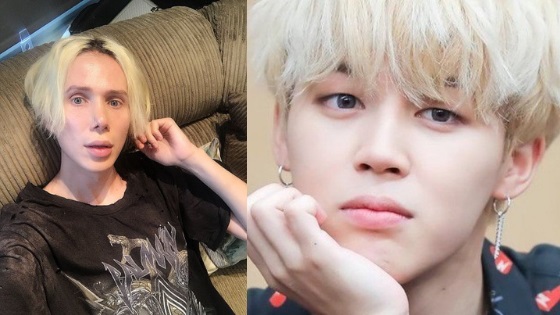
Meet the Man who Spent $100,000 to look like BTS’s Jimin

The TV series Hooked on the Look holds a reputation for its documentation of the extreme in terms of plastic surgery. Having featured figures like the “Real Life Ken Doll” and the Justin Bieber look-alike, having a Londoner named Oli London going to the surgical extremes should be nothing out of the ordinary.

The reason he’s worth noting, however, is for who this man wants to look like. London became a hot topic on social media for the fact that he wants to look like Jimin, one of the lead vocalists from the Kpop group BTS. In essence, the man wants to “change his race”.

This man has gone all out to try and look like the Korean star, from copying his hair, to buying clothes, to getting plenty of procedures to try and emulate Jimin. He’s gotten multiple rhinoplasty procedures, lip fillers, work on his eyes, jaw shaving, and has had all the fatty tissue removed from his chest, among other things. He’s not afraid to spend the money to look like the idol, and he clearly has the money to spend.

Despite all this, London argues that he doesn’t want to change his race, and that he knows that he will always be Caucasian. However, he still wants to try and look Korean because of his love of Jimin (and Kpop idols more generally). In fact, after getting fillers in his eyes and cheeks to look more “like Jimin”, in the show London comments as he looks at himself that he “looks and feels Korean”, which has questionable implications. It brings London into the uncomfortable category of “Koreaboo”, which involves the idolization of Korean culture based on the idea of Kpop and Kdramas, and the fetishization of Koreans.

While London claims he doesn’t want to “be” Korean, he certainly wants to look it, and he especially wants to look like Jimin, which would most likely disturb the actual singer. The Kpop idol already has to deal with sasaengs that follow him and his group around on airplanes and to hotels, and would probably not appreciate hearing that someone has spent an exorbitant amount of money just to look like him.
BTS Cause an Online Storm with their SNL Performance

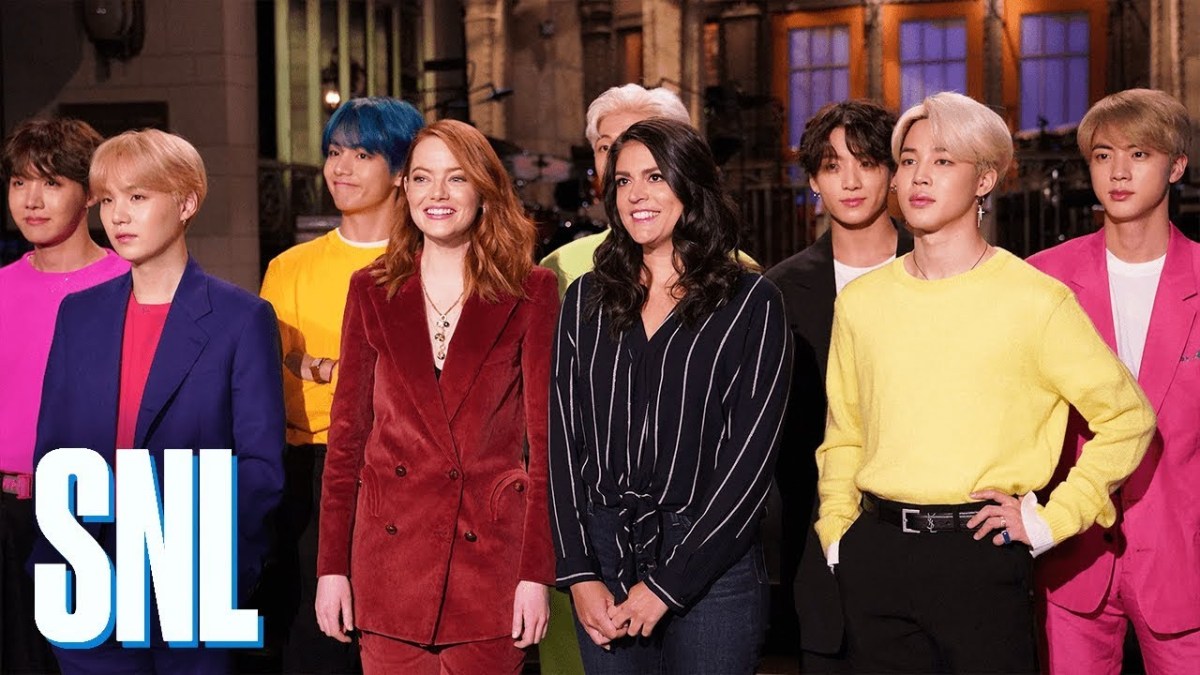
Lat night, Kpop boy band BTS performed on SNL with host Emma Stone, making them the first ever South Korean artists to appear on the show. Their performance was marked by much anticipation, with great excitement from the fans and plenty of advertising from the show itself.

They performed the day after the release of their new album Map of the Soul: Persona, performing their single “Boy with Luv” and their popular “Mic Drop Remix”, causing quite a storm on all social media platforms, namely Twitter. Fans fawned over the perfect choreography and the live singing, and even some mentioned how one of Rm’s outfits was from “Persona: Intro”.

Their performance on the show brought a jump in SNL viewership ratings that hasn’t happened in years. It also put the show as number one on trending lists, another feat for the show.

BTS’s new video for “Boy with Luv”, featuring Halsey, has already broken 116 million views in two days.

Youtube Rewind 2018: For the Corporate

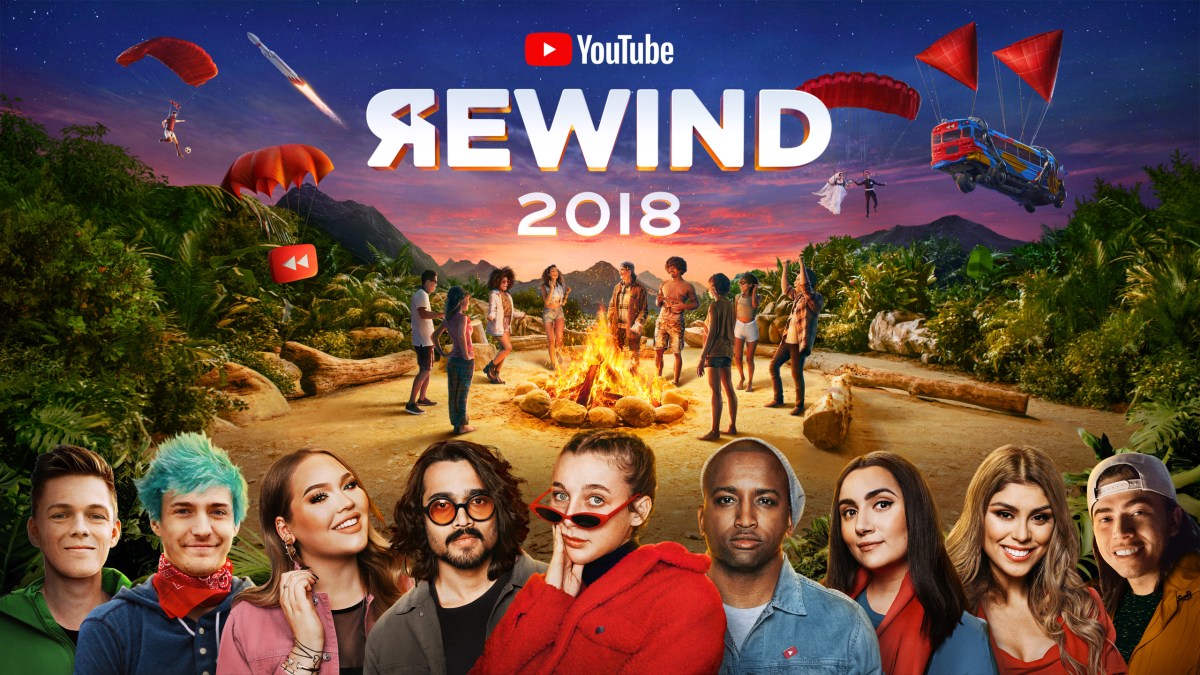
This last week, Youtube Rewind 2018 dropped, receiving not just the most dislikes of any previous rewind, but also the most dislikes of any video on the site ever, getting over 4 million dislikes in 24 hours. Which is ironic, considering that this years rewind was supposed to be “what the people want”.

Youtubers, all over the place jumped on the opportunity to review it. H3H3 even went so far as to compare this year’s rewind to the rewind from 2013, showing how much Youtube has changed to be more about the business than about the creators. This comparison brought to light what Youtube was before the 2016 “Ad-pocalypse”, an event hallmarked by the rush of company ads and investments being removed from Youtube after Pewdiepie’s anti-semitic controversy, and after. It’s a stark difference.

Now, before I go into it, I’m going to put this forward: I’ve seen this year’s rewind, and I hated it. Like, not just in the fact that they had almost no one I could recognize, but the fact that it was just all around cringy. Now, let’s get into details.

The rewind opens up with Will Smith, who not only doesn’t have a Youtube, but also wishes for Fortnite (?). It then leads to showing a Twitch streamer, and a bunch of people I swear I’ve never seen before, before going downhill from there.

I’m not going to do a full breakdown, but the first minute of this rewind should already say enough about how it’s not for the people, even though that was the theme of the video. “Let’s make it about the viewers! Go by the comments!” They said, although no one is really sure how legitimate those comments are. In fact, if you look at the comments below the video, you can see just how upset people are with it. The rewind ignored a lot of big events that happened not just on Youtube, but on social media in general, instead focusing on the…political contributions of some on the platform? It was ridiculous.

The video obviously reflected the Youtube that the company wants to present, which is soft and fun, but more importantly ad-friendly. It’s not accurate, and it avoids any and all “risks”, even though that’s what the platform is known for. The worst part was the Youtubers. A good 90 percent of them I, nor most other people, had ever heard of, and focused on things like mukbangs and ASMR. They had some KPop, copying the new video by BTS (the most widely-known Kpop group right now) without actually mentioning their name. It was just bad.

This video wasn’t for the people, despite what they proclaim. It was just a waste of time and money.

How Kpop got its Place in Western Media

Now that the season of music and movies has hit, Spotify has begun releasing a weekly playlist called “New Music Fridays”. I’ll listen to it sometimes to find music to add to my own personal playlists, and am unsurprised with the typical English and Latin music that comes on.

Today was different, however. Today I was pleasantly surprised to hear Blackpink’s “Ddu-Du Ddu-Du”, which had been released today (along with the music video for it). Blackpink is a prominent girl’s Kpop group, whose song “Boombayah” had broken records for being the most viewed debut song on Youtube, and achieving 150 million views in less than six months. Even as I write this, the music video “Ddu-Du Ddu-Du” became the fastest girl group Kpop music video to hit 10 million views. To hear their newest song on a playlist of otherwise Western songs was interesting.

The song (which was pretty good, by the way) got me thinking about Kpop as a whole. Just six years ago, most people outside my neighborhood (I grew up in a Korean neighborhood) had never heard of Kpop. Now, advertisements featuring BTS (the most popular Kpop group of right now) are growing increasingly less uncommon, and just about everyone I’ve spoken too knows about Kpop. This did not happen for no reason.

No, the reason Kpop has burst on to the scene goes beyond the accidental popularity of “Gangnam Style”. South Korea’s entertainment industry sits in an interesting situation, receiving direct funding and advisement from the Korean government while at the same time holding themselves as a private industry. This is because while the South Korean government is promoting a market economy with both a private and public sector, they are promoting it in a way that gives them control over how they promote the nation’s image. They want Kpop and Kdramas to spread and show how “cool” of a country South Korea is. The goal is to have their pop culture be known not only in Eastern and Western markets, but also in what’s called “developing” markets as well.

With the massive amount of funding the entertainment companies receive, they can push out higher quality media, to the levels of Japanese and Western media. They promote a Western appeal (adding rap, street wear), while at the same time keeping a unique flair that is inherent to Korean media. They were trying to make their brand known.

But even with all the effort put in, many were shocked to find that “Gangnam Style”, a lyrical satire about the Beverly Hills of South Korea, took the cake for breaking into Western markets. The song, which makes fun of the mannerisms of the rich in South Korea, was not the song the government wanted to be the first Kpop song that new audiences heard on a large scale. While that isn’t to say that they didn’t want singer Psy to make the song at all (he was a relatively popular artist within South Korea), they certainly didn’t want it to become that popular. But not everything can go according the plan, however.

I can’t say “Gangnam Style” was the song that put Kpop in the spot it holds today.  It seems more like the genre gained a more permanent footing when BTS shocked audiences by snatching the title of Top Social Artist at the American Billboard Awards in 2017, beating out prominent names like Selena Gomez and Justin Bieber. It sent the internet ablaze, being divided between fans who were excited for the win, and quite a few people who were asking “who are these guys?”. And while Kpop was popular already, I felt it opened more people to exposure from Kpop, getting more people to jump on the “Korean Craze”.