Returning to the World I Knew Before

I don’t know if I’ve indicated before, but I have a long history of being a huge nerd.

Or rather, a geek (yes, there is a difference). I wasn’t the techy “build your own computer and digs math” type, which would have classified me as a nerd (by stereotypical standards). No, I have always preferred pop culture and literature, preferring to spend my time playing games and dabbling in a bit of anime. But the biggest highlight of being a geek was going to conventions.

The two biggest conventions I went to were Wondercon, which functions as a mini-Comic Con, situated in Anaheim, and Anime Expo, the largest Anime convention in North America. I went to these conventions every year from when I was thirteen until I went to college, when scheduling began interfering. It got to a point where I kind of got sick of them.

But in college, things changed. For some reason, I had it in my head that I should “grow out” of my geekiness, or at least keep it more private. Perhaps it was because I looked around and saw all the other geeks around me at school made me uncomfortable. They were just too stereo-typically geeky. That’s not to say that some of my high school friends weren’t, but these guys just fit the bill too well.

The disassociation might also have been partially influenced by the fact that I never fit the bit for someone who was geeky. Yeah, I wear glasses and at one point cut my hair short and dressed less-than-pleasantly, but I’m not talking about that. I’m talking about my face, my figure. I looked more like the kind of person geeks and nerds would wish would be into the same stuff as them. And this isn’t out of an inflation of my own ego. I’ve had enough creepy experiences to know exactly what position I was in. I look more like I belong in a Starbucks.

This was a factor that had always plagued my adolescent years. Especially during the height of gamer gate, where you could get called a fake gamer or fake nerd for just about breathing the “wrong way”. They never judged the people that looked like (stereotypical) geeks and nerds. They judged the people that didn’t.

It didn’t help that my Mom and sister would make fun of me for being a geek. My sister has become more involved in the culture herself in recent years, which has lightened her take on it, but my Mom would always roll her eyes. She still thinks I’m into things that I’m not (i.e: she thinks everything I watch is anime for some reason). She didn’t stop me from being a part of geek culture, but she didn’t much like the fact that I was so into it, either.

So for most of my college years, I kind of kept things under wrap. I stopped investing myself in geek culture for the most part, although I couldn’t help having my closest friends know what I was into. Everything was going fine.

But then, I started to miss the geek world. I started to miss being involved in the newest game, and missed going to conventions. I missed being a geek. I wasn’t going to suddenly stop dressing decent, but I didn’t want to let go of something I actually enjoyed. It was a big part of my life, and it was something cool to do. I got to see artists I follow in person, discover new artists, and find new things that I didn’t know before in geek culture.

So I’ve decided to come back. My Dad says he can get us into Comic Con, and I am planning on going to Anime Expo, so I guess that’s a good start to breaking back in. While I don’t have much time to be “full geek” (I have school and work), I do plan on enjoying the things I once did.
The Saturation Complex of Geek Culture

I had mentioned in a post earlier that there is a prevailing idea that misconstrues how geek culture came to be. I can’t really say where this came about, although I strongly suspect that films and TV shows of the 1970s and 1980s paired with gendered conceptions surrounding geek culture are to blame. Whatever the cause, it has fueled this conception, leading to a sort of alienation complex as the geek community shifts and changes.

As a result, there is this saturated version of history, which relies on the idea that women and minorities have not been a part of geek culture until very recently (as in, within the last decade). As a result, there has developed a constant push against women and minorities joining in on geek culture, with particular “tests” placed against women in order to test if they’re “qualified” to partake in the geek community. These blockades grow increasingly pointless as geek culture continues to gain popularity, and yet for some reason persists. Perhaps I can explain why.

You see, it all starts at the source of geek culture: Science Fiction (Sci-Fi). In the saturated version of geek history, the first Sci-Fi author was Jules Vernes, best known for his book Twenty Thousand Leagues Under the Sea. As a result, this causes men who believe this start to think that women and other minorities have no real right to enter and write about Sci-Fi.

However, if you make one quick Google search, you’ll find that this version is incorrect. While Jules Verne was one of the earlier Sci-Fi writers, the real first Sci-Fi author was Mary Shelley, who published Frankenstein in 1818, a whopping fifty years before Jules Verne. This makes the Sci-Fi genre not a “boys only” club, but a club founded by women.

Shelley wasn’t the last female Sci-Fi author, either. Well-known ones include Octavia E. Butler, Margaret Atwood, Ursula K. Le Guin, and Suzanne Collins. Sci-Fi has never been a “boys only” club, although it is often pushed to appear that way.

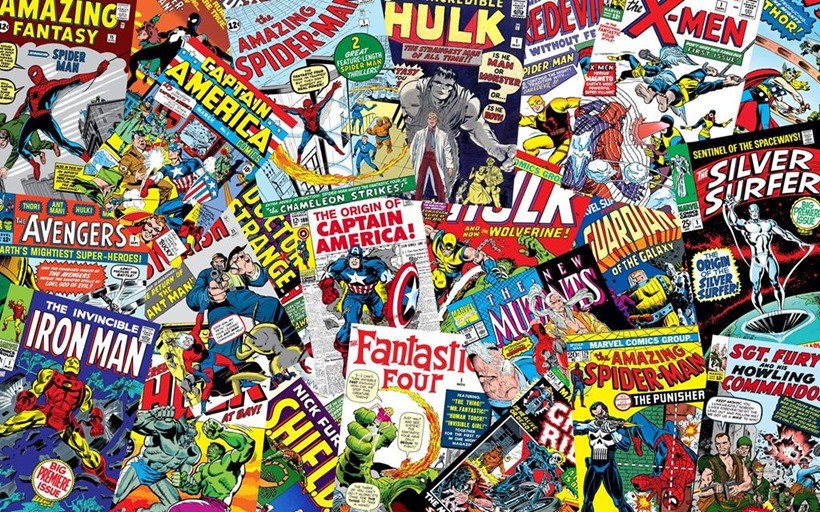
Comics, by contrast, didn’t really diversify until recently. In its early days, the comic industry was very much “boys only”, mostly outright refusing to hire women and other minorities. This isn’t unusual, however; the entertainment industry as a whole was that way.  That isn’t to say that women and minorities weren’t in those realms, but it was very difficult to break in, particularly from the 1920’s-1970’s. This realm makes it a whole lot easier to promote the saturated history. Since women and other minorities were barred, it was easy to say that they didn’t belong and exist in the space. Despite the fact that the majority of comic readers in the present era greatly outweighs the “traditional” readership (white men), there is still this stigma that pushes women and minorities away.

The same goes for the video game industry. Women and minorities were mostly barred in the early days (as they were discouraged and stigmatized from getting STEM degrees in college), meaning that they couldn’t break in until more recently. This has created a frictional environment that extends beyond game development and into game playing, leading to online harassment and common claims of not being a “real gamer” to anyone that doesn’t fit the geek stereotype. To be honest, the “fake gamer” argument is ridiculous: if you play games, you’re a gamer. You don’t have to be best of the best, but if you play video games as a hobby, then you qualify.

The reason there is such a push back against diversity entering geek culture mostly stems from a victim complex among the “traditional” geeks. Despite the fact that geek culture has been gaining continuous popularity over the last two-three decades (exploding after the premiers of Walking Dead and Game of Thrones), the news for some reason has not hit the geek community. Or, rather, it has not processed.

The “traditional” geeks seem to be in denial about just how popular geek culture is, moaning and groaning how they are such victims and such a minority, while at the same time fighting against anyone that doesn’t fit their own characteristics and pushing them away. They like to act like they’re still the kids that get severely bullied, although just about any kid with a computer nowadays has access to video games and anime. It’s a bizarre complex that sticks out like a sore thumb.

How Fandoms Go from Fab to Drab

Fandoms, which are a subculture centered around supporting or following a certain piece of media, are everywhere in Geek culture. Just about every TV show, movie, book series, and more has a fandom, some small, some tremendously big, and many in-between. If something extremely popular is released, usually its fandom explodes for a few months, or even a few years, before mysteriously collapsing and disappearing. If you’ve ever seen this occur, then you have just witnessed a fandom going from fab to drab.

How does this occur? Fandoms have normal lifespans, with the very small ones usually dying out fairly quickly after the piece is released (known as “going dead” in fandom terminology). Medium and large ones that continue in their drab phase can live a long time-I’m talking about decades of survival (Star Wars, Star Trek, Back to the Future). This is all a part of a natural cycle.

However, Fandoms that go from fab to drab have a relatively short and volatile lifespan, which can lead to fall-backs and resurgences, all before their eventual collapse. This usually comes as a result of several factors.

The first is the development is what’s known as toxicity. Every fandom has a few bad eggs. But when there’s enough of them, all attacking people and bullying people over differing ships and opinions, then the fandom gets labelled as “toxic”, both by people outside of the fandom and the few remaining clear-headed people still in the fandom. Fandom is supposed to be about a community coming together, not tearing each other apart. This is an issue that can occur in just about any large fandom, as major groups (particularly shaped around “ships”, or couples that people root for) belittle minor groups, essentially bullying them out of the fandom.

The toxicity does not stop at people in the fandom, either. I remember the days of Superwholock (The combination fandom of Supernatural, Dr. Who, and Sherlock) when the fandom would attack any outsider that questioned them or criticized them, building up their own reputation as toxic. The same thing happened to the Undertale fandom, leading to its demise within only a year of the game being released.

Which leads me to my next point: Hatred towards the fandom. When a fandom is toxic, it not only builds up a bad reputation, but cuts its own supply off of newcomers. When people are discouraged or turned off from joining the fandom, even the largest one will eventually fall. Every fandom needs newcomers to survive; too few or none at all will kill just about any one of them (Superwholock was an interestingly unique case, but in order to explain it in full detail I would need to talk about it separately).

When fandoms are faced with these two issues, they become increasingly volatile, lashing out against others and fully consuming themselves in their toxicity, which only furthers the problem. They solidify their own fate, even if they don’t know it.

Fandoms that once start fab, welcoming all others and becoming a large fandom that bonds over a certain media, can either quickly or slowly turn drab, turning against itself and ruining itself as others watch on. It’s an interesting and prevalent cycle that normally only happens to the biggest and trendiest fandom of the time, providing a serious lesson to others about growing too big too quickly.

How I Can’t let some Books go

I read a lot of books. More so when I was younger, and had a lot more time to read around school, but that doesn’t stop me from buying potential books to read.

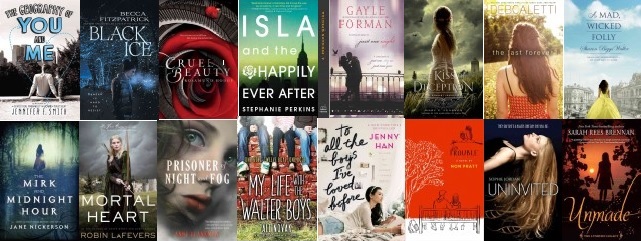
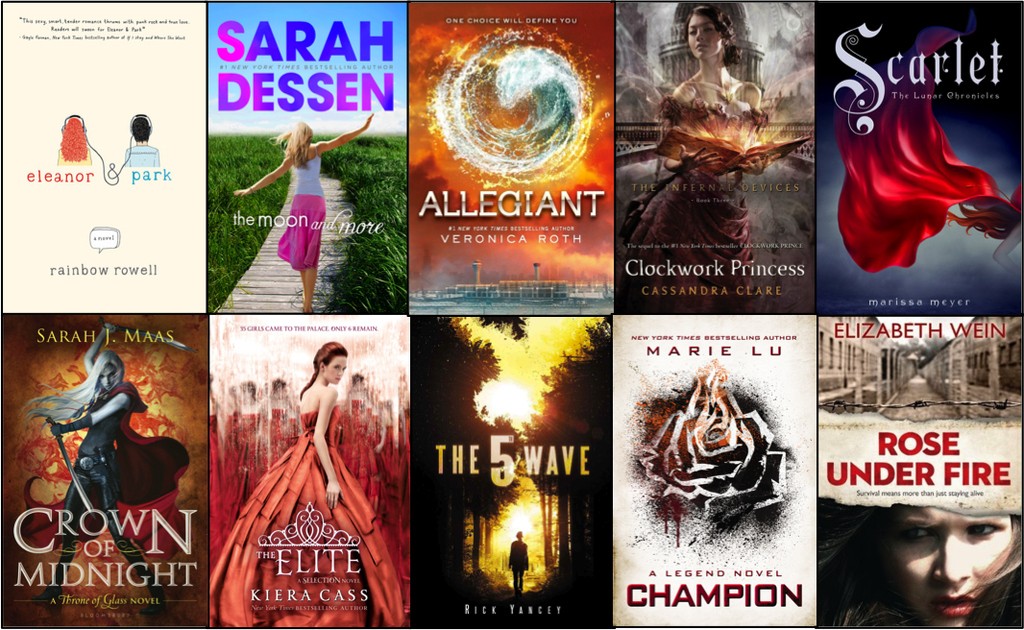
As a result I’ve invested my time and energy into many books, both good and bad, and even some okay. The good ones I usually keep in my room, and the bad ones usually go to the sad and lonely shelf in the middle of a hallway in my house. Trust me, there’s plenty of bad and okay books on that shelf. But hey, when you read a bunch of YA novels, you’re bound to run into many bad ones before you find a good one.

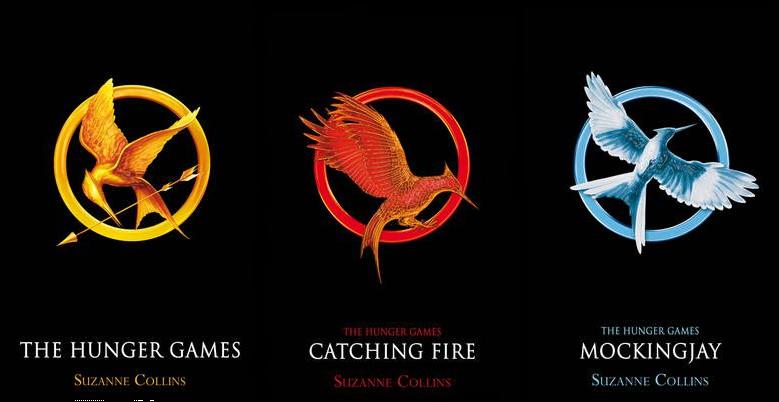
Most of the bad books I’ve read I’ve already forgotten. However, there are a few series that I just can’t let go. This might be because of the fact that among the bad series, there was a good book that I actually enjoyed. Usually this would be the first or second book, getting ruined by the third or whatever else book (In the Mortal Instruments, it was the opposite: I thought the first three books were decent enough, but liked the fifth book the most). Two series that exemplify the above for me are Hunger Games and A Court of Thorns and Roses. I thought the second books in both series were the best, but I didn’t much appreciate reading the third book, to put it politely.

But if only one or two books were really exceptional to me, why do I still cling onto its fandom? Well, I’m usually reminded of the series when I see fan art or something else of the sort. It gives me a sort of nostalgic feeling, and makes me want to re-read my favorite parts of the books I liked. It keeps me hooked onto the fandom, even if merely grabbing the barest shreds so I don’t get too invested in the culture again. Fandom culture has gotten pretty toxic over the years, and I don’t like to involve myself much in them anymore. Discussing their evolution will be saved for a different time, however.

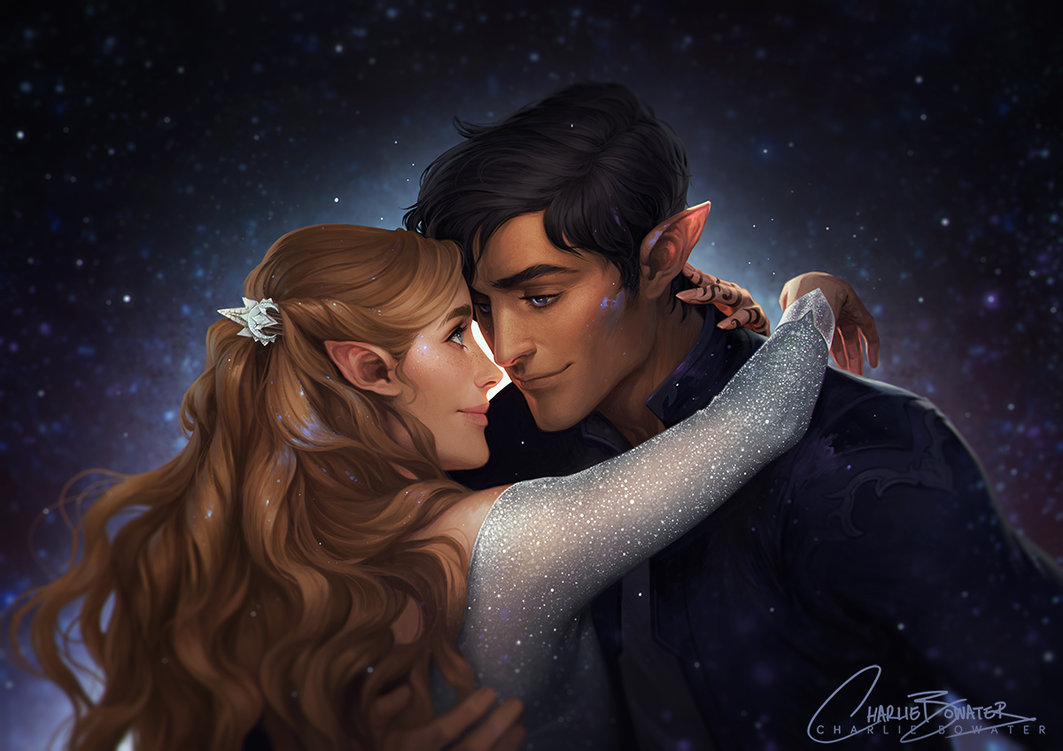
As for the fan art, it’s not just any old fan art. It’s usually drawn by artists I follow, who happen to have read or currently read the same books as me. When I see their interpretation of certain scenes or characters, I am redrawn to those books, even if I haven’t touched them in over two or three years. I blame nostalgia and the familiarity of the characters. My brain recognizes the characters and clicks, triggering a sense of desire to pick up the books.

Art Credit @ Charlie Bowater

Should Underage Sex Scenes be Descriptive?

This is an issue that only arises as one transitions from being a teenager to being an adult. It happens mostly as a result of shift in perceptions, where rereading the same section that you had no problem with when you were younger suddenly feels kind of weird.

But, I’m getting ahead of myself. Why am I even talking about this?

Well, it all started when I decided to go over a certain section in Cassandra Clare’s Lady Midnight. I don’t really know why I was; the book was a little too predictable for my tastes. But that’s besides the point.

Anyhow, in Lady Midnight, there is a sex scene between two of the main characters, both of who are seventeen when the events take place. When I had first read it, I thought there was nothing wrong (I had just turned eighteen). However, rereading it now, I felt that it got a little too descriptive, the number “seventeen” ringing in the back of my head. In Lord of Shadows, it gets even more descriptive.

The odd feeling got me thinking about other YA books with underage sex scenes written into them. More often than not, the sex scenes I’ve read usually involve the characters being eighteen or nineteen. But sometimes, they are younger. Which, there would be nothing wrong with that, had they not gotten so descriptive.

What do I mean by descriptive? I don’t mean when the narrator describes feelings and emotional roller coasters. Rather, I mean explicit mentions of penetrations and other physicality. When I was a teenager myself, I had no problem with this. In fact, I got excited by how daring the author would be. But now it feels kind of strange to read it being so descriptive, especially when the female character is specifically described as looking like a child. What makes it worse is when the author points out those childlike features during a scene, and then I want to skip the entire scene.

But, is the descriptiveness really so bad? Usually when the underage scene is written, the characters are seventeen or almost seventeen. Paired with the fact that the average age in the US for having sex for the first time is seventeen, then there really shouldn’t be an issue. These books are for kids from thirteen to around eighteen, and the scenes are catering towards that audience. So there really should be no issue, right?

Well personally, I would prefer them not to mention any penetration. But, if I was my younger self, I may not have an issue with that description.

Youtubers Becoming Authors: The Self-Help Trend

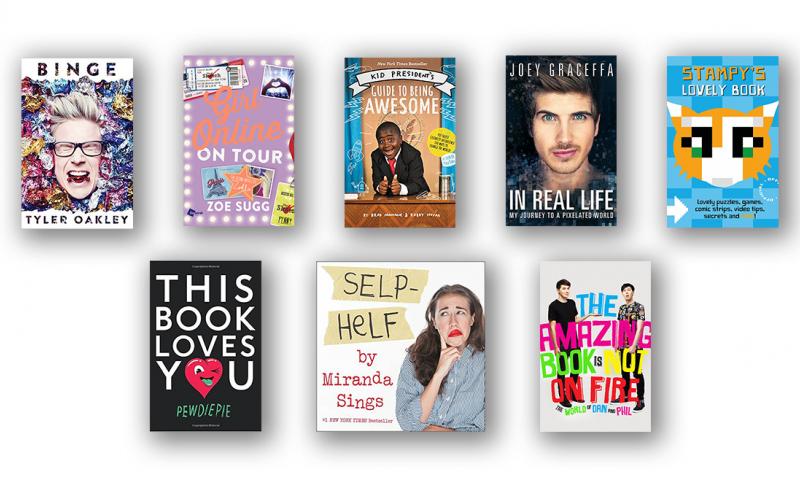
In the last five years, there have been a number of Youtubers releasing books, some fictional (like Joey Graceffa’s Dystopian trilogy), and others non-fictional (like Shane Dawson, Miranda Sings, Tyler Oakley, and so many others). Youtubers, using their influence, often write books of “self-help”, or a series of essays, or something similar to memoirs. They provide advice, despite the fact that they are only in their mid-to-late twenties. It’s a bizarre case, one that I have been feeling the need to unpack for a long time.

Now, while John Green is technically the first youtuber to release a book, he was an author first, so I will just skip him.

The first youtubers to publish a book after gaining their popularity were Blaire and Elle Fowler, publishing the fiction book Beneath the Glitter, in 2012. From then on, Youtubers began publishing their non-fiction books, with books such as I Hate Myself and In Real Life: My Journey to a Pixelated World gaining quite a bit of traction. Most of these centered around Youtubers’ tales of their childhood, functioning as a pseudo-memoir despite the fact that most of the authors were in their early-to-mid twenties.

It wasn’t until 2014 that the first actual “help” books came out from a Youtuber, with Hannah Hart’s My Drunk Kitchen: a Guide to Eating, Drinking and Going with Your Gut. It’s help aspect comes from the fact that this is a recipe book, although within the next three years tons of “self-help” books came out.

Now, while I have no qualms with things such as recipe books and fictional novels, the memoirs and self-help books kind of get to me. And it’s not like it’s business or fashion advice, either (Michelle Phan published Make-up: Your Life Guide to Beauty, Style, and Success- Online and Off in 2014, which offers both business and fashion advice, as well as maintaining a healthy attitude), but rather actual life advice. This isn’t to say that someone who isn’t in their twenties can’t give life advice. It just seems odd that someone who is in their twenties are offering advice books to their audience-most of which are in their early or mid teens.

To me it’s difficult to imagine my teen-self or any of my friends following the advice of someone who, quite often, never got their degree in college, and made their career in a  very competitive environment. It also seems weird to read a memoir about someone who hasn’t even made it to their thirties, yet. Most people don’t write memoirs until they’re almost in their fifties, or even later. It’s usually after they have lived quite a bit. That isn’t to say that a lot hasn’t happened to a young person, but most Youtubers’ memoirs are quite mundane. They have childhoods that may be tough, but are often not unusual.

Of course, some of these Youtubers can provide some insight that their younger audiences can relate to. Things such as mental illness, eating disorders, being a part of the LGBT spectrum, and other such hardships may connect to people who are stuck in similar positions. The only problem is that the writers are so young themselves, still growing and learning, that what they write in one book won’t be how they feel ten years down the line.

Perhaps rather than sticking to full on life advice, they should stick to subcategories that they excel in for now. There are so many ways that you can provide advice to young people without it being how to live. There are also many ways to write personal anecdotes without writing full memoirs. It’s better not to rush into things so young, despite our tendency to do so.

The Controversial Author of a Beloved Series

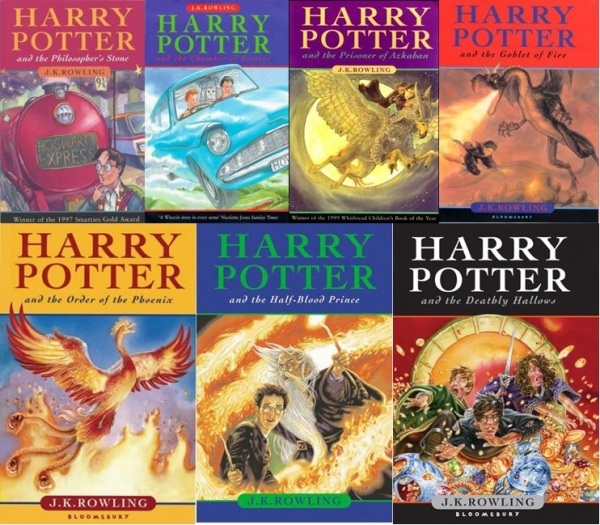
The Harry Potter books and movies have been loved and cherished for around two decades. It was a series that was recognizable to millions of people, to the point so that some of the advertising for Deathly Hallows Part Two didn’t even name the title of the movie. It has also led to the opening of Harry Potter World in both Universal Studios locations (Orlando, Los Angeles), with hundreds of thousands flocking to partake in some of the magic. The Harry Potter series was classified as the hallmark of an entire generation.

While the fandom for Harry Potter seems to be thriving, I can’t help but wonder how much this is done out of pure nostalgia, especially as more negative light turns to the series’ author, J.K. Rowling. As time goes on, I notice that former die-hard fanatics are noticing more issues with the series, particularly with the actual lack of originality that the magic world in the series has. But contrasting from these fans-turned critics are the ones that are still die-hard, constantly taking every house quiz, referencing the series when they can, and even getting permanent tattoos of famous symbols. It’s an interesting mix that I increasingly notice is coming at odds with one another.

In order to analyze why I notice some people being pushed away, we’d have to first look at the history of negative light placed on the author. You see, this all started after the release of Halfblood Prince (the book, of course), in which J.K. Rowling announced that Dumbledore, the father figure to Harry Potter, was actually gay. This came at a celebration of diversity initially, although there were some that questioned the fact that Dumbledore never revealed anything about his sexuality (no reference, no actions, nothing) in either the books or the films. Over time, this move turned purely to criticism, calling the author out for making a cheap shot of queerbaiting, especially with the lack of interaction between Dumbledore and his supposed “lover” in Fantastic Beasts and Where to Find Them 2.

J.K. Rowling only put more bad attention on herself by claiming diversity in the books after the fact, despite never referencing those characters in her series. This gained more negative attention and criticism, although a meme has arisen around her after-the-fact claims, with people claiming ridiculous things to mock her attempts.

Now, you may think “well, she wrote the books in the 1990’s and early 2000’s, she’s from England, so it would make sense that she’d only write about white people”. There’s a few issues with that logic. She had written the books with only white people, which, if you just left it at that, is fine. There’s nothing wrong with admitting that most of the characters are white, and all of them are straight. Most mainstream series and books from that period were like that (especially European books, although they do have a level of diversity that they seem to ignore). If she had just acknowledged that fact, there wouldn’t have been any controversy. But to try and say that you had diversity, while not putting in the effort to display that diversity, or re-editing the books to show real difference, is just weak. It reads as cowardice and band wagoning, which would turn people away.

Another issue, which came up earlier this year, is that J.K. Rowling has been following and liking the posts of TERFs. What is a TERF? A TERF, or Trans-Exclusionary Radical Feminist, is someone that focuses on promoting the equality of “biological” females, claiming that trans-males are traitors and trans-females are women-haters. They claim to be feminist, but are really not, and they are rejected by most of the feminist community, leading them to call discrimination and brainwashing. Their tweets are very difficult not to tell, and J.K. Rowling liked and retweeted several from a known TERF, which were targeted against trans-females. This caused some outrage, but not nearly as much as it should have. In fact, it has almost been completely forgotten, quickly hidden with news of a new interactive Harry Potter game. But it left its mark on me.

Where do I sit on this issue? Well, I was never able to finish the original series, despite the fact that my sister had read all seven books 4 times. I saw the movies, but was never all that invested. But the controversy has made me quite put off from investing my time and money in any of J.K. Rowling’s works or films.

The Fun of “Geek” Makeup

Despite the fact that Geek culture has been in the mainstream for nearly a decade, it was only recently that I discovered Geek-inspired makeup. Maybe this is due to the fact that I didn’t like makeup all the much until around two years ago, but it was still strange that I had never heard of it. I’ve been to cons, I’ve involved myself in many fandoms, how did I not hear about it?

Well, this is excluding the main-stream geek culture collections. Of course I’ve seen Star Wars themed lines, and also Hunger Games collections from Cover Girl and L’Oreal. And of course I’ve seen the Disney-inspired makeup. But I had never seen stores purely devoted to producing Geek-inspired makeup.

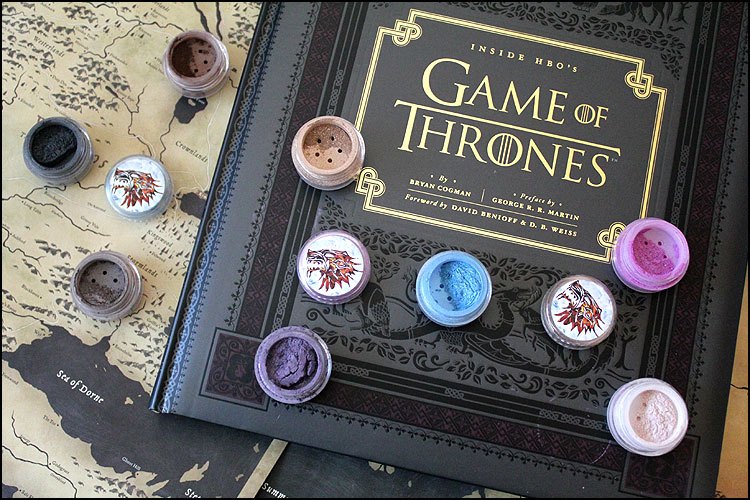
I had only discovered the makeup by chance, stumbling upon Shiro Cosmetics as I was looking for cruelty-free makeup. Looking into their site, I found they had a series of collections based off of popular media and memes, having collections centered around Game of Thrones, Into the Unknown, and Avengers, particularly eye shadows. They have cute little drawings that they come with on top, and lots of funny designs. And the reviews seem to like them.

The discovery of this site led me to start looking around for other Geeky makeup, and I was able to find quite a bit of collections. I found Geek Chic, Espionage Cosmetics, Nerdastic, and Black Pheonix Alchemy Lab, all of which had many items based around pop culture. It was astonishing, especially with the fact that the most of the colors looked so pretty. And most of them were cruelty-free.

The makeup usually has fun names, with fun designs, although if you’re looking for eyeshadow, don’t expect to many pressed palettes. Most of them are loose powder, with a few pressed palettes, which can be a little off-putting for some.

Geek-inspired makeup really started blowing up around 2015, as bigger companies began pushing out lines for the new Star Wars (Force Awakens), inadvertently boosting smaller makeup companies that based their whole existence around Geek culture. While still being considered “underground” and definitely “artisan”, Geek makeup has found its place and audience, and will only continue to grow as more people discover them.

Awful Teen Romance: How to they Maintain Popularity?

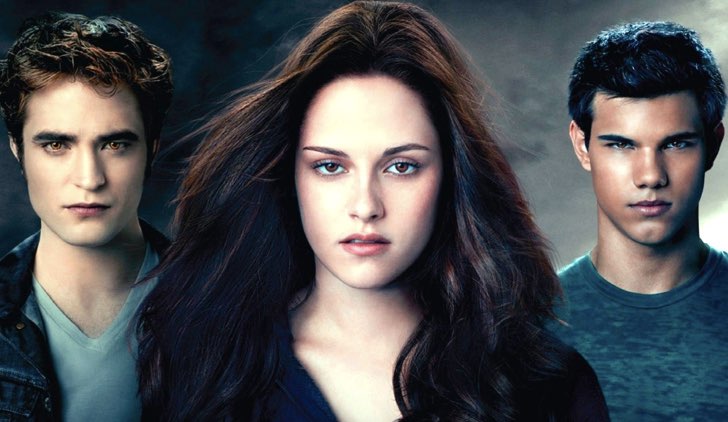
We’ve all at least heard of the genre, whether through the Twilight Saga or some other poorly written teen romance novel/movie. It is the soft-core version of the adult romance novels, whose only big difference is the loads of descriptive sex scenes. The genre is generally known as being poorly written and grossly centered around a most certainly unhealthy romance, and yet it still maintains a decent-sized reader base. How does this happen? Most importantly, who is still reading it, and why? Well, There’s a few different answers to that question.

While the popularity of the teen romance genre has certainly dropped sharply from it’s heyday in the late 2000’s, it still persists in young adult literature. In fact, it not only exists as it’s own genre, it also exists as a sub-genre, and makes an appearance in just about every piece of young adult literature.

You see, while there are the obvious books where the main plot is very much about romance (like the Iron Fae, Fallen, and Eleanor and Park), I’d have to say around 97-99% of all young adult literature has romance as a major story line, even if it isn’t the main one. Which, isn’t too unusual: plenty of adult books have some form of romance in them. The only issue here is that it’s always the same romance, and it is just like the ones found in purely romance novels. I’ve mentioned in a post before talking about the typical “unusual” female protagonist and her male counterpart. That’s basically the story here. It’s always a modest but stubborn, brash, inexperienced (romantically, sexually) girl that is supposed to be a “feminist symbol”, paired with the sarcastic, arrogant, and experienced guy who represents all the dangers of an abuser. But it’s okay, because the guy is secretly a sweetheart who hides behind a shell because of his “broken” past. Literally, this is almost always how it is. When it’s not, it’s shockingly refreshing.

The only issue is, young girls fall for it every time. I fell for it when I was a young teen, also. Why? Well, everyone wants that romance that’s destined to be. At least, when you’re young. As you get older relationship goals get much more realistic (sometimes). But as a young teen with no experience in dating, I didn’t really know what I wanted. I wanted to be that protagonist who kicked butt and got the guy of her dreams. Which, makes sense. When a romance that would in real life be abusive gets romanticized in the novels, everything about the guy seems angelic. It seems attractive, and it’s fictional, so you can get insanely invested without being classified as a stalker. That’s how they get you.

It’s not just young girls, either. I have an aunt that is way too invested in trashy teen romance novels, and she’s certainly not alone. There are plenty of middle-aged mothers who read these kinds of books. Why? Everyone needs an outlet. Whether it’s watching TV, running, drawing, or reading, everyone has to find something. But what about teen romance novels attracts so many middle-aged mothers? Well, I can’t say for sure. Mostly because there’s several theories, that can’t truly be proven by asking them. One is dissatisfaction in marriage.

Dissatisfaction is probably the biggest theory, because usually it’s the most accurate. Women who find themselves in positions where they’re not happy in their relationship, but not too unhappy where they’ll get a divorce, will turn instead to the cheesy teen romance, wanting to imagine themselves young again, being swept off their feet by a dreamy young man. It seems the most reasonable, and least far-fetched, especially when paired with the fact that in the US, there is a 40-50% divorce rate among first-time marriages.

Another theory is they use it as a form of escape. Not just from an unhappy marriage, but from being a middle-aged adult all together. Why not? Use the main protagonist to see yourself as a teen girl in her action-fighting prime, no kids, no job, no taxes to worry about. You want to escape to a fantasy world, especially one where the guy promises to do all the “hard work” for you. What a bargain, right?

Either way, the trashy teen romance genre maintains a solid base from both middle-aged mothers and young girls, and will continue to, as long as it pervades the young adult genre. Which, doesn’t have to be a bad thing, so long as the toxic depictions of the main protagonists gets wiped out. I’m tired of seeing the same male and female protagonist again and again.

Why the Hunger Games Trilogy Should Have Never Been Movies

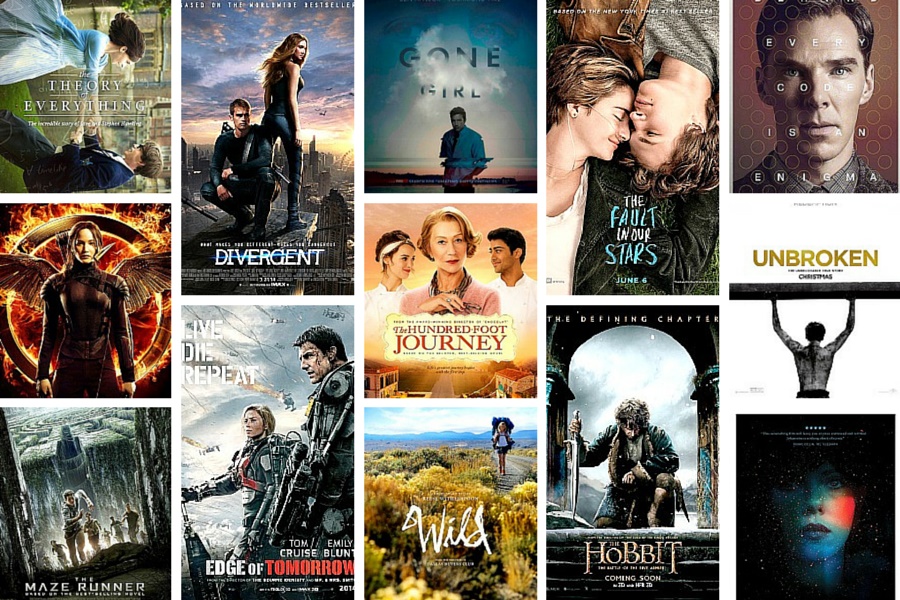
I was at the end of middle school when the first movie of the Hunger Games Trilogy was released. At the time, I had thought that the film was a serious let-down, with much of the book’s original purpose ripped out in favor of a “Hollywood-style” interpretation. But that was typical, as most books that were being turned into movies were glamified to fit a dramatic Hollywood action movie. But as the movies continued to come out, I got older, and noticed more issues with the films. By the end of it, I thought the films shouldn’t have existed at all.

Why is this? Well, just the idea of the films existing goes against everything that the books aspired to criticize. The books themselves were about a young woman of color (presumably native, based off her town’s physical characteristics) being inspired by a young black girl’s death to lead a rebellion against the glutinous and overly-extravagant Capitol, the head of Panem (which is the Latin word for “bread”).

Panem is a place where the districts closest to the Capitol are the wealthiest, while the furthest are the poorest (and tend to be people of color). But the Capitol itself benefits off of turning the fight to the death between children into a spectacle, watching their every movement and promoting them as though they were nothing more than TV actors. Katniss and Peeta’s romance gets televised and focused on, and throughout the books you can see they were a point of entertainment and propaganda, working to gain “sympathy” from the viewers. Meanwhile, the families of those that have to fight sit agonizingly, watching their children being brutally murdered for entertainment.

All the while, propaganda in support of the regime was constantly emphasized, with police task forces ensuring the peace. The propaganda is representative of the news media, promoting submission to the regime while broadcasting all the issues with it as a form of “entertainment”.

The Hunger Games criticizes everything that supports the oppressive system, which includes mainstream movie media. This is the biggest kicker for why the movies shouldn’t have existed. It was made by a large company (Lionsgate) which altered the feel of the books in order to show what they wanted with the rebellion, without anyone pinpointing back to the US (or other Western) system as a whole. It degrades the whole point of the books.

Not only that, but their marketing adds insult to injury, by promoting “Capitol-inspired” makeup, merchandise, computer games, all of which trivialize the struggle that book Katniss faces going against. It is using luxury as promotion for something that criticizes this very aspect. This wasn’t just for the first movie either; it popped up again in each of later three films as well.

The original movie made the same mistake the Capitol did: focusing on the romance rather than the violence. It wiped out just about half of the point of the first book, turning instead to make it all about the romance when it should not have been. Of course, this gained massive amounts of criticism by viewers, and Lionsgate made it more subtle in later films.

However, they didn’t change the fact that they completely whitewashed much of District Twelve. Rather than having people with brown skin and hair (as the book describes the majority of the district being), they got “lightly tan” people who had to dye their hair the right colors (for Katniss and Gale). Also, the actress who played Katniss refused to “lose weight” for the part, which also takes out the fact that District Twelve was a heavily impoverished district, and it erases much of the struggle of Katniss’s survival. I don’t mean to say that Jennifer Lawrence should have gotten to an unhealthy weight, but to have someone who didn’t look anywhere close to starving play the part of someone who was supposed to be malnourished is a bit of a stretch. The point of her depiction is to show the horrors that the Capitol caused, not to put the biggest name actress you can as the main role.

As popular as the books got, it would have been much better if they had been left as they were-books. Of course the movies made lots of money, and were insanely popular, but that was because people fell into the trap of the entertainment. As long as it’s not real, it’s okay to see it, right? Well, not if the powerful message of the books just get lost.

The Dark Tales Behind Disney’s Classic Films

It’s no surprise that when Disney does a retelling of a classic fairy tale, they definitely make it more “kid-friendly”. The once morally imbued and rather dark stories have found themselves remembered as sweet and innocent tales, one of happily ever afters and all the like. But what are the original tales? How were they in their most original form, and how has Disney mellowed them out?

I think to answer that, we have to look at the oldest Disney feature length film, Snow White. Much of the first part of the film follows that of the German story- the Queen is vain, and tries to kill Snow White when she surpasses her in beauty. But rather than telling the Huntsmen to retrieve her liver and lung, the Queen instead asks for her heart.

From then on in the story, Snow White still goes to the house of the seven dwarves to live there. But rather than try to get rid of Snow White once, the Queen actually attempts to kill her three times: first with lace, then with a poisoned comb, and finally with a poisoned apple. When Snow White is in a death-like state, the Prince stumbles upon her glass coffin (that the dwarves had placed her in rather than let her be buried in the ground), and immediately falls in love with her appearance. He persuades the dwarves to let him take her coffin so that he could look at her, and as his men lift her coffin, the piece of apple she had bitten falls out of her mouth. She wakes up, and they decide to get married, inviting the Evil Queen. The Queen, not knowing that the other queen was Snow White, attends the wedding, and is forced to dance on hot coals until she drops dead.

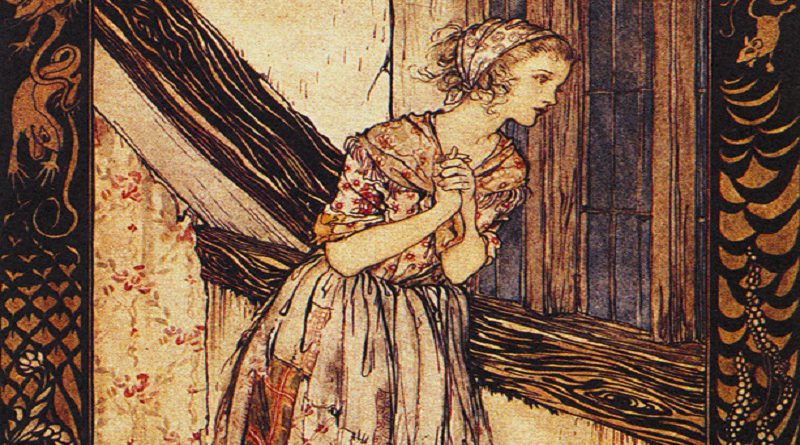
The next big fairy tale comes from the french original of Cinderella, also documented by the Grimm brothers. In this book the father never disappears, but is complacent in letting his second wife and stepdaughters turn Cinderella into a house servant. She works all day and all nice, cleaning the fire place, and doing other chores, and must sleep next to the fireplace at night, covering herself in ash and dust. She was given the name Cinderella, as a way to taunt her. Everyday she goes to her mother’s grave and weeps, and finds that a white dove hangs above her grave, granting her wishes.

On the dawn of the festival that the Prince was hosting, the stepmother forbid Cinderella from attending the ball, insisting that she was too dirty and embarrassing. Cinderella went to her mother’s grave and wept, calling on the bird to throw gold and silver down upon her. For three days she called upon the bird to dress her extravagantly, attending the ball and gaining the sole attention of the Prince. She keeps evading the Prince so that she couldn’t be recognized, but on the third night, the Prince had set a trap, causing her to lose one of her (golden) shoes.

The Prince decides to use the shoe to find her, and goes to the house of the Evil Stepsisters. They both try on the shoe, the older one cutting off her big toe and the younger one cutting off her heel to fit in the shoe. The Prince initially takes each one, only to be turned around by birds. Finally, despite the protest of her family, the Prince places the shoe on Cinderella, and realizes it’s her. They host a wedding, and the Evile Stepsisters try to go to Cinderella to gain her favor, only to have their eyes poked out by pigeons.

The third classic fairy tale I’m going to talk about is Sleeping Beauty, or Sun, Moon, and Talia. In the story, there is no slighted fairy (that would come in later versions), but rather a horoscope cast that she would face danger at a spinning flax. Aurora (or in this case, Talia), finds an old woman spinning as a teenager and asks to be taught how to spin. She gets the flax trapped in her thumb, and falls into a deep slumber, one that she cannot be woken up from.

She is left in the palace seemingly abandoned but attended by fairies, when one day a King stumbles upon the palace while on a hunt. He climbs a latter into her room, and is stunned by her beauty. After trying to wake her initially (unsuccessfully), he decides rather to rape her and be on his way, forgetting about her. Nine months later Talia gives birth to twins in her sleep, one boy and one girl. One of the children, trying to find her breast, actually sucks on her thumb, sucking the flax out and waking Talia up.

Not long later the King comes to see her again, and is joyous at finding her awake and with children. They fall in love after a few days, and he leaves again, promising to take her and the children with him next time.

The King’s first wife, realizing what has happened, plots to have Talia and the children killed, but is ultimately unsuccessful. She had ordered the twins to be cooked up and served to the king, but the chef, being kind-hearted, keeps them alive. She also tries to have Talia burned alive. But the king appears just in time and has his wife burned alive instead, marrying Talia and living with the children.

Remakes and Sequels in Hollywood, and How it’s Not a New Thing

The common phrase that pops up when someone mentions Hollywood nowadays is that Hollywood has run out of ideas. This phrase comes up in particular when constant remakes and sequels comes up, mixed with only a sprinkling of original movies. However, the modern situation isn’t new. In fact, it’s not only been an old tradition in Hollywood, but also Nollywood and Bollywood as well.

Ever wonder about all the sequels to Alien, Godzilla, and other films? Not the modern connections, but the ones that go as far back as the 1950’s? The many romantic comedies that came out during the 1950’s and 1960’s? Remakes and sequels have always been a quintessential part of Hollywood, since it’s inception. The sequels in particular, come when a series is popular- Hollywood is a business, and will run with a popular idea until it dries up. Such a tactic is not modern, nor unique. It has been happening.

Remakes, on the other hand, are usually made when a director decides that there is something to be improved upon in the original film, something that can be different. Of course, this choice is not always for the better, as we’ve seen with the remakes of Clash of the Titans and Willy Wonka and the Chocolate Factory. Usually, though, a director or screenwriter wants to improve on the story, and tries to portray their vision of how the film should be. This has worked, even, with the 2015 release of Mad Max: Fury Road. The films were an original series of films in the 1980’s, revamped in order to try an alternative story route, one that actually worked.

On top of the remakes, Hollywood has had a long history of taking from books and myths, despite the modern criticism that Hollywood only does it to get a guaranteed fan base. Characters such as Dracula and Perseus have found themselves on the big screen on multiple occasions in multiple forms, adapting them and re-adapting them to try and make a take on a story or myth unique. Especially from the 1970’s through the 1990’s with movies such as Psycho, the Shining, and Silence of the Lambs, all of which being smash hits, the tradition of bringing books to the big screen is nothing unheard of. Shakespeare has found his most famous play Romeo and Juliet in multiple movie retellings. Hell, just about all of Disney’s 2D animated films are based around different fairy tales (and even some 3D ones, such as Frozen and Tangled). To say that based off the fact that Hollywood makes films from stories and books is the key to showing that it no longer has originality is a farse.

Now, if you’re keen on the international films industries, you might be saying that they’re much more original. Now that may be true in some cases, you will find the retelling of famous stories and legends in Bollywood, Nollywood, and K-dramas. They do the same thing as Hollywood. Plus, they straight up make remakes of Hollywood films as well. Movies such as Resevoir Dogs, the Godfather, Silence of the Lambs, and When Harry Met Sally all have successful Bollywood remakes, and Nollywood is pushing to have a TV show based around Black Panther. To say that they don’t pull the same tactics as Hollywood would be ignoring a portion of their production system.

This isn’t to say that Hollywood is in the clear, however. Large companies often get trapped in the idea of making remakes or sequels, hoping to gain an automatic audience (increasingly without success). They’re trying to play it safe, but that’s clearly not what the audience wants (i.e: the box-office flops of Solo and the Mummy). People want more unique films to come back into Hollywood, and as usual, Hollywood is going slow in its response. Hopefully, however, it does respond soon.

YA Novels and the Curse of the “Unconventional” Protagonist

Note: when I say “unconventional”, I don’t mean diverse or unusual protagonists: I mean that they are slightly different variations of the same thing. The “unconventional” protagonist always has a similar appearance and an identical attitude, no matter the genre or book. I call them a curse, because they are usually the markers of a bad book, even for ones that had the potential to be good.

Now, the curse of the “unconventional” protagonist. had been a huge part in the young adults novels of my teenage years. It was practically everywhere; the same pale short girl that’s never a brunette, who isn’t “conventionally beautiful” like their mom.

Their main staple is their lack of curves, making them look like twelve years olds (when they’re adamantly sixteen). They have seemingly messy or bland hair, usually an unusual color, and they are always pale. They’re not conventionally attractive, but they have pleasant features, making them appealing to their main love interest. They look like their mothers, but their mothers, being taller, are somehow much the most gorgeous people to walk the face of the Earth, while they’re “cute”. Dressing nice or scandalous is taboo; modest clothes all around. They’re almost always useless and cause more trouble when they do involve themselves, but they’re stubborn, and never take the blame for anything they’ve done.

Almost every young adult book I read, the protagonist can best be identified by what I said above. It almost never changed (the big exception here is the Hunger Games, which featured a non-white woman who was tall and useful) and always had the same outcomes. It caused a lot of serious issues with how I perceived things during my teenage years.

Of course, I wasn’t about to charge into situations I knew I wasn’t useful in. In fact, the stubborn and useless factor actually got on my nerves. It even got to the point where I’d skip entire portions of books if I knew the protagonist was about to do something insanely stupid because “they’re not a useless child”. What really hurt was my perceptions of myself and romance.

My appearance heavily contrasts from the typical main protagonist; I am tall, I have olive skin that tans really easily, and I have dark brown eyes and hair. I lean more on the conventional side of attractiveness, in that I don’t look like a twelve year old. As a teenager, this made me very insecure about my features. I wanted to be like the main protagonists (before I realized how much of a stupid idea that was). I wanted to be short, and pale, and curve-less. I wanted unusual hair and eye colors. You may think that’s stupid, but when it’s all you see in the books you read, it doesn’t seem so stupid. At least, it didn’t seem so stupid to thirteen year-old me.

Girls that I look like get constantly trashed in comparison to the main protagonist, getting written off as sluts and mean girls who are insanely preppy and stupid. At the same time, the books with the “unconventional” protagonist gets pushed as “beneficial for all girls”, despite the obvious bashing of “conventional” girls. When that idea is getting shoved down your throat all the time, it really starts to affect how you see yourself. They’re extremely damaging, and can psychologically affect girls as young as ten to see themselves in a negative light. Worst part is, most won’t even realize until they’re practically adults, if then.

Now, I have seen improvements in the YA genre. I have noticed a growing diversification in main protagonists, which is quite refreshing. But the curse is still there, and it still maintains a presence. A weakening presence, but a presence. It needs to be targeted, and stopped once and for all.

The “Pure Virgin” Trope

For a time not so long ago, there was the common but somehow romantic concept of the “pure” girl who’s never had sex falls in love with the very experienced “bad” boy. Especially in the Young Adult urban fantasy (fantasy meshing with the real world), there was the common trope of the main female protagonist being a tiny but stubborn teenager who butts head with the tall and handsome new kid, eventually falling madly and viciously in love with him (her first love, by the way). Often times as well, girls the same age who have had sex are often placed in the light as pure sluts, with their character being left very one-dimensional. At the same time, the books are promoted as “empowering” to young girls, girls who can be as young as 10 and very impressionable.

Why does this matter? Well, trying to promote this idea (plus promoting romance with male protagonists of questionable choice), this can lead many to be unaware of the toxicity of relationships like that. Let’s break it down a little bit, shall we?

Well first, the fact that the main girl is practically the only one around that is a virgin promotes the idea that she is on a level above every one else, or “pure”. Now this isn’t to say that being a virgin at 16 or 17 is a bad thing- the average age that people lose their virginity at is 17- but having her be the only one that is a virgin is saying something. Plus, these girls usually haven’t even had their first kiss yet, like how much more obvious can you get?

The girl also usually doesn’t have very many friends, being the sort of “loser” in school. She usually has around one or two friends (maybe 3), and there is always a guy that she is closest with, mostly to play the love triangle game. Unless, there is the rare chance that he is gay (True Blood), and then he is just the sassy friend trying to encourage her to get laid. This reinforces another idea-it’s not cool to be “popular”. If you’re “popular”, then you’re just like all the other girls who sleep around and party. You’re not “pure”.

The “pure” aspect contrasts greatly from the main male protagonist, the new bad boy who is always insanely attractive. He usually sleeps around, is sarcastic as all hell, and doesn’t like to follow the rules. He is the kind of guy that’s supposed to be unachievable, but always turns his attention to the nerdy not conventionally pretty female protagonist. He sweeps her off her feet, and rescues her because he knows so much more about the magical world than she does. He becomes the useful one, while she sheepishly has to follow him around for protection, and eventual romance. He takes an interest in her mostly because of her purity (a concept that appears in many different books, TV, and movies), making her all the more desirable. She is the target of his romantic advances because she is “not like other girls”.

Plus, he’s always got a broken, tortured soul for the female protagonist to save. He can have all the problems he desires, but she can’t. She’s supposed to listen to all his problems, without having any actual problems of her own to share. This can be very dangerous for an actual relationship. A girl is not supposed to only be someone’s “savior”, but should also be able to reach out to her partner. If she feels like she can’t, then that’s not a very good relationship.

To make matters worse, the idea of the man acting aggressively protective, and sometimes even controlling, gets romanticized. Any man she hangs out with is a threat (and it’s usually portrayed that way), and she must be “protected” from them. She can’t be friends with male friends either, because it turns out they just want to get in her pants, even though bad boy is the only one for her. And bad boy gets really upset when she talks to other men. Controlling behavior is made to seem romantic here, when it’s really not, which could influence young girls into believing that it is. Her heart and body should only be meant for him, and never any one else ever again, which is also not a healthy thing to romanticize. It’s dangerous and can lead to girls getting trapped in toxic relationships.