
No One Wants to Play with a Sore Loser

Playing video games, and games in general, can lead to hours of extreme fun. That is, if you’re not playing with a sore loser.

What is a sore loser? A sore loser is someone who has a nasty competitive streak with anything game related. They can’t just relax and have fun, they have to win, or they won’t stop playing until they do. When they don’t win, they throw a fit and ruin the whole atmosphere. And that’s just if there’s only one person with a competitive streak.

The reason I’m talking about this can all be traced to my winter break from school and two of my younger cousins. I had had problems with these cousins before, as they have a tendency to antagonize each other to the point where it gets out of hand. This antagonizing behavior transfers rather miserably over to video games.

You see, the older brother (who is seven years older than his brother, mind you), has a Nintendo switch, with games such as Mario Party and Super Smash Bros. Fun games, right? Not with them. They are incredibly competitive, especially with each other, bickering and making nasty comments towards each other. They can’t play a game for the sake of having fun. It got to the point where I couldn’t play with them all that much, because their behavior dragged down the rest of the group and make the game stressful. They had to win, and when the younger one got second place in something, he would whine about being a loser that no one liked. Just about myself and all older cousins have called the two out for their behavior, but that didn’t seem to change anything.

Anecdote aside, I think it’s safe to say that no one likes playing video games with overly-competitive people. They make the situation tense, and it doesn’t get any better when they win/don’t win. They suck the life out of playing the video game, and then wonder why no one wants to play with them.

Now, let me just say that it doesn’t hurt to be competitive. Just about anyone can be competitive, which can add to the fun (no one wants to play with someone who doesn’t care enough to try, either). But it’s important to understand that the best way to make that competitiveness work is to understand when a game is just a game, and you won’t lose anything from it (unless you’re winning 10,000 dollars). Overly-competitive people just don’t know how to do that.
Narcissists: Funny in Pop Culture, Awful in Real Life

There’s nothing like seeing family for the holidays that inspires you to write again. And no, fortunately most of my family are not narcissists (or narcs, as I’ll say throughout the rest of this).

What is a narcissist? There are several definitions. The most common version that we see of narcissism (which is coined from the name “Narcissus”, who was so in love with himself that he slowly starved to death) is narcissistic personality disorder, which can be diagnosed by a therapist. Someone with this disorder is manipulative, self-centered, has a victim complex, and is generally a wretched human being.

NPD is not the only form of narcissism that exists. There is a spectrum for those who have narcissistic tendencies, but generally don’t qualify as narcissists. It’s much more common and obvious to notice by outsiders (people outside the family), and are generally brushed off as negative traits.

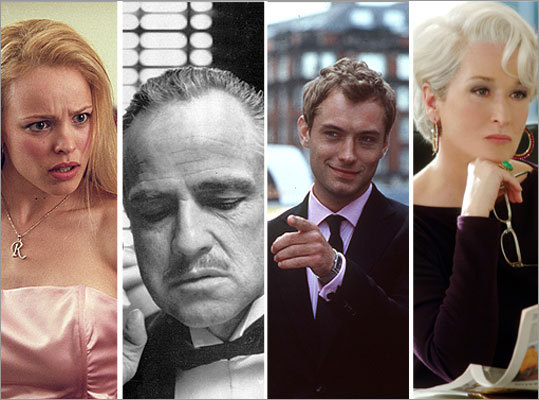
So, I won’t go into any detail, but hanging out with family for the holidays got me thinking about the contrast between how narcs are portrayed in pop culture versus how they are in real life. Narcs in both film and television are often portrayed in a funny light. They’re self-centered, but that in turn makes them the but of the joke as if eventually works out against them. They are obviously bad people, who are bad at getting their way and only put themselves in embarrassing situations because of it. They are a perfect and easy way to add a joke surrounding the rudeness of people.

Narcs in real life, however, are awful and deceptive. They care only about themselves, and not about anyone else, including their own children. A good example of this kind of behavior would be to mention something I’ve witnessed. A kid was asked by an adult what they got for Christmas, to which they responded that they got nothing. Upon the adult investigating further, he found that this was allegedly because money was “tight”, according to one of the kid’s parents. Well, interestingly enough, this person had just come back from not one, but two trips, one on a cruise, and the other to Las Vegas.

The parent in question had also turned down a job offer (that would have offered great pay, great benefits, and a long-term job), in order to go on the cruise. Now that parent complains about not having a job, acting on the permanent victim-complex that narcs seem to have.

That was only a mild example of a narcissist. Scrolling through the subreddit r/raisedbynarcissists, I read about some of the horrors these people faced at the hands of their families, who were narcs. I won’t disclose any of these stories, as I don’t have permission, but I encourage anyone who wants to to view some of the stuff that these people must face.

The point of comparison is that narcs are hardly funny outside of pop culture. Yes, some of their behavior is odd and sparks a good bit of laughter, but for the most part, it is atrocious and scarring. They’re also manipulative, gaining favor and sympathy from others, which in turn turns them against the victims of the narc behavior. They’re not obvious in nature, which also contrasts from their pop culture portrayal, making it much more difficult for people to actually see when someone is a narc.

The Impact of Slasher Films

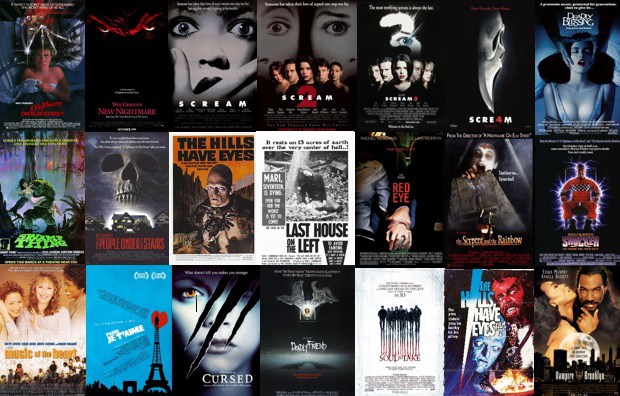
When horror films are analyzed for their greatness, the genre of slasher films is never included in the mix. We always turn to the more complex artistic thrillers such as Dracula, Rosemary’s Baby, the Shining, and An American Werewolf in London in order to present the hallmarks of horror. Some of the very few remarked-on slasher films include Halloween and Psycho, renowned for their complex relationships with their mother, calling homage to Freud’s Oedipus Complex.

But interestingly enough, despite the fact that slasher films are almost never remarked on in film academia (other than to be criticized for their garish nature), they are a major source for parody and imitation. While that may appear counter-intuitive for the genre being taken seriously, the fact that it is so imitated and parodied does say something about where slasher films lie in the horror genre.

Let me explain my argument by first studying the core or slasher films. Slasher films are exactly what the name “slasher” entails- violent murders, heartless serial killers, predatory chases, and other such forms. There is hardly room for the deep psychological thriller aspect, more focused on providing the gore and grotesque. The slasher film’s goals are both to make the audience laugh at the almost cartoonish nature of stable character archetypes and feel uncomfortable by the homage to basic and “savage” animal behavior- not just in the killer, but also among the good guys as well.

What do I mean by that? Well, from what I’ve seen, characters return almost to their basic human instinct-ignoring morals, ignoring civilization, all of that. It becomes merely an act for survival, the play on fight or flight, with airs of sexuality and other such basic functions.

As I’ve also mentioned before, as well, is that the characters in the slasher films have pretty stable archetypes, even as the plots change. They rarely ever change, making it easy to imitate not just for other slasher films, but for parody films as well. It also becomes easier to carry out in sequels and remakes, as expectations for complex characters among the audience is rather low. That’s why you can have a whole series such as Saw or Nightmare on Elm Street.

But where does the impact factor come in, other than imitation? Well, I’ve recently read a piece on slasher films that remarks that students of folklore or mythology will be able to tell you how slasher films are the epitome of oral history. Their archetypes, their diverse and interchangeable story lines, and the accumulation of sequels and imitations all reflect the story patterns of oral history and stories. No telling is exactly the same, and sequels are invited because there is not set story to finish. Because of this, pop culture can take slasher films and go to the moon and back, creatively adding their own takes for the sake of both horror and comedy. This in turn leaves a greater impact on the audience. We start to associate horror with aspects of the slasher, because we see it imitated and extended so much through pop culture, not just in films, but in TV, social media, and other such forms of media. Of course we won’t forget the other types of sub-genre within horror, but we identify and associate more with the slasher.

It’s not just because of their capacity for imitation that we remember the slasher genre so well, however. We also remember it because the genre does get quite creative, without having to be so deep and layered. Chucky and Nightmare on Elm Street are both remembered as horror classics for not just their slasher nature but also their creativeness. Chucky only had two sequels, and yet we remember the first one the most because of it’s take on killer dolls-something that hadn’t really been considered in horror film before. Almost the same goes for Nightmare on Elm Street-despite its numerous sequels, it takes the audience to a place that hadn’t been considered for horror films before- your own dreams.

Slasher films can get just as creative as its other horror counterparts, and leave just as much of an impact. The only thing is, because of their seemingly blunt and gruesome nature, they are sidelined by academics, who either consider the genre beneath them, or just see the genre as part of a “murder fetish”. Slasher is not given the light of day it deserves.