Why is the “Beauty Community” So Controversial?

For the past two years, the online Beauty Community has been rocked with wave after wave of new scandals. Racism, petty feuds, scams, and now, sexual predators have torn the community apart, and given it a bad reputation, bringing the community so far from the grace it used to hold. How did this happen? There’s several reasons.

1. Petty Feuds

The Beauty Community has become notorious as-of-late for nasty, and public fights. Beauty gurus will one day decide to air their dirty laundry through passive aggressive, or even outright accusations, against the person they are having problems with on social media, leading to huge dramas and nasty splits. Of the top 11 scandals that happened in the beauty community in 2018, 7 of them were feuds between each other and with makeup brands.

It’s not difficult to tell why these fights suddenly break out on social media. The beauty gurus, in making these posts, are attempting to bring both their fans and other people to their side, against the person they are fighting against. They are attempting to create a mob mentality to worsen the reputation of the person they’re fighting with, possible even ruining their reputation. It just adds to the pettiness.

2. Overload of Sponsored Content

Sponsored content has become a new norm on social media (particularly Youtube following the 2017 “Ad-Pocalypse”), and is often seen in many videos both by big-name Youtubers and small ones. You’ll often find at the mention of a sponsor at the start/end of a video, or even find the video center around the products that the sponsor is trying to promote. The latter has become a problem in the Beauty Community.

Makeup companies and beauty brands have flooded the Beauty Community, asking the gurus to make videos on their products. The amount of sponsored videos has become overwhelming to many viewers, who now complain that most of what the beauty gurus are producing is “unoriginal” and lacks creativity. People have become tired of finding another beauty video just being about a sponsor.

3. Racism and Apology Avoidance

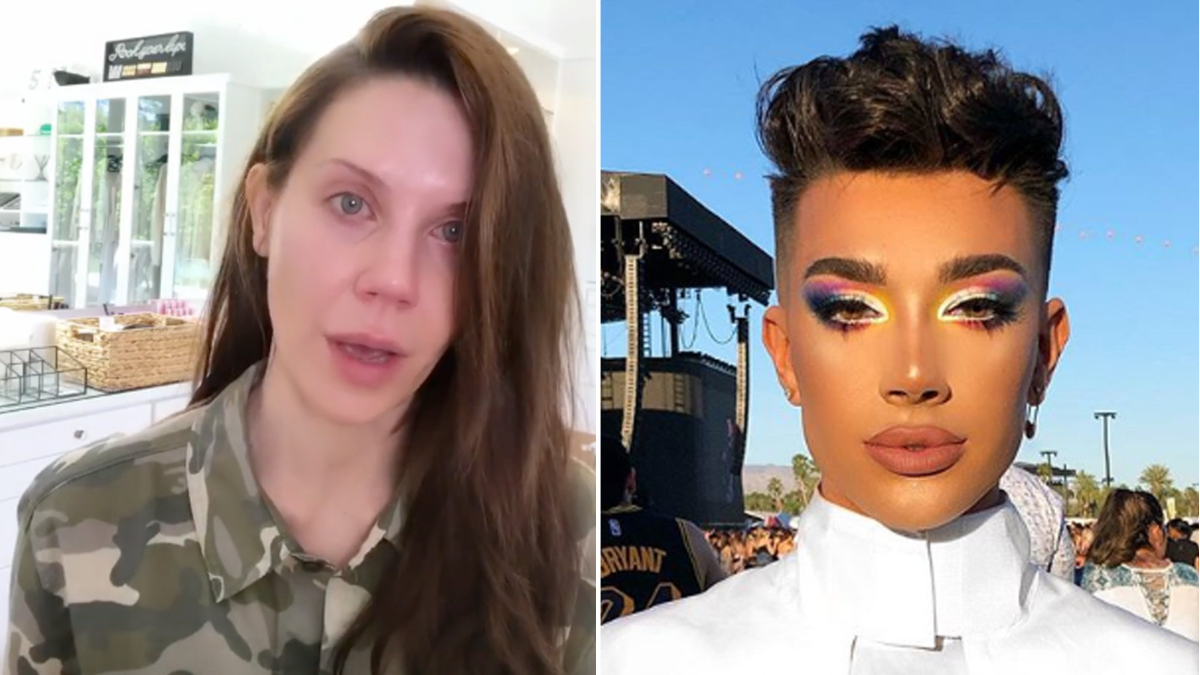
Last year, beauty guru Laura Lee was exposed for having made extremely racist tweets, after she tried calling out Jefree Star for his racist past. The sudden revelation created shock waves throughout both the beauty community and social media, and quickly became one of the top Youtube scandals of 2018.

Lee’s apology video for her racist tweets was short and over-dramatic, drawing even more criticism, and hatred against her. She was not the only beauty guru to have been exposed during the whole ordeal, as others like Nikita Dragon, Manny Mua, James Charles, and others were also exposed for their racist tweets, though they quietly slipped under the rug.

The racism that has become evident in the beauty community has been excused many times by fans wanting to protect their favorite, although this only adds to the resentment against the beauty community. The defense only encourages the gurus to make fake apologies and move on with their lives, especially since their career only seems to get temporarily hurt by it.
The Game of Skin Bleaching Roulette in Africa

Skin lightening and bleaching is a multi-billion dollar industry that has been on the rise for the past decade-much to the alarm of medical professionals. Particularly in Asia and Africa, skin bleaching ads and commercials are common, promoting products that will guarantee paler, flawless skin-a factor that is often seen as a key to success. However, these products are almost always unregulated, and include ingredients such as mercury, hydroquinone and derivatives, topical steroids, and resorcinol, all of which can cause irreversible skin damage with constant use. These ingredients are also known to break down melanin in the process of bleaching, leaving people more prone to developing skin cancer, particularly in hotter climates.

Products like these can create serious issues, particularly when considering the fact that 1 in 3 women on the African continent use, or have used skin bleaching products, according to a study by the University of Cape Town. Skin bleaching is especially an issue in South Africa, where black market skin bleaching products proliferate, leaving people at a higher risk of damaging their skin. It doesn’t matter that South Africa is one of the few countries in Africa that implements regulations of skin bleaching products produced within the country; black market imports pop up faster than they can be confiscated.

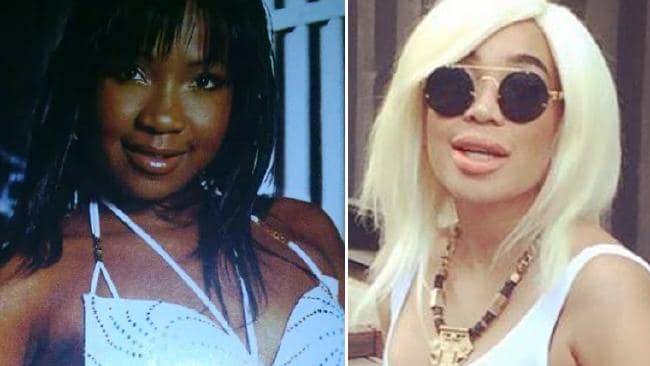
One celebrity in South Africa has gained quite a bit of attention for her skin bleaching, which has drawn harsh criticisms for encouraging young girls to lighten their skin as well. Musician Nomasonto “Mshoza” Mnisi has gained attention for becoming several shades lighter through her skin bleaching treatments, contrasting from her darker appearance from when she first premiered as an artist. She says her new skin makes her feel beautiful and more confident, which can portray badly to darker-skinned South Africans, particularly those already insecure about their appearance.

Mnisi shrugs off criticisms of her appearance, arguing that her choice of skin bleaching is a personal choice, comparing the procedures, which cost around 5,000 rand ($590 USD) each to getting a nose job or breast implants. Unlike much of the rest of the populace both in South Africa and the rest of the continent, the 30-year-old musician uses high-end skin bleaching products, which tend to be much safer than their black market counterparts.

The dangers of using skin bleaching products, particularly non-regulated ones, is that they can cause blood cancers, liver and kidney cancers, and a severe skin condition known as ochronosis, a form of hyper-pigmentation in which the skin turns a dark purple shade, according to a researcher at the University of Cape Town. Few people know of these dangers, however, and the increase in demand is troubling. The World Health Organization has reported that 77% of Nigerian women have used skin bleaching products, the highest of any African country, followed by Togo at 59%, South Africa at 35%, and Mali at 25%. Men are also starting to use skin whitening creams, which is only adding to the increasing demand for the products.

Although it is difficult to pinpoint one sole reason for why people bleach their skin, psychologists say that low self-esteem, and some degree of self-hatred, are common among reasons. Having lighter skin is more desirable throughout the African continent, a result of over 100 years of colonial rule, and with continued discrimination against those with dark skin in terms of education, pop culture, society, and jobs, people desire to lighten their skin and make themselves more “desirable”. The perceptions against darker skin are deeply entrenched into African society and pop culture, which keeps the demand for skin bleaching products alive.

K-Beauty: A Trend with a Dark Side

K-Beauty has been the “hot in-thing” on the beauty market for the last few years, each year growing exponentially more popular. People are going crazy for the various face masks, lotions, BB cream, dark spot treatment, CC cream, and many other products that hold a reputation for giving you a “dewy, young-looking face”. Youtubers and beauty bloggers only add to this craze, providing yearly top tens and list of best products. Now, in just about every pharmacy or beauty store, you’ll find a section devoted purely to Korean beauty and Korean companies.

But as with anything, the world of K-beauty has a vicious dark side. But this dark side isn’t an international issue. It only extends to the edges of the South Korean borders.

What do I mean by this? South Korea has interestingly harsh beauty standards, which can range anywhere from having a thin figure to having a certain face shape. Yes, a certain face shape. South Korea is currently known as the “plastic surgery capital of the world”, having the highest rates of plastic surgery per capita of any other country, with over 980,000 operations reported in 2014 (Business Insider, 2015) . The country also attracts hundreds of thousands of “medical tourists”, most of whom come to get cosmetic procedures, according a report by Chang-Won Koh (2017).

No, this isn’t the most alarming thing in the world. Despite the rather high levels of plastic surgery, South Korea ranks third in terms of the total number of plastic surgeries, trailing behind the US and Brazil by over 1,000,000 procedures (WorldAtlas, 2015). But you also have to consider that the population of South Korea ranges just around 55 million people, versus the 325 million in the US and the 209 million in Brazil. But I digress. It’s not so much the plastic surgery itself that’s the issue. It’s the culture surrounding it.

This culture is incredibly strict, and applies much more the girls than boys (although boys are not unaffected). The beauty culture actually even expects people to get plastic surgery to fit an impossible beauty ideal, with the most famous examples of this occurring being the fact that in just about every long-term K-pop idol contract, plastic surgery is one of the requirements.

But the beauty culture doesn’t just stop at plastic surgery. Skin bleaching is also a common problem, with illegal skin bleaching products flooding the beauty market every year in South Korea. There is a harsh expectation to be as white as possible (a result of a long-standing social issue where the nobility were white-skinned while the peasantry were dark-skinned from working in the sun). This expectation doesn’t just exist in South Korea (it exists throughout all of Asia, Africa, and Latin America), but South Korea is known for promoting ads that claim that being dark-skinned is being a failure in life (which has attracted much international backlash). The skin bleaching, which is known to break down melanin and leave skin much more likely to get skin cancer, can be compared to excessive tanning, which also leaves people at risk of the same effects.

But I can’t get on South Korea too harshly. The West also has incredibly high beauty standards, though with slightly less restrictions than South Korea. As I said earlier, the US ranks number one in terms of total amount of plastic surgery per year, having over 4 million procedures in 2015 alone. We also have a problem with tanning products, with products all over the market claiming to let you tan yourself from home, and tanning places existing all over the place. Are we really any better than South Korea?

The Fun of “Geek” Makeup

Despite the fact that Geek culture has been in the mainstream for nearly a decade, it was only recently that I discovered Geek-inspired makeup. Maybe this is due to the fact that I didn’t like makeup all the much until around two years ago, but it was still strange that I had never heard of it. I’ve been to cons, I’ve involved myself in many fandoms, how did I not hear about it?

Well, this is excluding the main-stream geek culture collections. Of course I’ve seen Star Wars themed lines, and also Hunger Games collections from Cover Girl and L’Oreal. And of course I’ve seen the Disney-inspired makeup. But I had never seen stores purely devoted to producing Geek-inspired makeup.

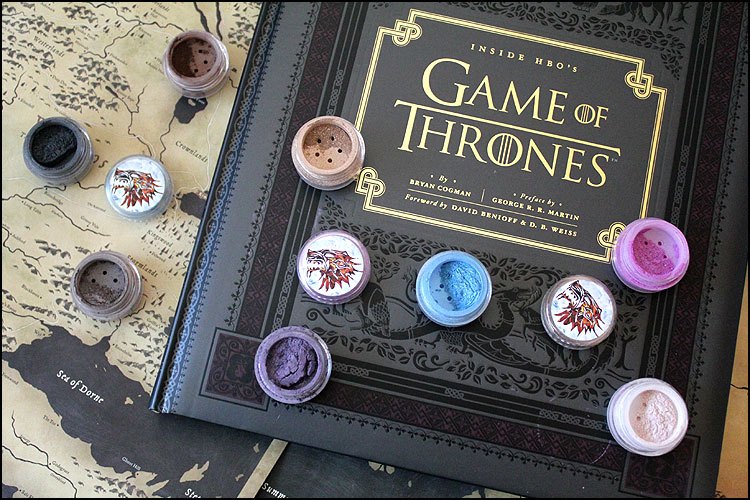
I had only discovered the makeup by chance, stumbling upon Shiro Cosmetics as I was looking for cruelty-free makeup. Looking into their site, I found they had a series of collections based off of popular media and memes, having collections centered around Game of Thrones, Into the Unknown, and Avengers, particularly eye shadows. They have cute little drawings that they come with on top, and lots of funny designs. And the reviews seem to like them.

The discovery of this site led me to start looking around for other Geeky makeup, and I was able to find quite a bit of collections. I found Geek Chic, Espionage Cosmetics, Nerdastic, and Black Pheonix Alchemy Lab, all of which had many items based around pop culture. It was astonishing, especially with the fact that the most of the colors looked so pretty. And most of them were cruelty-free.

The makeup usually has fun names, with fun designs, although if you’re looking for eyeshadow, don’t expect to many pressed palettes. Most of them are loose powder, with a few pressed palettes, which can be a little off-putting for some.

Geek-inspired makeup really started blowing up around 2015, as bigger companies began pushing out lines for the new Star Wars (Force Awakens), inadvertently boosting smaller makeup companies that based their whole existence around Geek culture. While still being considered “underground” and definitely “artisan”, Geek makeup has found its place and audience, and will only continue to grow as more people discover them.

Strange Instagram Beauty Trends

Over the years, Instagram has become the source for young makeup artists or beauty gurus to show off their makeup skills and looks. However, it has also become the source of strange beauty trends, trying (and failing) to promote bizarre and frankly impractical beauty “hacks”. I thought I might put together some of the most bizarre instagram trends and hacks that I’ve seen within the last two years.

1: Using wasabi as a lip filler.

In late 2016, social media star Farah Dhukai proclaimed that by placing a small amount of wasabi for about a minute, your lips can become plumper for a longer amount of time than normal lip plumpers. She argued that because of the wasabi’s burning properties, it can cause mild inflammation, which could work to plump up the lips. Dhukai even posted a video showing a “tutorial” of how the process should be, declaring it 100% safe. Dermatologist Joshua Zeicher, M.D, who spoke to Refinery29 about the case, did say that using wasabi in small amounts was fine and safe, unless you have sensitive skin. While it is safe, it is still a strange concept.

2. Feathered Eyebrow Trend

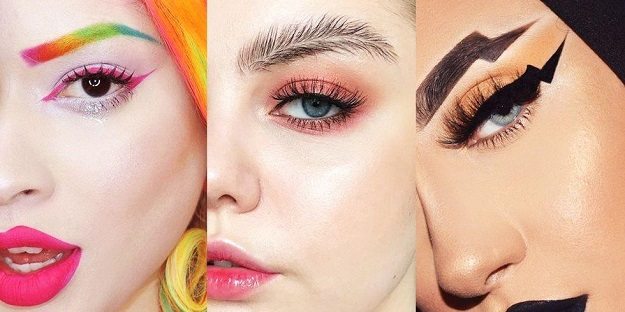
Initially started as a joke trend by popular makeup artist Stella Sironen, the “feathered eyebrow trend”, where half of the eyebrow is glued up and the other half is glued down, took off in a short-lived trend in 2017. It was used in order to “glamorize” makeup and bring it to a new level, although anyone normal would see this and think it was plain odd. Also, it probably is very difficult to make look how it’s supposed to.

3. Using Food for Makeup

Another strange and certainly not skin-friendly trend from last year was using different food items to apply your makeup. The trend, started by Raychel Newton who used a variety of different food objects (mac and cheese powder and Snickers bars to name a few), caused the hashtag #facefulloffoodchallenge to explode, where different makeup artists tried to make a fly look with random food items. While it is most certainly harmless, I don’t quite think it’s good for your skin, and wouldn’t recommend it.

4. Beauty Tampons

Tampons are most certainly not what you’d expect to be used for makeup. But in 2016, beauty blogger Ashley Blue DeFrancesco posted an Instagram video using a tampon as a beauty blender, applying foundation and using it on her skin. Which isn’t too bad, saying that a tampon is an absorbent wad of cotton, but in the context of what it is supposed to be used for, it becomes quite strange. It was surprisingly effective, although I’m not sure you’ll find anyone actively using their tampons to apply foundation, even in case of emergency, anytime soon.

5. Boob Blenders

In 2017, popular beauty blogger Huda Kattan decided to go a very unusual route, and try using a silicone bra insert as a beauty blender. In an attempt to start a new trend, she argued that it didn’t waste product like normal beauty sponges do. However, I don’t know how many people actually own a bra insert, nor do I know how willing they are to cut one up and use it as a blender.

6. Wavy Eyebrow Trend

Finally, we have a trend that some had considered cute, but most had considered bizarre, was the wavy eyebrow trend. Started in 2017, the wavy eyebrow trend involved gluing your eyebrows into “waves”, which some had argued was a new chic. The only problem with it is, that it’s hard to do, looks strange, and is definitely not suited for normal wear. It’s more something you do as a joke, not intend to wear out and about.