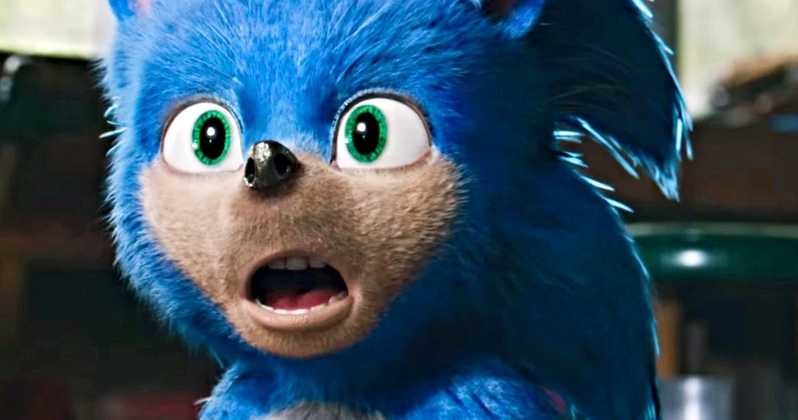
‘Sonic’ Director Agrees to Change Design of Sonic

Earlier this week, the first trailer for the new live-action Sonic was released, leading to a wave of criticism from the internet. The model of Sonic that appeared in the trailer was thought to be much worse than what had been seen in teaser posters, with the classic hedgehog looking like a weird fuzzy nightmare with human teeth.

The new trailer led to floods of memes, particularly surrounding the actor Jim Carrey, who is set to play the antagonist Eggman, saying that he will “carry the whole movie”. It also led to many artists editing the Sonic design to appear much more like his classic model from the games, leading to questions of how one artist can make a better design for a character in seemingly a few hours, when a company spent years making a monstrous design.

Well, the level of criticism seemed to reach the director, who understood what he needed to do loud and clear. Yesterday via Twitter Jeff Fowler announced that they would be changing the Sonic model to make him appear more like his classic features, which he imagines would appease fans and critics.
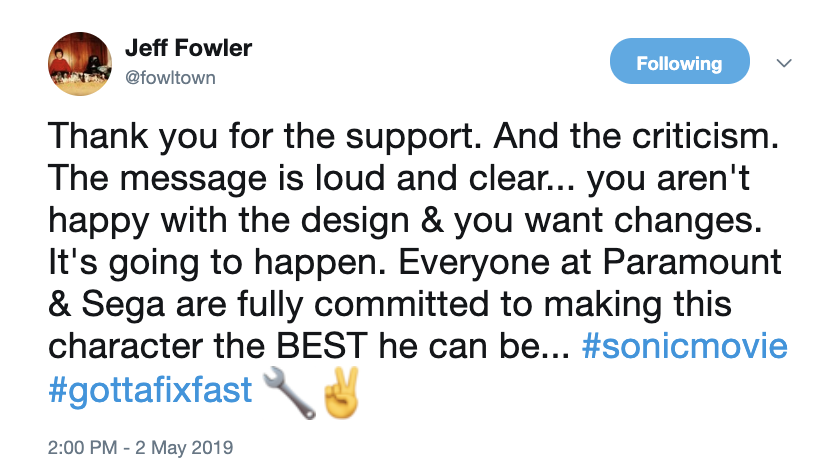
The announcement comes just six months before the supposed release date of the film, which excites some, but worries others, particularly artists. The media industry is rife with exploitation for artists, especially as these artists cannot unionize and advocate for themselves. The idea that they would have to change the main character’s model in just six months, with no announced push-back date, leaves the very great and dangerous possibility that these artists will be forced to work overtime for little pay in order to fix the design.

It’s not as though the artists can protest for better work conditions, either. With the media industry being so competitive, these artists can face harsh punishment for pushing back, or even get fired, and be replaced by someone willing to work the hard hours. It leaves the artists in a classic position of either doing what they’re forced to, or find themselves without a job.

The announcement to change the Sonic model comes only a week after developers and artists expose the exploitative work conditions in trying to quickly crunch out new content for the popular game Fortnite.
Artist Portrayals in Media: So Horribly Accurate

In comedy, we’ll always find that artists are either portrayed as air-headed “connected to the earth” white people, or pretentious jerks. That’s how they have always been portrayed since the dawn of the 1990’s and 2000’s, and that’s how they will be portrayed until the end of time. At this point, the portrayals are iconic.

The only problem with these portrayals is how horribly accurate they are. No, really, it’s insanely accurate. Need proof? Go to a modern art museum. Not even that. Just open an art history book or biography. Time and time again, you’ll find that artists tend to be extremely arrogant and pretentious, trying to act like they are on some higher tier of existence than the common folk. This isn’t the case for all artists, but it is the case for a majority of them.

This is especially true in the case of most modern artists, who think they can get away with painting a blank canvas white and selling it for a million dollars. Well, they kind of can, given that the culture surrounding art and art critiques inflates an artist’s ego to the point of no return by going insane over said white-painted canvas. The culture only makes the artist’s attitude that much worse, encouraging them to make paintings that can be done in less than five minutes. Not even paintings, but also sculptures (there was a case where an art piece which was literally a pile of trash was accidentally thrown out by a cleaning lady who didn’t know it was part of the exhibit). The culture helps further the monster. But it doesn’t create it.

No, the artist grows into the stereotype in college, and even high school. They make friends with other artists, learn about art and somehow get it in their head that they are more “unique” and “free” because of it. They invest themselves in their craft, and become infected. Then they get mad when people make fun of said infection. They insist that the stereotypes aren’t true at all, then act exactly like their stereotypes (even down to dressing like them, just without the beret and scarf). It’s almost sad.

But, like I’ve already said, this stereotypes doesn’t apply to all artists. There are a few that lie outside of the stereotype, who are actually fairly normal, and even make fun of the stereotypes and the people who act like them. They are, unfortunately, few and far between.

Social Media as an Art Form

For some reason, there seems to be a separation between social media and art. Perhaps it’s the connotation that art is in some sense fine, something of both the classics and genius modern artists. Social media, despite its variance, is seen as something that can’t penetrate the realm of art, save for actual digital artists.

I can’t help but argue against that assumption. Well, now I argue against it, but a few months ago I agreed with it. But in taking a class in media forms, a rather interesting and hefty lecture involved social media as art, and how it reaches different audiences. There was so much to say about artistic involvement through social media as a form of unconventional means, and yet there is almost no academic research about it. When you look into it, social media is a form of affecting society on its own, and not through art. To make matters worse, almost all books on the subject are just self-helps on how to use social media wisely. Nothing on the discourse of social media and art.

Why is this the case? Maybe because social media isn’t quite taken seriously as an art form. For marketing, yes, for social movements, possibly. But art? No way.

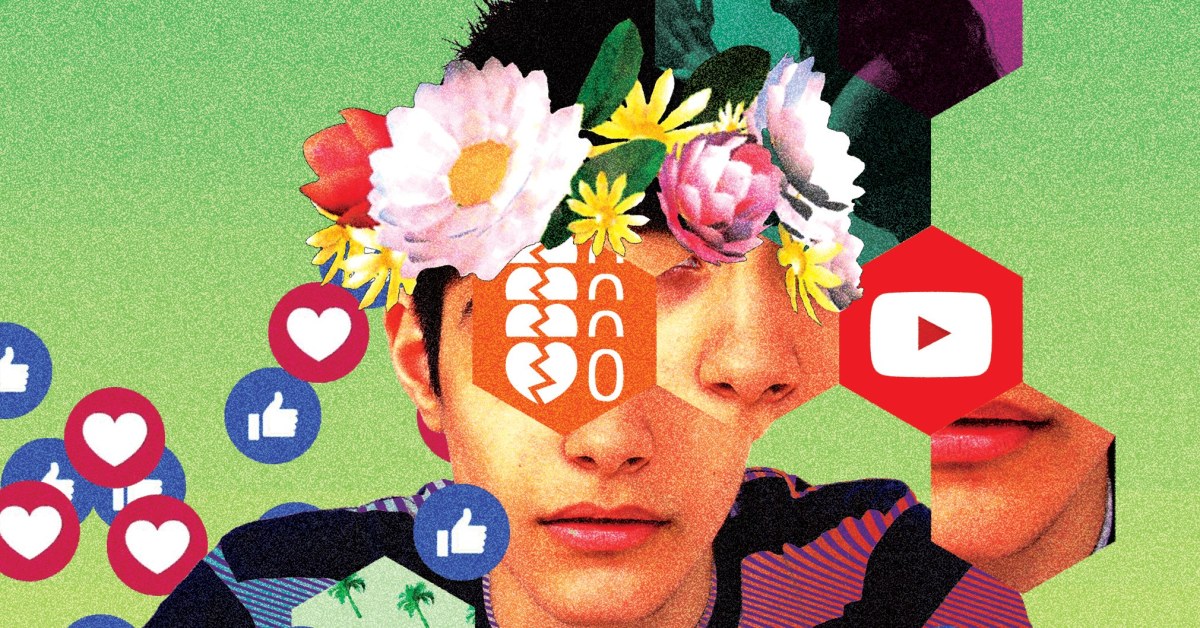
I think that social media, when used correctly, can be both a bizarre and powerful medium for artwork and social commentary. And I think the most powerful example of that are memes, and the trend known as vapor wave.

How can memes possibly be art? Not conventionally. Modern art is all about the unconventional, challenging the status quo in order to point out the irony and hypocrisy of something going on. Although I heavily question a good portion of modern art and feel that modern artists in themselves are hypocritical/pretentious, I have to admit that there are ones that are insanely clever, particularly ones that are participatory (the audience can interact with the piece). This opens the space for memes to come in.

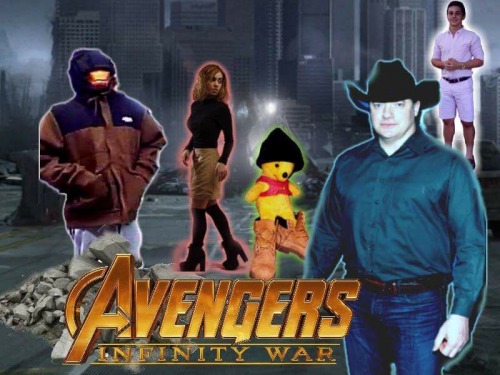
Memes, despite their apparent stupidity, are participatory forms of art in their essence. They’re images that are edited, via text post or some other form, to whatever the editor dictates. This in turn can cause more people to edit these images, creating a vast network of repetition, solidifying the original image (or figure, artwork, anything really), as a meme. And memes dwell in the world of social media, shared with and by thousands of people. Meme trends are created, and ultimately are archived for anyone who wants to find it.

Memes also, are often very political. They make fun of the current political climate, a particular figure (George Bush, Ted Cruz, etc.), or news that occur. They take the distasteful and turn it on its head for the sake of humor. Memes also can make fun of culture, society, and just about anything, which in itself is a form of art in how creative the variance can get. Memes, despite their ridiculousness, are just pieces of modern art, baby.

Now, what about vapor wave? What is vapor wave? Well, vapor wave was and is a phenomenon where images are layered in a way that appears like a pseudo-meme (the trend did have an origin in memes), attempting to be both aesthetically pleasing and humorous. Vapor wave takes much of its style from the Neo-Expressionist movement, which occurred from the late 1970s to the early 1990s. The Neo-Expressionist Movement attempted to be nonsensical but aesthetically pleasing through layer imaging, but rather than being humorous, it leans towards the more seriously critical. Vapor wave is almost just like that, except digital rather than physical, and funny rather than critical.

Social media is a powerful medium for the production and reproduction of participatory art, all of which goes under the radar of the connotation of “art”. People, without realizing it, are creating forms of art, which is not really considered art by “modern art” standards”, which I find to be an interesting paradox.

How Science Fiction Works Better in TV

I began watching Westworld recently to celebrate turning in my essay, and quickly got invested in it. The world, character arcs, and dynamism of the hosts intrigues me, especially as more of how the whole thing works slowly gets more developed and explained. Seeing how the show introduced its dynamics got me thinking about other sci-fi TV shows, and how they compare to movies of the same genre. The more I thought about it, the more I thought that sci-fi as a genre does much better in the realm of TV than film.

Why is that? Well, sci-fi often involves complex world/story-building when done right, and needs to be set out in a way that doesn’t seem rushed or boring. In film, there is only a two-two and a half hour span to introduce and develop the story and the world. Often times, that means there are aspects that are underdeveloped, rushed, or simply never explained. Which, when portrayed in a particular, more natural way, can work out.

Think of Mad Max: Fury Road. There wasn’t much actual explanation of the post-apocalyptic world, but there was visual representation, paired with just the right amount of explanation where the audience could understand how things worked. Of course, there were aspects left out; but the most important aspects are understood.

Now, the case of Mad Max is a case of sci-fi in films done well. More often than not, however, it takes a film multiple movies in order to explain itself and the world, sometimes dragging out stories that aren’t interesting enough or good past film 1 or 2. Or, in the case where there is only one film, the world is not explained enough, or simply isn’t interesting. Other times the story line is so bad and rushed that the world suffers as a result, too. In any sense, something is missing.

In the case of TV, however, there is a lot more to work with. Worlds can be properly flushed out and can work as an element of intrigue for the audience as it slowly unravels (in good shows, of course). Shows usually have a minimum of eight episodes to work out their world and dynamics, providing much more time and space to develop everything. The added fact that it usually comes out one episode a week even adds more to the suspense, maintaining greater interest than if it came out once every 2+ years. Sci-fi is a large and infinitely creative genre, and needs plenty of space to exist as a valid genre.

Sci-fi has had a long history in both film and movies, but is notably more prolific in TV, and much more recognizable. In the last decade particularly, sci-fi has been on the rise, after a period of falling behind fantasy. Sci-fi in TV shows also has the luxury of existing for longer, as average great shows can have as many as 9 or 10 seasons without appearing old or run-out, a heavy contrast from film. Shows can take on many more story arcs, as well, adding greater levels of complexity that otherwise couldn’t or wouldn’t exist.

Sci-fi can exist in both film and television, and has phenomenal pieces in both sets of media (Star Wars, Star Trek, Stranger Things), paired alongside bad pieces. However, I tend to notice that TV overall has better sci-fi series than film, particularly in recent years, most likely as a result as the care and space provided through TV. TV has provided sci-fi a grander space, and has lent it greater popularity than film, causing the genre to have an overall better quality.

Most Horror Movies Suck

Most horror movies suck. This isn’t a result of a new phenomenon, where an over-reliance on jump scares and cheap tricks has lowered the quality of horror movies. No, this is something that has existed since the dawn of the horror genre in film.

Now, you might be saying, “There’s plenty of classic horror movies”, or “there’s been good ones all the time”. Yeah, I’m not talking about the classics. I’m talking about everything else.

Let me put it into perspective: in the entire movie medium as a whole, there is a very disproportionate level of bad movies to good ones. For every great film, there are plenty of okay or even mediocre ones that came out before it. The ratio for horror films is even worse. The horror film industry is a very prolific one, meaning that combined with the critically-acclaimed classics (some recent ones including Cloverfield, Get Out, a Quiet Place, and Hereditary) come many, many more bad horror films. And that’s just on the level of mainstream media.

The problem is, although the production value for horror films has increased exponentially (in the earliest years, most horror films were pushed to the side-lines, almost to the level of B movie films. That isn’t to say that any weren’t, however: quite a few were. The difference in levels of production value drew more attention to the really good horror films, making them classics.

The good classics were remarkably known for their story line and the emotional investment of the actors, paired with excellent and perfectly timed cinematography. Suspense was deeply intertwined with these films, causing the audience to actually be invested, even long after the further development of movie effects and realism to make films pop more. The bad ones by contrast knew they weren’t very good. They made the most out of lowered budget and “lesser” actors, becoming mindless entertainment. Even the high quality bad horror films knew they were bad, at least to some level. There was a distinction in how the bad movies presented themselves, specifically separating themselves from the good ones.

Nowadays, it’s much harder to tell. With the increase in production value all around, and the overall increase in popularity for horror films, even the bad ones take themselves seriously. They try to act like the good ones, hiding otherwise boring, similar plots under the guise of an enticing trailer. The only indication might be picking up the ridiculousness or the stupidity of the plot in the trailer, and even then sometimes they’re misleading. I’ve been tricked into seeing plenty of horror films that look promising, only to see the same story line played out. The only difference would be the positioning of the jump scares.

Another issue is, when a great horror film comes out, there are often sequels that follow. And usually with each sequel that comes out, the quality of the film gets worse (exceptions include Cloverfield). As a result, the whole series, including the first film, gets devalued.

Horror films have the unfortunate trend of having a few really good horror films within a few years, and tons of bad horror films. Although This trend is starting to shift (2018 was an unusual year for having more good horror films than bad ones), there is a long history of really bad horror movies. There’s nothing wrong with that, as rom coms also had the same trend. The difference is, there is still some creativity to horror coming back, which has kept it alive through a particular decade of flops. Rom coms and horror films had a shared decade of mediocre majority films, but rom coms, holding too much to the classic formula, fell to the background. Horror films were able to barely cling on, until recent films have fully pushed it back onto its feet. We’ll see how horror movies evolve over the next few years.

Comic Books Have Always Been Political

With the releases of Wonder Woman and Black Panther, I couldn’t help but notice quite a few people mentioning that they didn’t like the fact that these movies were “adding” politics to comics. This always bothered me, because anyone who knows anything about comic books (unless they choose to ignore this) knows about how politics have always been a part of comic books. I’ll explain why.

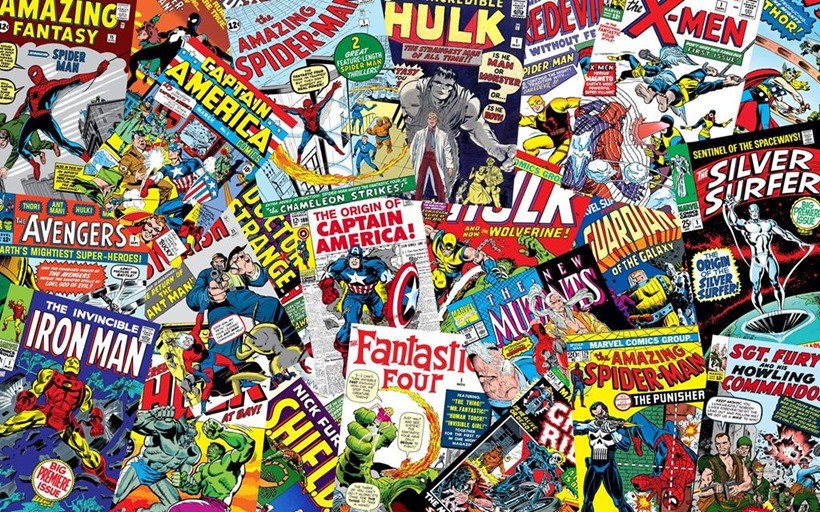
You see, most comics had their main start as anti-Nazi propaganda in the late 1930’s and especially during World War Two. Characters such as Superman and Wonder Woman from DC, and Captain America from Marvel represented the “heroes” of democracy, clad in Star Spangled Banner attire as they kicked the asses of the bad guys, who represented ultimate evil. What even pushes the point further is that the general majority of comic writers during the time period were Jewish, which Nazis despised. The characters and comics were written in support of the US’s involvement on the Western Front, fighting the bad guy and saving the day.

The end of the war was not the end of politics in comics, either. You see, comic books are an art medium, and their one of the most obviously political mediums, as well. However, because of their fictional nature, the political side is often ignored. Which seems odd to me, especially when considering the fact that there will be entire characters created in response to certain affairs on either the national or global sphere. Black Panther came about as a result of the Civil Rights’ Movement. Miss Marvel came about as a combatant to the rise of Islamophobia. X-Men’s whole premise is about discrimination against minorities.

Even comic creators will argue that they, and their works have always been political. They argue that they put their messages in superhero comics, with important messages being portrayed in an obvious-yet-not-quite-obvious way. It could be in an important conversation, or self-reflection, or a grave mistake. In any of these forms, there is a message, more often than not reflective a political or social message.

The fact that people ignore the political side to comics shows not only how well the messages are hidden, but also the success of the popularly sanitized version of nerd culture. What is the sanitized form of nerd culture? Well, it’s a version of anything to do with “nerdy culture” (i.e: Comic books, Sci-fi, fandoms) that erases the political and diverse history of nerd culture so that it only looks like white men were involved in nerd culture until recently. There are many drastic effects of this sanitized view, but I’ll get into that another time. The point is, the sanitized view of nerd culture is the most commonplace, and the most inaccurate form.

All-in-all, to say that comic books have never been political is drastically incorrect. Comics have always been political, and will always be political. To say otherwise is misguided.

How I Can’t let some Books go

I read a lot of books. More so when I was younger, and had a lot more time to read around school, but that doesn’t stop me from buying potential books to read.

As a result I’ve invested my time and energy into many books, both good and bad, and even some okay. The good ones I usually keep in my room, and the bad ones usually go to the sad and lonely shelf in the middle of a hallway in my house. Trust me, there’s plenty of bad and okay books on that shelf. But hey, when you read a bunch of YA novels, you’re bound to run into many bad ones before you find a good one.

Most of the bad books I’ve read I’ve already forgotten. However, there are a few series that I just can’t let go. This might be because of the fact that among the bad series, there was a good book that I actually enjoyed. Usually this would be the first or second book, getting ruined by the third or whatever else book (In the Mortal Instruments, it was the opposite: I thought the first three books were decent enough, but liked the fifth book the most). Two series that exemplify the above for me are Hunger Games and A Court of Thorns and Roses. I thought the second books in both series were the best, but I didn’t much appreciate reading the third book, to put it politely.

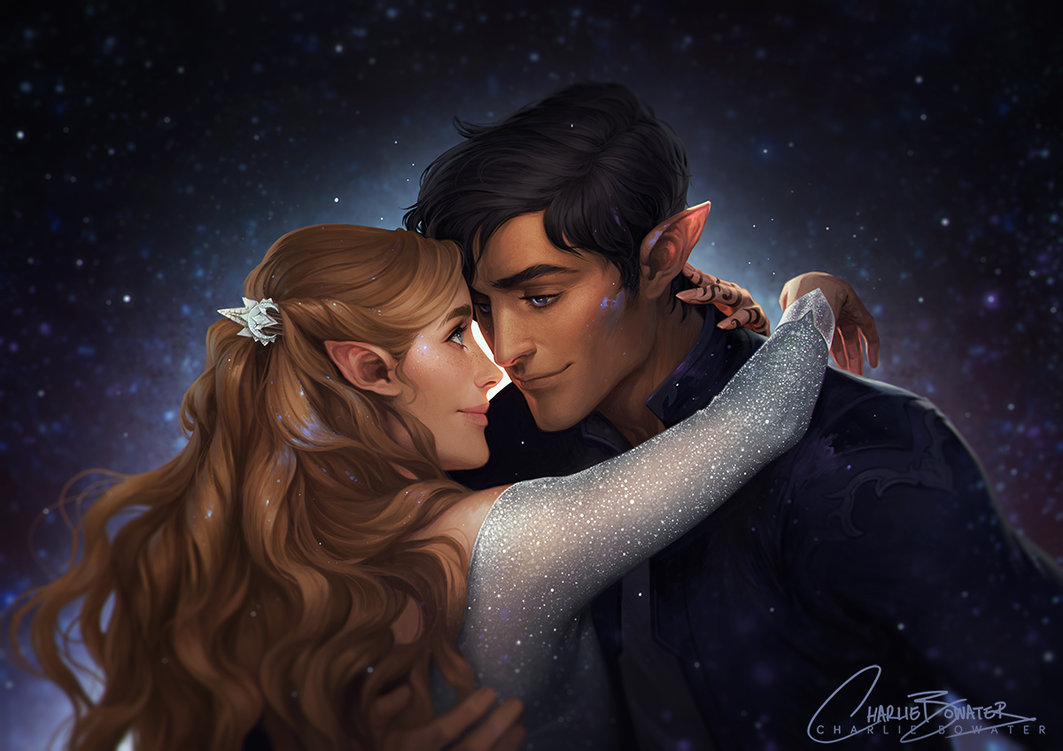
But if only one or two books were really exceptional to me, why do I still cling onto its fandom? Well, I’m usually reminded of the series when I see fan art or something else of the sort. It gives me a sort of nostalgic feeling, and makes me want to re-read my favorite parts of the books I liked. It keeps me hooked onto the fandom, even if merely grabbing the barest shreds so I don’t get too invested in the culture again. Fandom culture has gotten pretty toxic over the years, and I don’t like to involve myself much in them anymore. Discussing their evolution will be saved for a different time, however.

As for the fan art, it’s not just any old fan art. It’s usually drawn by artists I follow, who happen to have read or currently read the same books as me. When I see their interpretation of certain scenes or characters, I am redrawn to those books, even if I haven’t touched them in over two or three years. I blame nostalgia and the familiarity of the characters. My brain recognizes the characters and clicks, triggering a sense of desire to pick up the books.

Art Credit @ Charlie Bowater

How Movies and Memes have made me Connect Art and Music

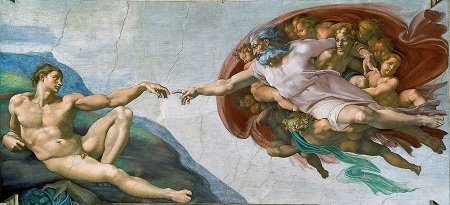
As I was walking through the National Museum of Art in Washington DC, I couldn’t help by hear constant genres of old music (Classical and Medieval), as I walked through the impressively European artwork. While hearing the music for so long (I spent hours in there), I was reminded of the time of when I was in other museums (in Rome, LA, San Francisco), and each time I heard music that I had subconsciously connected the artwork to.

There are only two reasons why this has occurred. The answer: movies and memes. Why these two? Well, I could argue that shows have also helped, but they gained their inspiration from movies and documentaries. Movies and documentaries often connect the old European art to classical music, Native and Polynesian art with traditional flute music, and so on and so forth. Documentaries are really to blame for this, particularly art and culture documentaries, pairing famous artworks alongside music that just gets stuck in your head.

However, it’s not just documentaries, as I mentioned earlier. Movies, too, sometimes only vaguely related to the artwork, can have music that can pop into my head, despite not even being in the same country (in some Roman churches, the soundtrack to Disney’s Hunchback of Notre Dame kept playing in my head). For some reason, my mind connects one to the other, and there’s no way to get out of it. And I’m certainly not the only one.

But where do memes come in? Well memes, the epitome of how people process pop culture and politics in the name of humor. These can take shape in the form of pictures, videos, and just about any other digital medium that you can work with. While sometimes art is used to make clever historical memes (there was a period of Washington painting memes that flooded my dash), the gifs and videos are what really get me.

Oftentimes the gifs are attached to some dumb song or another, and the videos are edited to have music in them. So rather than classy music binding itself to art in my mind, its dumb music that makes me smile or crack up. It’s dumb, but my mind seems keen on connecting my memories to the present, something I’m certain all of our brains do. Brains like to do stuff like that, especially when we get a first glance at famous works via pop culture. Sometimes it’s kind of nice, and other times it’s not.

Hollywood and the Wonders of Rome

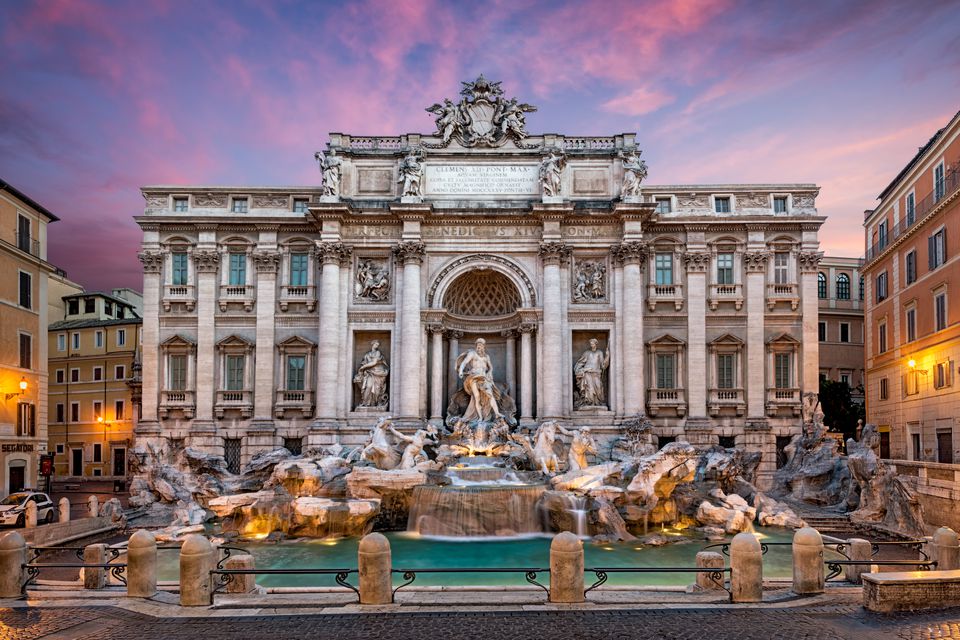
Trevi Fountain and the Mouth of Truth are both internationally renowned landmarks in the city of Rome. The former is inspired by the Baroque period, but was built in the 1700s as a grandiose way to be the end of a rebuilt aqueduct. The latter was built as a Roman sewer cap, but later became the source of a medieval tradition. We like to have the perception that these sights were always famous, and will continue to be. However, this is not the case. These monuments became famous during the 1950s, when a series of Hollywood films centered around Rome showcased these, sending tourists flocking to Rome. Three different films promoted these sights, each playing an important role in the sudden fame of the two sights.

Trevi fountain, or La Fontana di Trevi does not have a long history, although the source of its water does. Its water comes from an aqueduct that had been shut down, known as the Virgin Aqueduct. It had been shut for a while, before a pope during the Baroque period decided to reopen it and build a fountain to mark the finishing point of the aqueduct’s path, recruiting a design by Gian Lorenzo Bernini. However, it wasn’t actually built until the 1700s, designed by Nicola Salvi and finished by Giuseppe Pannini in 1762.

While the fountain was grandiose and a sight to see, it didn’t gain much international attention until the 1954 release of 3 Coins in the Fountain (Tre Soldi Nella Fontana). The film, which centers around 3 American women travelling to Rome to find love, throw coins in the fountain to make a wish, and reunite with their Italian lovers at the end of the film in front of it. Also, in 1960’s La Dolce Vita, and Italian film taking place in Rome, has a scene where Anita Ekburg takes a bath in the Trevi Fountain. While that will get you arrested if you try that now, it was fine for the time, gaining a great amount of attention internationally. These two films put the spotlight on Trevi fountain, showing off nuances of Rome that hadn’t been seen on the international level before. Now the fountain is almost always crowded with people, those who want to take photos in front of the beautiful artwork or throw a coin in and make a wish.

The same thing happened with the Mouth of Truth, or La Bocca di Verita. Once an embellished sewer cap depicting the god Ocean, it became the source of a medieval tradition which functions as a lie-detector test. Built into the exterior wall of a church, the tradition where someone placed their hand into the mouth of the cap to answer confession-type questions, where a false answer would result in the hand coming off. It was a long-standing local custom, and stayed that way until the 1953 release of Roman Holidays (Vacanze Romane), starring Audrey Hepburn. In the film, the Mouth of Truth is displayed when Gregory Peck places his hand in the mouth and fakes losing his hand to trick Audrey Hepburn. The film sent people to an otherwise normal medieval Greek catholic church, each one wanting a photo of themselves placing their hands inside the mouth of the cap. There is now a line in order to place your hand in the mouth, gaining a lot of popularity for the church, and getting them donations to continue to function and maintain their church.