Director Pushes Back the Release Date for the ‘Sonic’ Film

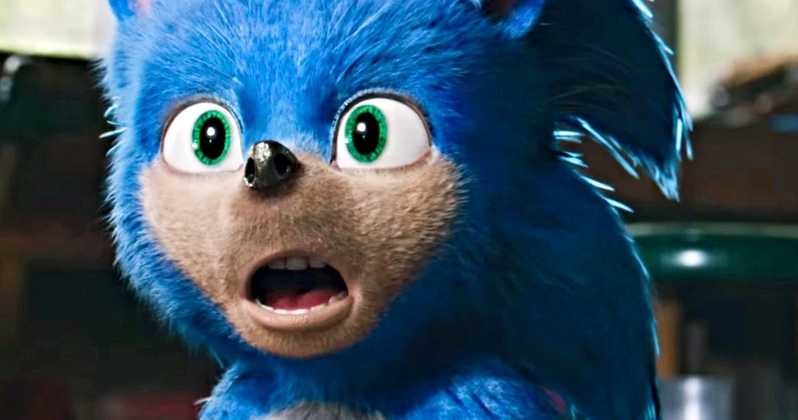
This past weekend, director Jeff Fowler announced that the release of the Sonic film to February 14, 2020, three months after the originally planned release date.

The announcement brought relief to the art and animation communities, who had been anxiously searching for updates since the heavily demanded redesign of the Sonic character was announced. Messages of happiness from the communities rounded about social media, all of them positive towards the push back date. Even some memes were made, joking about how people could now take out their “hot date” to see Sonic on Valentine’s Day, noting that the release date now falls on the holiday.

Aside from the jokes and happiness, some artists and animators have pointed out the fact that Paramount actually listened to people’s demands to push back the release day and prevent their artists from being “crunched” and overworked, relating it to how the gaming industry, which is notorious for “crunching” their workers, now has no excuse to do so.

Both the movie and gaming industries have a long history in overworking their animators, arguing that the “crunch” was necessary in order to release games and films in a timely manner. Their claims for necessary “crunching” have previously been met with dissatisfaction, but begrudging acceptance, particularly as the animators did not have the legal protection to stand their ground. With the announcement of the push back, however, the “necessity” falls under great question.

The Shows of my Childhood

A few days ago, I sat down and watched Will you be my Neighbor? with some family members. I was hit with a massive wave of nostalgia while doing so, old memories that I had nearly forgotten suddenly coming back up. Which got me thinking about other shows I’ve watched as a kid. I thought I might just say a few as a break from my two week hiatus.

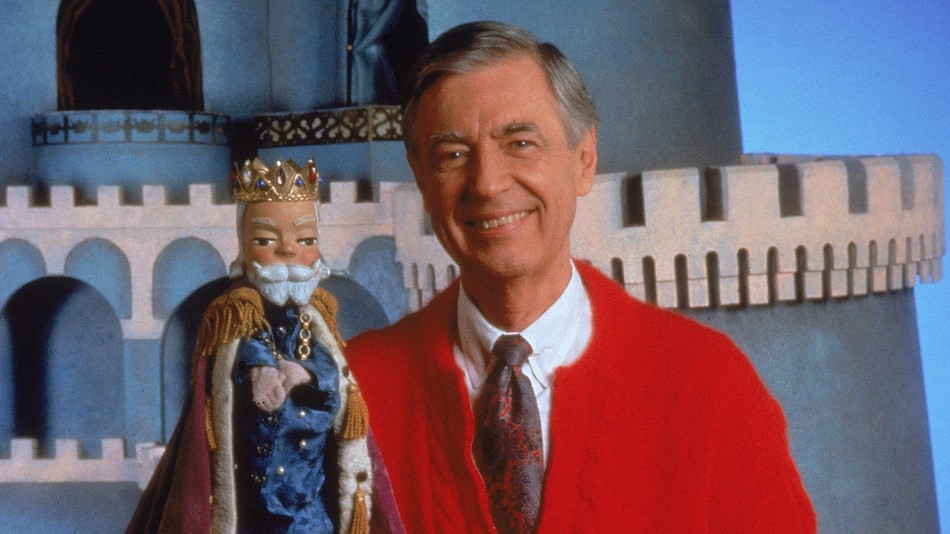
1. Mr. Rogers’ Neighborhood

The show premiered in 1968, geared towards treating children like intelligent beings and helping them deal with various issues, from large and political to small and social. It’s hosted by Fred Rogers, who not only shows up in person, but also controls all the puppets, dealing with other cast members. The show ran for over three decades, with the final episode occurring in 2001. I remember watching both the newer episodes and the older ones, although I was very young when I actively watched them. My memory is fading of the show, although I do remember certain parts of different episodes.

2. Teletubbies

While my sister watched Barney, I watched Teletubbies. The show centers around these characters known as “teletubbies”, who have antennas on their heads and TVs on their stomachs, which display real children. The four characters, Tinky Winky, Dipsy, La-La, and Po, each run around and play in an idyllic world, playing all day until a siren raises and calls for them to go to bed. The first episode aired in 1997, and took a break before returning to end in 2016. The show was one of those almost mindless shows, not violent or blatantly bad for children but not really having any substance, either. I liked it, however.

3. Rugrats

This show, premiering in 1991, centers around a baby’s imagination and life from a baby’s point of view. The Rugrats gang go on different adventures at the behest of the older Angelica, although their adventures mostly take place in and around their houses, without them going anywhere. It’s last episode occurred in 2004. It was unique for it’s time, playing with young children’s imagination and entertaining children through their own means. Every episode was something new. I remember watching it almost religiously, loving each and every episode.

4. Spongebob

Of course, how could I forget the biggest hallmark of kid’s television of the early 2000’s? The first episode premiered in 1999, and still continues to this day, centering around the life of Spongbob in the underwater town of Bikini Bottom. In it’s hayday, it was funny and unique, displaying characters who are both stereotypes but are also three dimensional. Even Mr. Krabs, who’s largest character aspect is greed, has character development and other aspects. I can’t speak for the show now, however, as I haven’t watched any episodes since 2008. What I’ve heard is not good news.

A History of the Mouse that Roared

On November 18 of this year, Mickey Mouse turns 90 years old. This mascot of Walt Disney Studios has had a long history, changing from his original form to his current squat and recognizable version. I thought I might provide a little history on this famous mouse, commemorating all that he has contributed to the Walt Disney brand.

Mickey Mouse’s story doesn’t start with himself, however. It starts with a cute little rabbit. This was Oswald the Lucky Rabbit, created in 1927 by Walt Disney when Disney Brothers Studio was just another part of Universal’s animation branch. He was an instant hit, and a star of Universal’s animation sector. However, when Disney met with Universal to negotiate another contract in 1928, he found himself in a position where all his employees had been hired away and the rights to Oswald had been ripped from him. He had been offered to become an employee for a lower salary, but had refused, leaving with loyal animator Ub Iwerks to find a replacement for Oswald.

They made a new character, a mouse, who originally went by the name of Mortimer. But the name didn’t last, and by the time of his debut, he was Mickey.

Now, Mickey wasn’t an immediate hit like Oswald. In fact, his first two shorts drew almost no attention. However, Disney made a big break with the release of Steamboat Willie, the first animation to have synchronized music and sound, on November 18 1928. Within a matter of months, a line of animated shorts appeared, and by the end of the year Mickey Mouse was a national fad. Walt Disney began lining up Mickey Mouse merchandise, and within two years the Mickey Mouse Club was up and running.

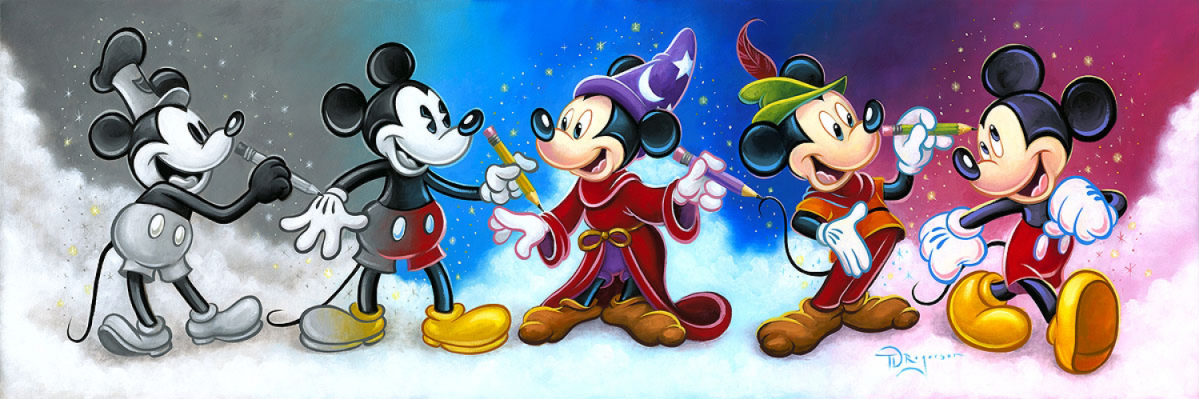
Mickey Mouse in his original form was more round, which limited the amount of movement that he had in animation. However, in 1935 animator Fred Moore gave him a more pear-shaped body, pupils, white gloves and a shorter snout, making him more dynamic and cute. This appearance made its big appearance in the Sorcerer’s Apprentice, a musical short that appeared in 1936’s Fantasia.

By the end of the 1930’s, Mickey Mouse had been in dozens of shorts, having starred in countless adventures. His popularity would continue throughout the 1940’s and into the early 1950’s, when major motion films such as Bambi and Sleeping Beauty began to take audiences by storm. With the rise of the “Golden Age” of Disney films came the fall of the popularity of Mickey Mouse. Starting in 1953, Mickey Mouse would be entirely out of commission until 1983, with the release of Mickey’s Christmas Carol.

Despite this decline, Mickey Mouse is still one of the most recognizable animated characters of the 20th and 21st centuries, still maintaining a whopping 40 percent of merchandise sales, and still appearing in popular video games such as Kingdom Hearts. He is the face of Walt Disney, and more generally Disney itself, maintaining a permanent presence. He is a small mouse with the voice of a lion, making himself known wherever he goes.