YA Novels and the Curse of the “Unconventional” Protagonist

Note: when I say “unconventional”, I don’t mean diverse or unusual protagonists: I mean that they are slightly different variations of the same thing. The “unconventional” protagonist always has a similar appearance and an identical attitude, no matter the genre or book. I call them a curse, because they are usually the markers of a bad book, even for ones that had the potential to be good.

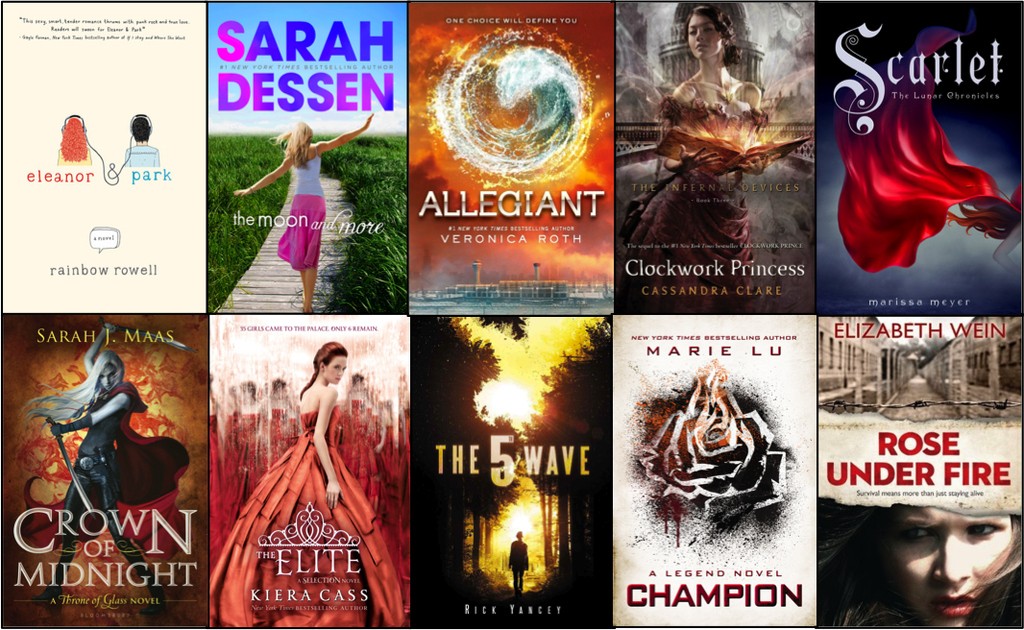
Now, the curse of the “unconventional” protagonist. had been a huge part in the young adults novels of my teenage years. It was practically everywhere; the same pale short girl that’s never a brunette, who isn’t “conventionally beautiful” like their mom.

Their main staple is their lack of curves, making them look like twelve years olds (when they’re adamantly sixteen). They have seemingly messy or bland hair, usually an unusual color, and they are always pale. They’re not conventionally attractive, but they have pleasant features, making them appealing to their main love interest. They look like their mothers, but their mothers, being taller, are somehow much the most gorgeous people to walk the face of the Earth, while they’re “cute”. Dressing nice or scandalous is taboo; modest clothes all around. They’re almost always useless and cause more trouble when they do involve themselves, but they’re stubborn, and never take the blame for anything they’ve done.

Almost every young adult book I read, the protagonist can best be identified by what I said above. It almost never changed (the big exception here is the Hunger Games, which featured a non-white woman who was tall and useful) and always had the same outcomes. It caused a lot of serious issues with how I perceived things during my teenage years.

Of course, I wasn’t about to charge into situations I knew I wasn’t useful in. In fact, the stubborn and useless factor actually got on my nerves. It even got to the point where I’d skip entire portions of books if I knew the protagonist was about to do something insanely stupid because “they’re not a useless child”. What really hurt was my perceptions of myself and romance.

My appearance heavily contrasts from the typical main protagonist; I am tall, I have olive skin that tans really easily, and I have dark brown eyes and hair. I lean more on the conventional side of attractiveness, in that I don’t look like a twelve year old. As a teenager, this made me very insecure about my features. I wanted to be like the main protagonists (before I realized how much of a stupid idea that was). I wanted to be short, and pale, and curve-less. I wanted unusual hair and eye colors. You may think that’s stupid, but when it’s all you see in the books you read, it doesn’t seem so stupid. At least, it didn’t seem so stupid to thirteen year-old me.

Girls that I look like get constantly trashed in comparison to the main protagonist, getting written off as sluts and mean girls who are insanely preppy and stupid. At the same time, the books with the “unconventional” protagonist gets pushed as “beneficial for all girls”, despite the obvious bashing of “conventional” girls. When that idea is getting shoved down your throat all the time, it really starts to affect how you see yourself. They’re extremely damaging, and can psychologically affect girls as young as ten to see themselves in a negative light. Worst part is, most won’t even realize until they’re practically adults, if then.

Now, I have seen improvements in the YA genre. I have noticed a growing diversification in main protagonists, which is quite refreshing. But the curse is still there, and it still maintains a presence. A weakening presence, but a presence. It needs to be targeted, and stopped once and for all.

Is Comic-Con Too Big for San Diego?

Every year in July San Diego is able to boast its position as the host of the world’s largest Comic-Con. Tourism skyrockets as thousands of people come from all over the country (and even the world) in order to attend the convention at the San Diego Convention Center near downtown. Every year more people and businesses come, with the former wanting to see what goes on and the later wanting to show off their newest wares. It is really a sight to behold.

There is one big issue with this situation, however. As more and more people and businesses come, the less space at the convention center there is to fit them. In fact, the convention has long outgrown the capacity of the convention center, with booths and events being lined up along the street, as well as filling up the center itself.

Comic-Con is also notoriously packed, with people I’ve spoken to saying that some aisles are almost impossible to go down. As it is such a famous convention, it would only make sense that thousands of people would attend. With the growing lack of space, however, it becomes almost too pack for its own good. Not that that’s going to stop people from coming, but it will make moving around less enjoyable.

San Diego is very aware of this fact. They want to make sure that they can continue to host Comic-Con and keep the economic boost for the city, even making plans to expand the convention center to better fit the convention. Why haven’t they acted on those plans? Well, the answer is simple: the convention would have to move to another city in order for them to expand the convention center.

In order for the convention to run uninterrupted, it would have to temporarily move to another city while the San Diego hall was getting renovated, for who knows how long. The issue here comes from the fact that the new city that gets to host might not want to give it up. Especially with a convention that provides so many benefits to the city, San Diego might not be able to get its own convention back when the construction is all said and done. Especially when the convention goes to cities like Los Angeles of San Francisco.

As a result, San Diego has been pushing it off. But how much longer can they push off expanding? Eventually, they’ll run out of too much practical space, and they can’t just let the convention branch all over downtown San Diego. They’ll eventually just have to expand the hall, and hope that the city Comic-Con goes to is willing to give the convention back.

Strange Instagram Beauty Trends

Over the years, Instagram has become the source for young makeup artists or beauty gurus to show off their makeup skills and looks. However, it has also become the source of strange beauty trends, trying (and failing) to promote bizarre and frankly impractical beauty “hacks”. I thought I might put together some of the most bizarre instagram trends and hacks that I’ve seen within the last two years.

1: Using wasabi as a lip filler.

In late 2016, social media star Farah Dhukai proclaimed that by placing a small amount of wasabi for about a minute, your lips can become plumper for a longer amount of time than normal lip plumpers. She argued that because of the wasabi’s burning properties, it can cause mild inflammation, which could work to plump up the lips. Dhukai even posted a video showing a “tutorial” of how the process should be, declaring it 100% safe. Dermatologist Joshua Zeicher, M.D, who spoke to Refinery29 about the case, did say that using wasabi in small amounts was fine and safe, unless you have sensitive skin. While it is safe, it is still a strange concept.

2. Feathered Eyebrow Trend

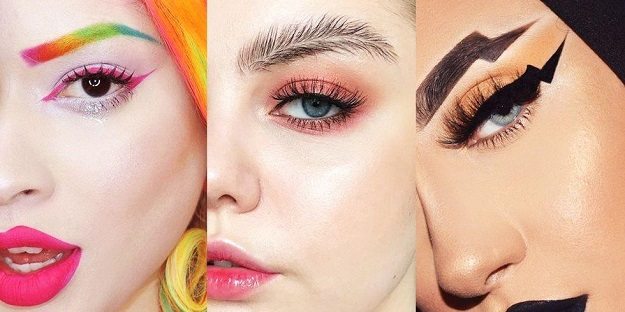
Initially started as a joke trend by popular makeup artist Stella Sironen, the “feathered eyebrow trend”, where half of the eyebrow is glued up and the other half is glued down, took off in a short-lived trend in 2017. It was used in order to “glamorize” makeup and bring it to a new level, although anyone normal would see this and think it was plain odd. Also, it probably is very difficult to make look how it’s supposed to.

3. Using Food for Makeup

Another strange and certainly not skin-friendly trend from last year was using different food items to apply your makeup. The trend, started by Raychel Newton who used a variety of different food objects (mac and cheese powder and Snickers bars to name a few), caused the hashtag #facefulloffoodchallenge to explode, where different makeup artists tried to make a fly look with random food items. While it is most certainly harmless, I don’t quite think it’s good for your skin, and wouldn’t recommend it.

4. Beauty Tampons

Tampons are most certainly not what you’d expect to be used for makeup. But in 2016, beauty blogger Ashley Blue DeFrancesco posted an Instagram video using a tampon as a beauty blender, applying foundation and using it on her skin. Which isn’t too bad, saying that a tampon is an absorbent wad of cotton, but in the context of what it is supposed to be used for, it becomes quite strange. It was surprisingly effective, although I’m not sure you’ll find anyone actively using their tampons to apply foundation, even in case of emergency, anytime soon.

5. Boob Blenders

In 2017, popular beauty blogger Huda Kattan decided to go a very unusual route, and try using a silicone bra insert as a beauty blender. In an attempt to start a new trend, she argued that it didn’t waste product like normal beauty sponges do. However, I don’t know how many people actually own a bra insert, nor do I know how willing they are to cut one up and use it as a blender.

6. Wavy Eyebrow Trend

Finally, we have a trend that some had considered cute, but most had considered bizarre, was the wavy eyebrow trend. Started in 2017, the wavy eyebrow trend involved gluing your eyebrows into “waves”, which some had argued was a new chic. The only problem with it is, that it’s hard to do, looks strange, and is definitely not suited for normal wear. It’s more something you do as a joke, not intend to wear out and about.

How to Win Back a Girl’s Heart: “Change”

In almost every romance, there is a portion where the guy must “win” the girl back after betraying her in some way- either acting like his normal playboy self or just doing something stupid. And just about every time, he does get her back, usually by apologizing or doing something to show that he’s “changed”. But has he really changed? In some instances, the previously reckless male character does actually show a change in attitude or behavior that would warrant a yes. But most often, it’s a big fat no.

In order to examine how the guy hasn’t changed, we must first understand how the typical main guy in a romantic movie starts out. He is most often the reckless playboy, who parties and sleeps around with whoever he wants. He goes to parties, maintains a decent job, and usually an apartment to himself. He doesn’t really care about anyone but himself and his best friend, who always tries to get him to “find a girl”-to which the man always shrugs the suggestion off with a playful scoff.

But then he meets the girl of his dreams. She’s a much more lax person, someone who doesn’t really like to party, or sleep around. She’d rather sit at home and watch a movie marathon, or read a book. She isn’t affected by the guy’s flirtation, which immediately peaks the guy’s attention. He has to find a way to impress her.

After the first time he meets her, they start meeting by chance. After a few times, they finally decide to hang out with each other on purpose. Maybe even date. The guy seems to be settling down. After a few months, he seemed to have changed.

But then he does something stupid. Either indirectly, or just a stupid action he decides to do. Girl finds out, and ditches him, heartbroken. Boy does something to make it back up to her, and they end up getting back together at the end.

Now, this isn’t always how the story goes. In The Big Sick, Kumail wasn’t really a partyer, but a nerdy comedian whose parents were trying to marry him off to a Pakistani girl. This is the point of conflict for his relationship, and he remedies it by sticking up for himself and spilling the truth to his parents. In this situation, he does change. However, in most other situations, the guy doesn’t really have a meaningful change. While he does settle and stop sleeping around, that’s not really giving something up. That’s just getting into a monogamous relationship. Usually the partying also dies down as a result, but that’s usually from finding else to pass the time and satisfy the need to do something. The behavioral changes are not because of an actual effort placed in-just the indirect results of deciding to date someone. There is nothing of real value to it.

The biggest example of this is the 50 Shades of Grey trilogy. In this case, Christian Grey starts out as a young billionaire who liked to exercise control in everything, rather than the reckless party guy. Anastasia breaks up with him, upset by his violent urges when it comes to BDSM and domination in her life, and he wins her back by promising to change. I’ve only seen the first two, so I will focus on his portrayal in the second film.

To summarize my argument before it starts, let’s just say this; he doesn’t change. His possessive behavior merely shifts, to be controlling in certain ways, but in aspects that almost don’t seem noticeable, who can claim that she has more “freedom”. He buys the publishing company she works for while arguing it’s a business investment, he happens to be in the right places at the right time, and he has the money and power to get people at her work fired. He is a prime example of the faux change that people fall for.

The “Pure Virgin” Trope

For a time not so long ago, there was the common but somehow romantic concept of the “pure” girl who’s never had sex falls in love with the very experienced “bad” boy. Especially in the Young Adult urban fantasy (fantasy meshing with the real world), there was the common trope of the main female protagonist being a tiny but stubborn teenager who butts head with the tall and handsome new kid, eventually falling madly and viciously in love with him (her first love, by the way). Often times as well, girls the same age who have had sex are often placed in the light as pure sluts, with their character being left very one-dimensional. At the same time, the books are promoted as “empowering” to young girls, girls who can be as young as 10 and very impressionable.

Why does this matter? Well, trying to promote this idea (plus promoting romance with male protagonists of questionable choice), this can lead many to be unaware of the toxicity of relationships like that. Let’s break it down a little bit, shall we?

Well first, the fact that the main girl is practically the only one around that is a virgin promotes the idea that she is on a level above every one else, or “pure”. Now this isn’t to say that being a virgin at 16 or 17 is a bad thing- the average age that people lose their virginity at is 17- but having her be the only one that is a virgin is saying something. Plus, these girls usually haven’t even had their first kiss yet, like how much more obvious can you get?

The girl also usually doesn’t have very many friends, being the sort of “loser” in school. She usually has around one or two friends (maybe 3), and there is always a guy that she is closest with, mostly to play the love triangle game. Unless, there is the rare chance that he is gay (True Blood), and then he is just the sassy friend trying to encourage her to get laid. This reinforces another idea-it’s not cool to be “popular”. If you’re “popular”, then you’re just like all the other girls who sleep around and party. You’re not “pure”.

The “pure” aspect contrasts greatly from the main male protagonist, the new bad boy who is always insanely attractive. He usually sleeps around, is sarcastic as all hell, and doesn’t like to follow the rules. He is the kind of guy that’s supposed to be unachievable, but always turns his attention to the nerdy not conventionally pretty female protagonist. He sweeps her off her feet, and rescues her because he knows so much more about the magical world than she does. He becomes the useful one, while she sheepishly has to follow him around for protection, and eventual romance. He takes an interest in her mostly because of her purity (a concept that appears in many different books, TV, and movies), making her all the more desirable. She is the target of his romantic advances because she is “not like other girls”.

Plus, he’s always got a broken, tortured soul for the female protagonist to save. He can have all the problems he desires, but she can’t. She’s supposed to listen to all his problems, without having any actual problems of her own to share. This can be very dangerous for an actual relationship. A girl is not supposed to only be someone’s “savior”, but should also be able to reach out to her partner. If she feels like she can’t, then that’s not a very good relationship.

To make matters worse, the idea of the man acting aggressively protective, and sometimes even controlling, gets romanticized. Any man she hangs out with is a threat (and it’s usually portrayed that way), and she must be “protected” from them. She can’t be friends with male friends either, because it turns out they just want to get in her pants, even though bad boy is the only one for her. And bad boy gets really upset when she talks to other men. Controlling behavior is made to seem romantic here, when it’s really not, which could influence young girls into believing that it is. Her heart and body should only be meant for him, and never any one else ever again, which is also not a healthy thing to romanticize. It’s dangerous and can lead to girls getting trapped in toxic relationships.

The Gatekeepers of Nerdom: The Small but Obnoxious Minority

It doesn’t take a genius to tell that being nerdy is “cool”. It’s been this way for the last decade, with pop culture trends that were once considered “lame” exploding in popularity, and fandom merch being sold at practically every corner. Conventions are appearing all over the place, and old ones (Comicon, Wondercon, Anime Expo) are growing larger every year. In 2015, more than 150 million people in the United States play video games, with 42 percent of Americans playing video games regularly. The nerd is no longer a joke of a subculture.

But for some reason, the news didn’t seem to have spread to one small group, known as the “Gatekeepers of Nerdom”- a group of nerds who argue that nerds are incredibly oppressed, while at the same time zealously trying to disprove the nerdiness of others, particularly of women. They seem to believe that they’re still stuck in 1980, when nerds were the typical bully subject in films. They also seem to believe that girls won’t date them because they’re nerdy, even though they’re really just not getting dates because they harass every girl who shows signs of nerdiness, trying to disprove them wherever they can.

The Gatekeepers are a small group, but are obnoxiously loud on social media, appearing where no one asked them to. Trying to find the “real” nerds seem to be their righteous mission, making many hate them- making the group in turn see themselves as “greatly oppressed”. Acknowledging the ever-growing diversity of the nerdom in any pop culture media is considered to be “SJW bs” by them.

How do they persist? Well, the Gatekeepers seem to push this continuous cycle where they harass people, get made fun of for it, and imagine they’re oppressed, causing them to continue existing. There is also the issue of the purity complex, where minority groups in fandoms, video games, and other aspects will try and prove that they are the most “pure” of anyone else, who is fake because they aren’t. The purity complex is a toxic form of trying to prove realness, especially in the realm of nerd, where there is no real purity. The nerdom has grown so much that finding a “pure” version of a nerd is utterly impossible.

The fortunate thing is, at least, that no one takes the Gatekeepers seriously. How do you take them seriously, when they are viciously trying to “protect” a subculture like it’s still 1980? And their harassment is kind of hilarious in itself. They appear suddenly in your feed, ask a “trivia question” trying to prove that you’re not a real nerd, and get mad when you either answer it correctly or ignore them. They’re not much of a real foe. It is entertaining to watch someone interact with one of them, though.