How I Can’t let some Books go

I read a lot of books. More so when I was younger, and had a lot more time to read around school, but that doesn’t stop me from buying potential books to read.

As a result I’ve invested my time and energy into many books, both good and bad, and even some okay. The good ones I usually keep in my room, and the bad ones usually go to the sad and lonely shelf in the middle of a hallway in my house. Trust me, there’s plenty of bad and okay books on that shelf. But hey, when you read a bunch of YA novels, you’re bound to run into many bad ones before you find a good one.

Most of the bad books I’ve read I’ve already forgotten. However, there are a few series that I just can’t let go. This might be because of the fact that among the bad series, there was a good book that I actually enjoyed. Usually this would be the first or second book, getting ruined by the third or whatever else book (In the Mortal Instruments, it was the opposite: I thought the first three books were decent enough, but liked the fifth book the most). Two series that exemplify the above for me are Hunger Games and A Court of Thorns and Roses. I thought the second books in both series were the best, but I didn’t much appreciate reading the third book, to put it politely.

But if only one or two books were really exceptional to me, why do I still cling onto its fandom? Well, I’m usually reminded of the series when I see fan art or something else of the sort. It gives me a sort of nostalgic feeling, and makes me want to re-read my favorite parts of the books I liked. It keeps me hooked onto the fandom, even if merely grabbing the barest shreds so I don’t get too invested in the culture again. Fandom culture has gotten pretty toxic over the years, and I don’t like to involve myself much in them anymore. Discussing their evolution will be saved for a different time, however.

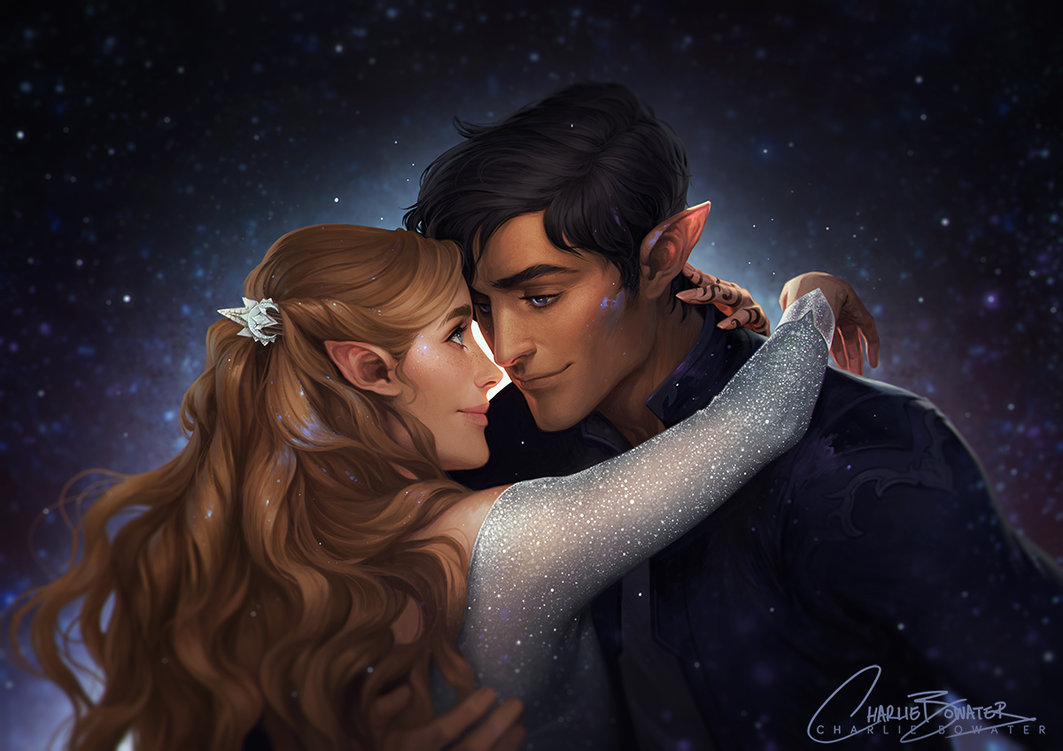
As for the fan art, it’s not just any old fan art. It’s usually drawn by artists I follow, who happen to have read or currently read the same books as me. When I see their interpretation of certain scenes or characters, I am redrawn to those books, even if I haven’t touched them in over two or three years. I blame nostalgia and the familiarity of the characters. My brain recognizes the characters and clicks, triggering a sense of desire to pick up the books.

Art Credit @ Charlie Bowater

How Aggretsuko and Gudetama Took the World

Hello Kitty has long been the star of the Japanese company Sanrio, since stepping onto the scene in 1964. Since then, numerous characters have been released through the decades, with characters such as Cinnamroll, Bad Badtz-Maru, and Chococat gaining some popularity and recognition.

However, there are two Sanrio characters, both of which are two of the company’s newest characters,  have taken not only social media, but also pop culture, by storm. The first of these two is Gudetama, who’s name is derived from “gude” (the Japanese onomatopoeia for having no energy), and “tama” (taken from the Japanese word for egg, tamago), is exactly what his name prescribes: a lazy egg. Released in Japan in 2013 and internationally 2014, the egg gained almost immediate popularity among Millennials and Generation Z kids for his adorable appearance and lazy attitude. His character release was accompanied by a series of online shorts displaying his daily “adventures”, and little emotes that display his range of laziness.

Gudetama maintains popularity as a result of his cuteness, but also his lazy attitude. Young people relate to his lazy attitude, because they want to be like him, lazy and having no problems to deal with (work, school, taxes, etc.). They want to be able to just do nothing. They also like his “kawaii” nature, his simplistic design making him absolutely adorable.

The character also has a very recognizable aesthetic, adding to his popularity: orange and yellow. Two colors that might otherwise be seen as garish and non-kawaii colors are made a central part of Gudetama’s aesthetic, which works incredibly well. It makes his aesthetic unique. All his merchandise is sold in this aesthetic, with shirts, jewelry, stationery, and other items being sold in the pastel yellow and yoke orange colors. Even the plushies of him tend to center around those colors, adding all the more to his absolute essence.

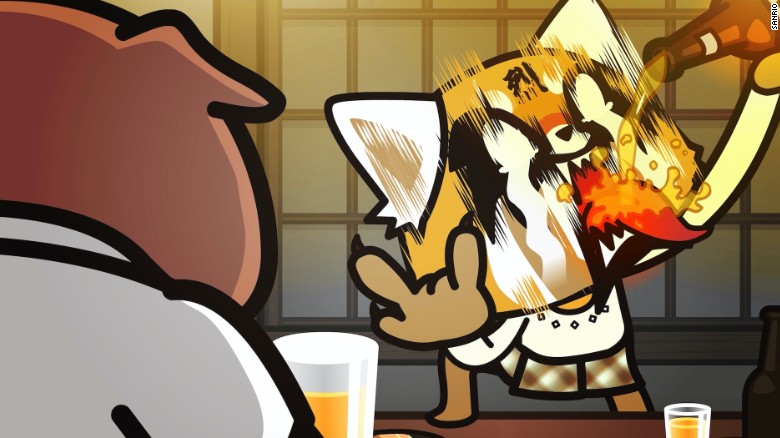
The second character, Aggressive Retsuko, a.k.a Aggretsuko, is a red panda who is an assistant associate at a Japanese company. Her work is oppressive, and she vents her frustration by getting angry, drinking, and singing death metal at a Karaoke bar. She was initially released in Japan in 2016, and then abroad in 2018, paired alongside the anime series about her life. She takes a much more adult perspective than Gudetama, and gained instant popularity because of the fact that she has to deal with her terrible boss (who is an actual pig) and fake coworkers. Many people entering the corporate work force have to deal with these same issues, and only wish they could vent all their frustration in the same way.

Although I haven’t seen much of her merchandise, I know it sells. She’s too popular for it not to sell. She holds a place at anime conventions, and has become a staple for the fact that she’s so relatable. It does help that she’s also very cute.

Both of these characters deal with issues that Millenials and older Gen-Z kids can relate to, although they represent opposite perspectives. Gudetama represents the joy of being able to be endlessly lazy, with no real troubles to deal with, while Aggretsuko deals with releasing stress when faced with the worst of work conditions. It’s interesting to see how they’ve taken off in popularity, and continue to remain popular.

How Movies and Memes have made me Connect Art and Music

As I was walking through the National Museum of Art in Washington DC, I couldn’t help by hear constant genres of old music (Classical and Medieval), as I walked through the impressively European artwork. While hearing the music for so long (I spent hours in there), I was reminded of the time of when I was in other museums (in Rome, LA, San Francisco), and each time I heard music that I had subconsciously connected the artwork to.

There are only two reasons why this has occurred. The answer: movies and memes. Why these two? Well, I could argue that shows have also helped, but they gained their inspiration from movies and documentaries. Movies and documentaries often connect the old European art to classical music, Native and Polynesian art with traditional flute music, and so on and so forth. Documentaries are really to blame for this, particularly art and culture documentaries, pairing famous artworks alongside music that just gets stuck in your head.

However, it’s not just documentaries, as I mentioned earlier. Movies, too, sometimes only vaguely related to the artwork, can have music that can pop into my head, despite not even being in the same country (in some Roman churches, the soundtrack to Disney’s Hunchback of Notre Dame kept playing in my head). For some reason, my mind connects one to the other, and there’s no way to get out of it. And I’m certainly not the only one.

But where do memes come in? Well memes, the epitome of how people process pop culture and politics in the name of humor. These can take shape in the form of pictures, videos, and just about any other digital medium that you can work with. While sometimes art is used to make clever historical memes (there was a period of Washington painting memes that flooded my dash), the gifs and videos are what really get me.

Oftentimes the gifs are attached to some dumb song or another, and the videos are edited to have music in them. So rather than classy music binding itself to art in my mind, its dumb music that makes me smile or crack up. It’s dumb, but my mind seems keen on connecting my memories to the present, something I’m certain all of our brains do. Brains like to do stuff like that, especially when we get a first glance at famous works via pop culture. Sometimes it’s kind of nice, and other times it’s not.

Youtubers Becoming Authors: The Self-Help Trend

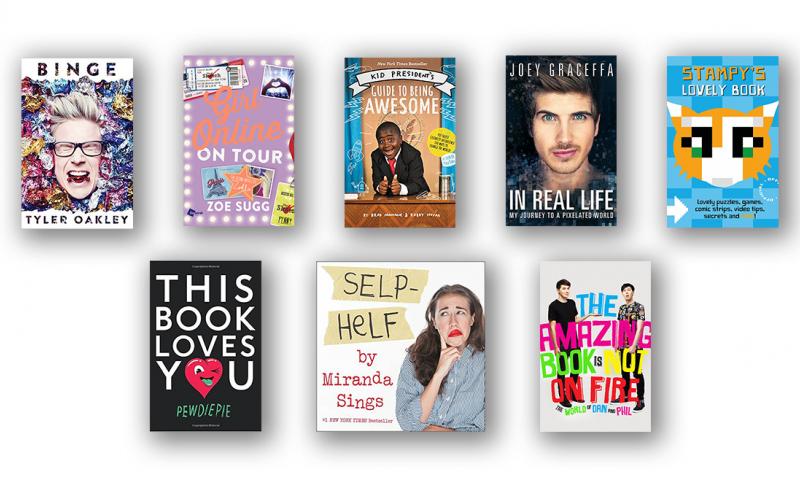
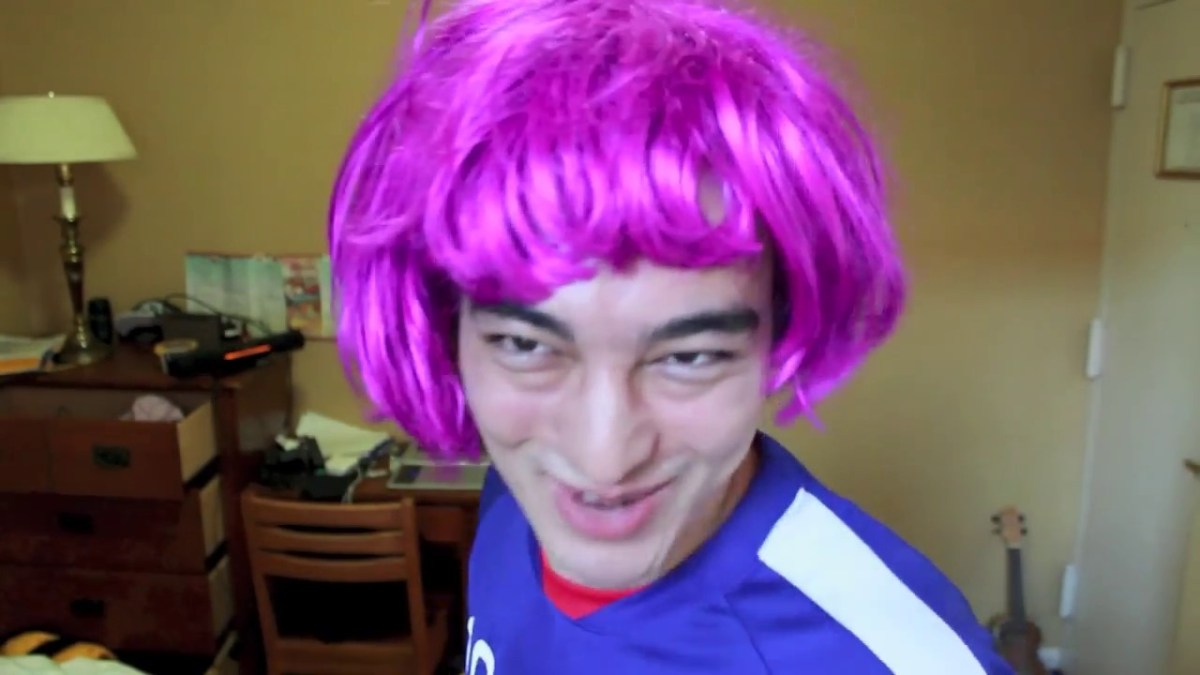
In the last five years, there have been a number of Youtubers releasing books, some fictional (like Joey Graceffa’s Dystopian trilogy), and others non-fictional (like Shane Dawson, Miranda Sings, Tyler Oakley, and so many others). Youtubers, using their influence, often write books of “self-help”, or a series of essays, or something similar to memoirs. They provide advice, despite the fact that they are only in their mid-to-late twenties. It’s a bizarre case, one that I have been feeling the need to unpack for a long time.

Now, while John Green is technically the first youtuber to release a book, he was an author first, so I will just skip him.

The first youtubers to publish a book after gaining their popularity were Blaire and Elle Fowler, publishing the fiction book Beneath the Glitter, in 2012. From then on, Youtubers began publishing their non-fiction books, with books such as I Hate Myself and In Real Life: My Journey to a Pixelated World gaining quite a bit of traction. Most of these centered around Youtubers’ tales of their childhood, functioning as a pseudo-memoir despite the fact that most of the authors were in their early-to-mid twenties.

It wasn’t until 2014 that the first actual “help” books came out from a Youtuber, with Hannah Hart’s My Drunk Kitchen: a Guide to Eating, Drinking and Going with Your Gut. It’s help aspect comes from the fact that this is a recipe book, although within the next three years tons of “self-help” books came out.

Now, while I have no qualms with things such as recipe books and fictional novels, the memoirs and self-help books kind of get to me. And it’s not like it’s business or fashion advice, either (Michelle Phan published Make-up: Your Life Guide to Beauty, Style, and Success- Online and Off in 2014, which offers both business and fashion advice, as well as maintaining a healthy attitude), but rather actual life advice. This isn’t to say that someone who isn’t in their twenties can’t give life advice. It just seems odd that someone who is in their twenties are offering advice books to their audience-most of which are in their early or mid teens.

To me it’s difficult to imagine my teen-self or any of my friends following the advice of someone who, quite often, never got their degree in college, and made their career in a  very competitive environment. It also seems weird to read a memoir about someone who hasn’t even made it to their thirties, yet. Most people don’t write memoirs until they’re almost in their fifties, or even later. It’s usually after they have lived quite a bit. That isn’t to say that a lot hasn’t happened to a young person, but most Youtubers’ memoirs are quite mundane. They have childhoods that may be tough, but are often not unusual.

Of course, some of these Youtubers can provide some insight that their younger audiences can relate to. Things such as mental illness, eating disorders, being a part of the LGBT spectrum, and other such hardships may connect to people who are stuck in similar positions. The only problem is that the writers are so young themselves, still growing and learning, that what they write in one book won’t be how they feel ten years down the line.

Perhaps rather than sticking to full on life advice, they should stick to subcategories that they excel in for now. There are so many ways that you can provide advice to young people without it being how to live. There are also many ways to write personal anecdotes without writing full memoirs. It’s better not to rush into things so young, despite our tendency to do so.

The Fun of “Geek” Makeup

Despite the fact that Geek culture has been in the mainstream for nearly a decade, it was only recently that I discovered Geek-inspired makeup. Maybe this is due to the fact that I didn’t like makeup all the much until around two years ago, but it was still strange that I had never heard of it. I’ve been to cons, I’ve involved myself in many fandoms, how did I not hear about it?

Well, this is excluding the main-stream geek culture collections. Of course I’ve seen Star Wars themed lines, and also Hunger Games collections from Cover Girl and L’Oreal. And of course I’ve seen the Disney-inspired makeup. But I had never seen stores purely devoted to producing Geek-inspired makeup.

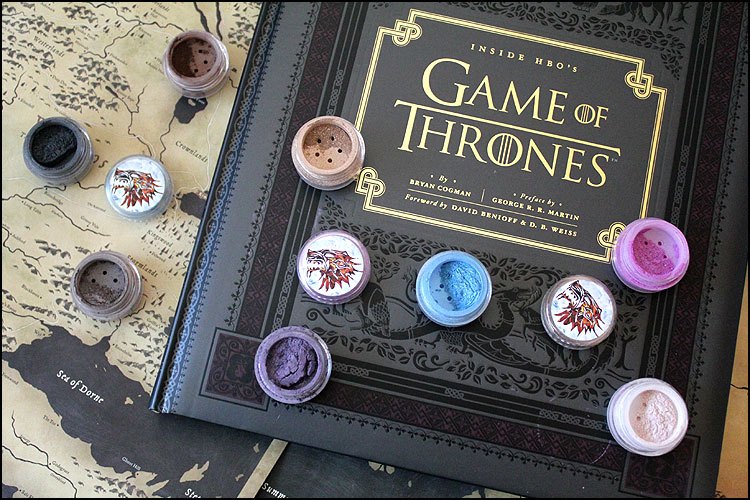
I had only discovered the makeup by chance, stumbling upon Shiro Cosmetics as I was looking for cruelty-free makeup. Looking into their site, I found they had a series of collections based off of popular media and memes, having collections centered around Game of Thrones, Into the Unknown, and Avengers, particularly eye shadows. They have cute little drawings that they come with on top, and lots of funny designs. And the reviews seem to like them.

The discovery of this site led me to start looking around for other Geeky makeup, and I was able to find quite a bit of collections. I found Geek Chic, Espionage Cosmetics, Nerdastic, and Black Pheonix Alchemy Lab, all of which had many items based around pop culture. It was astonishing, especially with the fact that the most of the colors looked so pretty. And most of them were cruelty-free.

The makeup usually has fun names, with fun designs, although if you’re looking for eyeshadow, don’t expect to many pressed palettes. Most of them are loose powder, with a few pressed palettes, which can be a little off-putting for some.

Geek-inspired makeup really started blowing up around 2015, as bigger companies began pushing out lines for the new Star Wars (Force Awakens), inadvertently boosting smaller makeup companies that based their whole existence around Geek culture. While still being considered “underground” and definitely “artisan”, Geek makeup has found its place and audience, and will only continue to grow as more people discover them.

Legends of the Weeaboo

I’ve already spoken about Koreaboos before. The people who want to be Korean, marry a Korean, want to be just like a Kpop idol or Kdrama star. They reject their own culture in the name of adopting Korean culture (or rather, what they think Korean culture is like).

The weeaboo is almost like this. Actually, they are the forefather to this. The weeaboo, rather than being centered around Korean pop culture, is centered around Japan. The weeaboo rejects their own culture in order to adopt what they believe is Japanese culture, proclaiming it as superior to everything else. They base their idea of Japanese culture off of anime and manga, imagining it as some perfect society that is more advanced than any other culture, and that it has had no bad history or political issues.

The weeaboo began to form around the 1990’s, when the West had access to popular anime and manga. Young generations now had access to watching anime, influencing an entire generation, causing some to go a little overboard and become weeaboos.

Except, at the time, they weren’t called weeaboos. Until the mid-2000’s, weeaboos were called “wapanese”, meaning white Japanese (despite people of all races having the potential to be a weeaboo). The old name was mostly given on online forums, with sites such as Reddit and 4chan coining the terms.

However, in the mid-2000’s, some 4chan moderators decided that they were sick of the term. They banned the term wapanese, causing users to scour the internet for another name. This is how they found the term weeaboo. The term came originally from an obscure comic, which is in no way connected to the actual group of people. However, it was a word that also didn’t have a meaning of its own, and was thus made what it is today.

Weeaboos are still going strong, although they now have to compete with koreaboos, causing an ironic and hypocritical battle between the two groups. They are both disgusted with one another, but can’t seem to relate the traits of the other groups back to themselves. It’s kind of weird, but amusing to watch.

The Emo Phase: People Still go Through One?

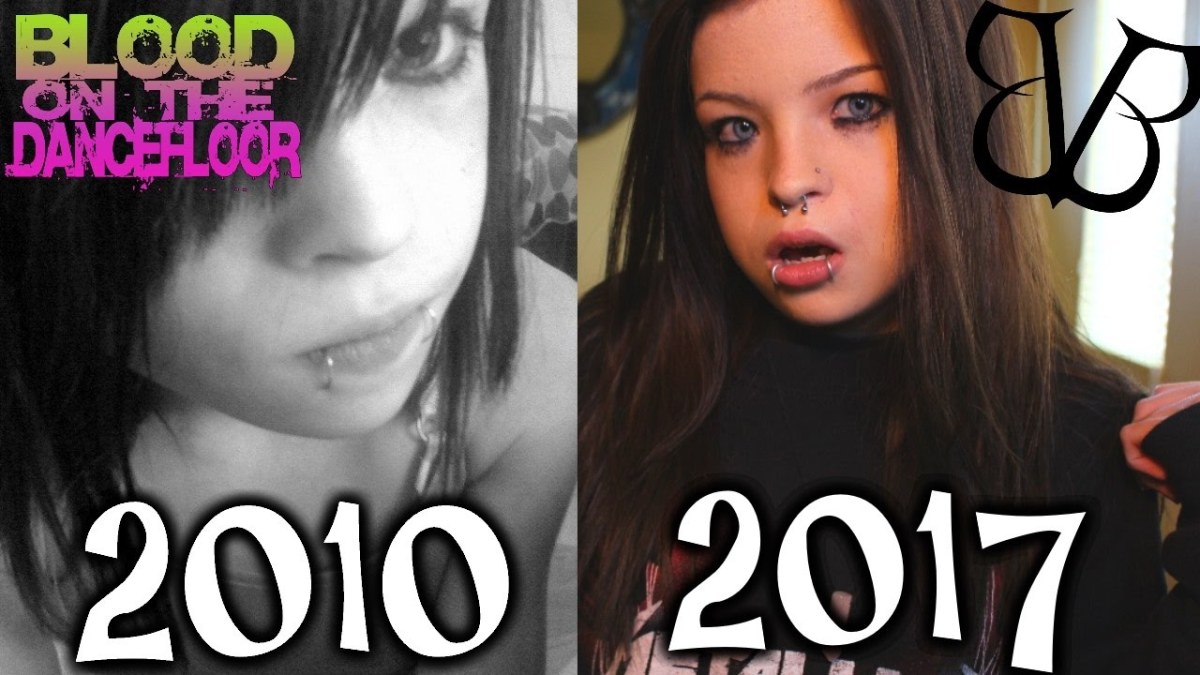
I grew up during the height of the Emo genre. Bands like My Chemical Romance, Evanescence, and the early days of Panic! At the Disco and Fall Out Boy were all hot on the scene, providing plenty of fuel to the Emo genre. Almost everyone had an emo phase; I even had a mild one. Dressing in all black, getting piercings all over and dying your hair funky colors was totally in. It was cool when I was a preteen.

But with the dawn of the 2010’s came the fall of the Emo genre. Rock, especially the hardcore rock, had fallen out of fashion in mainstream music, along with the Emo fashion. The era of the hipster was coming in.

I had thought the era of having an Emo Phase was long gone. But then my friend showed me a video of an Emo makeup tutorial from 2018. This greatly surprised me. There were still people going through Emo Phases in 2018? I had thought the closest people got was punk. I haven’t even seen a goth kid in ten years. So to see that there were still Emo kids was greatly surprising.

The thing is, I don’t even know how the Emo kids survive. I remember Emo phases being greatly tied to the music, but those are out of fashion. My Chemical Romance and Evanescence are disbanded, and Fall Out Boy and Panic! At the Disco have greatly changed their style. When Emo culture was a part of mainstream pop culture, it was easy to find and adopt that culture.

But I don’t find it anywhere, anymore. Not in the music, not in the fashion, not even in the hair. It simply doesn’t exist anymore. You can’t even really find videos online anymore about it, which leads me to wonder how it continues. It’s rather bizarre that the trend still continues on.

The “Anime Phase”

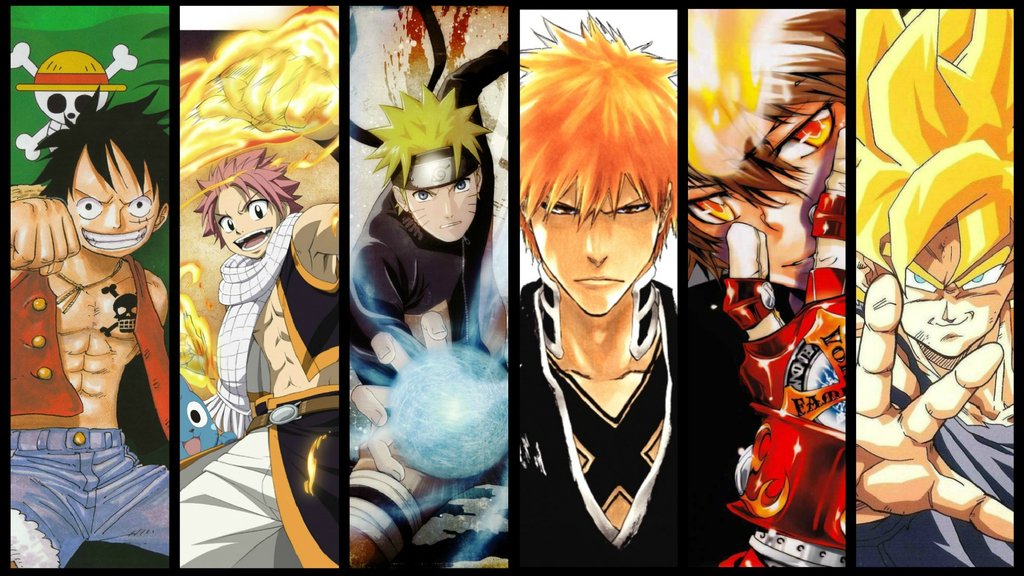
My friends and I all had one. Some of them still haven’t gotten out of it. It’s that period of time where most, if not all of what you watch is Anime, and you join fandoms centered around your favorite ones. It’s a normal part of nerd development, it seems.

For those of you who seem confused by this “Anime Phase”, let me put it into perspective: imagine you had a show or TV genre that you were absolutely obsessed with. You could have been obsessed with it for weeks, months, even years, but it was the center of your attention in terms of being a fan. They’re one in the same. But rather than having it be an American or British TV show/genre, it’s Japanese.

This phase rose out of the Anime Craze of the 1990’s. It came as a result of kids having greater exposure and access to watching Anime, allowing for the phase to blossom. Kids are going through a period of wanting to watch nothing but Anime, and there’s nothing wrong with that.

The Anime Phase can range anywhere from casual (like mine) to all-consuming. I was one of the ones who would watch Anime casually, but wasn’t too far into it. I could watch other shows, and watching Anime didn’t take up my entire day. But there are others, including people I knew, who would spend their day only watching Anime. These are usually the ones that don’t ever leave the Anime Phase, although there are occasions when they do.

In most cases, those who have an Anime Phase never stop watching anime. I can tell you that most of my friends still watch certain anime (mostly to most popular ones), although I find myself unable to sit down and watch one. The last one I saw was three years ago, and although some anime are enticing, I just can’t sit for that long watching. I’ve developed kind of a strange relationship with anime, probably because of overly casual nature of my Anime Phase.

The Anime Phase has been going strong for over twenty years. It’ll be interesting to see how long it continues for, especially with the rise of other popular phases.

Social Media Bandwagon: The Case of Alex Jones

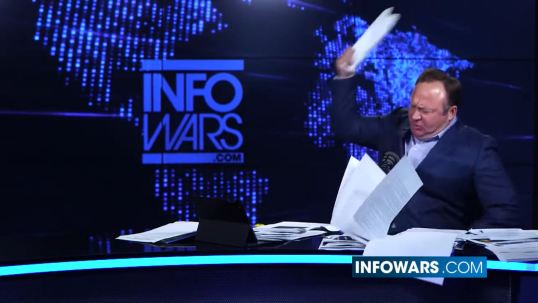
Within the last few days, Spotify, Facebook, Youtube, and Apple all made the move to ban Alex Jones, the runner of the conspiracy theory podcast known as Infowars. Apple was the first to make the move, with two days later the other three platforms following suit. This came as a result of months of complaining from general populace, who wanted Alex Jones banned for promoting false information and dangerous lies. And while this is a step in the right direction, it comes in a way that seems cowardly.

But let’s start at the beginning. Why did people want Infowars banned? Initially seen as a funny meme in the beginning, the podcast was quickly recognized as dangerous, spreading misinformation and promoting distrust in real media, arguing that the conspiracy theories presented are actually true. This grew dangerous under the age of “Fake News”, causing people to follow him and believe him, further dividing people over what is actually happening in the country.

This caused people to start pushing to get him off of mainstream social media platforms. People were tired of Alex Jones and his podcast, and wanted him to stop having open access to unsuspecting audiences. People even cited that he was breaking terms of service on multiple platforms in order to try and get him off the normal way, but none of the social media platforms did anything. Despite constant protest and pushing to get him off, not a single platform did anything.

That was, until Apple finally decided to cut his app off, and to stop streaming his podcast on Apple Music. Then, seemingly out of nowhere, the other three platforms “found’ that Jones was in fact breaking Terms of Service. Now he’s only on Twitter, saying that the other platforms banned him out of cowardice. The real case is, however, that no one wanted to do anything unless someone else did it first.

Think about it. As good a move as it is, why did it take so long for the platforms to act? Then, when Apple finally banned Jones, why did they move so quickly? Because they’re jumping on the bandwagon.

The thing is, companies don’t really care, unless it will hurt their own public image. So when a big company like Apple moves, of course Facebook (who recently took a major hit over selling information and causing a company to make bot accounts), would want to jump at the opportunity to make themselves look better. And of course Youtube and Spotify would want to as well, in order to prevent losing public face. It does make them look kind of weak.

But at least they did something good. I can’t hate on them too hard, because it wasn’t like they banned someone people actually liked. But it does kind of look sad when companies jump on a bandwagon to keep people on their platform.

The Ironic Existence of Lolis and Shotas

There is a subcategory within anime and manga culture that has an interesting, and even controversial, existence: lolis and shotas. It is a category that pertains to both males and females, portraying either gender as little children, despite them being full-blown adults. Lolis, or girls that have the appearance of being cutesy and prepubescent, are much more common than shotas, which are the male equivalent. They have two aspects of them, one that makes an appearance in normal anime and manga, and the other, which makes an appearance in the genre known as “Not Safe for Work”, or NSFW.

The former aspect, one in which lolis and shotas make appearances in normal anime and manga, are much tamer, but still controversial. They are usually immortal beings, although they can also be eighteen+ year olds, mostly to add comedic humor. Although, it doesn’t help that usually lolis are sexualized, being child-like or innocent in appearance, but scantily clad in small armor. But say they’re a child and they’ll insist that their actually 1000 years old. The biggest example I can think of is the Fire Emblem character Nowi. Nowi is a 1000 year old dragon in scant armor (literal bikini armor with boots and a cape), that looks like she’s 12 years old. It makes romancing her with anyone rather bizarre and kind of uncomfortable, just as it is strange to romance any of the shotas in her game (Ricken and Donnel).

However, this isn’t to say it’s always the case. There are a few lolis that are normally dressed, or dressed in oversized clothes to emphasize their cuteness (the scantily clad nature doesn’t apply to shotas: they are normally dressed from all the cases I’ve seen). Sometimes, the lolis are fully-dressed, making them seem more normal and not sexualized. Usually, though, the loli is dressed in a way that is clearly catering to male fans, and is very much sexualized.

This sexualization plays heavily into the second aspect that lolis and shotas play in: HentaiHentai is the anime equivalent of porn, which I mentioned is the NSFW aspect. In this case, lolis and shotas are sexualized alike (of course with the lolis being more common), sometimes being left alone, and sometimes being altered to be more sexual. The lolis especially, will sometimes be given insanely large breasts (we’re talking the length of their body), in order to add some sexuality, while the rest of the appearance stays the same. Shotas are often feminized, too, making them appear as submissive, while the other partner is much more adult-looking and dominant. In either case, both lolis and shotas are most often set as adults. Not all the time, however.

So, how are lolis and shotas ironic? Well, they’re usually adults, with child-like appearances. They insist that they are older, but promote an almost pedophilic image, without explicitly being pedophilic. They encourage a dangerous sexualization of young, prepubescent children, especially young girls, encouraging creepy men (and some women) to check out and even follow young girls. The sexualization pervades in the anime and manga community, tainting its media.

How “Daddy” got Popular in all the Wrong Ways

It was a mere six years ago when the term “daddy”, which holds it’s place as a part of the Daddy/Little Girl/Boy kink, broke the scene into mainstream Internet media. Once a niche kink that was relatively unknown, the Daddy/Little Girl/Boy kink became widely known, with much criticism following it. The term “daddy” especially gained criticism, while at the same time becoming a meme within social media. Now it is a permanent fixture, although for many it has ruined the original pure meaning of the term.

But first: what is the Daddy/Little Girl/Boy kink? The kink consists of two consenting partners, in which one, the “Daddy” is the dominating male, and the other, the “Little Girl/Boy”, is the submissive type. It is kind of like age play (where one person pretends to be much younger), except more mature, with the submissive figure playing the “cutesy little kitten” type. The submissive will even address the dominant as “Daddy” in a sexual way, trying to get their attention and be used for sexual acts. There are not that many people in this kink, although within recent years it has gained more traction.

When the term “Daddy” broke onto the scene, it permanently changed how many teens and young adults saw the term. People started to use it in a mock sexual and comedic manner, although it’s innocent beginning for most was tarnished. Even I’ve been affected, and every time I hear the word used in a non-mocking manner makes me uncomfortable.

A few years ago, however, the backlash finally arose against the use of “daddy” in a sexual manner. People wanted its innocent meaning to be at the forefront again, and for its use in a sexual manner to sink back out of existence. Anyone who tried to argue in defense of the kink was shot down by the masses, and it was pushed down.

Going into the modern era, the term is much less common, but still tainted. It is still used as a joke, which keeps it’s dirty meaning from fully fading among young adults, although it doesn’t seem to be presenting itself to younger teens, anymore. But it will be a long time before it’s finally gone.

The Genius of Who is America?

Most often the first thing that comes to mind when someone hears the name ‘Sacha Baron Cohen’ is “Oh, the dude from Borat!”. The actor, who has played characters such as Ali G, Bruno, and of course, Borat, gained his permanent recognition after the release of Borat: Cultural Learnings of America for Make Benefit Glorious Nation of Kazakhstan back in 2006. In the film, he duped countless people all across the US, with only a few scenes (such as the kidnapping of Pamela Anderson) being fake. His film gained immense popularity, for both bringing out the honest truth from people, and being hilarious at the same time.

Now he’s back, but this time with a TV show. Taking the role of four different characters (Ricky Sherman, Dr. Nira Cain-N’Degeocello, Billy Wayne Ruddick, and Erran Morad), he goes around to people of a variety of political backgrounds, anywhere from small-town folk to big-time politicians, tricking them into absurd (and sometimes career-ending) situations. This comes into to play when he “teaches” controversial House Rep Jason Spencer Krav Mga, causing the man to shout the N-word and run into him with his bare behind.

Of course, this time it is much harder for Cohen to pull off. With his popularity, more people may recognize him, which has happened in the case of trying to dupe a gun shop owner, who recognized him under all the prosthetic makeup. In another, actually filmed case, part of his prosthetic actually came off, but the couple he was trying to dupe played good sportsmanship and kept running with it. Now that Borat is so recognizable, Cohen needs to use more prosthetics, and be much more careful in how he acts, as to not ruin the joke.

His jokes, however, can be quite brutal, but it’s exactly what the nation needs. He makes fun of both liberals and conservatives, calling out the absurdities on both side, and exaggerating stereotypes in order to confuse and make fun of whomever he’s with. It also shows the audience how absurd people can be, and while some think what he’s doing is too far over the edge, it’s a nice break from the safer political comedy that we’ve seen in the past few years. Everyone else has played it safe, and it’s refreshing to see someone who takes safe and rubs it into the ground.

The best part is, his “offensive humor” is not really all that offensive. It’s how the people take his comments and react that show the ugly side of the comedy. That’s what makes his humor especially genius. He gives people an inch and they take it an run a mile, duping themselves in the process. It leads to some interesting situations (actual police roll up to a ‘staged’ Quinceanera that Cohen had tricked some men into making in order to “trap” illegal immigrants. On a sign out front, he posted their words of what they thought the immigrant would be expecting, and setting up the situation to look like they were trying to lure young girls.

The best part is, he wasn’t the one who came up with the situation: the men were. They thought of what when down at a Quinceanera, and what to do in order to drug and deport any “illegals”. They duped themselves, while he sat on the sidelines. He shows the absurdity of such racism, and how it can easily turn against them.

His form of comedy is, in my opinion, exactly what we need; something brutal and honest, showing the worst sides of everybody in order to get a laugh. And it does, in some cases, show the worst side of everybody (from blatant racists to crazy social justice warriors). No one is safe, and I’m excited to see how the show goes on.

The Popular Myth of July and August

There is a common myth that Julius Caesar and Octavian Augustus added the months of July and August, respectively. But there’s a reason that myth never makes an appearance in any popular culture surrounding the two men: because it’s a myth.

Well, it’s not entirely a myth. But I will get into that later. You see, the months that were added to the calendar that we use today were actually January and February, with February originally being placed at the end of the month. This is thanks to the Roman ruler Numa Pompilius (a Roman king), who decided to make the calendar longer after realizing that the calendar was far too short to make up for the actual year. This comes as a result of the original Roman calendar, which was merely taken from it’s lunar Greek predecessor, was only 304 days long. When Numa added the two months, the calendar got pushed up to 355 days, eliminating the need for adding an extra month(s) just to play catch-up to the rotation of the sun.

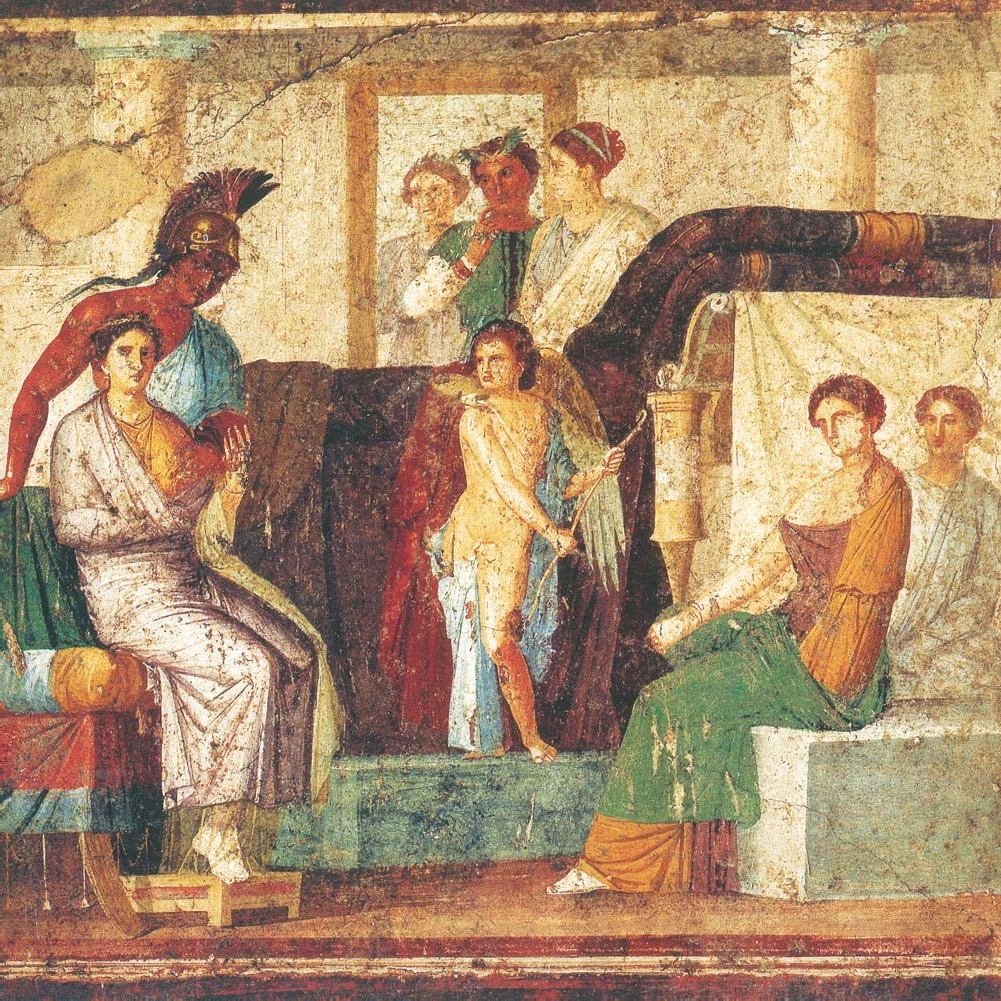
So, if January and February were actually the months that were added, where did July and August come from? Well, Before the dictator and emperor came in, the calendar looked like this: January, Martius, Aprilis, Maius, Juniius, Quintilis, Sextilis, September, October, November, December, and February. Can you see which ones were changed? Well, Quintilis wouldn’t be changed until after Julius Caesar’s death. As a part of his divination by the people, Augustus changed the month of Quintilis (which means fifth in Latin) to July, in honor of Caesar’s birth month.

August, however, would be implemented while Augustus was still emperor, with Sextilis being the one that gets renamed. This is in honor of his good emperorship in 8 BC, presented by the Senate. His birth month is not in August, however, but rather September. So why did Sextilis get changed? Possibly to show the sign of lineage. Augustus wanted the month to follow July, as a show of his relation to the popular dictator (he was adopted by Julius Caesar). Plus, since both July and August had 31 days, it would also show his equal greatness to his predecessor.

So, why the popular myth, then? Most likely as a show of the two men’s inflated egos, or even because they were the only two months whose names were changed. No other month would have their name changed (although February would find itself moved to be between January and Martius in the fifth century). Either theory would make sense, although it is difficult to say how inflated the men’s egos were. They were certainly grand, although that might just be because they were Romans (the Romans were quite extravagant and egotistical normally). So, I can’t really say why the myth exists, or why it persists.

The Rise of Drag Culture

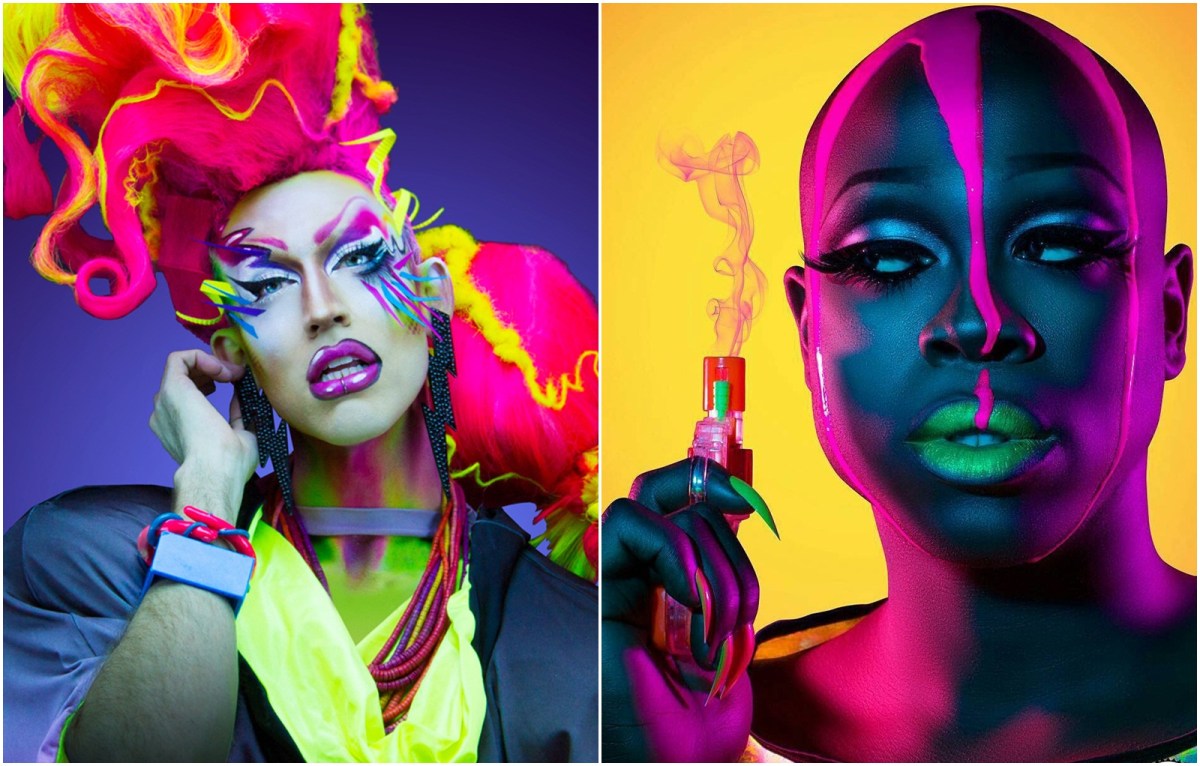
In the US, particularly in major cities, Drag Culture, a subset of the gay culture where (typically) men dress as exaggerated forms of women as a play on gender identity and for entertainment, has grown rapidly in popularity within the last decade. Boosted by the success of Rupaul’s Drag Race, drag culture has faced a resurgence in popularity in pop culture, putting names such as Bianca Del Rio, Chad Michaels, and Latrice Royale alongside Rupaul and Lady Bunny. However, this current rise does not mean that Drag Culture is a new thing. Drag Culture extends far back, much farther than the 1980’s and 1990’s, providing a rich insight into the cultural history of performances.

While the official rise in drag began in the 1870’s, you can look even further back to the times of Greece and Rome, where women were not allowed to act in mainstream performances. Young boys were chosen to play the roles, a factor that continued through the Shakespearean period of performance. This didn’t just exist in Europe, either. In Japan, the famous Kabuki theater historically did not allow women to perform, with the role of those who take the female character being known as the onnagata. They did not have to be young boys, either: they could be all the way into their middle ages, performing the role of a young girl.

The real start for drag culture though did begin, as I said earlier, in the 1870’s. However, they weren’t the iconic LGBT+ performances that we see today. Rather, they were merely men who, wanting to mock women, would dress in exaggerated forms and act as though they were women, representing femininity. The use of drag in LGBT+ communities doesn’t begin until the 1920’s and 1930’s, when the first “gay bars” were established. Members of the queer community could meet there and watch performances, drag included.

Drag Culture would take a hit in the 1950’s and 1960’s, however, as public policy and law began cracking down on the LGBT+ community. In order for a man in drag to not get arrested, he had to wear no less than three articles of male clothing. As a form of protection and activism, the “Imperial Court System” founded by Jose Julio Sarria, came to be. In this system, there was the creation of Drag Balls, a fraternity-type system where “Mother” Drag Queens formed a “house”, taking other drag queens under their wing. These would continue into the modern era, being mentioned by some of the younger queens on Rupaul’s Drag Race.

In the 1980’s, Drag Culture began getting recognized by the general public again (following the LGBT+ Right’s Movement following the events at Stonewall), with prominent queens going on TV shows, movies, and musicals, most notably the role of the Tracy’s Mom in Hairspray being taken by drag queen Divine in the original film. We also start to see the rise of Lady Bunny, being most known for her comedy and DJ skills.

And of course, in the 1990’s, we see the rise of Rupaul. With the release of the hit “Supermodel”, Rupaul changed the Drag game permanently. This would only be added when in 2009 he released the first season of the hit show Rupaul’s Drag Race, which continues to shape the Drag Queen game and allow up-and-coming queens to promote themselves to a massive audience.

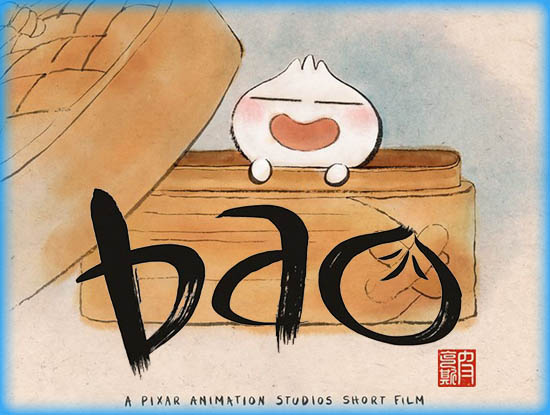
A Month After the Controversy: My Opinion on Pixar’s Bao

Once again coming after all the drama has settled, I have decided to put my two cents in on something. I saw Bao a month ago with my friend, and didn’t think much of it initially. But then all the drama rose and fell surrounding the short, with confusion arising over some aspects of Chinese culture. Is the short worth all the drama? Let’s take a look.

I am going to divide this into three sections: the pros, the cons, and a look at the whole controversy. I’ll try to pinpoint some significant cultural aspects that some people might not understand when looking at this. The analysis here is based off of my opinion, but I’ll try to be factual. This will be spoilery, so if you haven’t seen it and want to, watch out.

The Pros.

What I like the most about the story is the overall message. It was short, and got its story line out without any words. The animation was cohesive and colorful, all the characters being soft lines and not sticking out against the little dumpling child. Everyone was plump and round, and each character was distinctive in characteristic.

I honestly thought the film was a heartwarming tale. I am not quite certain what position the mother is in, but based off of the experiences of my friends’ first generation mothers clashing with them, I imagine there is some influence in there. She clashes with her son, who she sees as acting too far out against her, with the dumpling being a metaphor for her relationship with her son. It really was a powerful portrayal. The short portrays fracturing and reconciliation within a family, with a mother being initially unable to accept her son leaving. It is a story thousands of families face- and it does a decent job at it.

Overall, I thought it was short but had a good story to tell. It was well-animated, and was much better than the last Disney-related short I had to sit through (I’m looking at you, Frozen). I got invested, without needing twenty minutes to do so. It was cohesive and smart, without needing actual dialogue.

The Cons.

I have mentioned that Bao does a decent job at telling it’s story. But it’s not perfect.

The biggest con I can think of for this short is that fact that it relies very heavily on the use of metaphor. Which, works for adults and people who have a concept of metaphor, but not so much for children. In order to explain this, I have to go a little into the plot of the short.

Now, as I mentioned, the dumpling child is a metaphor for the woman’s relationship with her son. She raises the dumpling, but as he grows older he gets more rebellious and distant, eventually trying to leave her. Well, as a resolution, the woman eats the dumpling. Then the son, who looks like the dumpling, steps in from there.

Not bad, right? Well, the problem arises with the fact that most, if not all young children, will not connect the dumpling child as mirroring the son, without really being real. To them, they would see the dumpling child as different, and would think that she actually just murdered a dumpling person. Which, when you think about it, might put kids in distress. And it did-there were reports from audience members of some kids being distressed enough to cry from the scene. The reliance on metaphor is something that most kids-at least the ones that were anything like me-would simply not understand. It’s one flaw, but it’s a big one.

The Controversy.

Now that I’ve given my take, let’s take a look at where the controversy comes from. The short itself was directed by Domee Shi, and was influenced by her experience with Chinese immigrant parents in Canada. And as you can see, you can see the struggles that arise between the mother and the bao as the dumpling grows up and wants to leave and have independence.

How is this a problem? Well, from my friend’s experiences (Korean and Filipino) with their immigrant parents, and from some research, I find that the family and household are very intertwined. The child is not expected to leave the house and suddenly have a career at eighteen-which presents it’s own set of problems in the West-, but are actually expected to stay in the household past eighteen. The family is central, with three or four generations sometimes living in a house together. This idea comes at odds with American culture, especially for the children of immigrants who are surrounded by that culture. It often causes a strain in the relationships (as I’ve seen with some of my best friends and their parents), as the clash in culture causes arguments.

Now, because of my witnessing of these experiences, I am familiar with the cultural clash, especially in Asian immigrant families. However, there were quite a few people (mostly white Americans), who didn’t understand what was happening. This is where the controversy starts. There was an explosion of arguments, as people who didn’t understand the nature and context of the short began social media arguments with people who understood the short all too well. This caused calls of racism and ignorance, when I have to say such sayings might have been a little uncalled for.

Because of social media and the fact that huge portions of the US and Canadian populations live in large, diverse cities, we often forget that there are people who don’t know the experiences of immigrant families, nor understand the context of Asian culture versus Western Culture. When informed, people will grasp it, but when people don’t understand, a pivotal scene like the woman eating the bao would not make much sense. It would just seem like an overreaction to an argument, rather than an important moment that permanently changes the relationship of a family.

Does this mean we should have “dumbed down” the scene for people? No, not at all. While I do think some of the comments I saw were just people who were genuinely confused and not ignorant, I do think some people took advantage to stir up a huge controversy. I don’t think the short should have stirred up that much controversy, but I am not in a position where I understand all sides.