Why is 4/20 a Thing in North America?

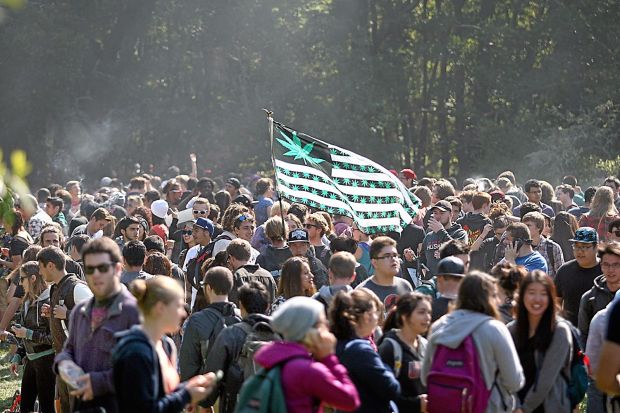
This past saturday, the “unofficial holiday” known as 4/20 occurred, landing on the first day of Passover and the day before Easter Sunday. Events celebrating the “holiday” appeared throughout the US and Canada, with some events even occurring in the UK and New Zealand.

Those in non-cannabis culture countries who see jokes and mentions of the event may be asking “why is this a holiday?” or even “what does 420 even have to do with weed?”. Well, in order to understand the first question, we need to first look at the second.

The association of 420 and marijuana started in the 1970’s in San Rafael, California. A group of high school students and marijuana enthusiasts, going by the name of “Waldos”, met up at 4:20 pm every afternoon by a statue in order to search for that they believed to be a was a pot plot. They never did find the pot plot, but began using the term “420” as a code for anything pot-related.

How did the term expand beyond just the group of Waldos? One of them became involved with the band Grateful Dead, when they worked with said Waldos father on a real estate deal. The bassist of the Grateful Dead became friends with the Waldo, and heard the 420 slang and took a liking to it, kick-starting its spread throughout the United States.

The “holiday” itself came around starting in 1990, and has grown in subsequent years. The event really bloomed internationally in cannabis culture countries in the early 2010’s, when 420 became a popular meme after the legalization of recreational marijuana in the state of Colorado. Recreational marijuana use already existed in Canada, the Netherlands, Luxembourg, Belgium, Portugal, and Chile, although celebration of the 420 event only existed, and only really continues to exist in Canada.

Marijuana remains almost entirely illegal throughout most of the rest of the world, which keeps celebration of the event mostly in North America. Cultural differences and perceptions of marijuana also locks the event within North America for the most part, although the internet has been spreading awareness of the event throughout the West.
The Game of Skin Bleaching Roulette in Africa

Skin lightening and bleaching is a multi-billion dollar industry that has been on the rise for the past decade-much to the alarm of medical professionals. Particularly in Asia and Africa, skin bleaching ads and commercials are common, promoting products that will guarantee paler, flawless skin-a factor that is often seen as a key to success. However, these products are almost always unregulated, and include ingredients such as mercury, hydroquinone and derivatives, topical steroids, and resorcinol, all of which can cause irreversible skin damage with constant use. These ingredients are also known to break down melanin in the process of bleaching, leaving people more prone to developing skin cancer, particularly in hotter climates.

Products like these can create serious issues, particularly when considering the fact that 1 in 3 women on the African continent use, or have used skin bleaching products, according to a study by the University of Cape Town. Skin bleaching is especially an issue in South Africa, where black market skin bleaching products proliferate, leaving people at a higher risk of damaging their skin. It doesn’t matter that South Africa is one of the few countries in Africa that implements regulations of skin bleaching products produced within the country; black market imports pop up faster than they can be confiscated.

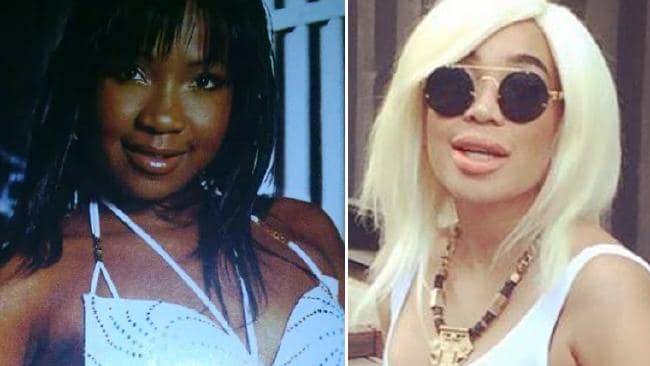
One celebrity in South Africa has gained quite a bit of attention for her skin bleaching, which has drawn harsh criticisms for encouraging young girls to lighten their skin as well. Musician Nomasonto “Mshoza” Mnisi has gained attention for becoming several shades lighter through her skin bleaching treatments, contrasting from her darker appearance from when she first premiered as an artist. She says her new skin makes her feel beautiful and more confident, which can portray badly to darker-skinned South Africans, particularly those already insecure about their appearance.

Mnisi shrugs off criticisms of her appearance, arguing that her choice of skin bleaching is a personal choice, comparing the procedures, which cost around 5,000 rand ($590 USD) each to getting a nose job or breast implants. Unlike much of the rest of the populace both in South Africa and the rest of the continent, the 30-year-old musician uses high-end skin bleaching products, which tend to be much safer than their black market counterparts.

The dangers of using skin bleaching products, particularly non-regulated ones, is that they can cause blood cancers, liver and kidney cancers, and a severe skin condition known as ochronosis, a form of hyper-pigmentation in which the skin turns a dark purple shade, according to a researcher at the University of Cape Town. Few people know of these dangers, however, and the increase in demand is troubling. The World Health Organization has reported that 77% of Nigerian women have used skin bleaching products, the highest of any African country, followed by Togo at 59%, South Africa at 35%, and Mali at 25%. Men are also starting to use skin whitening creams, which is only adding to the increasing demand for the products.

Although it is difficult to pinpoint one sole reason for why people bleach their skin, psychologists say that low self-esteem, and some degree of self-hatred, are common among reasons. Having lighter skin is more desirable throughout the African continent, a result of over 100 years of colonial rule, and with continued discrimination against those with dark skin in terms of education, pop culture, society, and jobs, people desire to lighten their skin and make themselves more “desirable”. The perceptions against darker skin are deeply entrenched into African society and pop culture, which keeps the demand for skin bleaching products alive.

KPop is Now in the West, and it’s Here to Stay

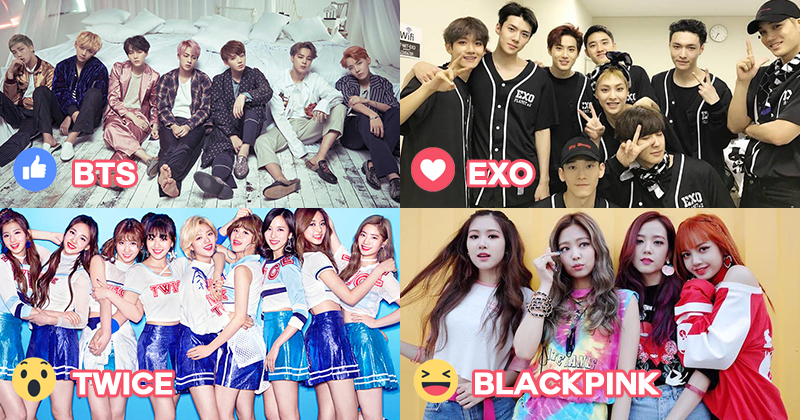
The Western pop culture realm was severely shaken up when in 2017 BTS was nominated for a Billboard Music Award, and won. They were the first Korean artists to get nominated for a Western Music award, and were met with a mix of both excitement from their fans and confusion from the general populace. Social media was flooded with questions about who BTS was, and why/how they got nominated in the first place.

Two years later, and Kpop has not only exploded in popularity, but is slowly melding its way into Western music. Artists such as Steve Aoki, Nicki Minaj, Jason Derulo, and Dua Lipa have collaborated with some of the most popular Kpop groups, mixing both Korean and English in a way that had only previous been done with Latin music. Just last week Jason Derulo came out with a song and music video featuring LAY and NCT 127, the former being a Kpop singer and the latter being a Kpop group, called “Shut Up, Let’s Dance”.

Kpop is working its way into Western music, though at a much slower rate relative to the explosion in popularity among Western audiences. The rapid growth in fans of Kpop is rather astonishing, as in just a few months the rate of Kpop fans have skyrocketed, and social media interactions with Kpop groups. For both BTS’s and EXO’s twitters, the rate of interaction with the accounts by fans beat expected interactions by a longshot in 2018, beating out top western artists such as Beyonce and Justin Bieber.

Kpop groups have even made their way into Western advertisements, as BTS has both been on the cover of Billboard magazine and modeled for Vogue. The most popular female group at the moment, Blackpink, just appeared on the cover of Billboard magazine as well, having some of the highest amount of streams on Spotify. Their latest song “Ddu Du Ddu Du” also has topped 695 million views on Youtube, making it one of the most listened to Kpop songs globally.

Kpop is pushing its way into Western Music, and, at least for the time being, it’s here to stay. It’ll be interesting to see how Western music awards, particularly awards such as the Grammy’s, will adapt to the rising popularity of Kpop. Will it add a category specifically for Kpop, which they did for Latin music? Or will they simply meld it in to the preexisting categories, as what occurred with BTS this february? It’ll be interesting to see where the next few years takes us.

The Evolution of Fake News

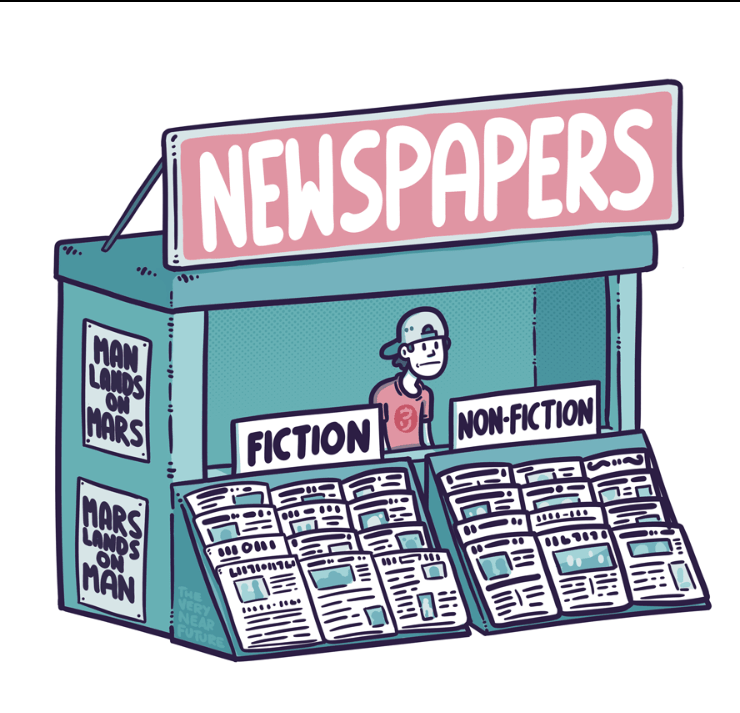
Although the term was popularized in the 2016 US presidential elections, fake news has had a rather long existence, spanning over a century. It’s no new thing, although at the moment, the proliferation of fake news has built up points of great contention, trust, and turmoil.

Fake news can trace it’s history all the way back to the Spanish-American War of 1898, which was, in essence, caused by William Randolph Hearst and his newspaper the New York Journal. During this time period, the “fake news” was classified as “Yellow journalism” as the yellow tint of the printing of Hearst’s paper differentiated it from it’s rival newspaper. Hearst’s newspaper pushed out fabricated stories about the violence of the Spanish towards Americans in the Caribbean, utilizing emotion to encourage the American public to want war. This triggered a period filled with fake news, which became so rampant that a challenging newspaper rewrote it’s tagline to support “real news-not fake news”.

Despite the anxiety over the fake news, yellow journalism was able to successfully turn the people to want war, which kick-started the Spanish-American war.

Fake news did not die after the war. Instead, it went someone dormant, as there was major backlash against such fake news at the dawn of the twentieth century. However, fake news would make a new rise during World War One, churning out propaganda about the barbaric nature of the Germans, particularly against Belgium. Now, this isn’t to say that Germany did not act violently against Belgium, a peaceful country, but the fake news industry blew much of the invasion way out of proportion, churning out stories that rang not just in the US, but throughout the allied nations.

Not only that, but rampant propaganda an fake news actually fooled the entirety of the German public, who thought the entire span of the war that they were winning the war. And since the German military maintained mass press censorship, the public never knew they were losing until Kaiser Wilhelm II declared surrender.

Fake news would keep making appearances in spreading of the First Red Scare in the US, feelings of isolationism both in the US and in Europe, and the decade of harsh reeducation of the German public during the rise of Nazi Germany. Following the end of the second world war, fake news would appear intermittently, spiking during times of conflict, and declining during periods of relative peace. With the dawn of the internet, however, fake news found its new home.

The way that fake news is presented has changed in terms of proliferation, although its function and purpose has not changed in the slightest. It fueled conflict and dissent during the 2016 presidential elections, and continue to fuel political polarization and divide, particularly as the global public is much less likely to do the research to find the truth. Currently, the media stands in a precarious position, being both the source of truth and also of sensationalist fake news, which in turn damages the trust of the public. This problem becomes incredibly difficult to resolve especially as sources of media are so vastly expanded, with just about anyone, including myself, holding the ability to push out news, whether fake or not.

K-Beauty: A Trend with a Dark Side

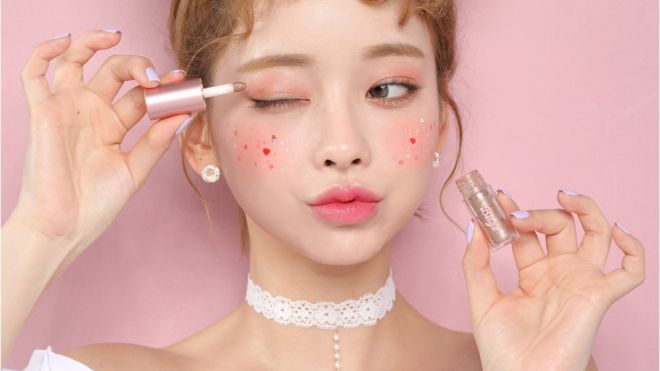
K-Beauty has been the “hot in-thing” on the beauty market for the last few years, each year growing exponentially more popular. People are going crazy for the various face masks, lotions, BB cream, dark spot treatment, CC cream, and many other products that hold a reputation for giving you a “dewy, young-looking face”. Youtubers and beauty bloggers only add to this craze, providing yearly top tens and list of best products. Now, in just about every pharmacy or beauty store, you’ll find a section devoted purely to Korean beauty and Korean companies.

But as with anything, the world of K-beauty has a vicious dark side. But this dark side isn’t an international issue. It only extends to the edges of the South Korean borders.

What do I mean by this? South Korea has interestingly harsh beauty standards, which can range anywhere from having a thin figure to having a certain face shape. Yes, a certain face shape. South Korea is currently known as the “plastic surgery capital of the world”, having the highest rates of plastic surgery per capita of any other country, with over 980,000 operations reported in 2014 (Business Insider, 2015) . The country also attracts hundreds of thousands of “medical tourists”, most of whom come to get cosmetic procedures, according a report by Chang-Won Koh (2017).

No, this isn’t the most alarming thing in the world. Despite the rather high levels of plastic surgery, South Korea ranks third in terms of the total number of plastic surgeries, trailing behind the US and Brazil by over 1,000,000 procedures (WorldAtlas, 2015). But you also have to consider that the population of South Korea ranges just around 55 million people, versus the 325 million in the US and the 209 million in Brazil. But I digress. It’s not so much the plastic surgery itself that’s the issue. It’s the culture surrounding it.

This culture is incredibly strict, and applies much more the girls than boys (although boys are not unaffected). The beauty culture actually even expects people to get plastic surgery to fit an impossible beauty ideal, with the most famous examples of this occurring being the fact that in just about every long-term K-pop idol contract, plastic surgery is one of the requirements.

But the beauty culture doesn’t just stop at plastic surgery. Skin bleaching is also a common problem, with illegal skin bleaching products flooding the beauty market every year in South Korea. There is a harsh expectation to be as white as possible (a result of a long-standing social issue where the nobility were white-skinned while the peasantry were dark-skinned from working in the sun). This expectation doesn’t just exist in South Korea (it exists throughout all of Asia, Africa, and Latin America), but South Korea is known for promoting ads that claim that being dark-skinned is being a failure in life (which has attracted much international backlash). The skin bleaching, which is known to break down melanin and leave skin much more likely to get skin cancer, can be compared to excessive tanning, which also leaves people at risk of the same effects.

But I can’t get on South Korea too harshly. The West also has incredibly high beauty standards, though with slightly less restrictions than South Korea. As I said earlier, the US ranks number one in terms of total amount of plastic surgery per year, having over 4 million procedures in 2015 alone. We also have a problem with tanning products, with products all over the market claiming to let you tan yourself from home, and tanning places existing all over the place. Are we really any better than South Korea?

Artist Portrayals in Media: So Horribly Accurate

In comedy, we’ll always find that artists are either portrayed as air-headed “connected to the earth” white people, or pretentious jerks. That’s how they have always been portrayed since the dawn of the 1990’s and 2000’s, and that’s how they will be portrayed until the end of time. At this point, the portrayals are iconic.

The only problem with these portrayals is how horribly accurate they are. No, really, it’s insanely accurate. Need proof? Go to a modern art museum. Not even that. Just open an art history book or biography. Time and time again, you’ll find that artists tend to be extremely arrogant and pretentious, trying to act like they are on some higher tier of existence than the common folk. This isn’t the case for all artists, but it is the case for a majority of them.

This is especially true in the case of most modern artists, who think they can get away with painting a blank canvas white and selling it for a million dollars. Well, they kind of can, given that the culture surrounding art and art critiques inflates an artist’s ego to the point of no return by going insane over said white-painted canvas. The culture only makes the artist’s attitude that much worse, encouraging them to make paintings that can be done in less than five minutes. Not even paintings, but also sculptures (there was a case where an art piece which was literally a pile of trash was accidentally thrown out by a cleaning lady who didn’t know it was part of the exhibit). The culture helps further the monster. But it doesn’t create it.

No, the artist grows into the stereotype in college, and even high school. They make friends with other artists, learn about art and somehow get it in their head that they are more “unique” and “free” because of it. They invest themselves in their craft, and become infected. Then they get mad when people make fun of said infection. They insist that the stereotypes aren’t true at all, then act exactly like their stereotypes (even down to dressing like them, just without the beret and scarf). It’s almost sad.

But, like I’ve already said, this stereotypes doesn’t apply to all artists. There are a few that lie outside of the stereotype, who are actually fairly normal, and even make fun of the stereotypes and the people who act like them. They are, unfortunately, few and far between.

The American Meme, and Unnecessary Drama

For the past few days, I had been in a funk about writing. I didn’t have any inspiration to write about anything, which was kind of annoying, because I wanted to at least write about something. That was, at least, until I watched the American Meme on Netflix with my friend last night.

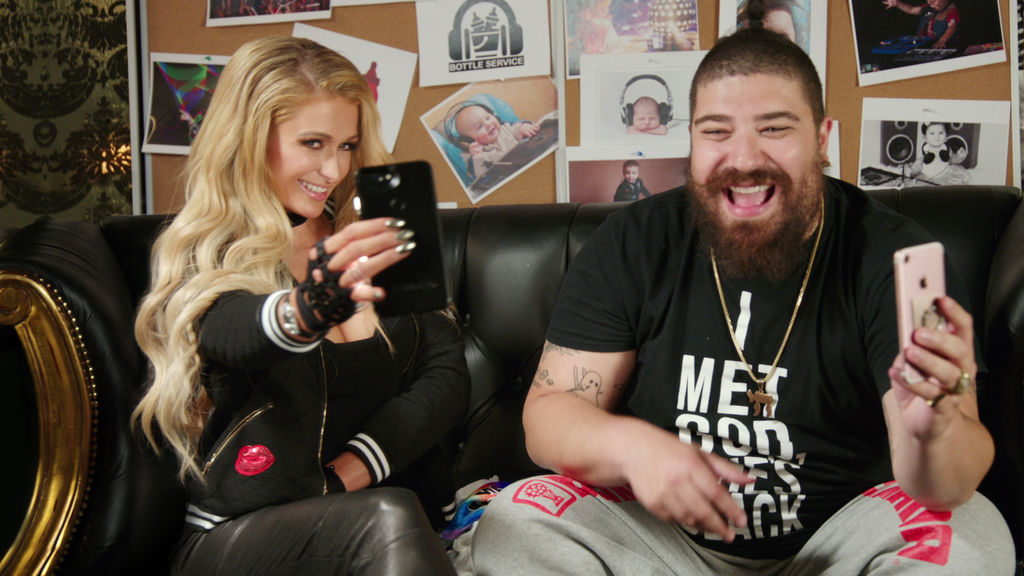
God, this documentary was something else. I don’t think I’ve ever rolled my eyes harder than when I watched this. It wasn’t because the documentary was necessarily bad-just filled with whiny, obnoxious people who complained about being social media influencers, while at the same time refusing to leave it.

I’m not kidding. Literally ninety percent of the documentary was about these people complaining about being influencers. How they “hate people” or “their life sucks”, but they also continue to do their job because “what else can I do?” The only person I had any real sympathy for was Paris Hilton, who did get chased around by paparazzi, and did have a private sex tape released without her consent. That, I can understand.

But everyone else? I’m sorry, but I have none for them. They’re literally all the same types- kids who move out to LA to make it big, don’t get any parts, and then turn to social media to pay the bills. Then they complain because the pathway they chose sucks and is competitive and fake, but don’t leave or move back home. They claim to be hooked on the attention, which may be true, but seriously, it’s not that hard. Being an influencer is cut-throat. Don’t like it? Leave.

I do realize in writing this that my sympathy may be lessened by the fact that they moved to LA, especially to become actors, which grates on my nerves to no end. I, like most other native Angelinos, hate those kinds of people. The transplants that come here to be in the entertainment industry, then refuse to leave when they get jaded. They increase the traffic, the housing prices, the cost of living. They add to the gentrification of long-standing communities, all the while flaunting how they’re from a small town or some other state. Sorry, but you won’t find sympathy from me.

Another thing that got on my nerves: how these people claimed they had to be crazy to get views, and how everyone in Hollywood dresses up and calls the paparazzi to them now. Which isn’t true in the slightest. Most traditional entertainers (actors, musicians), don’t have the paparazzi coming to them, and don’t get all flashy. They blend into the regular population, eating at restaurants or going to the gym. Most of them stay out of the limelight, going entirely against the claim Mark Henderson made about Hollywood.

And as for social media influencers, I follow plenty of them (and live near a few) that don’t at all do crazy things for the sake of social media. They don’t make fools of themselves, and still get millions of views on a youtube video they release, or an Instagram photo that they send out. This documentary tries to say otherwise, but facts are facts.

This documentary, to a certain extent, was a load of bs. I won’t lie and say that social media is nothing like this (because any creative platform can be pretty cut-throat and strenuous), but the extent to which these people make their claims is so exaggerated. The people interviewed also act like there’s no way out, but then contradict themselves (like Kirill was saying he had ‘no other option’ than to party like crazy for Instagram, and then it goes and talks about how Paris Hilton used her fame to start a bunch of brands), to the point where is just seems ridiculous. To me, the documentary was just a way for people to complain about their lives without actually changing anything about it.

What is Black Friday Really?

While this event is portrayed most often as being exclusive to the US, there are actually over 20 other nations that participate in this event. Every year, a few more countries seem to jump on the bandwagon, as well, as the idea of making more money through providing massive sales is becoming increasingly more appealing to international businesses, despite declining sales in the US. But the US is the birth-land of this event, so I will be focusing on it for the sake of fully explaining what it is.

Despite what most stories have you believe, Black Friday started around 1960 in Philadelphia, Pennsylvania, as hordes of suburban shoppers and tourists would flood the city the day after Thanksgiving to be prepared for the Army-Navy football game that happened on that Saturday of each year. Cops were overworked trying to deal with all the people, and shoplifters ran free, causing the term “black friday” to be pinned to the day.

Black Friday didn’t really take off as a national commercial event until the late 1980’s, when companies took advantage of the name and decided to try and make the event appear more positive. The only problem was, that developed an entire culture around bombarding stores in order to get that early holiday shopping done.

I’ll give you a hint about how that happened: pop culture and media advertisements. Stores began advertising their “Black Friday” deals, pushing to the public that it would be a one-day only sale of a lifetime deal. This happened on TV, radio, anything they could push it to that would gain an audience. And it did.

By the 1990’s, you start seeing depictions of it in movies and TV shows, with whole episodes or portions being dedicated to people trying to go Black Friday shopping, waiting in line or getting hindered for some reason. Even going as far as the mid-2000’s, shows, particularly comedy shows, would frame at least one episode about trying and failing to go Black Friday shopping, or going Black Friday shopping and basically participating in a Battle Royal-type scenario because of it. It became ingrained in US pop culture for a long while, only fueling the drive for Black Friday shopping.

Even now, there are still adverts for Black Friday sales. It gets mentioned on the news, on social media, on Youtube channels.  People make memes about it, we hear news about it (especially from Walmart, who is notorious for having straight brawls in their store).
It still gets talked about and remembered, meaning it will not be going away for a long while.

Revisiting Disney Fanaticism

A few months back, I wrote about some of the world of Disney fanaticism. I had kind of forgotten about it for a while, but was reminded of the world when I not only saw lots of people from back home posting about going to Disneyland (all this weekend, mind you), but also stumbled upon Youtube channels dedicated to analyzing different things about Disney, namely DisneyDan.

I decided to watch some of these videos, particularly the evolution of different character portrayals in Disney parks, and felt very strange. Maybe it’s because of the level of detailed analysis that these people go into (these videos could be 30 minutes or longer). Or perhaps it’s from the fact that almost every time, these people will mention seeing all the performances that the character participates in that they could, plus going to multiple meet-and-greets for that character.

The videos surprised me, and spurred me into researching more Disney fanaticism, namely through looking at fan merchandising. It wasn’t hard to stumble upon a treasure trove. Mickey Mouse ears were everywhere, with so many different themes that it was impossible to find an end. There were also limited edition plushies, clothes, posters, art, just about anything that wasn’t a Disney park itself.

I was surprised by the creativity put into making some of the products (namely the Mickey ears-someone made Dolewhip themed ones), but not at all surprised by the quantity of items to get. I know how far fanaticism can go, although even now it’s still hard to comprehend. I’m fine with getting the occasional plush, and going to Disneyland about once a year; when I see these people go all-in I wonder where their supply of spending money comes from. Disney is expensive.

But let’s revisit the videos I watched, for a second. They’re tied to the money thing, as these Disney analysts almost always mention going out to Disney on Ice, or seeing all the different shows within the Disney park-all that adds up. The amount of personal research (plus, all the Disney history they go into to get a fully fleshed-out story line, is honestly quite impressive. I mean, it’s an interesting topic, but I’m not quite sure I’d be willing to go as much into detail as some of these people. It got me wondering what kind of people they were, centered around their intense attachment to Disney. How much merch did they have, did they have annual passes, do they work for Disney. So many questions run through my mind, ones that I don’t really know if I want to find the answer to. For me, it’s better to appreciate from afar in this kind of situation

Social Media as an Art Form

For some reason, there seems to be a separation between social media and art. Perhaps it’s the connotation that art is in some sense fine, something of both the classics and genius modern artists. Social media, despite its variance, is seen as something that can’t penetrate the realm of art, save for actual digital artists.

I can’t help but argue against that assumption. Well, now I argue against it, but a few months ago I agreed with it. But in taking a class in media forms, a rather interesting and hefty lecture involved social media as art, and how it reaches different audiences. There was so much to say about artistic involvement through social media as a form of unconventional means, and yet there is almost no academic research about it. When you look into it, social media is a form of affecting society on its own, and not through art. To make matters worse, almost all books on the subject are just self-helps on how to use social media wisely. Nothing on the discourse of social media and art.

Why is this the case? Maybe because social media isn’t quite taken seriously as an art form. For marketing, yes, for social movements, possibly. But art? No way.

I think that social media, when used correctly, can be both a bizarre and powerful medium for artwork and social commentary. And I think the most powerful example of that are memes, and the trend known as vapor wave.

How can memes possibly be art? Not conventionally. Modern art is all about the unconventional, challenging the status quo in order to point out the irony and hypocrisy of something going on. Although I heavily question a good portion of modern art and feel that modern artists in themselves are hypocritical/pretentious, I have to admit that there are ones that are insanely clever, particularly ones that are participatory (the audience can interact with the piece). This opens the space for memes to come in.

Memes, despite their apparent stupidity, are participatory forms of art in their essence. They’re images that are edited, via text post or some other form, to whatever the editor dictates. This in turn can cause more people to edit these images, creating a vast network of repetition, solidifying the original image (or figure, artwork, anything really), as a meme. And memes dwell in the world of social media, shared with and by thousands of people. Meme trends are created, and ultimately are archived for anyone who wants to find it.

Memes also, are often very political. They make fun of the current political climate, a particular figure (George Bush, Ted Cruz, etc.), or news that occur. They take the distasteful and turn it on its head for the sake of humor. Memes also can make fun of culture, society, and just about anything, which in itself is a form of art in how creative the variance can get. Memes, despite their ridiculousness, are just pieces of modern art, baby.

Now, what about vapor wave? What is vapor wave? Well, vapor wave was and is a phenomenon where images are layered in a way that appears like a pseudo-meme (the trend did have an origin in memes), attempting to be both aesthetically pleasing and humorous. Vapor wave takes much of its style from the Neo-Expressionist movement, which occurred from the late 1970s to the early 1990s. The Neo-Expressionist Movement attempted to be nonsensical but aesthetically pleasing through layer imaging, but rather than being humorous, it leans towards the more seriously critical. Vapor wave is almost just like that, except digital rather than physical, and funny rather than critical.

Social media is a powerful medium for the production and reproduction of participatory art, all of which goes under the radar of the connotation of “art”. People, without realizing it, are creating forms of art, which is not really considered art by “modern art” standards”, which I find to be an interesting paradox.

My Takeaway from the Jake Paul Series

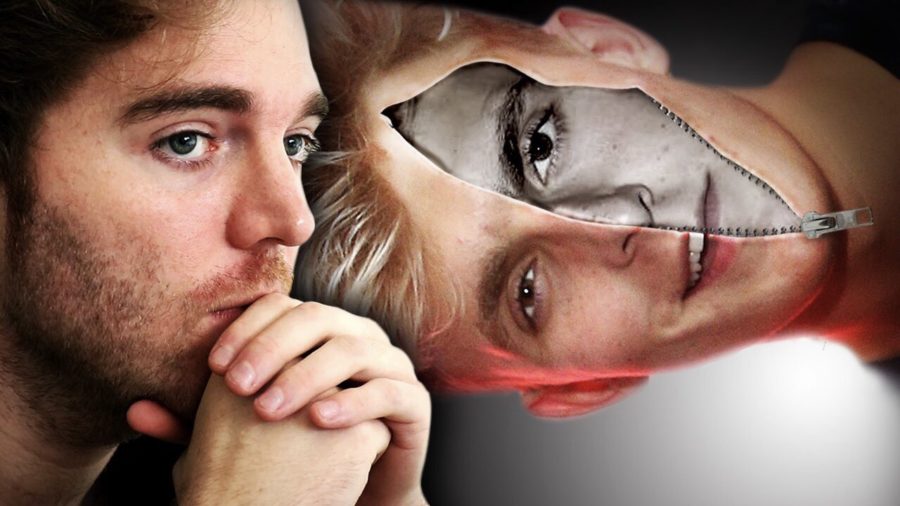
If you’ve been involved in the Youtube world, then you would know that a few days ago, Shane Dawson wrapped up his eight-part series on Jake Paul. The series ended in an almost two-hour long finale, a good 90 percent centered around the final interview that Shane had been building up to throughout the series.

Despite my qualms about the second episode, I watched the series in its entirety. I will say that while I admire the amount of research Shane went through, approaching multiple different people that were involved in Jake Paul’s life in order to get their perspectives, I have to say that in the end, Shane let his bias show a little too brightly.

Not in the sense that he ignored that Jake Paul is a sociopath (which he’s not), but in the sense that in the end he went a little too light on calling out his past. He did ask about the assault case, the cheating situation, and other such things that people had been wondering about. He provided advice on what Jake Paul should do, to which the latter figure seemed enthusiastic to accept. But the interview as a whole was a little underwhelming. Shane promised that the interview would allow no mercy, and spent the whole series making that promise, but when he got to the actual interview, I couldn’t help but be bored. I sat there, constantly checking how much time was left, wondering when the harder questions were going to come in. In the end, I felt that we weren’t given what we were promised, because Shane learned to like Jake Paul.

And, to be honest, I did feel some sympathy towards Jake Paul. Throughout the show, the strained and frayed family dynamic came up, which provides some insight on who Jake Paul is behind the scenes. His Dad raised him to believe it was okay to act like this, and his brother did some awful things that would mess with someone. Working with a father and brother, as well, is also very dangerous, as it blurs the line between work and family. It can destroy families.

There’s also the fact that Jake Paul holds himself in a toxic situation, living in the Team 10 house and almost never taking a break. Even his girlfriend can sense it, and wants them to move away so that they aren’t constantly in the limelight. That kind of situation would mess with anyone.

And yet, at the same time, I hesitate to sympathize. The situation between Alyssa and Jake still makes me wonder, especially as some aspects to each side of their stories holds differences, making it difficult to believe one person or another. Shane never fully fleshed out the situation through third-parties without bias, adding a sense of dissatisfaction and uncertainty. The uncertainty makes me hesitate.

Also, despite him being in a messed up situation, we can’t ignore the fact that Jake Paul has done some crappy things. There were bad choices he made outside of the ones discussed in the series, and they were choices that he made. Of course, college males can act as dumb as him, but being an influential figure, especially with a demographic of kids 8-16, he needs to know better. And I’m glad Shane pointed that out, cause in certain ways Jake didn’t seem to understand the amount of influence he actually had on kids. Constant merch plugging, his music, and pranks, his talk against school, all of that can leave an impact on a kid, shaping their views. He didn’t seem to understand that.

Now, in the end, Jake promised to change things. But words don’t mean anything if no one acts on them. I want to see him act on it, and the best way I can imagine that being is taking an extended break from Youtube-possibly even moving back out to Ohio. To think on himself and his actions, to come back and change his content. I won’t believe the guy until he’s actually presented the social sphere with his change, and possibly moved himself into a situation where he has a break from the chaos. While I do hope that he does improve, I will only believe it when I see it.

Returning to the World I Knew Before

I don’t know if I’ve indicated before, but I have a long history of being a huge nerd.

Or rather, a geek (yes, there is a difference). I wasn’t the techy “build your own computer and digs math” type, which would have classified me as a nerd (by stereotypical standards). No, I have always preferred pop culture and literature, preferring to spend my time playing games and dabbling in a bit of anime. But the biggest highlight of being a geek was going to conventions.

The two biggest conventions I went to were Wondercon, which functions as a mini-Comic Con, situated in Anaheim, and Anime Expo, the largest Anime convention in North America. I went to these conventions every year from when I was thirteen until I went to college, when scheduling began interfering. It got to a point where I kind of got sick of them.

But in college, things changed. For some reason, I had it in my head that I should “grow out” of my geekiness, or at least keep it more private. Perhaps it was because I looked around and saw all the other geeks around me at school made me uncomfortable. They were just too stereo-typically geeky. That’s not to say that some of my high school friends weren’t, but these guys just fit the bill too well.

The disassociation might also have been partially influenced by the fact that I never fit the bit for someone who was geeky. Yeah, I wear glasses and at one point cut my hair short and dressed less-than-pleasantly, but I’m not talking about that. I’m talking about my face, my figure. I looked more like the kind of person geeks and nerds would wish would be into the same stuff as them. And this isn’t out of an inflation of my own ego. I’ve had enough creepy experiences to know exactly what position I was in. I look more like I belong in a Starbucks.

This was a factor that had always plagued my adolescent years. Especially during the height of gamer gate, where you could get called a fake gamer or fake nerd for just about breathing the “wrong way”. They never judged the people that looked like (stereotypical) geeks and nerds. They judged the people that didn’t.

It didn’t help that my Mom and sister would make fun of me for being a geek. My sister has become more involved in the culture herself in recent years, which has lightened her take on it, but my Mom would always roll her eyes. She still thinks I’m into things that I’m not (i.e: she thinks everything I watch is anime for some reason). She didn’t stop me from being a part of geek culture, but she didn’t much like the fact that I was so into it, either.

So for most of my college years, I kind of kept things under wrap. I stopped investing myself in geek culture for the most part, although I couldn’t help having my closest friends know what I was into. Everything was going fine.

But then, I started to miss the geek world. I started to miss being involved in the newest game, and missed going to conventions. I missed being a geek. I wasn’t going to suddenly stop dressing decent, but I didn’t want to let go of something I actually enjoyed. It was a big part of my life, and it was something cool to do. I got to see artists I follow in person, discover new artists, and find new things that I didn’t know before in geek culture.

So I’ve decided to come back. My Dad says he can get us into Comic Con, and I am planning on going to Anime Expo, so I guess that’s a good start to breaking back in. While I don’t have much time to be “full geek” (I have school and work), I do plan on enjoying the things I once did.

The Saturation Complex of Geek Culture

I had mentioned in a post earlier that there is a prevailing idea that misconstrues how geek culture came to be. I can’t really say where this came about, although I strongly suspect that films and TV shows of the 1970s and 1980s paired with gendered conceptions surrounding geek culture are to blame. Whatever the cause, it has fueled this conception, leading to a sort of alienation complex as the geek community shifts and changes.

As a result, there is this saturated version of history, which relies on the idea that women and minorities have not been a part of geek culture until very recently (as in, within the last decade). As a result, there has developed a constant push against women and minorities joining in on geek culture, with particular “tests” placed against women in order to test if they’re “qualified” to partake in the geek community. These blockades grow increasingly pointless as geek culture continues to gain popularity, and yet for some reason persists. Perhaps I can explain why.

You see, it all starts at the source of geek culture: Science Fiction (Sci-Fi). In the saturated version of geek history, the first Sci-Fi author was Jules Vernes, best known for his book Twenty Thousand Leagues Under the Sea. As a result, this causes men who believe this start to think that women and other minorities have no real right to enter and write about Sci-Fi.

However, if you make one quick Google search, you’ll find that this version is incorrect. While Jules Verne was one of the earlier Sci-Fi writers, the real first Sci-Fi author was Mary Shelley, who published Frankenstein in 1818, a whopping fifty years before Jules Verne. This makes the Sci-Fi genre not a “boys only” club, but a club founded by women.

Shelley wasn’t the last female Sci-Fi author, either. Well-known ones include Octavia E. Butler, Margaret Atwood, Ursula K. Le Guin, and Suzanne Collins. Sci-Fi has never been a “boys only” club, although it is often pushed to appear that way.

Comics, by contrast, didn’t really diversify until recently. In its early days, the comic industry was very much “boys only”, mostly outright refusing to hire women and other minorities. This isn’t unusual, however; the entertainment industry as a whole was that way.  That isn’t to say that women and minorities weren’t in those realms, but it was very difficult to break in, particularly from the 1920’s-1970’s. This realm makes it a whole lot easier to promote the saturated history. Since women and other minorities were barred, it was easy to say that they didn’t belong and exist in the space. Despite the fact that the majority of comic readers in the present era greatly outweighs the “traditional” readership (white men), there is still this stigma that pushes women and minorities away.

The same goes for the video game industry. Women and minorities were mostly barred in the early days (as they were discouraged and stigmatized from getting STEM degrees in college), meaning that they couldn’t break in until more recently. This has created a frictional environment that extends beyond game development and into game playing, leading to online harassment and common claims of not being a “real gamer” to anyone that doesn’t fit the geek stereotype. To be honest, the “fake gamer” argument is ridiculous: if you play games, you’re a gamer. You don’t have to be best of the best, but if you play video games as a hobby, then you qualify.

The reason there is such a push back against diversity entering geek culture mostly stems from a victim complex among the “traditional” geeks. Despite the fact that geek culture has been gaining continuous popularity over the last two-three decades (exploding after the premiers of Walking Dead and Game of Thrones), the news for some reason has not hit the geek community. Or, rather, it has not processed.

The “traditional” geeks seem to be in denial about just how popular geek culture is, moaning and groaning how they are such victims and such a minority, while at the same time fighting against anyone that doesn’t fit their own characteristics and pushing them away. They like to act like they’re still the kids that get severely bullied, although just about any kid with a computer nowadays has access to video games and anime. It’s a bizarre complex that sticks out like a sore thumb.

Comic Books Have Always Been Political

With the releases of Wonder Woman and Black Panther, I couldn’t help but notice quite a few people mentioning that they didn’t like the fact that these movies were “adding” politics to comics. This always bothered me, because anyone who knows anything about comic books (unless they choose to ignore this) knows about how politics have always been a part of comic books. I’ll explain why.

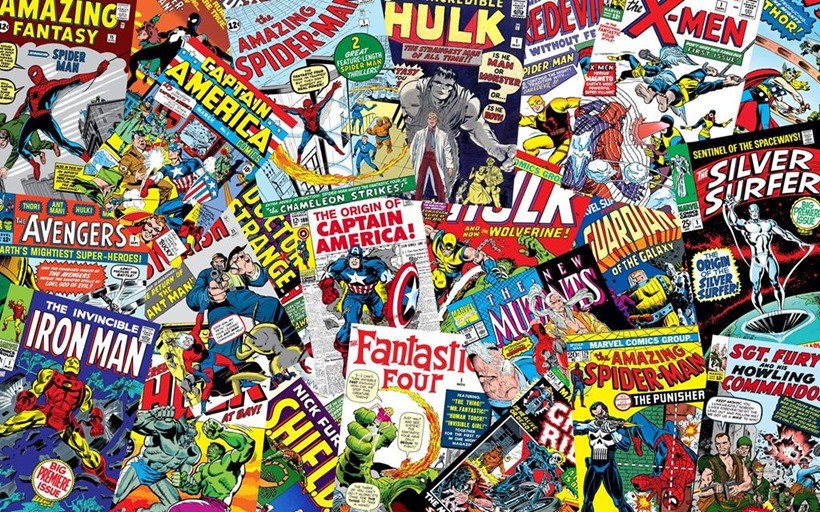
You see, most comics had their main start as anti-Nazi propaganda in the late 1930’s and especially during World War Two. Characters such as Superman and Wonder Woman from DC, and Captain America from Marvel represented the “heroes” of democracy, clad in Star Spangled Banner attire as they kicked the asses of the bad guys, who represented ultimate evil. What even pushes the point further is that the general majority of comic writers during the time period were Jewish, which Nazis despised. The characters and comics were written in support of the US’s involvement on the Western Front, fighting the bad guy and saving the day.

The end of the war was not the end of politics in comics, either. You see, comic books are an art medium, and their one of the most obviously political mediums, as well. However, because of their fictional nature, the political side is often ignored. Which seems odd to me, especially when considering the fact that there will be entire characters created in response to certain affairs on either the national or global sphere. Black Panther came about as a result of the Civil Rights’ Movement. Miss Marvel came about as a combatant to the rise of Islamophobia. X-Men’s whole premise is about discrimination against minorities.

Even comic creators will argue that they, and their works have always been political. They argue that they put their messages in superhero comics, with important messages being portrayed in an obvious-yet-not-quite-obvious way. It could be in an important conversation, or self-reflection, or a grave mistake. In any of these forms, there is a message, more often than not reflective a political or social message.

The fact that people ignore the political side to comics shows not only how well the messages are hidden, but also the success of the popularly sanitized version of nerd culture. What is the sanitized form of nerd culture? Well, it’s a version of anything to do with “nerdy culture” (i.e: Comic books, Sci-fi, fandoms) that erases the political and diverse history of nerd culture so that it only looks like white men were involved in nerd culture until recently. There are many drastic effects of this sanitized view, but I’ll get into that another time. The point is, the sanitized view of nerd culture is the most commonplace, and the most inaccurate form.

All-in-all, to say that comic books have never been political is drastically incorrect. Comics have always been political, and will always be political. To say otherwise is misguided.

How Fandoms Go from Fab to Drab

Fandoms, which are a subculture centered around supporting or following a certain piece of media, are everywhere in Geek culture. Just about every TV show, movie, book series, and more has a fandom, some small, some tremendously big, and many in-between. If something extremely popular is released, usually its fandom explodes for a few months, or even a few years, before mysteriously collapsing and disappearing. If you’ve ever seen this occur, then you have just witnessed a fandom going from fab to drab.

How does this occur? Fandoms have normal lifespans, with the very small ones usually dying out fairly quickly after the piece is released (known as “going dead” in fandom terminology). Medium and large ones that continue in their drab phase can live a long time-I’m talking about decades of survival (Star Wars, Star Trek, Back to the Future). This is all a part of a natural cycle.

However, Fandoms that go from fab to drab have a relatively short and volatile lifespan, which can lead to fall-backs and resurgences, all before their eventual collapse. This usually comes as a result of several factors.

The first is the development is what’s known as toxicity. Every fandom has a few bad eggs. But when there’s enough of them, all attacking people and bullying people over differing ships and opinions, then the fandom gets labelled as “toxic”, both by people outside of the fandom and the few remaining clear-headed people still in the fandom. Fandom is supposed to be about a community coming together, not tearing each other apart. This is an issue that can occur in just about any large fandom, as major groups (particularly shaped around “ships”, or couples that people root for) belittle minor groups, essentially bullying them out of the fandom.

The toxicity does not stop at people in the fandom, either. I remember the days of Superwholock (The combination fandom of Supernatural, Dr. Who, and Sherlock) when the fandom would attack any outsider that questioned them or criticized them, building up their own reputation as toxic. The same thing happened to the Undertale fandom, leading to its demise within only a year of the game being released.

Which leads me to my next point: Hatred towards the fandom. When a fandom is toxic, it not only builds up a bad reputation, but cuts its own supply off of newcomers. When people are discouraged or turned off from joining the fandom, even the largest one will eventually fall. Every fandom needs newcomers to survive; too few or none at all will kill just about any one of them (Superwholock was an interestingly unique case, but in order to explain it in full detail I would need to talk about it separately).

When fandoms are faced with these two issues, they become increasingly volatile, lashing out against others and fully consuming themselves in their toxicity, which only furthers the problem. They solidify their own fate, even if they don’t know it.

Fandoms that once start fab, welcoming all others and becoming a large fandom that bonds over a certain media, can either quickly or slowly turn drab, turning against itself and ruining itself as others watch on. It’s an interesting and prevalent cycle that normally only happens to the biggest and trendiest fandom of the time, providing a serious lesson to others about growing too big too quickly.