Love After Divorce: The Appeal of the “Reborn Woman”

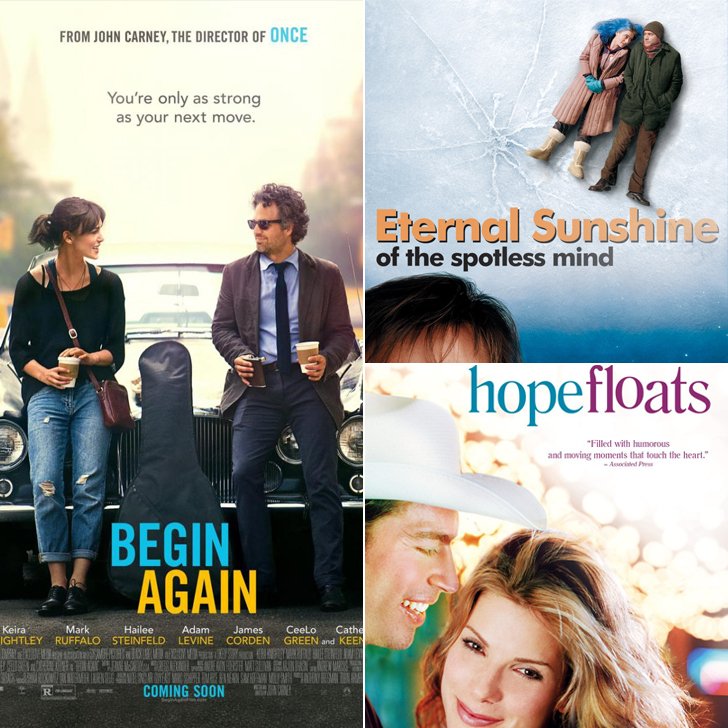
With the recent release of Book Club, I began wondering about the whole “Love After Divorce” genre that seemed to be appearing more often in mass entertainment films. The Book Club, which centers around women in their seventies trying to find new romance after divorce (two divorce, one widow), falls on the older end of the spectrum in terms of age for the genre, but still holds many of the tropes that make it a good representation. Finding a man in his fifties whose rich and attractive, having a happy ending, plenty of women’s bonding moments, struggling to get back into the dating realm, and many others. And despite its worse-for-wear reviews, it was mildly successful, making $53 million in the domestic box office, while the movie had been made with a budget of $10 million.

The success got me thinking-what makes these films so appealing? Upon looking into it, I found blog upon blog of women talking about their favorite “Love After Divorce” films, all with tales about how many of the films they didn’t like until after they got divorced. Which makes sense, as those who face the troubles are divorce are more likely to relate to a light-hearted film about finding love in the time after, but is there that much of a base for it?

Well, according to the American Psychological Association, anywhere between 40 to 50% of all marriages end in divorce after the first marriage in the United States-with the divorce rate for subsequent marriages being even higher than that. With that in mind, the base for the “Love After Divorce” genre becomes that much bigger- especially when divorce happens to women who are middle-aged, and haven’t been in the dating sphere for decades (if at all). The light-heartedness of the films also adds to cheering women up after a rough divorce-as many blog testimonials will tell. And I can’t entirely say that that isn’t possible.

From the “Love After Divorce” films I’ve seen, it’s hard to say that the films are anything beyond cliche chick-flick money-grabs. But then again, I am not divorced, and I am certainly not middle aged. I am not a part of the demographic that is being targeted by these movies, and I can’t relate to someone going through a divorce. Divorce is a rough experience, not just for the spouses but also for any other family member involved. And if it had been a long marriage, it can be rough on self-image and self-esteem. A movie about finding an attractive rich man might just be what someone needs to feel more confident. I can’t knock something like that.

While the films tend to follow the same tropes (which had led to the doom of rom coms), they seem to maintain an appeal and audience, which is something to note.

Can Romantic Comedies Make a Comeback?

Romantic comedies, or rom coms, have faced a serious decline in popularity on the big screen. Once at their peak in the 1990’s and early 2000’s, rom coms have been relegated to the indie screen, where they have become products of subculture, rather than a point of mass entertainment. But could this change?

Rom coms initially began falling out of popularity on the big screen in the late 2000’s and early 2010’s, as many rom com films fell back on the same tropes and plot points, causing the genre to look too repetitive and unoriginal. These tropes include cute-meets, love triangles, happy endings, mid-movie break-ups and change of hearts, last moment change of hearts, and many others that led movies to become repetitive and unoriginal. The good rom coms were mashed together with the many bad ones, and audiences lost interest.

Rom coms moved to the indie screen as a result, and major media companies practically gave up on the genre for more profitable endeavors. Rom coms became parts of subculture, with more dynamism coming in as a result of having the “indie freedom” that comes with being made without having to appeal to the general populace. And with this decade being dominated by a distinct lack of rom coms, it seemed like they were never coming back.

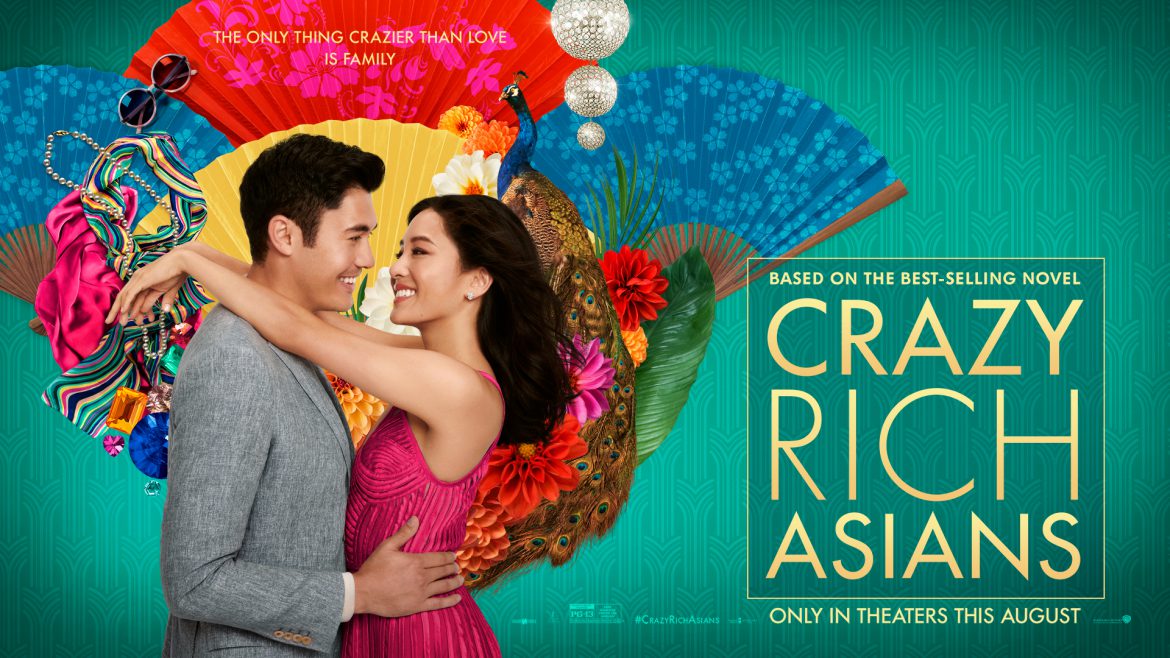
That was, until the announcement for August’s release of Crazy Rich Asians was announced. The film, released by Warner Brothers and based off the bestselling book by Kevin Kwan, is creating discussion around whether or not the genre can come back to the big screen. Increasingly, there is hope that the film with give the genre a much needed rebirth, bringing the genre back to a newer audience.

While I don’t know about the film bringing an entire genre back, it does have the potential to give romantic comedies an entirely new look, shedding old tropes that really needed to go.

A Timeline of Alien Films

Aliens, or extra-terrestrials, have had a surprisingly long and interesting history in terms of film. Beginning as early as 1902’s A Trip to the Moon, aliens have made appearances in a variety of genres from horror/thriller to comedy (and even romance), ranging anywhere from mysterious blobs to almost human. I thought I would compile a few of the ones that have made a major impact on alien cinema.

Let’s start with A Trip to the Moon, or La Voyage Dans La Lune, released in 1902 by George Melies. While you may not have heard of it (as with most films from the silent era), it is important for being the first film centered around contact with aliens. Influenced by Jules Verne’s From the Earth to the Moon and Around the Moon, the French film is about a group of astronomers who go to the moon in a cannon-launched capsule. As they explore the moon, they are chased by a strange looking lunar people, or Selenites, one of which they eventually capture and bring back to Earth. Here the aliens look distinctly non-human, setting up the trend for other interpretations of aliens in film.

In the next film of importance, the Blob, released in 1958 by Irvin Yeaworth (note: Superman made his first film appearance in a 1948 serial, but I am skipping over him, as the film centers around his comic origins, rather than its own idea), the non-humanoid alien appearance continues, with the main creature being a mere blob. The Blob arrives in Pennsylvania from a meteorite crash, where it consumes and old man who pokes the meteorite open. The Blob continues to grow and consume everything in its path, only stopped by extreme cold. This film, like the ones that came before it, center around aliens coming to Earth, or are mostly centered around Earth.

Star Wars, however, breaks that trend, taking place in a “galaxy far, far away”. Episode IV, released in 1977 by George Lucas, centers around a young Luke Skywalker, who lives in Tatooine with his aunt and uncle during an intergalactic civil war. After his uncle buys C3PO and R2D2, he discovers a message from the captured Princess Leia, and embarks on a journey to find Obi Wan Kenobi. From there he goes on a journey with the renowned smuggler Han Solo to find and rescue Princess Leia. In this film, and in the trilogy, the aliens come anywhere from entirely human (most of the main cast) to giant monsters, meant to represent a whole galaxy of different species. Star Wars is incredibly well-known, and seems to remain so, with new films from the series coming out every year.

Star Wars was an interesting turn from the norm of alien movies, being action-filled and comical, rather than horror-filled and intense. But the next big film on our list makes a serious return to the horror-thriller genre, coming in the form of Alien in 1979. Directed by Ridley Scott, the film follows the crew of the ship Nostromo who receive a distress signal from the planet LV-426, to which they decide to investigate. On the planet they find a derelict ship, which contains large egg-like objects. When one of the crew members touches on, a creature comes out and attaches itself to his face. It eventually falls off on its own, and after which they return to their own ship. The man who was attacked chokes and dies, however, and a small alien bursts from his chest, disappearing into the ship. From then the crew must try and kill the creature, which quickly grows, and begins to kill and eat the crew. This film was the first in its eventual series, developing into an entire series based around Alien vs. Predator.

The next film, like Star Wars, takes another turn away from the horror-thriller genre, being the heartwarming E.T the Extra-Terrestrial. Released in 1982 by Steven Spielberg, this cult classic follows the tale of E.T, who gets left behind after his group of alien botanists flee from government agents. It hides in a suburban tool shed, where he is discovered and befriended by ten-year old Elliot. They form a connection with one another, working together to try and send a message to E.T’s home. They work against government agents who are trying to capture and study E.T. to try and get his people to come back for him. It’s a heartwarming tale that has retained its popularity throughout the decades, contrasting typical alien films in that the alien this time is a cute wrinkly creature.

While there are plenty more alien films of importance to talk about, I’m going to have to cut it short and focus on a more “recent” one (when I mean recent, I mean late 2000’s). This film is Avatar. Why did I decide to choose this film over anything else? Well, because it not only was a change in how aliens are portrayed, but also how film is made entirely. The film, which was made almost entirely through CGI (a feat almost unheard of), takes place through the perspective of Jake Sully, a paraplegic former marine who partakes on a mission to find an energy source for Earth, after all natural resources had been depleted. They find a valuable source called unobtanium on the planet Pandora, a heavily forested planet inhabited by the 10-foot tall Na’vi. He joins the Avatar program to try and gain access to the unobtanium, but eventually falls in love with the princess Neytiri, and begins to change tune. He works to protect the land of the Na’vi against the humans who want to destroy their environment for resources, becoming one of the Na’vi in the process. I want to point out this film because of the mark it left in film (despite the joke that no one can remember a single line from the film). It was remarkable for its insanely high-production and beautiful scenery and design, and with the amount of CGI that it used, was considered a feat.
A Hollywood History of Vampires

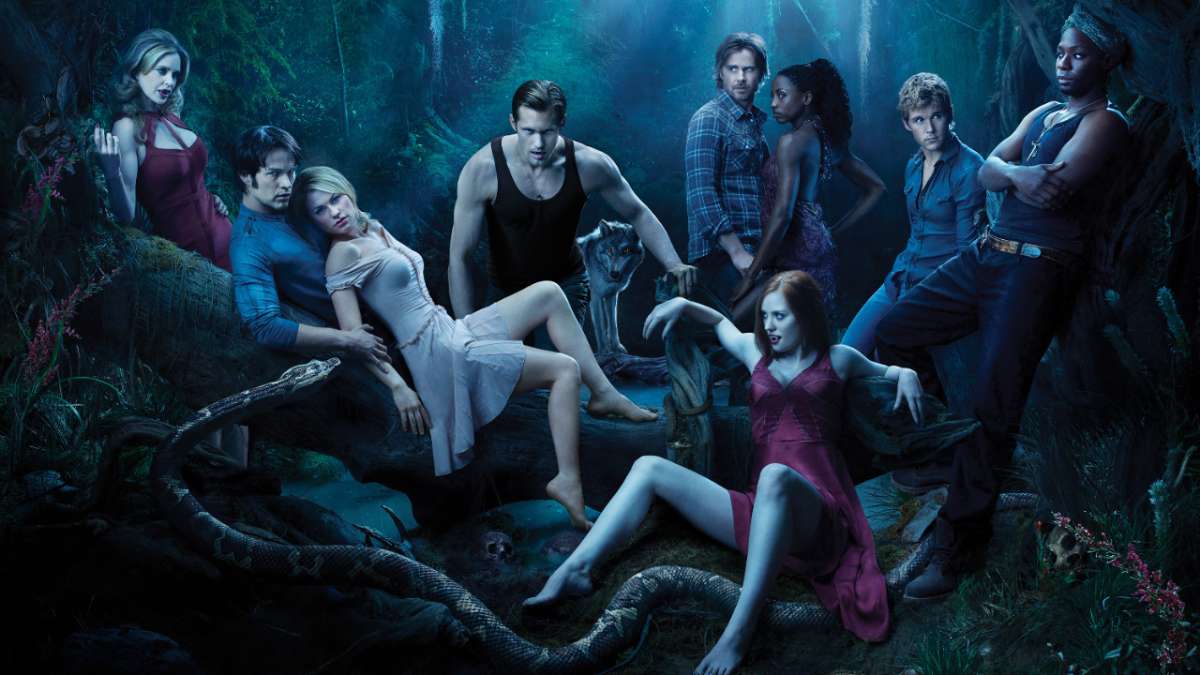
With the revival of vampire literature after the release of Twilight back in 2006, vampires, having faded in popularity, suddenly skyrocketed, with shows such as True Blood, Vampire Diaries, and films such as Hotel Transylvania (and of course, the Twilight Saga) pumping out at every turn, amassing massive popularity. But how did the vampire evolve? From the “Golden Age” of Hollywood to now, the vampire has changed quite a bit. But how?

To start, we’ll look at the most famous vampire of all, Dracula (if you thought Edward Cullen, shame on you). The character, having originated in Bram Stoker’s Dracula in 1897, was originally portrayed as a Count from the fictional Eastern European country known as Transylvania. He attempts to move to England and “vampify” the nation, leaving a small team of men and a woman to stop him.

Dracula found his first film appearance as Count Orlok in F.W Murnau’s Nosferatu, which was released in 1922. Although his name was not Dracula, Count Orlok was very similar to Bram Stoker’s character, with the plot closely following the story line of the novel (in fact, it was so similar, Florence Stoker, Bram Stoker’s wife, sued and demanded that every copy of Nosferatu be destroyed). Later, Count Dracula would find himself back on the screen (this time with his namesake) in Universal Studios’ release of Dracula by Tod Browning in 1931. This film, would cause Dracula to become a household name, his character becoming a permanent figure in Hollywood history. This film would gain so much popularity that it would lead to the release of the sequel Dracula’s Daughter in 1936.

In their original forms, vampires represented beings of pure evil, with no remorse over what they were, and nothing to gain sympathy from the audience. However, with the relaxation of Hollywood standards around what could be shown on the screen in the 1960’s and 1970’s, more dimensional elements began creeping into vampire films, in particular, sensuality. These elements would lead to a shift in how the vampire is portrayed, a marker of this being 1983’s “The Hunger”, by Tony Scott. In this film, John, a human lover of the vampire Miriam Blaylock, is hit with “sudden living death”, where he ages rapidly but is still alive. Sexual promiscuity is apparent throughout the film, with Miriam sleeping with both men and women, and trying to tie them to her as lovers to make them “vampire-like”. While still pertaining horror-like qualities, the films adds a new, less horrifying dimension to vampires, setting them up for the eventual “humanization” that would occur in the 1990’s and 2000’s.

Vampires from then on would be defanged-literally. Their fangs would become retractable, and in Buffy the Vampire Slayer they acted just like normal humans. By the release of Twilight in 2008, vampires had become super-sexy almost human beings. During the time period, they were considered the apex of supernatural romance, (although sparkling in the sun rather than burning to death didn’t catch on very well). And it wasn’t just TwilightTrue Blood and Vampire Diaries also boasted super-sexy male vampires, with fans fawning over them at every which way and point.

With Hollywood so drastically changing the vampire from nightmare-inducing to hot and cuddly, it does beg the question- are we stuck with them like this? I don’t think so. While vampires have lost some of their popularity on the big screen, shows like Penny Dreadful and the Strain have portrayed vampires back in their original form-truly terrifying. There is a decent turn away from the romantic protagonist vampire, with vampires once again being seen as the villains, acting sort-of-human but still definitely different. It seems, now, that audiences are getting sick of the “softening” of vampires-which, in my opinion, is probably for the best.