Government Crackdowns on Chinese Pop

Chinese-Pop, despite its popularity within China, Taiwan, and Hong Kong, is rarely though of in the rest of the world. The genre lies continually in the shadows of the longstanding J-Pop, and the now booming K-Pop industries, although it has in recent years drawn more attention.

C-Pop has drawn an increasing amount of attention in recent years as it has come under the eye of government scrutiny for its “moral divergence”. The government, under Xi Jinping’s regime, has pushed for a return to more traditional Confucian morals, which argues a loyalty to hierarchy, and is used as a rejection of Western influence, and has recently turned its attention towards “cleansing” Chinese popular culture.

Back in January of 2018, the Chinese media regulator came out with an edict that said Chinese TV shows “should not feature actors with tattoos (or depict) hip hop culture, sub-culture and immoral culture,” in essence bringing the growing heyday of Chinese hip hop to a grinding halt. Hip Hop, which originated in the urban black population in the US, is a prime target for the “moral straightening” program that the Chinese government is aiming to implement, as it exists as the epitome of Western influence

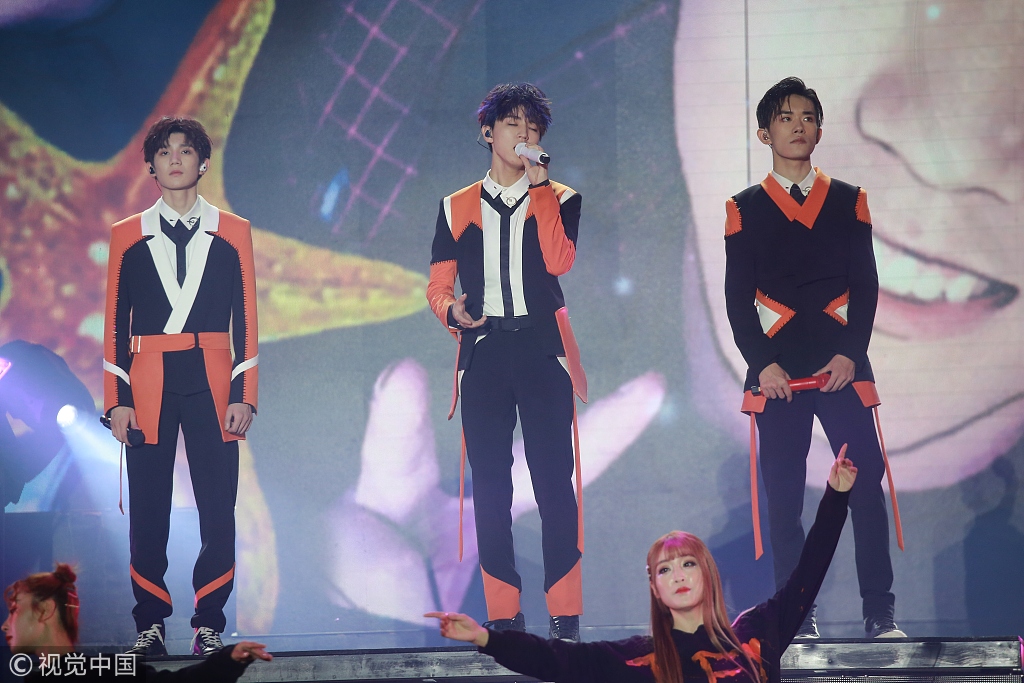
Another, more recent possible act by the government, was the blurring of men’s pierced ears in January 2019. Both actors and C-Pop singers alike are now appearing on TV with blurred earlobes, which almost immediately drew criticisms from fans. The fans argued that the blurring of earrings, which was never explicitly implemented by the government (although most likely heavily suggested) reinforced the traditional, outdated standards of beauty for men and women.

In the regions outside of the major cities, the move to blur the earrings for the most part seems to have support, as traditional beliefs of hierarchy and gender still dominate. Men wearing earrings, to the rural population, was seen as “degrading” to the social status and strength of men.

The government is suspected with having a heavy hand in the decision to blur the earrings, as it would be another feature of the “moral straightening” of Chinese pop culture, and would function as a rejection again of Western culture.


The Game of Skin Bleaching Roulette in Africa

Skin lightening and bleaching is a multi-billion dollar industry that has been on the rise for the past decade-much to the alarm of medical professionals. Particularly in Asia and Africa, skin bleaching ads and commercials are common, promoting products that will guarantee paler, flawless skin-a factor that is often seen as a key to success. However, these products are almost always unregulated, and include ingredients such as mercury, hydroquinone and derivatives, topical steroids, and resorcinol, all of which can cause irreversible skin damage with constant use. These ingredients are also known to break down melanin in the process of bleaching, leaving people more prone to developing skin cancer, particularly in hotter climates.

Products like these can create serious issues, particularly when considering the fact that 1 in 3 women on the African continent use, or have used skin bleaching products, according to a study by the University of Cape Town. Skin bleaching is especially an issue in South Africa, where black market skin bleaching products proliferate, leaving people at a higher risk of damaging their skin. It doesn’t matter that South Africa is one of the few countries in Africa that implements regulations of skin bleaching products produced within the country; black market imports pop up faster than they can be confiscated.

One celebrity in South Africa has gained quite a bit of attention for her skin bleaching, which has drawn harsh criticisms for encouraging young girls to lighten their skin as well. Musician Nomasonto “Mshoza” Mnisi has gained attention for becoming several shades lighter through her skin bleaching treatments, contrasting from her darker appearance from when she first premiered as an artist. She says her new skin makes her feel beautiful and more confident, which can portray badly to darker-skinned South Africans, particularly those already insecure about their appearance.

Mnisi shrugs off criticisms of her appearance, arguing that her choice of skin bleaching is a personal choice, comparing the procedures, which cost around 5,000 rand ($590 USD) each to getting a nose job or breast implants. Unlike much of the rest of the populace both in South Africa and the rest of the continent, the 30-year-old musician uses high-end skin bleaching products, which tend to be much safer than their black market counterparts.

The dangers of using skin bleaching products, particularly non-regulated ones, is that they can cause blood cancers, liver and kidney cancers, and a severe skin condition known as ochronosis, a form of hyper-pigmentation in which the skin turns a dark purple shade, according to a researcher at the University of Cape Town. Few people know of these dangers, however, and the increase in demand is troubling. The World Health Organization has reported that 77% of Nigerian women have used skin bleaching products, the highest of any African country, followed by Togo at 59%, South Africa at 35%, and Mali at 25%. Men are also starting to use skin whitening creams, which is only adding to the increasing demand for the products.

Although it is difficult to pinpoint one sole reason for why people bleach their skin, psychologists say that low self-esteem, and some degree of self-hatred, are common among reasons. Having lighter skin is more desirable throughout the African continent, a result of over 100 years of colonial rule, and with continued discrimination against those with dark skin in terms of education, pop culture, society, and jobs, people desire to lighten their skin and make themselves more “desirable”. The perceptions against darker skin are deeply entrenched into African society and pop culture, which keeps the demand for skin bleaching products alive.

KPop is Now in the West, and it’s Here to Stay

The Western pop culture realm was severely shaken up when in 2017 BTS was nominated for a Billboard Music Award, and won. They were the first Korean artists to get nominated for a Western Music award, and were met with a mix of both excitement from their fans and confusion from the general populace. Social media was flooded with questions about who BTS was, and why/how they got nominated in the first place.

Two years later, and Kpop has not only exploded in popularity, but is slowly melding its way into Western music. Artists such as Steve Aoki, Nicki Minaj, Jason Derulo, and Dua Lipa have collaborated with some of the most popular Kpop groups, mixing both Korean and English in a way that had only previous been done with Latin music. Just last week Jason Derulo came out with a song and music video featuring LAY and NCT 127, the former being a Kpop singer and the latter being a Kpop group, called “Shut Up, Let’s Dance”.

Kpop is working its way into Western music, though at a much slower rate relative to the explosion in popularity among Western audiences. The rapid growth in fans of Kpop is rather astonishing, as in just a few months the rate of Kpop fans have skyrocketed, and social media interactions with Kpop groups. For both BTS’s and EXO’s twitters, the rate of interaction with the accounts by fans beat expected interactions by a longshot in 2018, beating out top western artists such as Beyonce and Justin Bieber.

Kpop groups have even made their way into Western advertisements, as BTS has both been on the cover of Billboard magazine and modeled for Vogue. The most popular female group at the moment, Blackpink, just appeared on the cover of Billboard magazine as well, having some of the highest amount of streams on Spotify. Their latest song “Ddu Du Ddu Du” also has topped 695 million views on Youtube, making it one of the most listened to Kpop songs globally.

Kpop is pushing its way into Western Music, and, at least for the time being, it’s here to stay. It’ll be interesting to see how Western music awards, particularly awards such as the Grammy’s, will adapt to the rising popularity of Kpop. Will it add a category specifically for Kpop, which they did for Latin music? Or will they simply meld it in to the preexisting categories, as what occurred with BTS this february? It’ll be interesting to see where the next few years takes us.

Watching the Meg: So Bad it was Good

Last night after coming home from class, I noticed my landlady and one of my housemates watching the latest shark movie the Meg. It was fairly early in the movie, so I decided to sit down and join them. I didn’t think the movie would be good, but I was entirely right in that assumption. But I have to admit, there was something about how bad it was that made it so entertaining to watch.

So, what is the Meg about? The whole plot is about a marine research group run by a private billionaire that accidentally allows a megalodon, the prehistoric ancestor of the shark, out of of the thermoclyne layer of the ocean (which is somehow locked in place by a freezing layer of water?). The megalodon, once free, begins swimming around, destroying boats and reeking havoc on the the researchers. The group works to stop the megalodon before it reaches the coast of China and kills hundreds in a lust for food.

Yeah, the plot already sounds ridiculous. It gets worse. The movie is filled with cheap and cliche dialogue, particularly between the main action dude (who is super buff and gritty, by the way), and the love interest. The dialogue made me crack up quite often, especially when they tried to use it to be emotional/dramatic. It was superficial and corny.

Expanding on that, just the interaction between all the characters feels so fake. Like, it was impossible to get into the characters or treat them like real characters fake. Their interactions were short and superficial, with no character development or deep interaction. When some of these characters reacted to their friends dying, I couldn’t feel anything because none of their interactions felt real in the first place. Even with the main guy’s ex-wife, I was rather confused about where they stood. They were still friends? But their marriage was kind of messy? I didn’t even know. They were all just barely fleshed out versions of stereotypes, or not even anything really at all.

And the romance they build between the main guy and the girl? God, was it weird. Whoever wrote the film clearly tried to make the romance super obvious. They even involved the woman’s eight year-old daughter, who basically gave the okay to having the dude bang her mom. That made my housemate cover her face with the blanket, and made my landlady laugh.

On top of all this, the film had lots of social commentary surrounding Chinese pollution and their process of de-finning sharks. Which, is good commentary, but kind of strange when paired with a movie all about killing a giant shark. I guess you could say the commentary means that the meg is just a metaphor for mother nature exacting its revenge, but that would probably be asking too much from this movie. But the commentary was obvious.

Yet at the same time, there was plenty of product placement. Nike, some watches (I don’t remember what brand), some cell phones, light up shoes, etc. The product placement was all over the place. And I’m going to bed all the brands featured pollute the environment in some way, which kind of negates the point of the commentary.

All-in-all, it was a bad movie. But I stayed and watched the whole thing, just for how entertaining it was. It was a pretty comical movie, even though I highly doubt it was supposed to be taken that way. I just couldn’t help myself. It was fun to see how bad it really was.

How Aggretsuko and Gudetama Took the World

Hello Kitty has long been the star of the Japanese company Sanrio, since stepping onto the scene in 1964. Since then, numerous characters have been released through the decades, with characters such as Cinnamroll, Bad Badtz-Maru, and Chococat gaining some popularity and recognition.

However, there are two Sanrio characters, both of which are two of the company’s newest characters,  have taken not only social media, but also pop culture, by storm. The first of these two is Gudetama, who’s name is derived from “gude” (the Japanese onomatopoeia for having no energy), and “tama” (taken from the Japanese word for egg, tamago), is exactly what his name prescribes: a lazy egg. Released in Japan in 2013 and internationally 2014, the egg gained almost immediate popularity among Millennials and Generation Z kids for his adorable appearance and lazy attitude. His character release was accompanied by a series of online shorts displaying his daily “adventures”, and little emotes that display his range of laziness.

Gudetama maintains popularity as a result of his cuteness, but also his lazy attitude. Young people relate to his lazy attitude, because they want to be like him, lazy and having no problems to deal with (work, school, taxes, etc.). They want to be able to just do nothing. They also like his “kawaii” nature, his simplistic design making him absolutely adorable.

The character also has a very recognizable aesthetic, adding to his popularity: orange and yellow. Two colors that might otherwise be seen as garish and non-kawaii colors are made a central part of Gudetama’s aesthetic, which works incredibly well. It makes his aesthetic unique. All his merchandise is sold in this aesthetic, with shirts, jewelry, stationery, and other items being sold in the pastel yellow and yoke orange colors. Even the plushies of him tend to center around those colors, adding all the more to his absolute essence.

The second character, Aggressive Retsuko, a.k.a Aggretsuko, is a red panda who is an assistant associate at a Japanese company. Her work is oppressive, and she vents her frustration by getting angry, drinking, and singing death metal at a Karaoke bar. She was initially released in Japan in 2016, and then abroad in 2018, paired alongside the anime series about her life. She takes a much more adult perspective than Gudetama, and gained instant popularity because of the fact that she has to deal with her terrible boss (who is an actual pig) and fake coworkers. Many people entering the corporate work force have to deal with these same issues, and only wish they could vent all their frustration in the same way.

Although I haven’t seen much of her merchandise, I know it sells. She’s too popular for it not to sell. She holds a place at anime conventions, and has become a staple for the fact that she’s so relatable. It does help that she’s also very cute.

Both of these characters deal with issues that Millenials and older Gen-Z kids can relate to, although they represent opposite perspectives. Gudetama represents the joy of being able to be endlessly lazy, with no real troubles to deal with, while Aggretsuko deals with releasing stress when faced with the worst of work conditions. It’s interesting to see how they’ve taken off in popularity, and continue to remain popular.

Legends of the Weeaboo

I’ve already spoken about Koreaboos before. The people who want to be Korean, marry a Korean, want to be just like a Kpop idol or Kdrama star. They reject their own culture in the name of adopting Korean culture (or rather, what they think Korean culture is like).

The weeaboo is almost like this. Actually, they are the forefather to this. The weeaboo, rather than being centered around Korean pop culture, is centered around Japan. The weeaboo rejects their own culture in order to adopt what they believe is Japanese culture, proclaiming it as superior to everything else. They base their idea of Japanese culture off of anime and manga, imagining it as some perfect society that is more advanced than any other culture, and that it has had no bad history or political issues.

The weeaboo began to form around the 1990’s, when the West had access to popular anime and manga. Young generations now had access to watching anime, influencing an entire generation, causing some to go a little overboard and become weeaboos.

Except, at the time, they weren’t called weeaboos. Until the mid-2000’s, weeaboos were called “wapanese”, meaning white Japanese (despite people of all races having the potential to be a weeaboo). The old name was mostly given on online forums, with sites such as Reddit and 4chan coining the terms.

However, in the mid-2000’s, some 4chan moderators decided that they were sick of the term. They banned the term wapanese, causing users to scour the internet for another name. This is how they found the term weeaboo. The term came originally from an obscure comic, which is in no way connected to the actual group of people. However, it was a word that also didn’t have a meaning of its own, and was thus made what it is today.

Weeaboos are still going strong, although they now have to compete with koreaboos, causing an ironic and hypocritical battle between the two groups. They are both disgusted with one another, but can’t seem to relate the traits of the other groups back to themselves. It’s kind of weird, but amusing to watch.

The Ironic Existence of Lolis and Shotas

There is a subcategory within anime and manga culture that has an interesting, and even controversial, existence: lolis and shotas. It is a category that pertains to both males and females, portraying either gender as little children, despite them being full-blown adults. Lolis, or girls that have the appearance of being cutesy and prepubescent, are much more common than shotas, which are the male equivalent. They have two aspects of them, one that makes an appearance in normal anime and manga, and the other, which makes an appearance in the genre known as “Not Safe for Work”, or NSFW.

The former aspect, one in which lolis and shotas make appearances in normal anime and manga, are much tamer, but still controversial. They are usually immortal beings, although they can also be eighteen+ year olds, mostly to add comedic humor. Although, it doesn’t help that usually lolis are sexualized, being child-like or innocent in appearance, but scantily clad in small armor. But say they’re a child and they’ll insist that their actually 1000 years old. The biggest example I can think of is the Fire Emblem character Nowi. Nowi is a 1000 year old dragon in scant armor (literal bikini armor with boots and a cape), that looks like she’s 12 years old. It makes romancing her with anyone rather bizarre and kind of uncomfortable, just as it is strange to romance any of the shotas in her game (Ricken and Donnel).

However, this isn’t to say it’s always the case. There are a few lolis that are normally dressed, or dressed in oversized clothes to emphasize their cuteness (the scantily clad nature doesn’t apply to shotas: they are normally dressed from all the cases I’ve seen). Sometimes, the lolis are fully-dressed, making them seem more normal and not sexualized. Usually, though, the loli is dressed in a way that is clearly catering to male fans, and is very much sexualized.

This sexualization plays heavily into the second aspect that lolis and shotas play in: HentaiHentai is the anime equivalent of porn, which I mentioned is the NSFW aspect. In this case, lolis and shotas are sexualized alike (of course with the lolis being more common), sometimes being left alone, and sometimes being altered to be more sexual. The lolis especially, will sometimes be given insanely large breasts (we’re talking the length of their body), in order to add some sexuality, while the rest of the appearance stays the same. Shotas are often feminized, too, making them appear as submissive, while the other partner is much more adult-looking and dominant. In either case, both lolis and shotas are most often set as adults. Not all the time, however.

So, how are lolis and shotas ironic? Well, they’re usually adults, with child-like appearances. They insist that they are older, but promote an almost pedophilic image, without explicitly being pedophilic. They encourage a dangerous sexualization of young, prepubescent children, especially young girls, encouraging creepy men (and some women) to check out and even follow young girls. The sexualization pervades in the anime and manga community, tainting its media.

Remakes and Sequels in Hollywood, and How it’s Not a New Thing

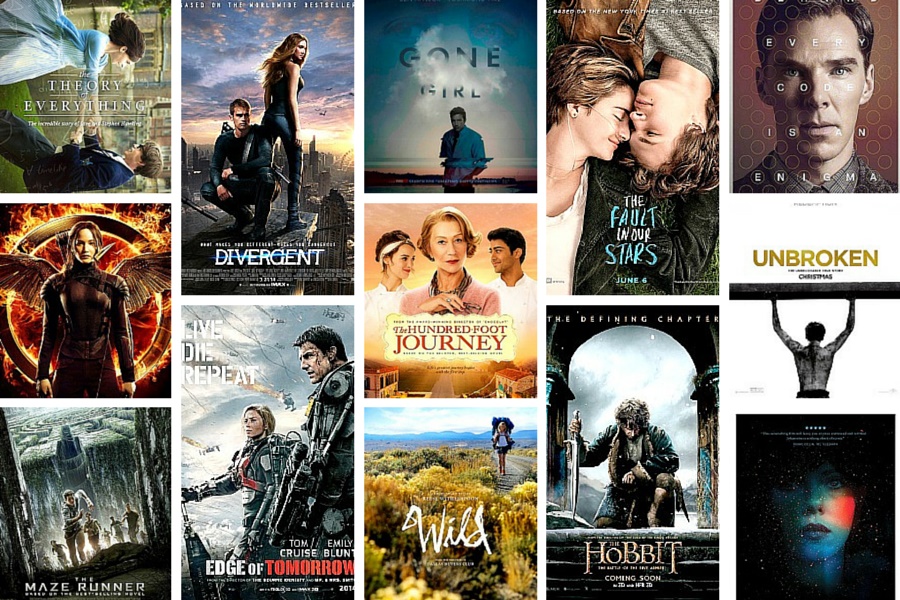
The common phrase that pops up when someone mentions Hollywood nowadays is that Hollywood has run out of ideas. This phrase comes up in particular when constant remakes and sequels comes up, mixed with only a sprinkling of original movies. However, the modern situation isn’t new. In fact, it’s not only been an old tradition in Hollywood, but also Nollywood and Bollywood as well.

Ever wonder about all the sequels to Alien, Godzilla, and other films? Not the modern connections, but the ones that go as far back as the 1950’s? The many romantic comedies that came out during the 1950’s and 1960’s? Remakes and sequels have always been a quintessential part of Hollywood, since it’s inception. The sequels in particular, come when a series is popular- Hollywood is a business, and will run with a popular idea until it dries up. Such a tactic is not modern, nor unique. It has been happening.

Remakes, on the other hand, are usually made when a director decides that there is something to be improved upon in the original film, something that can be different. Of course, this choice is not always for the better, as we’ve seen with the remakes of Clash of the Titans and Willy Wonka and the Chocolate Factory. Usually, though, a director or screenwriter wants to improve on the story, and tries to portray their vision of how the film should be. This has worked, even, with the 2015 release of Mad Max: Fury Road. The films were an original series of films in the 1980’s, revamped in order to try an alternative story route, one that actually worked.

On top of the remakes, Hollywood has had a long history of taking from books and myths, despite the modern criticism that Hollywood only does it to get a guaranteed fan base. Characters such as Dracula and Perseus have found themselves on the big screen on multiple occasions in multiple forms, adapting them and re-adapting them to try and make a take on a story or myth unique. Especially from the 1970’s through the 1990’s with movies such as Psycho, the Shining, and Silence of the Lambs, all of which being smash hits, the tradition of bringing books to the big screen is nothing unheard of. Shakespeare has found his most famous play Romeo and Juliet in multiple movie retellings. Hell, just about all of Disney’s 2D animated films are based around different fairy tales (and even some 3D ones, such as Frozen and Tangled). To say that based off the fact that Hollywood makes films from stories and books is the key to showing that it no longer has originality is a farse.

Now, if you’re keen on the international films industries, you might be saying that they’re much more original. Now that may be true in some cases, you will find the retelling of famous stories and legends in Bollywood, Nollywood, and K-dramas. They do the same thing as Hollywood. Plus, they straight up make remakes of Hollywood films as well. Movies such as Resevoir Dogs, the Godfather, Silence of the Lambs, and When Harry Met Sally all have successful Bollywood remakes, and Nollywood is pushing to have a TV show based around Black Panther. To say that they don’t pull the same tactics as Hollywood would be ignoring a portion of their production system.

This isn’t to say that Hollywood is in the clear, however. Large companies often get trapped in the idea of making remakes or sequels, hoping to gain an automatic audience (increasingly without success). They’re trying to play it safe, but that’s clearly not what the audience wants (i.e: the box-office flops of Solo and the Mummy). People want more unique films to come back into Hollywood, and as usual, Hollywood is going slow in its response. Hopefully, however, it does respond soon.

Nollywood, Nigeria’s Film Hub

We’ve all heard of Hollywood and Bollywood, the undeniably largest hubs for films on the planet. But I notice most people in the West have never heard of the world’s second largest film industry, one that sits in the heart of Africa’s largest economy. This hub, which has gained a surprising amount of momentum, is Nollywood.

Nollywood films first began coming out in the early 1960s, a respective fifty and seventy years after the founding of Hollywood and Bollywood. The first generation of Nigerian films arose just after Nigeria’s independence, with notable filmmakers being Hubert Ogunde, Jab Adu, Ola Balogun, and Moses Olaiya (a.k.a Baba Sala). They helped to modernize much of Nigeria’s film genres, including comedy, drama, and opera, but grew quickly frustrated with the high cost of production materials. After pushing to the government, who had begun funding Nigeria’s TV industry, they gained funding, helping the new industry grow and thrive.

The industry for a while centered around indigenous films, but in 1992, the film Living in Bondage by Ken Nnebue was released, going on to be considered Nollywood’s first big blockbuster release, setting Nigeria on the path of pushing out more commercial films. The first Nigerian film to gain international attraction was Osoufia in London, released in 2003, pushing Nollywood films to be released in standard quality.

In 2009, Nollywood had officially surpassed Hollywood as the second largest film industry in terms of production revenue, second only to Bollywood. As of 2014, Nollywood’s production worth is approximately $3.3 billion USD, although nowadays the industry faces a serious revenue bleed, as movie pirating the the lack of true global breakout has drained revenue, causing a serious drain on the formal economy. Still, Nollywood produces a whopping 1,500 films a year, greatly surpassing Hollywood’s annual production.

Nollywood greatly contrasts from Hollywood in that it is not made in a uniform pattern, with a single language dominating the industry. Rather, the industry is filmed throughout different regions, in over 300 languages, reflecting the many different cultures inside Nigeria. Despite their growing adoption of international uniform influence, they maintain a distinctive cultural difference, setting the industry apart from the two more well-known.

It is undeniable that the industry has the potential to become internationally renowned, although it has yet to. When it can and will finally make its breakthrough is uncertain. But it seems to be doing well for itself, and continues to grow each year.