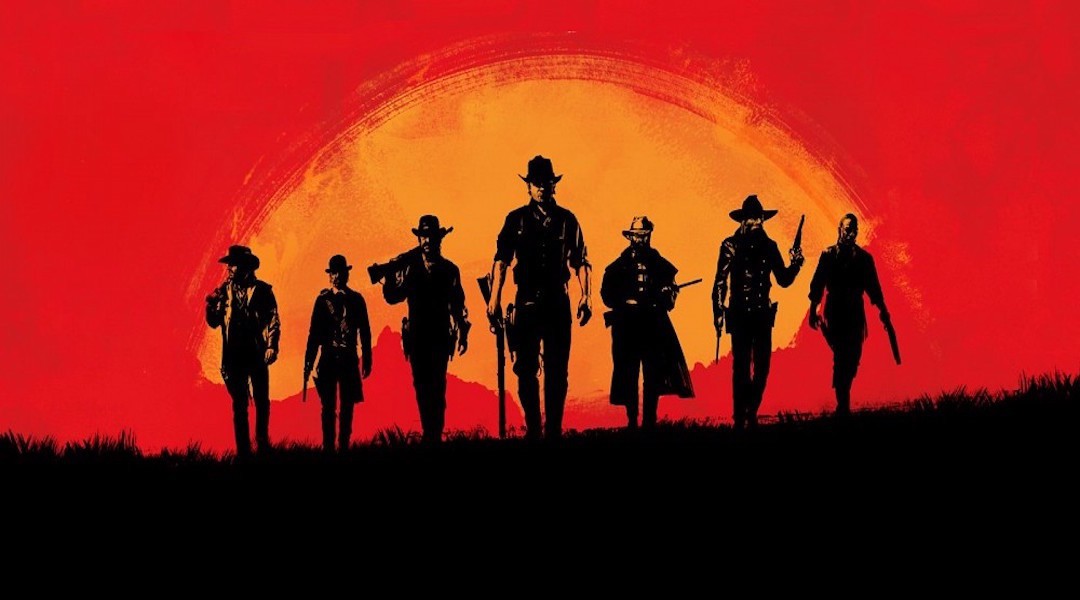
Things to Note From Rockstar’s Work Conditions

I would have written earlier about this, but was away from my computer and couldn’t get to it. But about a week ago, it was discovered that in order to make Red Dead Redemption 2, programmers and other staff had to work 100 hour weeks over a three week period in order to finish the game. This caused a swift backlash on the Internet about the conditions, with everything from news journals to podcasts criticizing what Rockstar had done. Co-founder and VP Dan Houser argued that these overtime shifts were “optional” to employees in defense of the habits, saying that these people opted-in overtime to finish the newest game.

However, when some employees (granted permission by the company to clear the air) took to Reddit for Q&A, that clearly wasn’t the case. A QA tester from the Rockstar Lincoln studio in the UK clarified that the public doesn’t often hear of the working conditions as a result of employees signing a NDA (non-disclosure agreement), preventing them from taking issues to the public.

He also clarified that the overtime shifts aren’t really optional but expected, as they have to make up an overtime shift if they for whatever reason can’t do an initial one. As for weekends, they have to make it up as a “double” weekend if they miss out on working one. The QA tester does clarify that they are paid for their overtime. He does establish the difference between a typical work shift and an overtime shift, the main difference being about 2 1/2- 3 hours longer. The overtime shifts are usually implemented near the end of the creation of a video game, in order to have it released by the proper date they planned for. While that doesn’t alleviate the issue of exploitation, it does explain that the overtime hours aren’t the norm.

Now, in the midst of this controversy, I noticed that some freelance artists, programmers, ans video game designers took to Twitter and other forums to explain their story. They didn’t center their stories around Rockstar, but rather their experiences as contract workers for other companies. What they explained was rather interesting.

Just about 100% of the time, the people were explaining that they voluntarily took on the hours, for fear of being dropped from their contracts. Despite some being told by their own employers that they don’t need to work so hard, they still overworked, trying to be as productive as possible and thus more valuable. All of these cases end in a nasty case of burn out.

What is burn out? By dictionary terms, it means to completely ruin one’s health or energy through overworking for a long period of time. People will permanently disfigure themselves, or place themselves into life-threatening situations that way, all because they wouldn’t let their body rest. Ever heard of people dying at their desks in Japan from working too much? Yeah, that’s an extreme form of burn out.

As I mentioned earlier, the thing to note in both of these areas is that the overtime is promoted as voluntary or optional in terms of the legal working contract. But workers argue that the “optional” overtime was actually expected, or perceived to be expected, thus feeling the pressure to take up the overtime. It’s a dangerous expectation that can easily result in the damaged health of an employee.
Returning to the World I Knew Before

I don’t know if I’ve indicated before, but I have a long history of being a huge nerd.

Or rather, a geek (yes, there is a difference). I wasn’t the techy “build your own computer and digs math” type, which would have classified me as a nerd (by stereotypical standards). No, I have always preferred pop culture and literature, preferring to spend my time playing games and dabbling in a bit of anime. But the biggest highlight of being a geek was going to conventions.

The two biggest conventions I went to were Wondercon, which functions as a mini-Comic Con, situated in Anaheim, and Anime Expo, the largest Anime convention in North America. I went to these conventions every year from when I was thirteen until I went to college, when scheduling began interfering. It got to a point where I kind of got sick of them.

But in college, things changed. For some reason, I had it in my head that I should “grow out” of my geekiness, or at least keep it more private. Perhaps it was because I looked around and saw all the other geeks around me at school made me uncomfortable. They were just too stereo-typically geeky. That’s not to say that some of my high school friends weren’t, but these guys just fit the bill too well.

The disassociation might also have been partially influenced by the fact that I never fit the bit for someone who was geeky. Yeah, I wear glasses and at one point cut my hair short and dressed less-than-pleasantly, but I’m not talking about that. I’m talking about my face, my figure. I looked more like the kind of person geeks and nerds would wish would be into the same stuff as them. And this isn’t out of an inflation of my own ego. I’ve had enough creepy experiences to know exactly what position I was in. I look more like I belong in a Starbucks.

This was a factor that had always plagued my adolescent years. Especially during the height of gamer gate, where you could get called a fake gamer or fake nerd for just about breathing the “wrong way”. They never judged the people that looked like (stereotypical) geeks and nerds. They judged the people that didn’t.

It didn’t help that my Mom and sister would make fun of me for being a geek. My sister has become more involved in the culture herself in recent years, which has lightened her take on it, but my Mom would always roll her eyes. She still thinks I’m into things that I’m not (i.e: she thinks everything I watch is anime for some reason). She didn’t stop me from being a part of geek culture, but she didn’t much like the fact that I was so into it, either.

So for most of my college years, I kind of kept things under wrap. I stopped investing myself in geek culture for the most part, although I couldn’t help having my closest friends know what I was into. Everything was going fine.

But then, I started to miss the geek world. I started to miss being involved in the newest game, and missed going to conventions. I missed being a geek. I wasn’t going to suddenly stop dressing decent, but I didn’t want to let go of something I actually enjoyed. It was a big part of my life, and it was something cool to do. I got to see artists I follow in person, discover new artists, and find new things that I didn’t know before in geek culture.

So I’ve decided to come back. My Dad says he can get us into Comic Con, and I am planning on going to Anime Expo, so I guess that’s a good start to breaking back in. While I don’t have much time to be “full geek” (I have school and work), I do plan on enjoying the things I once did.

You Can’t Rely on Old Media for Depictions of the West

Recently, Rockstar has announced that Red Dead Redemption 2, the sequel to its instant classic of Red Dead Redemption, will add black cowboys, portraying a more realistic perspective of how the Wild West would have been.

However, like all things with time period games, there are those who dissent to having these characters added. Fortunately, it’s not nearly on the same scale as some other games, but it still exists. One argument of the dissent that stuck out to me was the idea of how historically “inaccurate” it was to have black cowboys. These arguments are based off of old Hollywood and TV portrayals of the West, somehow justifying their arguments. If P.O.Cs were not portrayed then, then therefore they simply weren’t actually present, right?

Wrong. Let me give a little insight on the actual realm of the West. The West, with its notoriety for being a “lawless wasteland”, was much more racially open than the rest of the United States. A former part of land owned and controlled by Spain (and later Mexico), the wide and mostly unpopulated expanse had plenty or room for the proliferation of Vaqueros, or the precursor to cowboys.

The Vaquero lifestyle was mostly used by Mexicans and some Natives, who gained influence from the Spanish ranchers on the Missions. However, when the land was won over by the US in the Mexican-American War, the Vaquero stopped being a purely Hispanic profession. Caucasian and later black cowboys began making an appearance on the scene, taking up the Vaquero (later renamed cowboy) lifestyle to live a “free rancher” life.

Black cowboys initially started as slaves tending to their masters’ cattle ranches while they were away at war in Texas, although there were some that escaped West before incorporation into the US to escape their former masters. In this, black Vaqueros gained the skills that would make them invaluable to the cattle industry, allowing them to prosper following the end of the Civil War. As many as 1 in 4 cowboys were Black, travelling throughout the West to help ranchers herd their cattle.

Now, this didn’t make the West some racial paradise, as discrimination against Latinos, Blacks, Native Americans, and later Asians (who came in to help build train tracks that would help connect the Continental US) was still a common phenomenon. But it allowed more freedom than other parts of the US.

Now, with all that in mind, how does this relate to old media? Well, if you’ve watched any spaghetti Western film or TV, you’ll easily notice that the diverse history of the West simply does not exist. If there’s a Native, they’re violent savages killing the poor white woman for fun. The Asians are portrayed as dirty, cheap, and lying. There’s not even a mention of Blacks or Hispanics.

No, the Western shows and films represent and idealized White version of the West, one which claims the cowboy as purely American made, despite its Hispanic origins. It’s about the finding the Classic love in the Wild and Gritty West, centered around White actors in a purely whitewashed realm.

Even as late into the 1990’s, media surrounding the West was heavily geared towards portraying it as white dominant, with only a few outliers that portrayed otherwise. It was only in recent years with Django Unchained, Hateful Eight and Magnificent Seven that the whites-only narrative has fallen back, showing another, previously unacknowledged side of diversity in the Wild West.

Old Media has a particular representation for portraying false narratives, and is unreliable for arguments trying to prove historical accuracy. Media changes stories and narratives all the time for entertainment, especially in older films and TV shows.

The Downfall of Telltale Games

Now, I am a few days late to this whole drama, but that has let me get a glimpse of a little extra content.

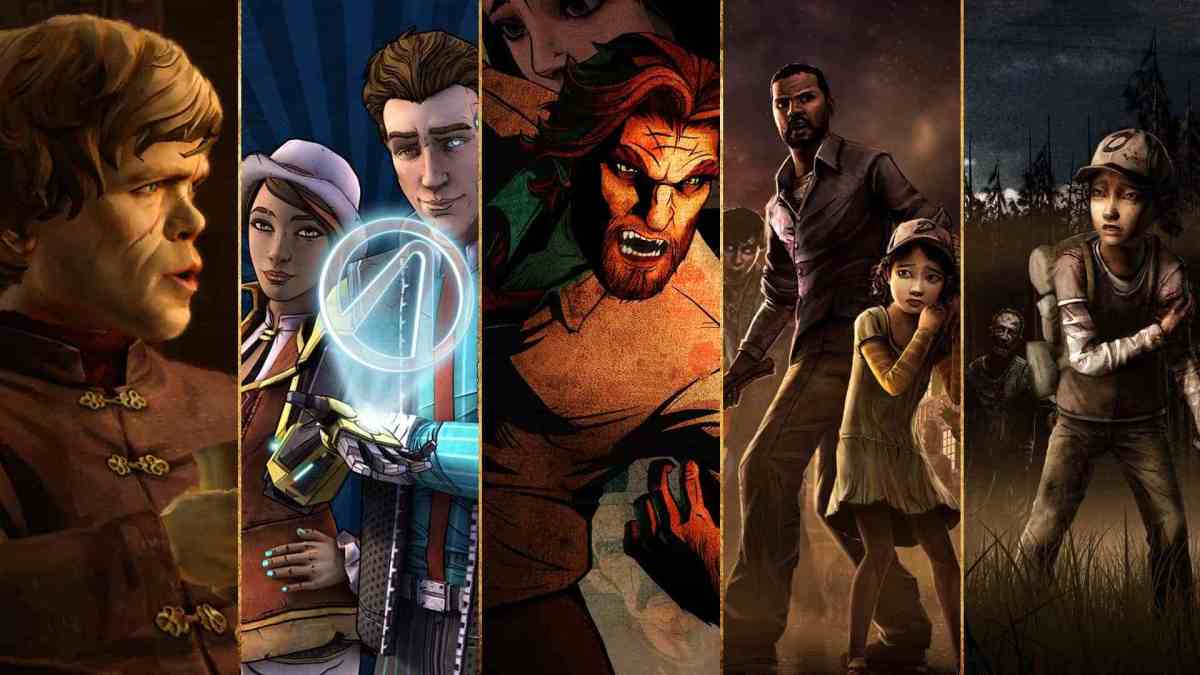
Last week, Telltale games declared that it was going to be shutting down, laying off most of its staff (who were expecting an eventual closure, but not so sudden). Official reports argue that a failed round of funding (the last backer abruptly pulled out) caused the shut down. The company is only staying open in order to finish the Minecraft: Story Mode for Netflix, then is shutting down permanently. This puts a halt to the much anticipated final season of Walking Dead and trashes the production for a Stranger Things game.

While officially, financial problems led to the closure, this development was a long time coming. Telltale games exploded onto the mainstream scene with the insanely popular first season of Walking Dead, released in 2012. Every gamer who was played that game, with streams for the first chapter popping up. As the game had promised that the endings would change based on your actions, people were trying to get the best ending possible. The first season was pretty good at making it seem like it changed based off actions, as well.

However, people quickly realized in the second season that this was not the case. Major events occurred no matter what, taking away the purpose of trying to find different outcomes. Another problem as well was the fact that the only character that remained consistent was Clementine (and later the child), while all other characters seemingly disappeared. Even the spin-off game was a dead end, with none of the characters making it into the actual game. This made it so there was too many characters to get invested in, turning people off.

This also ruined interest in Game of Thrones and Batman, two games that were reportedly good, but too long and unchanging for people to really be invested in. It only goes downhill from there, as Telltale keeps releasing more and more games, none of which had anywhere near the same popularity as the first season of Walking Dead. As a result, the company was merely digging itself into its own grave.

But, it didn’t let that on to its employees. In fact, the company had just hired people weeks before they had the massive layoff, with people even moving across the country in order to come and work. As a result, a massive class-action lawsuit has been filed against the company, as with the sudden layoff with an almost immediate cut-off of benefits, they have violated California labor laws. Some argue that in suing a bankrupt company, they are wasting their time, but it’s important to solidify that these laws apply to gaming companies, who might otherwise think they’re exempt.